Anthurium
Anthurium andraeanum
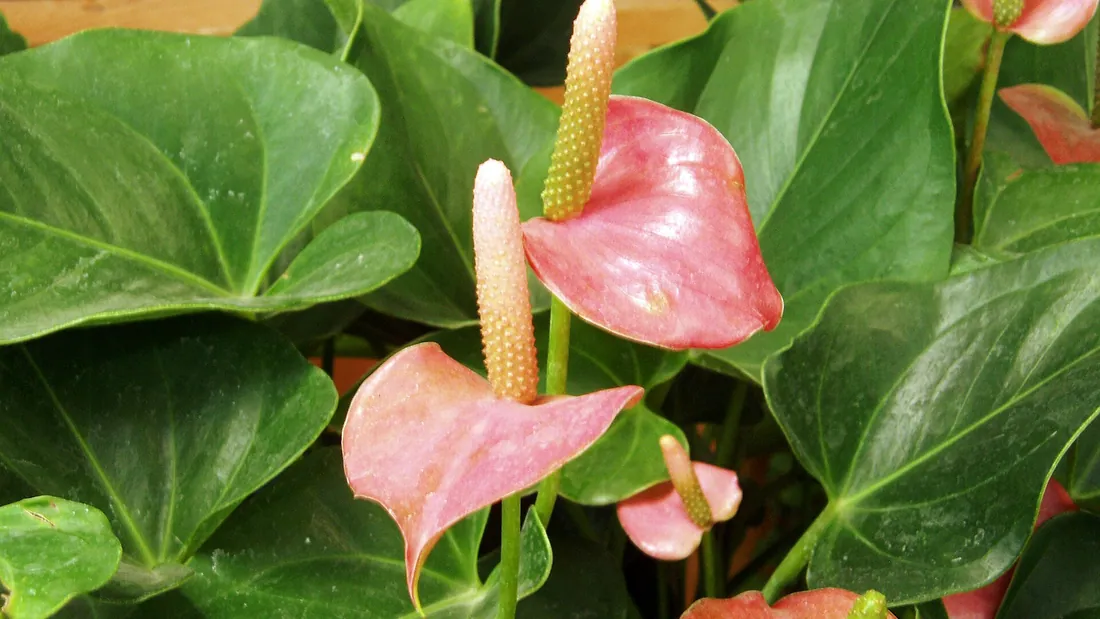

The anthurium (Anthurium andraeanum) is a tropical houseplant known for its smooth, waxy red spathe, which people often mistake for a flower when it is actually a modified leaf. It comes from the humid forests of South America and tolerates neither cold nor dry air. Everything hinges on the heating season: radiators dry out the air indoors, and that is when the plant suffers.
Light and exposure
The anthurium wants plenty of light, but never direct sun, which scorches its foliage. An east-facing window, or a spot a few metres from a south-facing bay window, suits it well. In too much shade it survives, but it stops flowering.
Through the grey months, move it closer to the window. In deep winter, under short and low light, an anthurium placed at the back of a room goes into complete standby.
Watering
Water regularly to keep the substrate slightly moist, but never soggy. Let the top centimetre dry out before watering again, then always empty the saucer. Roots left sitting in water rot quickly.
In winter, space out the watering clearly. The plant drinks little when it slows down, and too much water on a cold substrate is the leading cause of loss. Water at room temperature, low in lime, avoids spots on the foliage.
Soil and repotting
The anthurium is epiphytic by nature: its roots want air, not compact soil. An airy mix does the job, for example two thirds tropical plant potting soil and one third orchid substrate, with a little bark or perlite.
Repot every two to three years, in spring, into a pot only slightly larger and always with drainage holes. Roots poking out of the top are not a flaw in this plant, it is how it naturally works.
Temperature and humidity
The anthurium likes steady warmth, between 18 and 25 degrees all year round. Below 15 degrees it stops. Keep it away from windows that cool down at night in winter, and from draughts.
It is mainly air humidity that causes trouble indoors. The plant demands humid air, around 60 percent, whereas central heating drops interiors to 30 or 40 percent. The result: brown, dry leaf tips and aborted buds. Mist several times a week, or set the pot on a tray of moist clay pebbles without the base touching the water.
Pruning and upkeep
The anthurium does not really need pruning. You simply remove, right at the base, the yellowed leaves and the old faded spathes, using a clean tool.
Wipe the waxy foliage with a damp cloth from time to time, as dust reduces the light it captures. A diluted fertiliser for flowering plants, every two to four weeks from April to September, supports flowering. Stop in winter.
Pests and diseases
The real danger is root rot, caused by too much water and a soggy substrate. Foliage that yellows suddenly, a soft base, soil that smells musty: repot, cut away the black roots and replant in fresh, well-draining mix. This is the number one problem indoors, especially during the heating season.
As for pests, the dry air from heating favours two enemies. Red spider mites weave fine webs under the leaves and give a speckled, dull look. Mealybugs settle in the leaf axils and on the stems, in cottony white clusters or small brown shells. Raising humidity discourages spider mites; for mealybugs, dab with alcohol on cotton and treat with black soap.
Propagation
Division is the simplest and most reliable method. When you repot in spring, take out the root ball and separate the side offshoots that already carry their own roots. Repot each division in the same airy mix, warm and humid.
Allow a few weeks before you see new leaves. Do not divide too small: a division with two or three leaves and a good bundle of roots takes off far better than a puny offshoot.
Toxicity
The whole plant contains calcium oxalate crystals. If a cat, dog or child chews a leaf or a stem, it causes strong irritation of the mouth and throat, heavy drooling, sometimes vomiting and swelling. Rarely serious, but distinctly unpleasant. Place the plant out of reach of nibbling animals and young children.
Climate and hardiness
Where and in which climate it thrives
The anthurium never goes outside in a temperate climate: it is a frost-tender tropical plant that stays indoors twelve months out of twelve. Its calendar is an indoor calendar, set by the heating more than by the garden seasons.
The critical period covers the whole heating season, when the radiators are on. The air in heated homes then falls well below what the plant can bear, and that is when the brown tips and the halt in flowering appear. The move that changes everything: keep the anthurium away from radiators and raise the humidity around it, through misting, a tray of moist pebbles, or a group of plants close together that create their own microclimate. A bright bathroom is often the ideal spot through the heating season.
Well settled, it can flower all year round, cold season included, as long as light and humidity keep up. It is this long flowering that makes it one of the most rewarding houseplants there are, once the battle against dry air is won.
Growing anthurium?
Green Hub keeps a dated history of your own plant: its photos, its progress, its repottings. An AI answers about yours specifically, not a generic sheet, for free.
Identify my plantMonth-by-month care calendar
| January | Heating in full swing. Move the pot away from radiators, mist several times a week and watch for brown tips, a sign of air that is too dry. |
|---|---|
| February | Reduced watering, let the top dry out between two. Watch for red spider mites under the leaves, favoured by dry air. |
| March | The light returns, the plant restarts. A good time to repot if the roots are overflowing, into an airy mix. |
| April | Clear resumption. Start the diluted fertiliser for flowering plants again, every two to four weeks, and more regular watering. |
| May | Active growth. Clean the foliage with a damp cloth and keep the substrate slightly moist. |
| June | In full form, flowering at its peak. Continue the fertiliser and mist on hot, dry days. |
| July | Keep it away from the direct sun coming through the panes, it scorches the foliage. Empty the saucer thoroughly. |
| August | Continue watering and fertilising. Optionally divide a plant that is too bushy by separating the already rooted offshoots. |
| September | The light fades, move the plant closer to the window. Last feed before the winter rest. |
| October | The heating starts again, the fight against dry air begins. Set up the tray of moist clay pebbles. |
| November | Space out the watering, the plant slows down. Keep it away from cold windows at night. |
| December | Relative rest. Little water, no fertiliser, plenty of air humidity. A bright bathroom makes good winter quarters. |
Green Hub tips
- The number one enemy here is the heating: always keep the anthurium away from radiators and mist it in winter.
- Systematically empty the saucer after watering. Roots left soaking rot, it is the leading cause of loss indoors.
- Brown, dry leaf tips? That is air that is too dry, not a lack of water. Raise the humidity with a tray of moist pebbles.
- Toxic to cats, dogs and children if chewed: place it up high, out of reach of nibblers.
- To propagate, divide in spring keeping pieces with two or three leaves and good roots, they take off far quicker.
Related species
Aglaonema
Aglaonema commutatum
The aglaonema (Aglaonema commutatum) is a robust, easy houseplant, prized for its foliage variegated with green,…
Alocasia
Alocasia
The alocasia, nicknamed elephant ear, charms with its large, dramatically veined leaves. It is a demanding tropical…
Dieffenbachia
Dieffenbachia seguine
Dieffenbachia (Dieffenbachia seguine) is a houseplant with large foliage variegated in cream and green, native to the…
Heartleaf philodendron
Philodendron hederaceum
The heartleaf philodendron (Philodendron hederaceum), also known as the sweetheart plant, is a vine from the tropical…
Peace lily
Spathiphyllum
The peace lily (Spathiphyllum) is a tropical understorey plant from Central America, prized for its glossy green…
Pothos
Epipremnum aureum
The pothos (Epipremnum aureum), also called devil’s ivy, is a tropical vine from the Solomon Islands that has become…
Updated on
How this sheet is written
Written for Green Hub with the help of language models, then reviewed. It offers gardening guidance, not professional advice: if you are unsure whether a plant is toxic to a child or an animal, ask a vet, a doctor or your national poison centre.