Peace lily
Spathiphyllum
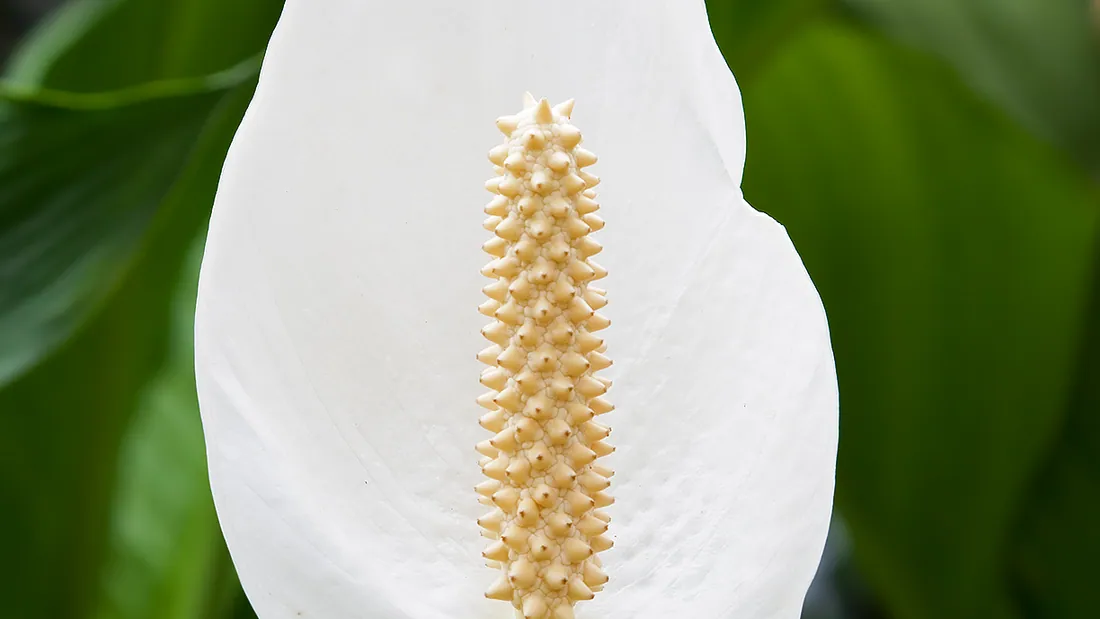

The peace lily (Spathiphyllum) is a tropical understorey plant from Central America, prized for its glossy green foliage and its large white flowers, which are in fact bracts called spathes. Unlike most houseplants, it likes to stay slightly moist and flowers even in moderate light. In a temperate climate it lives indoors all year: it tolerates no frost and suffers from the air dried out by heating, but it has the merit of clearly warning when it is thirsty by dropping its leaves, which a watering revives within a few hours.
Light and exposure
The peace lily prefers bright but indirect light, like the understorey it comes from. A spot one metre from an east- or north-facing window suits it very well. The direct summer sun scorches and bleaches the foliage, while too little light reduces or stops flowering, without killing the plant for all that.
If your peace lily makes fine leaves but no longer flowers, it is often a lack of light: move it closer to a window, without direct sun. Under a grey winter, a brighter spot through the darkest months helps it keep a few flowers.
Watering
It is one of the few houseplants that likes a substrate always slightly moist, but never soaked. Water as soon as the surface starts to dry, on average once or twice a week in summer and once a week in winter. The plant needs more water than average, but equally hates stagnant water in the saucer.
Its great advantage is that it warns you. When its leaves soften and droop all at once, it is thirsty: a good watering straightens it up within a few hours, with no aftermath if the lapse did not last. Just avoid letting it wilt repeatedly, which eventually damages the foliage. Tap water is fine, but if the tips turn brown, let the water stand overnight or collect rainwater.
Soil and repotting
A rich, light potting soil for green plants suits it, lightened with a handful of perlite to keep it from compacting and becoming suffocating. The pot must have drainage holes: the peace lily likes moisture, not water stagnating around the roots.
Repot in spring every one to two years, as the plant grows fast and fills its pot with roots. Choose a container only slightly larger. A rootbound clump dries out very fast and makes the plant droop in no time; this is often the sign that it is time to repot.
Temperature and humidity
The ideal range is 18 to 26 degrees. Below 12 degrees the plant suffers, and the cold blackens its foliage. It tolerates no frost and hates cold draughts near doors and windows.
The real problem is the dry air of heating through the whole heating season. This plant of the humid understorey reacts quickly: the tip and edge of the leaves turn brown and dry out. Mist the foliage, place the pot on a bed of moist clay pebbles, or run a humidifier. This is the main constraint of growing it in a heated interior.
Pruning and upkeep
The peace lily is not pruned for shaping. Cut at the base, with a clean tool, the faded flowers whose spathe has turned green then brown, as well as the yellowed or damaged leaves. This keeps the plant tidy and encourages it to produce new flowers.
Regularly wipe the glossy foliage with a damp cloth to remove dust and let the plant capture the light. Also trim the browned tips if they bother you, following the shape of the leaf, without cutting into the green, healthy part.
Pests and diseases
The main enemy is an excess of stagnant water, which rots the roots: leaves yellowing en masse, a soft base, soil that smells stale. Take the rootball out, cut away the brown, soft roots, and repot in fresh substrate. Conversely, brown, dry tips betray air that is too dry rather than a disease.
As for pests, watch for mealybugs and red spider mites, favoured by the dry air of winter. Clean with a cotton pad soaked in diluted methylated spirits and raise the room’s humidity. Regularly dusted foliage and good humidity clearly limit these attacks.
Propagation
Clump division is the only simple and reliable method, and it succeeds almost every time. At the spring repotting, take the plant out, spot the natural offsets of the clump, and separate them by hand or with a clean knife, making sure each piece keeps leaves and a good bunch of roots. Repot each offset in a suitable pot.
The peace lily cannot be propagated by leaf or stem like a vine: without division, you get no new plant. The best time to divide coincides with repotting, when the plant enters active growth and recovers quickly from the operation.
Toxicity
The whole plant contains calcium oxalate crystals. Chewed, a leaf strongly irritates the mouth, tongue and throat, and makes you salivate. Keep the peace lily out of reach of cats, dogs and young children.
Climate and hardiness
Where and in which climate it thrives
The peace lily lives indoors all year. It does not go out into the garden: the slightest frost kills it, and nights below 12 degrees make it suffer well before winter. You may possibly put it out in the shade on a sheltered terrace at the height of the warm season, but bring it back in as soon as the nights drop below 12 degrees again.
The great challenge for this plant of the humid understorey is the heated winter. The air dried out by heating through the whole heating season quickly browns the tip and edge of the leaves. Place the pot on a bed of moist clay pebbles, mist the foliage, and keep it away from the burning air of the radiator. Also make the most of a brighter spot during the grey months to help it keep a few flowers. Well cared for, it reflowers several times a year, even indoors.
Growing peace lily?
Green Hub keeps a dated history of your own plant: its photos, its progress, its repottings. An AI answers about yours specifically, not a generic sheet, for free.
Identify my plantMonth-by-month care calendar
| January | Light rest. Keep the substrate just moist, about one watering a week. Away from the radiator, mist against the dry air. |
|---|---|
| February | Still slowed down. Watch for mealybugs and red spider mites favoured by the dry air. Wipe the foliage and keep up the humidity. |
| March | Growth restarts with the light. Resume more regular watering. A good time to divide and repot if the clump is tight. |
| April | Full recovery. Division and repotting ideal. First light feeding. The first flowers may appear. |
| May | Active growth and flowering. Water to keep the soil fresh, once or twice a week. Feed every 15 days, diluted fertiliser. |
| June | Fine flowering. You may put the plant out in the shade on a sheltered terrace. Cut the faded flowers to encourage others. |
| July | High summer. Water as soon as the surface dries, mist in high heat. Continue the light feeding. |
| August | Growth still steady. Keep removing faded flowers and yellowed leaves. Prepare the return indoors if the plant is outside. |
| September | Bring the plant back in as soon as the nights drop below 12 degrees. Gently reacclimatise it to indoor light. |
| October | Growth slows. Last light feeding. Space the waterings a little without ever letting the rootball dry out completely. |
| November | Rest. Move the pot closer to a window for the weak daylight. Stop feeding. Beware the dry air of the heating. |
| December | Winter rest. Keep the substrate just moist. Mist regularly and keep the plant away from the radiator to avoid brown tips. |
Green Hub tips
- The peace lily warns you when it is thirsty: its leaves droop all at once and straighten up within a few hours after a watering.
- Fine leaves but no more flowers? It is almost always a lack of light. Move it closer to a window, without direct sun.
- Against the brown tips of the heated winter, place the pot on moist clay pebbles and mist: it is a plant of the humid understorey.
- To propagate, divide the clump at the spring repotting. The peace lily cannot be propagated by stem like a vine.
Related species
Aglaonema
Aglaonema commutatum
The aglaonema (Aglaonema commutatum) is a robust, easy houseplant, prized for its foliage variegated with green,…
Alocasia
Alocasia
The alocasia, nicknamed elephant ear, charms with its large, dramatically veined leaves. It is a demanding tropical…
Anthurium
Anthurium andraeanum
The anthurium (Anthurium andraeanum) is a tropical houseplant known for its smooth, waxy red spathe, which people often…
Dieffenbachia
Dieffenbachia seguine
Dieffenbachia (Dieffenbachia seguine) is a houseplant with large foliage variegated in cream and green, native to the…
Heartleaf philodendron
Philodendron hederaceum
The heartleaf philodendron (Philodendron hederaceum), also known as the sweetheart plant, is a vine from the tropical…
Pothos
Epipremnum aureum
The pothos (Epipremnum aureum), also called devil’s ivy, is a tropical vine from the Solomon Islands that has become…
The guides that mention it
Indestructible Houseplants: Tolerating Drought Is Not Tolerating Shade
Tolerating drought and tolerating shade are two different adaptations, and almost every list mixes them up. What these…
Watering Plants Properly: Deciding Rather Than Following a Schedule
Beginners water too often and too little at the same time. How to read the soil instead of the calendar, tell thirst…
Toxic Plants for Cats and Dogs: Recognising the Danger Rather Than Memorising a List
A list of toxic plants is easily forgotten and always incomplete. What actually protects a cat or dog is recognising…
How to Compost in an Apartment with Worm Composting
Tiered bin, red worms and worm tea: how to compost your kitchen scraps without a garden or odor, even in a city…
Updated on
How this sheet is written
Written for Green Hub with the help of language models, then reviewed. It offers gardening guidance, not professional advice: if you are unsure whether a plant is toxic to a child or an animal, ask a vet, a doctor or your national poison centre.