Alocasia
Alocasia
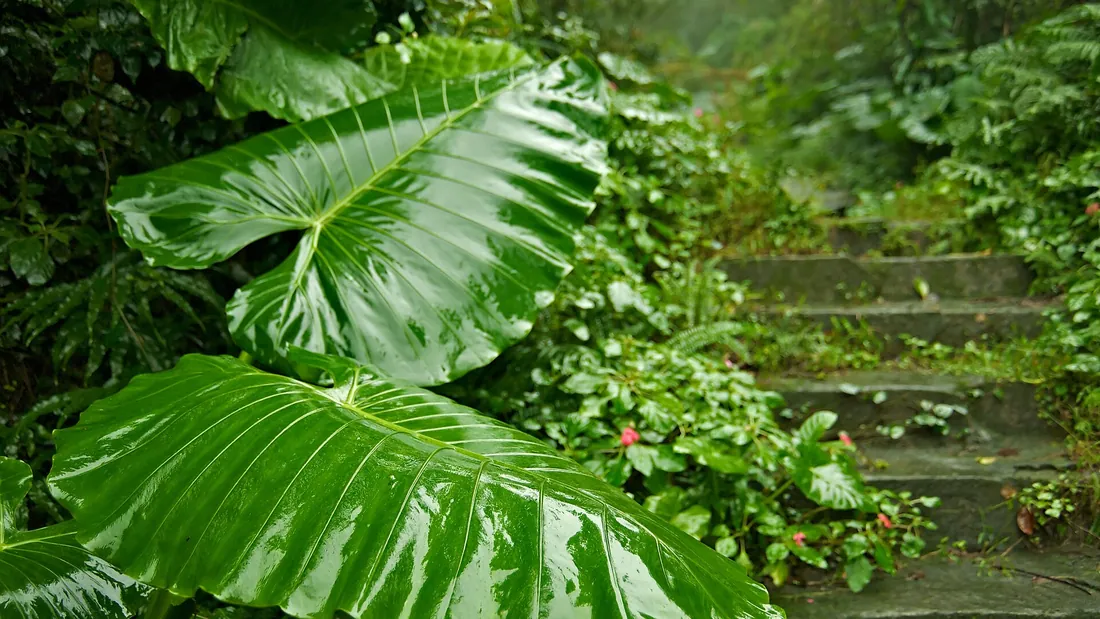

The alocasia, nicknamed elephant ear, charms with its large, dramatically veined leaves. It is a demanding tropical plant, reserved for anyone willing to look after its conditions: high air humidity, constant warmth, bright but filtered light. In the cold season it takes a clear rest and can drop all its leaves as the days grow shorter. No need to panic then: it is not dead, it goes dormant on its tuber and starts again in spring. One last thing, the whole plant is toxic.
Light and exposure
The alocasia wants plenty of light, but indirect. In the wild it grows under the canopy, bathed in filtered light and never scorched by harsh sun. At home, a bright spot near an east-facing window, or slightly set back from one that takes the full midday sun, suits it well.
Direct afternoon sun quickly marks and burns its large leaves, while a spot that is too dark makes it decline, with stretched petioles and smaller leaves. In weak winter light, move it right up to the window, or add a grow light if you want to limit leaf loss.
Watering
Keep the substrate lightly moist in spring and summer, without ever soaking it. Water as soon as the top centimetre has dried, with room-temperature water, ideally low in lime. The alocasia hates prolonged drought as much as standing water, it is a balance to find.
In winter, everything changes. The plant slows down or goes fully dormant, and its water needs collapse. Cut back sharply and let the substrate dry out much more between waterings. If the leaves fall and only the tuber remains, keep the soil barely damp, never soaked, or the resting tuber will rot.
Soil and repotting
Give it an airy, free-draining substrate that holds a little moisture without ever compacting. A mix of potting soil, fine bark and perlite, with a share of coconut fibre, closely reproduces the light forest floor it likes. A pot with drainage holes is essential.
The alocasia is happy in a fairly snug container, which warms up and dries out a little faster. Repot in spring, as growth resumes, when the roots circle the bottom. It is also the chance to inspect the tuber and spot any offsets. Avoid repotting during full winter dormancy, the plant will not settle in while it sleeps.
Temperature and humidity
Constant warmth is a condition for success. The alocasia is comfortable between 18 and 27 degrees and dislikes sudden swings. Below 15 degrees it sulks, stops growing, and the cold triggers leaf drop.
It tolerates no frost and never overwinters outside here. Avoid cold draughts, poorly insulated windows and the vicinity of a door opening outdoors in winter. Conversely, keep it a little away from radiators, which dry out the air it needs so badly. A warm, stable room, a bright bathroom for instance, often works wonders.
Pruning and upkeep
The alocasia is not pruned for shape. Simply cut off yellowed or dried leaves at the base, with a clean tool, as they fade. It is normal for an old leaf to give way when a new one unfurls, the plant only keeps a limited number of leaves at a time.
In autumn and winter, this yellowing can speed up until the foliage is fully lost. Only cut the petiole once it is soft and clearly yellow, not before: as long as it is green, it still feeds the tuber. Wear gloves for this work, as the sap is irritating.
Pests and diseases
Indoors, trouble comes mainly from too much water and air that is too dry. Overly generous watering in winter rots the roots and tuber: soft leaves, general yellowing, a smell of stale soil. The fix is to dry out, unpot to inspect the tuber and cut away the soft parts.
The dry air of a heated home favours spider mites, which pierce the underside of the leaves and leave fine webbing. Also watch for scale insects and aphids. Good humidity, regularly wiped foliage and careful checking keep these attacks in check. Spots on the leaves often betray water that is too hard, or a root problem, rather than a real disease.
Propagation
The alocasia is propagated by dividing the tubers, not by stem or leaf cuttings. When repotting in spring, gently free the root ball: you will often find small bulbils or offsets clinging to the main tuber. Detach them with a few roots.
Plant each offset in a small pot of light substrate, keep it warm, in filtered light and a humid atmosphere, and be patient: the start is slow and temperamental. A clear cover or a mini greenhouse keeps up the humidity that helps it take. Always handle with gloves, as the sap and tubers are irritating.
Toxicity
The whole plant is toxic. Alocasias contain calcium oxalate crystals, highly irritating, present in the leaves, stems and sap. Chewed or swallowed, a leaf causes an intense burning sensation in the mouth and throat, heavy salivation, swelling of the lips and tongue, and sometimes difficulty swallowing. Contact of the sap with the skin or eyes can irritate sensitive people.
Keep the plant out of reach of young children and pets, cats and dogs in particular, which like to nibble the leaves. If swallowed, rinse the mouth, give a little to drink, and contact a doctor, the poison centre or a vet. Wear gloves when repotting or dividing, and wash your hands afterwards, especially before touching your face.
Climate and hardiness
Where and in which climate it thrives
Anywhere the cold season drops below 15 °C, the alocasia is a pure houseplant, to be treated as a tropical guest that needs pampering. It only knows outdoor life in the warm season at most, in light shade and sheltered from the wind: put it out once nights hold above 16 °C, and bring it in well before they fall back under that mark.
The striking feature is the rest through the dark season. As the days shorten and the house cools, the alocasia slows down then may drop all its leaves and go dormant on its tuber. Many beginners then believe the plant is dead and throw it away: that is the mistake not to make. A firm tuber, even without a single leaf, is very much alive. Keep it in its pot, warm, barely damp, and leave it alone. When the light returns, it starts again, often more vigorous than before. To limit this leaf loss, give it the warmest and most stable room in the house, as much light as possible near a window, and good air humidity despite the heating. The further from the equator, the more the window matters: under short, low winter light, a grow light as a top-up through the three or four darkest months helps it get through without full dormancy.
Growing alocasia?
Green Hub keeps a dated history of your own plant: its photos, its progress, its repottings. An AI answers about yours specifically, not a generic sheet, for free.
Identify my plantMonth-by-month care calendar
| January | Heart of the rest. Water very little, just enough to keep the tuber barely damp, no feed. A firm tuber without leaves is alive, leave it in the warmth. |
|---|---|
| February | Still quiet. Watch for spider mites near the heating. Check that the tuber stays firm and that the substrate is not soaked. |
| March | First signs of a restart as the light comes back. Gradually resume watering. This is the right time to repot and divide the offsets. |
| April | Growth picks up again. New leaves forming. Resume a light, regular feed and keep good air humidity. |
| May | Full restart. Water according to how the substrate dries. If you plan to move it outside, harden it off in the shade after mid-May, once frosts have passed. |
| June | Fine growth. Bright filtered light, warmth, humidity: the plant unfurls its largest leaves. Keep up the diluted feed every two to three weeks. |
| July | In full form. Beware of direct sun that burns the foliage and of substrate drying fast in strong heat. Mist or raise the humidity. |
| August | Still steady growth. Keep up careful watering and feeding. Watch for pests and wipe the foliage to keep it clean. |
| September | Bring it in if it was outside, before the cool nights. Gradually cut back the feed. Set it in the brightest spot for winter. |
| October | Clear slowdown. Space out watering, stop feeding. The first leaves yellow, that is normal, only cut the soft petioles. |
| November | Entering rest. Leaf loss can increase. Water sparingly. A top-up grow light helps limit full dormancy. |
| December | Rest settled in. Very little water, no feed, warm and away from draughts. Never throw out a tuber that looks dead but stays firm. |
Green Hub tips
- Never throw out an alocasia that has lost its leaves in winter. As long as the tuber is firm, it is simply sleeping and will start again in spring.
- Air humidity is the key to success. A bright bathroom, a group of plants or a tray of moist clay pebbles beats a dry, overheated room.
- Water by how dry the substrate is, never out of habit. Excess water, especially in winter, rots the tuber and kills more alocasias than thirst.
- The whole plant is toxic through its calcium oxalates. Keep it out of reach of children and animals, and wear gloves to prune or divide it.
- In winter, give it as much light as possible, even adding a grow lamp: this is often what makes the difference between keeping its foliage and going dormant.
Related species
Aglaonema
Aglaonema commutatum
The aglaonema (Aglaonema commutatum) is a robust, easy houseplant, prized for its foliage variegated with green,…
Anthurium
Anthurium andraeanum
The anthurium (Anthurium andraeanum) is a tropical houseplant known for its smooth, waxy red spathe, which people often…
Dieffenbachia
Dieffenbachia seguine
Dieffenbachia (Dieffenbachia seguine) is a houseplant with large foliage variegated in cream and green, native to the…
Heartleaf philodendron
Philodendron hederaceum
The heartleaf philodendron (Philodendron hederaceum), also known as the sweetheart plant, is a vine from the tropical…
Peace lily
Spathiphyllum
The peace lily (Spathiphyllum) is a tropical understorey plant from Central America, prized for its glossy green…
Pothos
Epipremnum aureum
The pothos (Epipremnum aureum), also called devil’s ivy, is a tropical vine from the Solomon Islands that has become…
Updated on
How this sheet is written
Written for Green Hub with the help of language models, then reviewed. It offers gardening guidance, not professional advice: if you are unsure whether a plant is toxic to a child or an animal, ask a vet, a doctor or your national poison centre.