Chervil
Anthriscus cerefolium
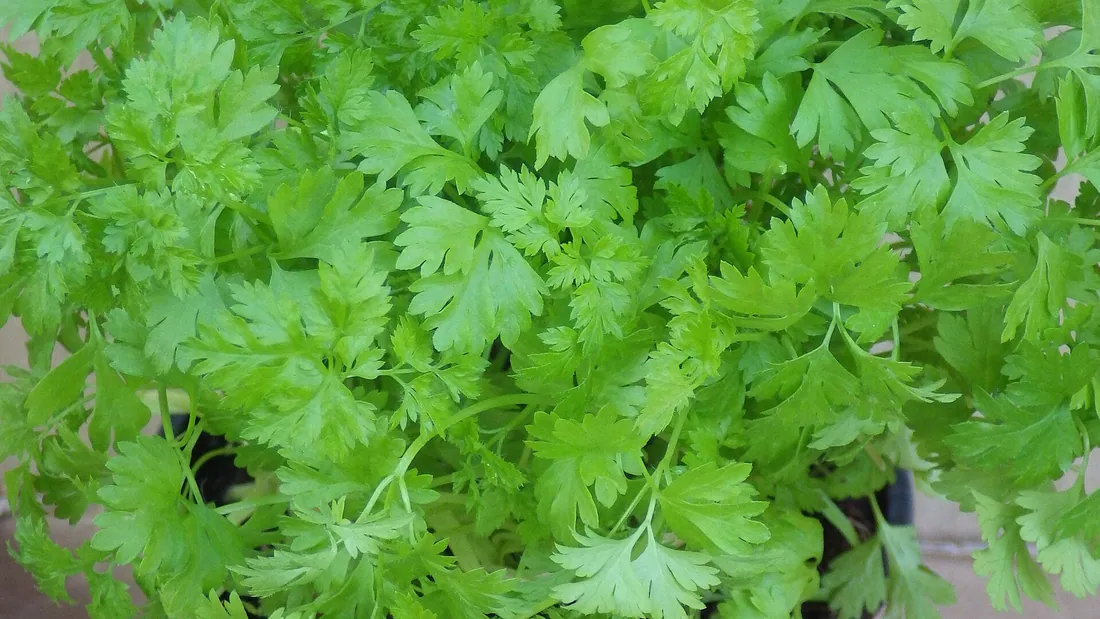
_Topfpflanze--Josef_Schlaghecken.jpg)
Chervil (Anthriscus cerefolium) is a fine annual herb with finely cut foliage and a delicate, slightly aniseed flavour. Unlike most herbs, it shuns full sun: it prefers partial shade and coolness, and bolts to seed very quickly once it gets hot and dry. It is a convenient plant that grows almost all year in a temperate climate, as long as you sow it where it does not cook. It does not transplant well, so you sow it directly in place, in small staggered handfuls. One thing to know before you start: when young, it resembles toxic umbellifers, so you only grow safe seed.
Light and exposure
Chervil is one of the few herbs that hates full sun. A spot that is too hot and too bright sends it into flower within a few weeks, before you have even had a chance to enjoy it. Set it in partial shade: at the foot of a wall that stays in shade, under a light shrub, in the shade cast by taller plants in the vegetable garden, or on a windowsill that does not catch the midday sun.
On either side of summer, when the sun stays gentle, it tolerates a brighter position without trouble. It is in high summer that you really have to protect it: sown in light shade at the heart of the warm season, it lasts far longer than in a scorching spot. Think of partial shade as the default setting, not as a fallback.
Watering
Cool soil is the key for chervil. Ground that dries out means guaranteed bolting and foliage that turns leathery. Water regularly to keep the soil moist without excess, especially in dry, windy weather, and mulch the base to hold moisture longer.
In a pot, keep a close eye: the compost dries fast and a thirsty chervil flowers at once. A morning watering, at the base, suits it well. In an often humid climate, watering becomes mainly an issue during the dry spells of high summer; the rest of the year, the rain does a good part of the work.
Soil and repotting
Chervil is happy in light, cool, humus rich soil, the kind that holds moisture without turning to mud. Ordinary garden soil, lightened with a little mature compost, is plenty. It has no great demands, it is above all coolness that matters more than richness.
Avoid soils that crust over on the surface and prevent the small seeds from emerging. A light raking before sowing and a veil of fine compost on top help you get even germination. In a pot, ordinary compost mixed with a little compost does the job perfectly, as long as it does not dry out between two waterings.
Temperature and humidity
Chervil is hardy and stands the cold well: it comes through cold winters without trouble and even self seeds from one year to the next. It is the autumn seedlings that, under a cold frame or fleece, can hold for a good part of winter and provide leaves during the bad season.
Its real enemy is heat. Beyond 22 or 25 degrees, combined with drought, the plant runs to flower and stops producing tender foliage. That is why summer sowings are reserved for cool, shaded corners. Chervil is therefore more a herb of the mild seasons than of the heart of summer.
Pruning and upkeep
You do not prune chervil in the strict sense, you harvest it. Cut the most developed outer leaves at the base, leaving the heart to produce new shoots. Regular harvesting keeps the plant full and delays flowering a little. Pick in the morning rather, when the foliage is full of freshness and most fragrant.
Remove the flower stems as soon as they appear if you want to prolong the leaf harvest; flowering marks the end of the cycle for that clump. Mind one point of vigilance that is anything but trivial: never harvest an unidentified wild plant believing it to be chervil. When young, several toxic wild umbellifers resemble it closely, and only sure identification allows picking.
Pests and diseases
Chervil is little prone to disease. Its main trouble in a humid climate is powdery mildew or a light felting on the foliage when the plants are too crowded and the air stagnant. Thin the sowings to let the air circulate, and avoid watering onto the leaves at the end of the day.
Slugs and snails enjoy the tender young shoots, especially in a wet spring: watch the emerging seedlings and protect them if needed. Aphids can also settle in during dry weather. Nothing serious as a rule: a well placed chervil, in the cool and not too dense, gets through the season without real problems.
Propagation
Chervil is sown, and only in place: it withstands transplanting badly, which breaks its young root and often triggers premature bolting. Sow directly in the open ground or in the final pot, broadcast or in rows, then barely cover and keep moist until emergence, which takes one to two weeks. Then thin to leave a few centimetres between the plants.
The secret of a continuous harvest is staggered sowing: repeat a small handful every two to three weeks from March to September, choosing more shaded spots as the summer heats up. One imperative safety point: use only seed bought or harvested from your own safe plants. Cultivated chervil is edible and harmless, but mistaking a self sown seedling for a toxic wild umbellifer such as fool’s parsley would be a mistake never to make. When in doubt about a plant that came up on its own, you do not eat it.
Climate and hardiness
Where and in which climate it thrives
Chervil is grown as a cool-season annual almost anywhere, from USDA zone 3 to zone 10: what limits it is not the cold but the heat. The plant is hardy, autumn rosettes come through the winter outdoors in a climate with moderate winters, and a simple fleece or cold frame is enough where the frost bites harder. It also self-seeds readily from one year to the next.
Its growing window is narrow at the top: the foliage forms between 10 and 20 °C, the flower stalk starts beyond 20 to 22 °C, and past 25 °C combined with drought bolting becomes irreversible within days. Three triggers add up, heat, water stress and day length: at high latitudes a midsummer sowing bolts even at moderate temperatures, simply because the days are long.
Hence a schedule that follows the season, not the month. In a temperate climate, sow in gentle sun on either side of summer and keep the midsummer sowings for the coolest, shadiest corners. In a Mediterranean or subtropical climate, chervil becomes a full cool-season crop, sown in autumn and harvested all winter. For those late sowings, a variety selected for cold hardiness and winter production, such as 'Cerfeuil d’Hiver de Bruxelles', is more reliable than common chervil; the fringed type known as curled chervil, with more compact foliage, spreads its harvest over a longer period, though it is less fragrant. Under a very wet winter, sow on a raised bed or in a pot: it is standing water, not the cold, that rots the rosettes.
Growing chervil?
Green Hub keeps a dated history of your own plant: its photos, its progress, its repottings. An AI answers about yours specifically, not a generic sheet, for free.
Identify my plantMonth-by-month care calendar
| January | Harvest possible on the autumn plants protected under a cold frame or fleece. Order safe seed, never seed of doubtful origin. |
|---|---|
| February | Rest for the most part. Under a cold frame, a first very early sowing is possible in mild years. Prepare a cool corner for the sowings to come. |
| March | First direct sowings in place, under a cold frame or in the open ground during a mild spell. Sow thinly and keep the soil moist until emergence. |
| April | Full sowing season in the open ground, still in the gentle spring sun. Thin the young plants and mulch to keep the coolness. |
| May | Harvest of the first sowings. Repeat a handful to stagger. Start choosing more shaded spots for the next ones. |
| June | Rising heat: sow now in partial shade, at the foot of a shaded wall or under tall plants. Water to avoid bolting. |
| July | Heart of summer, a delicate period. Sow only in cool, shaded spots, soil kept moist. Harvest young before flowering. |
| August | Still sow in the shade and water. You may let a few plants flower and seed for spontaneous self seeding in the garden. |
| September | The climate cools, chervil finds ideal conditions again. A good month for a generous sowing meant for autumn and winter. |
| October | Abundant harvest of the late summer sowings. Set up a fleece or a cold frame over a late sowing to hold through the bad season. |
| November | Protect the young plants under a cold frame or fleece for a winter harvest. Clean up the plants gone to seed, keeping a few seeds. |
| December | Slow harvest on the sheltered plants. Rest and planning: note the cool corners that did best this year. |
Green Hub tips
- Always sow in place and in small staggered handfuls: chervil hates transplanting and runs to seed if you disturb it.
- In summer, put it in partial shade and keep the soil cool. In full sun and dry, it runs to flower before it is good to harvest.
- Use only safe seed and never harvest a plant that came up on its own without certainty: when young, chervil resembles toxic umbellifers.
- Let one or two plants seed at the end of the season: chervil self seeds on its own and starts again in the cool corners the following year.
Related species
Carrot
Daucus carota
The carrot (Daucus carota) is a staple root vegetable in the vegetable garden, keeping all winter and sown directly in…
Celery
Apium graveolens
Celery (Apium graveolens) covers two vegetables from the same species: stalk celery, grown for its crisp ribs, and…
Coriander
Coriandrum sativum
Coriander (Coriandrum sativum) is an annual herb grown for both its fresh leaves, with their pronounced flavour, and…
Dill
Anethum graveolens
Dill (Anethum graveolens) is an annual herb with a lacy outline, a cousin of the carrot and fennel. It is a warm-season…
Florence fennel
Foeniculum vulgare var. azoricum
Florence fennel (Foeniculum vulgare var. azoricum) is the fennel grown for its swollen base, crisp and…
Parsley
Petroselinum crispum
Parsley (Petroselinum crispum) is the most used herb in the kitchen, flat or curled depending on taste. It is a…
The guides that mention it
Updated on
How this sheet is written
Written for Green Hub with the help of language models, then reviewed. It offers gardening guidance, not professional advice: if you are unsure whether a plant is toxic to a child or an animal, ask a vet, a doctor or your national poison centre.