Dill
Anethum graveolens
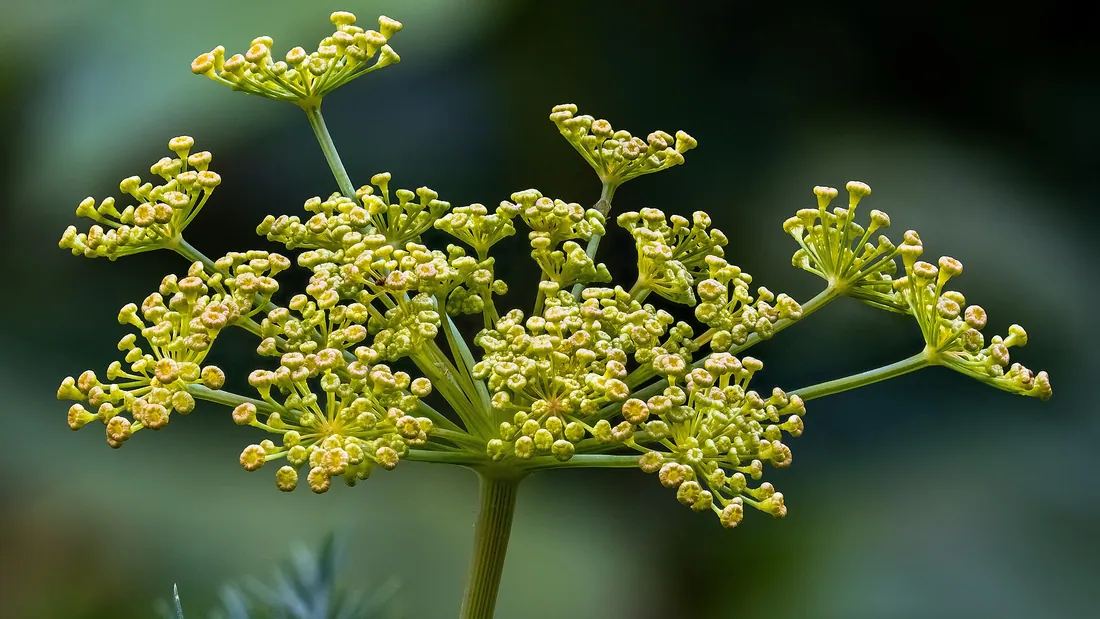

Dill (Anethum graveolens) is an annual herb with a lacy outline, a cousin of the carrot and fennel. It is a warm-season plant that is sown directly in place: its taproot hates transplanting to the point of bolting because of it. It is sown in the open ground once the soil holds above fifteen degrees, and the sowings are staggered every three to four weeks to have tender foliage all summer.
Light and exposure
Dill wants full sun, at least six hours a day. It is in full light that it develops its fine foliage and its aniseed aromas. Too shady a spot gives thread-like, pale plants that soon flop over.
The point most often neglected is the wind. Dill easily reaches eighty centimetres, sometimes more, on hollow, fragile stems that topple at the first gust of wind. Choose a sunny but sheltered corner, along a low hedge or a wall, and provide light staking for the tallest specimens.
Watering
Dill likes a soil that stays cool. That is even the key to delaying bolting: a plant that is thirsty heads straight for flower and stops producing foliage. Water regularly, especially in hot, dry weather, aiming for the base and not the foliage.
In summer, a light mulch at the base keeps the moisture in and limits watering. Avoid excess standing water, however, which the taproot tolerates poorly. The aim is a soil that stays cool at all times, never waterlogged.
Soil and repotting
A cool, rich and well-drained soil suits it best. An addition of well-rotted compost before sowing supports rapid growth and abundant foliage. It tolerates ordinary soils but gives far more in a loose, deep soil where its taproot can go down.
There is no talk of planting or repotting with dill: it is sown in place, full stop. Transplanting breaks or twists the taproot, and the plant reacts to that stress by bolting prematurely. Sow directly where the dill is to grow, in the open ground or in a large deep pot that you will no longer move.
Temperature and humidity
Dill is sensitive to cold at sowing. Below warmed soil, germination drags or fails: that is why an over-early sowing gains nothing. Wait until the soil has gained a few degrees, once the hard frosts are past, rather than a still-cold soil where the seeds lie dormant without coming up.
The adult plant, for its part, tolerates cool summers well. Its real enemy is the opposite: dry heat. A burst of heat combined with a lack of water makes it bolt in a few days. A moderate, damp summer actually suits it better than a heatwave, and in a hot climate the crop has to be shifted to the cool season.
Pruning and upkeep
You don’t prune dill, you harvest it. Take the young foliage as needed, cutting the most tender stems at the top. This delays flowering a little and keeps you fresh sprigs for longer.
Routine care comes down to a few gestures: regular watering, a mulch, a stake for the tall stems, and weeding the young sowings, which are easily smothered. When a plant flowers, let it rise if you want the umbels and the seeds, or pull it up to make room for a younger sowing.
Pests and diseases
Powdery mildew can cover the foliage with a whitish felting late in the season, especially on crowded, poorly aired plants. Excess water at the base also encourages damping-off and crown rot on young plants. Sow thinly, air out, and water at the base in the morning to limit all that.
As for pests, dill shares the enemies of its family. The carrot fly may take an interest in it, and aphids gather on the young shoots and umbels. The good news: those same umbels attract hoverflies, ladybirds and small parasitic wasps that regulate the aphids in the neighbouring vegetable garden.
Propagation
Dill is propagated by direct sowing, never by transplanting. Sow in place at a shallow depth, half a centimetre, in rows or small clusters, then thin out to leave about twenty centimetres between the plants. Emergence takes two to three weeks depending on the warmth of the soil.
For continuous foliage, stagger the sowings every three to four weeks, from May to July. Let one or two plants rise at the end of the season: the yellow umbels give seeds that readily self-sow on the spot and that you can also harvest for the kitchen or for next year’s sowing.
Climate and hardiness
Where and in which climate it thrives
Dill is grown as an annual everywhere, from USDA zone 2 to zone 11: what decides is not its hardiness but the length of its season. Young plants take brief light frosts, around -3 °C, but a hard freeze finishes off the clump, and dill never comes back from one year to the next, except by spontaneous self-seeding.
Two factors govern bolting, and the climate decides which one strikes first. The first is day length: dill is a long-day plant, and it flowers all the faster once the days run past fourteen hours. At high latitudes, a midsummer sowing runs to umbels within a few weeks whatever you do; near the equator, where day length barely moves, the leaf harvest lasts far longer. The second is dry heat: a heat spell on drying soil triggers flowering in a matter of days.
Hence two opposite ways of growing it. In a temperate climate, oceanic or continental, sow as soon as the soil holds fifteen degrees and stagger every three to four weeks to keep tender foliage coming. In a Mediterranean, subtropical or arid climate, reverse it: dill is sown there in the cool season, through autumn and winter, and the scorching summer stands as the off season. A mild, wet winter suits it well as long as the soil drains; it is standing water at the crown, not the cold, that kills young plants.
Growing dill?
Green Hub keeps a dated history of your own plant: its photos, its progress, its repottings. An AI answers about yours specifically, not a generic sheet, for free.
Identify my plantMonth-by-month care calendar
| January | Nothing in the garden. Order the seeds and spot a sunny corner sheltered from the wind for the sowings to come. |
|---|---|
| February | Too early and too cold to sow. Dill hates transplanting, so no sowing in modules indoors. Be patient. |
| March | Prepare the plot: loosen the soil deeply and work in a little well-rotted compost for the taproot. |
| April | Still too cold for reliable sowing. The soil is not warmed enough, germination would drag. Wait for May. |
| May | Here we go. Sow in place, at a shallow depth, in warmed soil after mid-May. Water to keep the soil cool until emergence. |
| June | Thin the young plants to twenty centimetres. Make another sowing to stagger. First harvests of tender foliage. |
| July | Last staggered sowing of the season. Water regularly in hot weather to delay bolting. Stake the tall stems. |
| August | Full harvest of foliage. Watch for powdery mildew on crowded plants. Let a few specimens flower for the umbels and the beneficials. |
| September | End of foliage harvest. The umbels yellow: harvest the seeds when ripe for the kitchen and next year’s sowing. |
| October | The season ends. Gather the last seeds, let some fall on the spot for a spontaneous self-seeding in spring. |
| November | End of cycle. Dill is annual, it doesn’t come back. Clean up the plot and compost the dry stems. |
| December | Rest. Note where the dill grew well and check that it was far from fennel and carrots for next year. |
Green Hub tips
- Always sow in place, never in modules: the taproot doesn’t like transplanting and bolts if you disturb it.
- Stagger the sowings every three to four weeks from May to July for tender foliage continuously all summer.
- Water regularly: drought and heat spells make dill run to flower and stop leaf production.
- Don’t plant it next to fennel, with which it cross-breeds and loses its flavour, nor near carrots, which share its pests.
Related species
Carrot
Daucus carota
The carrot (Daucus carota) is a staple root vegetable in the vegetable garden, keeping all winter and sown directly in…
Celery
Apium graveolens
Celery (Apium graveolens) covers two vegetables from the same species: stalk celery, grown for its crisp ribs, and…
Chervil
Anthriscus cerefolium
Chervil (Anthriscus cerefolium) is a fine annual herb with finely cut foliage and a delicate, slightly aniseed flavour.…
Coriander
Coriandrum sativum
Coriander (Coriandrum sativum) is an annual herb grown for both its fresh leaves, with their pronounced flavour, and…
Florence fennel
Foeniculum vulgare var. azoricum
Florence fennel (Foeniculum vulgare var. azoricum) is the fennel grown for its swollen base, crisp and…
Parsley
Petroselinum crispum
Parsley (Petroselinum crispum) is the most used herb in the kitchen, flat or curled depending on taste. It is a…
The guides that mention it
Easy herbs to grow
Thyme, rosemary, basil, parsley, mint: which ones make it through the winter outdoors, which ones self-seed, and how to…
Sowing Seeds Successfully: Why It Fails, and What Fixes It
A seed that never comes up was not unlucky. Germination temperatures by species, correct depth, seeds that need light,…
Updated on
How this sheet is written
Written for Green Hub with the help of language models, then reviewed. It offers gardening guidance, not professional advice: if you are unsure whether a plant is toxic to a child or an animal, ask a vet, a doctor or your national poison centre.