Coriander
Coriandrum sativum
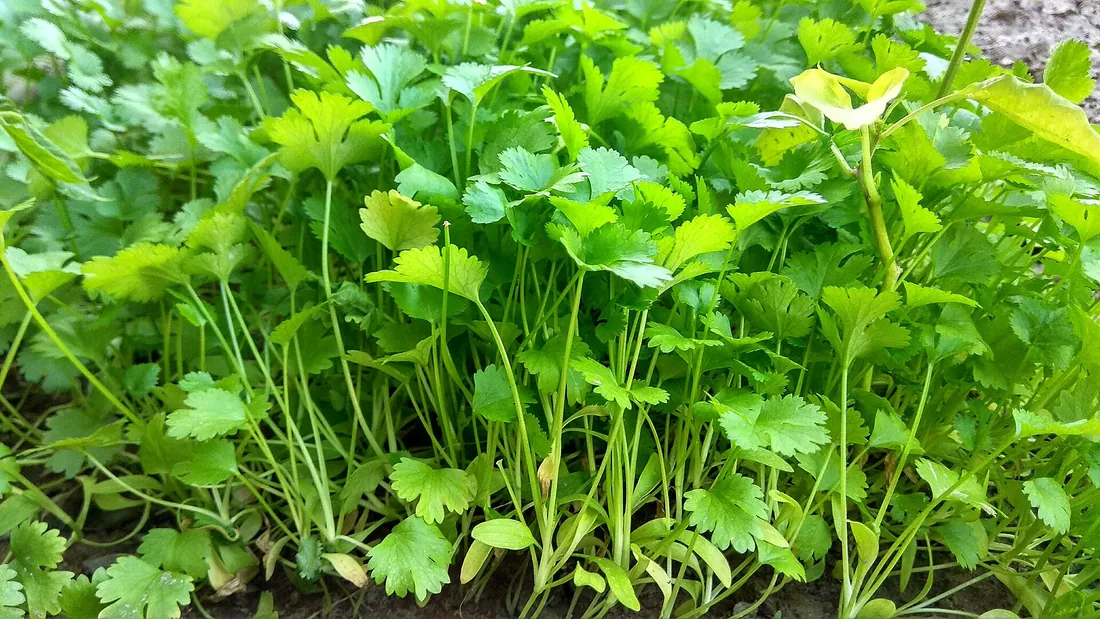

Coriander (Coriandrum sativum) is an annual herb grown for both its fresh leaves, with their pronounced flavour, and its dried seeds, which are milder and lemony. It is a seasonal plant, not hardy, that does not overwinter outdoors, and its great flaw is bolting very quickly as soon as it turns hot or dry. The secret is to sow it directly in place, keep it cool, and stagger the sowings for a continuous supply of leaves. A fast and slightly temperamental plant, but generous once you understand it.
Light and exposure
For a leaf harvest, coriander prefers a partly shaded position, especially in high summer. A spot that is too hot and too sunny drives it to bolt almost at once, at the expense of foliage.
If your aim is instead to harvest the seeds, a sunny position promotes flowering and ripening. For foliage, then, give it a cool, bright corner that is not scorching, with light shade in the afternoon during heat waves.
Watering
Coriander needs constantly cool soil. The slightest water stress, soil that dries out or a burst of heat, triggers bolting, that is the rapid appearance of the flower stalk at the expense of the leaves. So water regularly to keep the soil cool.
In pots as in open ground, consistency is essential: frequent, moderate watering is better than a drying out followed by a flood. A light mulch at the base helps retain moisture and delay bolting.
Soil and repotting
Coriander likes loose, cool soil, rich in organic matter and well drained. Adding mature compost before sowing supports fast growth and abundant foliage.
It develops a taproot and tolerates transplanting poorly: it is better to sow it directly in its final spot rather than transplant it, which stresses it and speeds up bolting. In pots, choose a fairly deep container, at least twenty centimetres, with good drainage.
Temperature and humidity
Coriander is an annual that does not overwinter outdoors: it does not survive frost and completes its cycle in a single season. Unlike thyme, chives or mint, which are perennial and hardy, it must be resown every year. Unlike basil, it is not so cold-sensitive as to fear the slightest coolness: it tolerates mild temperatures and even grows better in the cool than in the heat.
It is precisely the heat that upsets it. A hot summer sends it to seed within a few days. So it can be sown relatively early in spring, as soon as the soil warms up a little, and again at the end of summer to make the most of the cool late season, when it produces fine foliage. An autumn frost marks the end of the plants in place.
Pruning and upkeep
Harvest the outer leaves as needed, cutting the stems at the base, which encourages the centre to produce new leaves. Pick regularly to slightly delay bolting and prolong the harvest.
As soon as a flower stalk rises in the centre, the plant switches to seed and the leaves become sparse and finely cut. You can cut this stalk to gain a few leaves, but a bolting plant is nearing the end. The best thing then is to let it flower to harvest the seeds, and to rely on a new sowing for foliage.
Pests and diseases
Coriander is fairly little affected by diseases, its short cycle often keeping it out of harm’s way. In damp weather, powdery mildew may cover the foliage with a white felt and leaf spots may appear. Thin out sowings that are too dense and avoid wetting the foliage in the evening to limit these troubles.
Like other Apiaceae, it can attract the carrot fly, Psila rosae, whose larvae attack the roots: an insect-proof mesh protects the sowing. Aphids sometimes nestle in the flower umbels, and slugs devour the young seedlings in spring. Nothing very serious in general on a crop grown cool and airy.
Propagation
Coriander is propagated only by sowing, and preferably by direct sowing, since it hates transplanting. Sow the seeds about one centimetre deep, in cool, loose soil, in their final position. Emergence takes one to three weeks. A classic trick is to split or lightly rub the seeds, which are in fact double fruits, to speed up germination.
Stagger the sowings every two or three weeks, from spring to the end of summer, to make up for the rapid bolting and have leaves continuously. If you let a plant flower and set seed, it often self-sows and you will find spontaneous seedlings the following season.
Climate and hardiness
Where and in which climate it thrives
Coriander is a non-hardy annual: frost kills it, it completes its cycle in a single season and is resown each year from fresh seed. It grows best between 10 and 21 °C and prefers cool conditions to heat, which reverses the usual reflex: it is not the cold that thwarts the gardener, it is the summer. At the first spell of heat or drought the plant bolts within days and leaves almost no foliage.
Day length counts as much as temperature. Coriander is a long-day plant: above roughly fourteen hours of daylight it switches to flowering even in partial shade. The further you are from the equator, the longer midsummer days become: above 50 degrees of latitude they exceed sixteen hours, and a plant in full light then bolts very fast. In the tropics, where day length barely varies, heat alone calls the tune.
The remedy therefore follows the climate. In a temperate oceanic climate with mild summers, two windows give the best foliage: early spring, and a late-summer sowing that makes the most of a mild, damp late season up to the first frosts. In a continental climate with a short, hot summer, tighten the successional sowings across spring and start again as soon as the nights cool. In a Mediterranean or subtropical climate coriander becomes a cool-season crop: sow it when the heat drops and grow it right through the winter, protecting it only from frost. Everywhere, sow directly in place without transplanting, keep the soil cool, mulch, and choose a slow-bolting variety such as 'Marino' or 'Cruiser F1'.
Growing coriander?
Green Hub keeps a dated history of your own plant: its photos, its progress, its repottings. An AI answers about yours specifically, not a generic sheet, for free.
Identify my plantMonth-by-month care calendar
| January | Nothing to do outdoors, coriander does not overwinter. Order the seeds. An indoor sowing in a bright pot is possible for young leaves. |
|---|---|
| February | Still too cold outdoors. Prepare the soil and the seeds. Indoor growing is possible on a bright windowsill. |
| March | A first sowing under a cold frame or sheltered can start if the soil warms up. Still too early in the open ground. |
| April | First direct sowing in open ground, the soil has warmed up. Sow in place, coriander hates transplanting. |
| May | The sowings emerge and grow in the cool of spring, the ideal period for foliage. Stagger a new sowing. |
| June | Foliage harvest. The heat arrives and bolting speeds up: keep the soil cool, water and mulch. Sow in light shade. |
| July | In high summer, the plants bolt quickly. Let a few plants flower to harvest the seeds. Sow in partial shade for foliage. |
| August | Harvest the seeds on the bolted plants, when the umbels turn brown. Resume the foliage sowings for the late season. |
| September | Excellent period for foliage, the returning coolness calms the bolting. Late-summer sowings produce fine green growth. |
| October | Last leaf harvests before the frosts. Harvest the final seeds. A mesh can extend the plants in place a little. |
| November | The first frosts close the cycle of the plants in open ground. Clean up the spots. Indoor growing is possible. |
| December | End of the outdoor season. Note the periods that worked best. A pot indoors still supplies a few leaves. |
Green Hub tips
- Always sow in place, without transplanting: coriander’s taproot hates being disturbed and this triggers bolting.
- Against too-rapid bolting, keep the soil cool and give it partial shade in summer. A burst of heat or dryness sends it running.
- Stagger the sowings every two to three weeks: a plant produces leaves for only a limited time before bolting.
- The best foliage comes in the cool of spring and autumn. A late-summer sowing benefits from a mild late season.
Related species
Carrot
Daucus carota
The carrot (Daucus carota) is a staple root vegetable in the vegetable garden, keeping all winter and sown directly in…
Celery
Apium graveolens
Celery (Apium graveolens) covers two vegetables from the same species: stalk celery, grown for its crisp ribs, and…
Chervil
Anthriscus cerefolium
Chervil (Anthriscus cerefolium) is a fine annual herb with finely cut foliage and a delicate, slightly aniseed flavour.…
Dill
Anethum graveolens
Dill (Anethum graveolens) is an annual herb with a lacy outline, a cousin of the carrot and fennel. It is a warm-season…
Florence fennel
Foeniculum vulgare var. azoricum
Florence fennel (Foeniculum vulgare var. azoricum) is the fennel grown for its swollen base, crisp and…
Parsley
Petroselinum crispum
Parsley (Petroselinum crispum) is the most used herb in the kitchen, flat or curled depending on taste. It is a…
The guides that mention it
Easy herbs to grow
Thyme, rosemary, basil, parsley, mint: which ones make it through the winter outdoors, which ones self-seed, and how to…
Vegetable Garden Pests: The Natural Method That Holds All Season
A leaf riddled with holes, a lettuce shaved to the ground overnight, a twisted and sticky shoot: every kind of damage…
Updated on
How this sheet is written
Written for Green Hub with the help of language models, then reviewed. It offers gardening guidance, not professional advice: if you are unsure whether a plant is toxic to a child or an animal, ask a vet, a doctor or your national poison centre.