Parsley
Petroselinum crispum
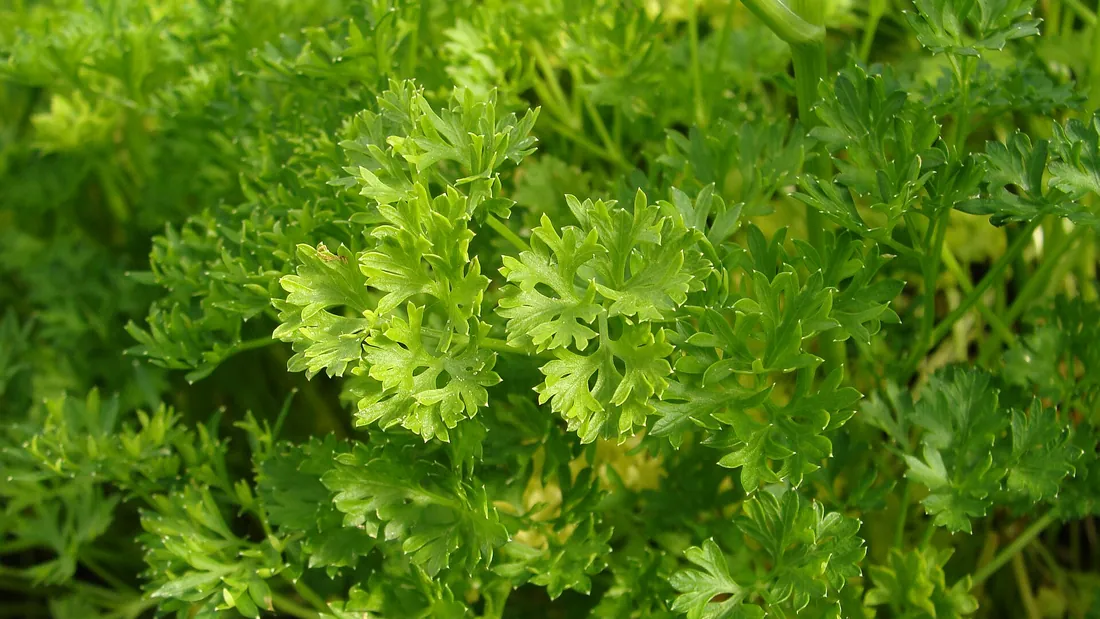

Parsley (Petroselinum crispum) is the most used herb in the kitchen, flat or curled depending on taste. It is a biennial plant: in the first year it makes foliage, in the second it runs to seed and then dies. It overwinters outdoors without trouble from USDA zone 5 upwards and starts up early in the season, but you have to resow it each year to have tender leaves continuously. Its slow germination, two to four weeks, is the only real pitfall for beginners.
Light and exposure
Parsley grows well in full sun as well as partial shade, which makes it an easy herb to fit into the garden. In the middle of summer, a slightly shaded position in the afternoon spares it from suffering the heat and running to seed too quickly.
In a pot on a windowsill or a balcony, give it light without scorching sun all day long. A parsley that receives a few hours of morning sun and brightness the rest of the time produces abundant, tender foliage.
Watering
Parsley likes soil that stays cool. Water regularly so the soil never dries out completely, especially in hot weather, because dry soil pushes the plant to run to seed and toughens its leaves.
In a pot, the substrate dries out quickly: check the soil with your finger and water as soon as the surface is dry. Avoid soaking it, however, as permanently waterlogged soil favours root rot.
Soil and repotting
A rich, loose and deep soil suits it best. Parsley develops a taproot, so it appreciates soil loosened deeply and enriched with mature compost before sowing.
In a pot, choose a fairly deep container, at least twenty centimetres, with good drainage. A quality vegetable potting mix with a little compost added supports a fine production of leaves over several months.
Temperature and humidity
Parsley is hardy. Its rootstock withstands frost down to about minus ten to minus twelve degrees Celsius, enough to get through a temperate-climate winter in open ground without special protection, from USDA zone 5 upwards; the rootstock starts up again as soon as the soil warms. It is a biennial: the plant established in spring gets through the winter, then runs to seed and dies during its second year.
In practice, a spring sowing gives leaves from summer until the frosts, holds on through winter at a slow pace, then still provides a few harvests at the start of the following season before flowering. For tender parsley continuously, it is better to resow each year rather than rely on the old plants.
Pruning and upkeep
Harvest by cutting the outer stems at the base, those that surround the heart of the clump. The plant then continues to produce new leaves from the centre. Cutting too high leaves useless stubs and tires the plant.
When a plant starts to bolt, a tough flower stem rises up at the centre. This bolting signals the end of tender leaves. Cut it off if you want to gain a few harvests, but be aware that a plant that bolts is nearing the end and that you need to prepare the succession with a new sowing.
Pests and diseases
Parsley is fairly robust, but a few troubles recur here. Powdery mildew can cover the foliage with white felting in mild, damp late-summer weather. Rust, with its little orange pustules under the leaves, sometimes appears in the same conditions. Air the plants and avoid wetting the foliage in the evening to keep them at bay.
As for pests, the carrot fly, Psila rosae, attacks the Apiaceae and parsley does not escape it: its larvae bore into the roots. An insect netting placed over the sowing is the best defence. Slugs, for their part, readily devour the young seedlings in spring.
Propagation
Parsley is propagated by sowing, either directly in place or in modules. Sow shallowly, at half a centimetre, in soil kept moist. Germination is slow and capricious, count on two to four weeks. An old trick is to soak the seeds overnight in lukewarm water before sowing to speed up emergence.
Sow several times over the season, from spring to midsummer, to always have young, productive plants. Parsley also self-seeds if you let a plant run to seed: you will find young spontaneous seedlings the following year.
Climate and hardiness
Where and in which climate it thrives
Parsley is a sure bet anywhere the winter is not extreme: the rootstock withstands frost down to about minus ten to minus twelve degrees Celsius, which lets it overwinter in open ground without special protection from USDA zone 5 upwards. Only the foliage suffers in the hardest cold snaps; the root starts up again as soon as the soil warms. It is one of the few herbs that stay available for a good part of the year: a plant sown in spring produces until the frosts, marks a winter pause, then still offers a few pickings early in the following season before running to seed.
It is at ease in a mild, damp oceanic climate as in a continental one, provided the soil is drained: in heavy ground left waterlogged all winter, the taproot rots more easily than it freezes, which is why digging deeply before sowing matters more than protecting the foliage from cold. In a hot, dry climate, or through a heatwave, it bolts far faster and needs afternoon part shade along with soil that never dries out completely.
The key gesture is to resow regularly. Make a first sowing as soon as the soil has warmed, parsley taking a late cold snap perfectly well, then a second two to three months later to take over. That way you always have tender leaves, without depending on the old plants that bolt. A late summer sowing, well established before the cold arrives, gets through the winter and starts up vigorously early in the season. Indoors, a pot on a bright windowsill provides a few sprigs through the cold season, but air that is too dry and light that is too weak will draw it up: choose the brightest window and a fairly cool room.
Growing parsley?
Green Hub keeps a dated history of your own plant: its photos, its progress, its repottings. An AI answers about yours specifically, not a generic sheet, for free.
Identify my plantMonth-by-month care calendar
| January | The established plants sleep under the cold. Harvest a few sprigs from the hardy clumps or from a pot brought into the light. |
|---|---|
| February | Still at rest outdoors. Prepare the soil and the seeds. A sowing under cover in the warmth can start to get ahead. |
| March | Old plants start up again in the garden. Sowing possible under a cold frame or indoors. Soak the seeds overnight to speed up emergence. |
| April | First sowing in open ground, the soil has warmed up. Keep the soil moist, germination is slow. |
| May | The sowings finally come up. Thin out the plants that are too crowded. Last year’s old plants start to run to seed. |
| June | Full harvest. Cut the outer stems. Make a second sowing to take over from the plants that are bolting. |
| July | Generous harvest. Water regularly to avoid early bolting in hot weather. Summer sowing still possible. |
| August | Continue the harvest. Watch for powdery mildew and rust in damp weather. A late sowing established now will get through the winter. |
| September | Fine autumn production, parsley likes the returning coolness. Thin out the last sowings. |
| October | Harvest slowing down with the cold. Bring a pot onto a windowsill for the winter. Mulch the plants in place. |
| November | Parsley enters its rest. The hardy plants hold on outdoors. Pick a few more sprigs in mild weather. |
| December | Winter rest. Harvest from the well-established clumps or from the pot brought indoors. Note the positions for next year. |
Green Hub tips
- Soak the seeds overnight in lukewarm water before sowing: parsley germination is slow, this bath wakes it up.
- Resow each year rather than keeping the old plants. In the second year, parsley runs to seed and the leaves toughen.
- Always harvest the outer stems at the base, never the heart. The clump then starts up again from the centre and produces for a long time.
- A summer sowing well established before autumn gets through the winter outdoors and starts up strongly as soon as the soil warms at the end of winter.
Related species
Carrot
Daucus carota
The carrot (Daucus carota) is a staple root vegetable in the vegetable garden, keeping all winter and sown directly in…
Celery
Apium graveolens
Celery (Apium graveolens) covers two vegetables from the same species: stalk celery, grown for its crisp ribs, and…
Chervil
Anthriscus cerefolium
Chervil (Anthriscus cerefolium) is a fine annual herb with finely cut foliage and a delicate, slightly aniseed flavour.…
Coriander
Coriandrum sativum
Coriander (Coriandrum sativum) is an annual herb grown for both its fresh leaves, with their pronounced flavour, and…
Dill
Anethum graveolens
Dill (Anethum graveolens) is an annual herb with a lacy outline, a cousin of the carrot and fennel. It is a warm-season…
Florence fennel
Foeniculum vulgare var. azoricum
Florence fennel (Foeniculum vulgare var. azoricum) is the fennel grown for its swollen base, crisp and…
The guides that mention it
Easy herbs to grow
Thyme, rosemary, basil, parsley, mint: which ones make it through the winter outdoors, which ones self-seed, and how to…
Sowing Seeds Successfully: Why It Fails, and What Fixes It
A seed that never comes up was not unlucky. Germination temperatures by species, correct depth, seeds that need light,…
Updated on
How this sheet is written
Written for Green Hub with the help of language models, then reviewed. It offers gardening guidance, not professional advice: if you are unsure whether a plant is toxic to a child or an animal, ask a vet, a doctor or your national poison centre.