Sweet potato
Ipomoea batatas
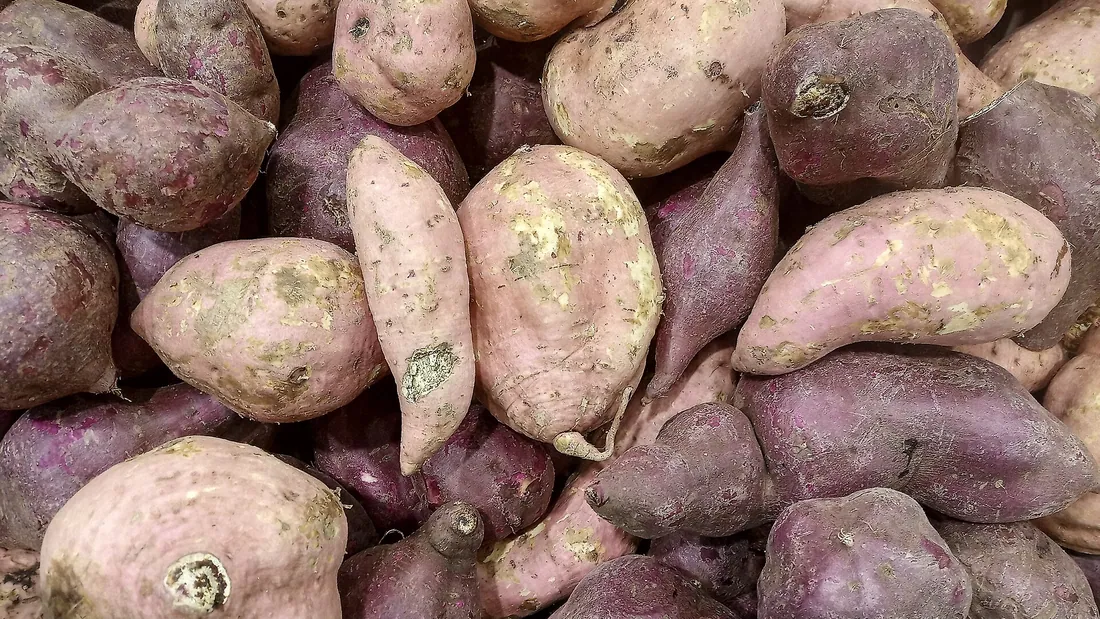

Sweet potato (Ipomoea batatas) is a tropical vegetable in the morning glory family, native to Central America and long considered a crop reserved for warm countries. In a temperate climate it is a gamble for the curious gardener: the plant demands heat from start to finish of its cycle and tolerates no frost at all. Summers warmer than they used to be make the adventure possible well beyond its native range, provided you work with your climate rather than against it. You plant the young rooted shoots, called slips, only once the soil has risen above fifteen degrees, several weeks after the last frosts.
Light and exposure
Sweet potato does not compromise on sun: it needs the warmest, sunniest spot in the garden, sheltered from the wind, ideally against a wall that catches the midday sun and gives back its warmth in the evening. Below six hours of full sun a day, the plant just ticks over without ever swelling its tubers properly.
Where the summer stays temperate, growing under a tunnel or in a small greenhouse really changes things: the heat stored during the day keeps working on the plant all night, which makes up for cool nights. In unprotected open ground, give it without hesitation the warmest, most sheltered corner you have, even if that means sacrificing a spot usually kept for another crop.
Watering
Sweet potato drinks a lot during full summer growth, especially in the dry, warm summers it likes best. Water regularly and generously right through the stem-growth phase, until about six weeks before the expected harvest, deeply rather than in frequent small doses, so the roots go looking for moisture deep down instead of staying near the surface.
Then cut back gradually on watering from that point on. Soil that is too wet while the tubers are swelling encourages disease and rot, and too much water just before harvest leaves them blander and less well suited to storage. Soil that stays moist without ever being waterlogged remains the rule, as with most root vegetables.
Soil and repotting
The ideal soil is light, sandy, deeply loosened and well drained. Heavy clay soil, which holds water and stays cold in spring, delays the start of growth and produces misshapen or forked tubers. Work the soil deeply before planting and form mounds or raised rows about twenty centimetres high: the soil warms up faster there in spring and drains better once the rain returns at the end of the season.
A sheet of black plastic mulch laid down before planting is the single most rewarding move wherever the summer lacks heat: it warms the soil by several degrees and keeps that warmth going all summer, a real boost for a tropical plant. Plant the slips through small slits cut in the plastic. On poor soil, working in some well-rotted compost at preparation time supports tuber formation without the excess fresh nitrogen that would make them split.
Temperature and humidity
This is the critical point in any temperate climate, like basil but worse: sweet potato tolerates absolutely no frost, neither in spring nor in autumn, and it stalls as soon as night temperatures drop below 15 degrees. A single cool night is enough to stop tuber growth dead for several days.
Never plant before the soil is genuinely warm, meaning above fifteen degrees ten centimetres down, which often takes three to four weeks after the last frosts, far later than the date that is enough for basil or tomatoes. At the other end of the season, watch the first frost forecasts as soon as the nights turn cool and harvest before they hit: a single frosty night on tubers still in the ground is enough to damage them and ruin their storage life.
Pruning and upkeep
Sweet potato is not pruned like a herb, but its long trailing stems do need regular attention: lift them every two or three weeks to stop them rooting at every node. A stem that roots along its length spreads the plant’s energy over a scatter of small secondary tubers instead of concentrating it on the main tubers closest to the crown.
You can also pinch out the tips of the most invasive stems to curb their spread and push the plant to branch rather than run indefinitely. The young shoots and leaves are actually very good to eat, sautéed like spinach: a bonus harvest that costs the plant nothing as long as you keep it modest.
Pests and diseases
Outside its tropical range, sweet potato still escapes most of the diseases and pests that trouble other vegetable garden crops, a crop too recent at these latitudes for its natural enemies to have really settled in. That is a clear advantage over the ordinary potato, which has to deal with blight from the first summer rains.
Slugs remain the main worry, especially on young plants freshly put in the ground, still tender and vulnerable before their leaves toughen up. Voles sometimes attack the tubers in the soil, particularly late in the season when they sense the harvest is near: fine mesh laid at the bottom of the mound at planting time limits the damage on soils prone to them.
Propagation
Propagation is done using slips, young rooted shoots taken from a tuber. The simplest method at home is to stand a tuber half in water and half in the air, somewhere warm and bright, eight to ten weeks before the intended planting date: shoots appear after a few weeks and then grow their own roots.
Once the slips are about ten centimetres long and carry real roots, gently detach them from the parent tuber and let them soak in water for a few days to strengthen their root system before planting. In a cool climate, it is often easier to simply buy ready-grown plants from a nursery or specialist garden centre in spring: growing your own slips needs a warmth and a length of time that a temperate early season rarely provides in enough quantity.
Climate and hardiness
Where and in which climate it thrives
The sweet potato is a tropical perennial grown as an annual: it only stays outside all year in USDA zones 9 to 11, and the slightest frost kills it, foliage and tubers still in the ground alike. Its growth already stops below fifteen degrees, its optimum sits around twenty-four degrees, and it needs four to five frost-free months to fill its tubers; early varieties such as 'Georgia Jet', which complete their cycle in ninety to a hundred days, are the only realistic ones where the summer is short.
Under a hot, long climate, subtropical or Mediterranean, the crop poses no problem at all and is grown in open ground without any tricks. Under a temperate climate, oceanic or continental with a cool summer, it stays a gamble: plant when the soil rises above fifteen degrees at ten centimetres down, that is three to four weeks after the last frosts, on a mound, under black plastic mulch which gains several degrees, and preferably against a wall that catches the midday sun or under a tunnel, to make up for cool nights. In the wet tropics, it is the rainy season that has to be avoided while the tubers are forming, or they rot in the ground.
After lifting, temperature switches roles and becomes a tool: curing for four to seven days between twenty-seven and twenty-nine degrees, at high humidity, heals the harvest wounds and converts part of the starch into sugars. Storage then takes place between thirteen and fifteen degrees, never in the fridge: below ten degrees the flesh suffers irreversible chilling damage and stays hard when cooked.
Growing sweet potato?
Green Hub keeps a dated history of your own plant: its photos, its progress, its repottings. An AI answers about yours specifically, not a generic sheet, for free.
Identify my plantMonth-by-month care calendar
| January | Nothing to do in the garden. A good time to order tubers for slips or find a nursery that will sell slips in spring. |
|---|---|
| February | To grow your own slips, start a tuber half in water, somewhere warm and bright on a windowsill. |
| March | Keep growing slips in the warmth. The shoots lengthen and put out their first roots. |
| April | Detach the rooted slips from the parent tuber and let them soak in water. Still too early to plant outside, the soil stays cold. |
| May | Prepare the mounds or raised rows, loosen the soil and lay down black plastic mulch to start warming it before planting. |
| June | Plant the slips in open ground at the start of June, once the soil is properly warm and all frost risk has passed. Water generously at planting. |
| July | Full growth. Lift the trailing stems regularly to stop them rooting at every node. Water generously in dry weather. |
| August | The plant covers the ground. Keep lifting the stems. Cut back watering gradually from mid-August. |
| September | Watch the first frost forecasts. Harvest before they hit, usually towards the end of the month. |
| October | Harvest without fail if not already done, before any frost risk. Cure the tubers for a few days somewhere warm and dry to improve storage and sweetness. |
| November | Store the cured tubers somewhere dry and frost-free, around 13 to 15 degrees. Keep a few back to start slips next winter. |
| December | Rest. Note the planting date, variety and what worked this year to fine-tune next season. |
Green Hub tips
- Never plant until the soil has risen above fifteen degrees: count on three to four weeks after the last frosts, far later than the date that is enough for basil or tomatoes.
- Black plastic mulch or growing under a tunnel changes everything wherever the summer lacks heat: it supplies the extra heat this tropical plant is missing.
- Lift the trailing stems regularly to stop them rooting along the way, otherwise the plant’s energy scatters over a mass of small tubers.
- Harvest without fail before the first autumn frosts, then let the tubers cure for a few days somewhere warm: they gain sweetness and store far better.
Related species
Artichoke
Cynara scolymus
The artichoke (Cynara scolymus) is a large perennial with silvery, deeply cut foliage, as striking in an ornamental…
Asparagus
Asparagus officinalis
Asparagus (Asparagus officinalis) is an unusual perennial for a vegetable patch: once established, an asparagus bed…
Bean
Phaseolus vulgaris
The green bean (Phaseolus vulgaris) is one of the easiest vegetables in the kitchen garden, provided you respect one…
Beetroot
Beta vulgaris
Beetroot (Beta vulgaris) is an easy root vegetable, one of the most forgiving in the kitchen garden. You sow it…
Bell pepper
Capsicum annuum
The bell pepper (Capsicum annuum) is an annual fruiting vegetable and a genuinely cold-shy one, the sweet cousin of the…
Broad bean
Vicia faba
The broad bean (Vicia faba) is one of the very first vegetables of the year, a rustic, sturdy legume that goes into the…
Updated on
How this sheet is written
Written for Green Hub with the help of language models, then reviewed. It offers gardening guidance, not professional advice: if you are unsure whether a plant is toxic to a child or an animal, ask a vet, a doctor or your national poison centre.