Asparagus
Asparagus officinalis
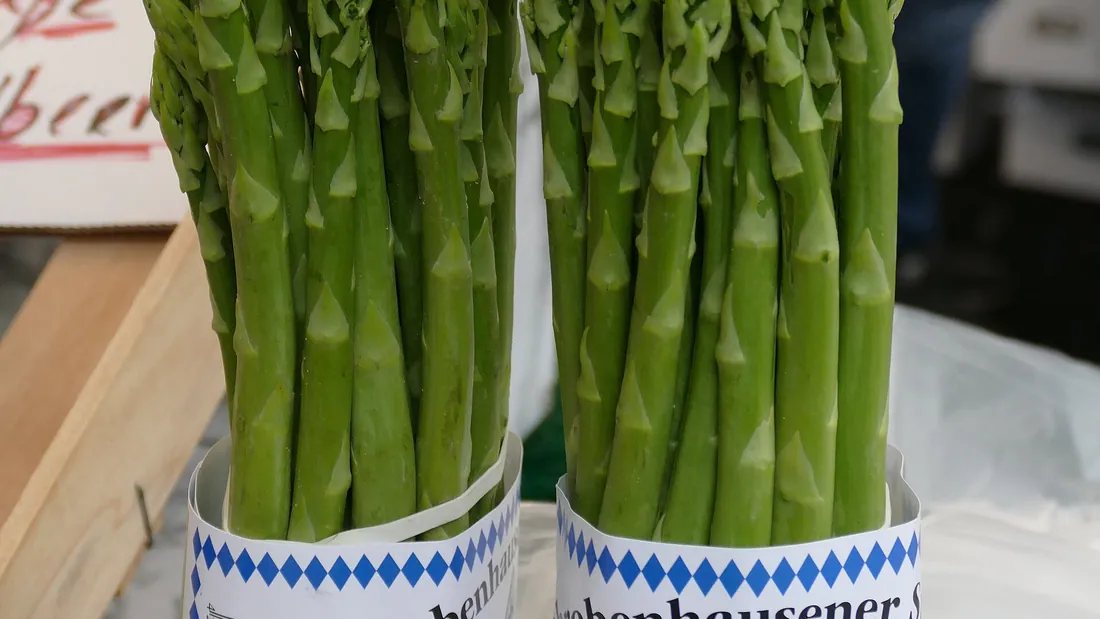

Asparagus (Asparagus officinalis) is an unusual perennial for a vegetable patch: once established, an asparagus bed stays in place and keeps producing for fifteen years, sometimes twenty. It is also the most patience-testing crop in the garden. You plant crowns in spring, then hold off harvesting anything for two full years while the plant builds up its reserves, and the first real harvest only comes in the third year. A slow start that pays for itself every spring after, without ever replanting.
Light and exposure
Asparagus wants full sun, with no shade cast by a nearby tree or hedge. Since the bed stays put for fifteen years or more, choose the spot carefully from the start: an open square, away from trees whose roots would compete with the crowns underground.
A slightly separate corner of the vegetable patch works well, since asparagus does not like being disturbed by the rotation of neighbouring crops. Give it plenty of room: a planting trench takes up more space than you expect, and the crowns spread out over the years.
Watering
Young crowns planted at the start of the growing season need regular watering right through that first season, while they build the deep roots that will make them self-sufficient later. On sandy or sandy-loam ground, which drains fast and holds little water, that first year calls for particular attention: a young row left to dry out is hard to bring back once the roots have shrivelled.
After that, asparagus becomes one of the most frugal plants in the kitchen garden: roots that plunge a metre or more from the third year onwards go looking for water long after the surface mulch has dried. During harvest, generous but well spaced watering, rather than small frequent doses, gives plump spears, above all in a dry spring, which is becoming more frequent in temperate climates.
Avoid any standing water around the crown, though, whether it comes from badly aimed watering or from soil that has compacted: it is the leading cause of crown rot, well ahead of a shortage of water. At the end of the season, let the foliage yellow without watering more: the plant goes naturally dormant and no longer needs moisture in the soil.
Soil and repotting
Asparagus wants deep, light and above all perfectly drained soil. A sandy or sandy-loam soil suits it beautifully; heavy clay that holds water over winter rots the crowns and can doom the bed before it even gets going.
Clear the plot of stones and perennial weed roots before digging the planting trench: the spears, which push their way up through the soil, get deformed by the smallest obstacle. A generous helping of well-rotted compost at the bottom of the trench, worked in at planting time, gives the crop a strong start for the fifteen years ahead.
Temperature and humidity
Asparagus is a fully hardy plant: crowns in the ground fear neither frost nor snow, and they come through the winters of USDA zones 3 to 8 with no protection to plan for. The foliage yellows and dries at the end of the growing season, the plant goes dormant and comes back on its own the following spring.
The real threshold to watch is in the soil, not the air: spears start to push as soon as the ground reaches 8 to 10 degrees at depth, but growth only turns genuinely fast above 18 to 20 degrees, where a spear can gain several centimetres in a single fine day. Market growers aim at that threshold by stretching black plastic film over the ridge a few weeks before growth restarts, which brings the harvest forward by two to three weeks, a trick within reach of any home gardener with a plain black tarpaulin.
The only remaining risk is late frost, which blackens young spears already up out of the ground after an early spring, without ever threatening the plant itself or the harvests that follow.
Pruning and upkeep
Asparagus is not pruned in the usual sense. The key task is to stop harvesting spears at midsummer, around the end of June, and let the stems grow on freely from then. These feathery stems, a metre and a half tall or more, use photosynthesis to build the reserves the crown will store for next year.
In autumn, once the foliage has properly yellowed and dried out after the first frosts, cut the stems back to a few centimetres above the ground. Never cut them while still green: it is precisely while they are yellowing that the plant is moving its sugars down into the roots.
Pests and diseases
The asparagus beetle is the most visible pest: this small red-and-black beetle with a metallic sheen lays its eggs on the stems, and its grey larvae can strip the foliage within days if left unchecked. Picking them off by hand as soon as you spot the first ones, early in the morning while they are still sluggish with cold, remains the most effective method in a home garden.
Asparagus rust forms orange, later brown, pustules on the stems in late summer, encouraged by stagnant humidity between rows planted too close together. The asparagus fly, for its part, lays eggs in the young spears, and its larvae tunnel through them, making them unfit for harvest. Spacing out the plants and cleaning up the foliage thoroughly in autumn keeps all three problems in check at once.
Propagation
Asparagus is almost always propagated from crowns, those fleshy, star-shaped roots you buy ready to plant in spring from a nursery or garden centre. This is by far the simplest and quickest route for a home gardener, since it skips the two to three years of growing from seed needed before you even get a plantable crown.
Growing from seed is possible for the curious, sown in pots at the end of winter, but takes even more patience: it needs about a year of nursery growing before you get a crown worth planting out for good. It is also worth knowing that asparagus is dioecious, with separate male and female plants: the modern varieties sold as crowns are almost all male hybrids, which are more productive, since female plants spend energy producing decorative but useless red berries instead of spears.
Climate and hardiness
Where and in which climate it thrives
Asparagus crowns are among the hardiest things in a kitchen garden: buried 20 to 25 centimetres deep, they come through the winters of USDA zones 3 to 8 with no protection at all, well past -20 degrees. The foliage yellows and dries at the first hard cold, the plant goes dormant and starts again on its own the following season.
That hardiness has a price: asparagus needs a real rest. In a climate with no marked winter, mild Mediterranean or subtropical, the plant exhausts itself trying to produce all year round; growers there force dormancy by cutting the foliage and withholding water for six to eight weeks of the dry season, then watering again to trigger the spears. In an oceanic or continental climate, winter does the job by itself.
The calendar is read on a soil thermometer, not an air one: spears start to push as soon as the ground reaches 8 to 10 degrees at depth, and only gain several centimetres a day above 18 to 20 degrees. A sheet of black plastic stretched over the ridge a few weeks before growth restarts brings the harvest forward by two to three weeks, at any latitude. Where spring is unsettled, a late frost blackens the spears already out of the ground without endangering the crown: you lose that flush, not the bed.
Patience depends on no climate at all: two years with nothing harvested, a deliberately short two to three week harvest in the third year, full production around the fifth. White, purple and green spears come from the same crowns: white is earthed up and cut underground with a small blade, purple is the same gesture pushed a few hours further once the tip has broken the surface, green grows in the open air with no earthing up, simpler for a home garden and stronger in flavour. Nothing stops you from growing all three in the same row in the same year. Names such as Mechelen or Argenteuil asparagus are not protected designations, only historic marketing centres whose name has stayed a byword for quality.
Growing asparagus?
Green Hub keeps a dated history of your own plant: its photos, its progress, its repottings. An AI answers about yours specifically, not a generic sheet, for free.
Identify my plantMonth-by-month care calendar
| January | Complete rest in the garden. This is the time to choose the final spot and order crowns from a nursery for planting in spring. |
|---|---|
| February | Prepare the plot as soon as the soil is no longer frozen: dig deeply, remove stones and roots, and work in some well-rotted compost. |
| March | Plant the crowns in a trench twenty-five to thirty centimetres deep, spreading the roots out in a star shape over a small ridge of soil at the bottom. |
| April | Crown planting finishes up. On a bed established for three years or more, the first spears push through, be patient if yours is still young. |
| May | Full harvest on productive beds. For white asparagus, build up the ridges and harvest underground with a small blade; for green, simply cut at ground level. |
| June | Harvest continues until midsummer at the end of June, then stops for good: after that, let all the stems grow on freely to rebuild the crown’s reserves. |
| July | The feathery stems grow tall, building next year’s reserves. Watch for the asparagus beetle and pick it off by hand as soon as it appears. |
| August | Water generously in dry spells to keep the foliage going. Keep hunting the asparagus beetle and watch for the first rust pustules on the stems. |
| September | The foliage stays green and keeps working through photosynthesis. Nothing to harvest, leave the plant be so it can finish recharging. |
| October | The foliage starts to yellow with the first cool spells. Do not cut it back yet while it still holds some green. |
| November | Once the foliage has fully yellowed and dried out after frost, cut the stems back to a few centimetres above the ground and tidy up the bed. |
| December | Winter rest for the asparagus bed. A good time to mulch the row lightly and plan a new trench if you want to expand the patch. |
Green Hub tips
- Be patient: do not harvest anything for the first two years after planting the crowns, let the plant build up its reserves before you touch a single spear.
- Always stop harvesting at midsummer, end of June, even if spears are still coming up: a harvest stretched too long exhausts the crown for the following years.
- Waterlogged winter soil kills crowns more reliably than frost does: if your soil is heavy, build the trench up as a well-drained ridge with coarse sand.
- Watch for the asparagus beetle from spring onward: pick it off by hand early in the morning, while it is still sluggish with cold and easy to catch.
Related species
Hosta
Hosta
The hosta (Hosta spp.) is a perennial native to the damp woodlands of East Asia, from Japan through China to Korea. It…
Hyacinth
Hyacinthus orientalis
The hyacinth (Hyacinthus orientalis) is a spring bulb whose heady scent announces the return of fine weather in gardens…
Lily of the valley
Convallaria majalis
Lily of the valley (Convallaria majalis) is the small perennial with white, fragrant bell flowers traditionally given…
Madagascar dragon tree
Dracaena marginata
The Madagascar dragon tree (Dracaena marginata) is a houseplant with a slender trunk and a tuft of strap-like leaves…
Snake plant
Dracaena trifasciata
The snake plant (Dracaena trifasciata), long classed under the name Sansevieria trifasciata and nicknamed…
Spider plant
Chlorophytum comosum
The spider plant (Chlorophytum comosum), also called ribbon plant, is a South African perennial that has become the…
The guides that mention it
Garden Mulching: Every Mulch Has an Effect and a Drawback
Mulching is presented everywhere as a benefit with no downside. There is one for every material: what nitrogen drawdown…
Sowing Seeds Successfully: Why It Fails, and What Fixes It
A seed that never comes up was not unlucky. Germination temperatures by species, correct depth, seeds that need light,…
Updated on
How this sheet is written
Written for Green Hub with the help of language models, then reviewed. It offers gardening guidance, not professional advice: if you are unsure whether a plant is toxic to a child or an animal, ask a vet, a doctor or your national poison centre.