Beetroot
Beta vulgaris
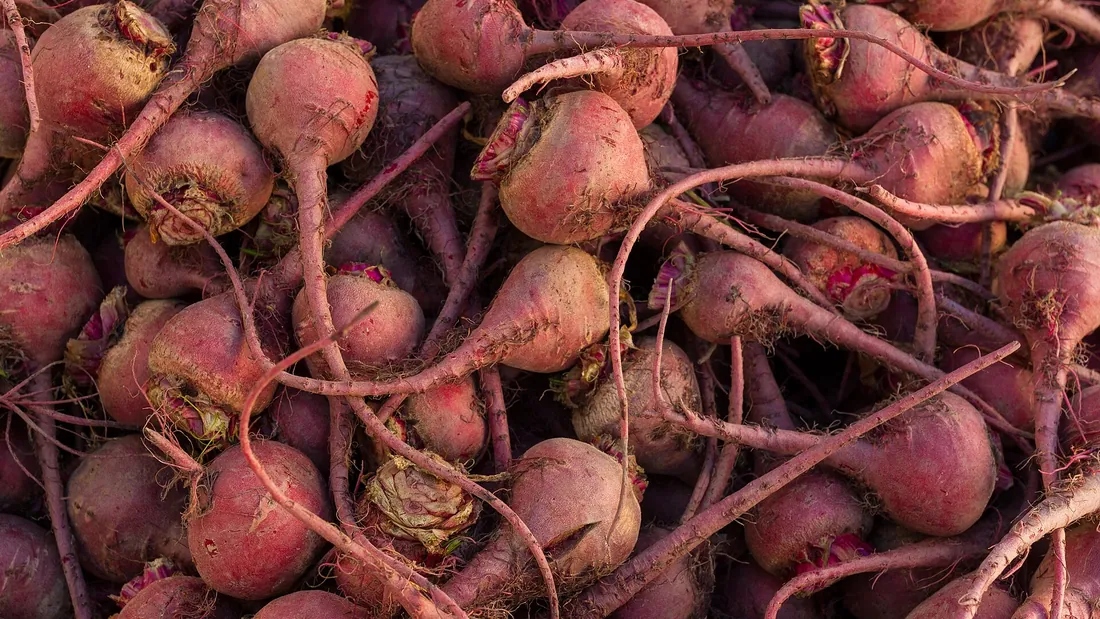

Beetroot (Beta vulgaris) is an easy root vegetable, one of the most forgiving in the kitchen garden. You sow it directly in place as soon as the soil has warmed to 8 or 10 degrees, staggering the sowings, and harvest it two to three months later. One quirk to know from the outset: each seed is in fact a cluster containing several, so several seedlings come up at the same spot. Thinning is therefore not optional, it is the step that decides the size of the roots.
Light and exposure
Beetroot wants full sun. Give it a well-open bed, without shade cast by a hedge or a row of taller vegetables. Six hours of sun a day at minimum give it round, well-coloured roots; in shade, the foliage develops but the root stays small.
It is an open-field vegetable, not a plant for cover. A hot, dry exposure poses no problem as long as watering keeps up, but a shaded, cool bed gives disappointing beetroot. So choose the brightest spot in the kitchen garden.
Watering
Regular watering is the key to a tender beetroot. The soil must stay fresh at all times, without swings. This is where it all plays out: a beetroot that goes thirsty then drinks all at once after rain turns hard, splits, develops pale fibrous rings, and often bolts to seed. Regularity matters more than quantity.
In a dry spell at the height of the growing season, count on a good watering every two or three days if rain is lacking, at the base and not on the foliage. A light mulch between the rows keeps the soil fresh and saves you half the watering cans in hot weather.
Soil and repotting
Beetroot likes a loose soil, worked deeply, fresh and free of stones. Dig or decompact before sowing so the root goes straight down without hitting anything. Avoid fresh manure in the sowing year: it makes the roots fork. A soil enriched the previous season, or a bed of well-matured compost, suits perfectly.
You sow directly in place, never in pots, because beetroot tolerates transplanting poorly. Trace furrows two centimetres deep, spaced thirty centimetres apart, drop a cluster every five centimetres and cover. Emergence takes one to three weeks depending on the warmth of the soil.
Temperature and humidity
The critical point is the soil temperature at sowing. Below 7 or 8 degrees the seed germinates poorly and, above all, the cold felt when young pushes the plant to bolt to seed instead of forming a root. So wait for a soil warmed to 8 or 10 degrees, whatever the calendar says. A sowing made too early, on ground that has not warmed, often ends in bolting.
Once established, beetroot is moderately hardy. It takes the cool of the late season and light white frosts in its stride. But a large, protruding root fears hard frost: a sharp cold at the end of autumn makes it rot in the ground. That is the signal to harvest and bring in.
Pruning and upkeep
No pruning in the strict sense, but one obligatory step: thinning. Since each cluster gives several crowded seedlings, you must step in as soon as the plants have two or three true leaves. Keep the most vigorous at each spot and remove the others, so as to leave one beetroot every ten centimetres along the row. Without this sorting, you harvest tiny, deformed roots that get in each other’s way.
Routine care comes down to little: hoe and weed between the rows to keep the soil clean and airy, and maintain the mulch. The young thinned leaves are not thrown away, they are eaten like spinach, raw as baby leaves or cooked.
Pests and diseases
Beetroot is little prone to disease. The most common in a humid climate is cercospora leaf spot, a fungus that pits the leaves with small round spots with a grey centre and reddish edge, in mild and damp late-season weather. It disfigures the foliage without destroying the root; remove the affected leaves and avoid watering the leaves in the evening.
As for pests, watch for the beet leaf miner fly, whose larva mines the inside of the leaves and digs translucent galleries in them that turn brown. Crush the affected areas between your fingers and remove the very affected leaves. Slugs attack the young seedlings in spring, the most at-risk period, before the plant gains strength.
Propagation
Beetroot is multiplied by direct sowing, and only that way in the kitchen garden. Sow the clusters in place every five centimetres in a furrow, then let them come up before thinning. Soak the seeds a few hours in lukewarm water before sowing: the hard coat of the cluster softens and germination gains several days.
Producing your own seed takes patience, because beetroot is biennial: it flowers only in its second year. You would have to keep a few fine roots in the cellar over winter, replant them the following spring and wait for the flower spike. In practice, you buy fresh seed each year, it is simpler and more reliable.
Toxicity
Beetroot is entirely edible, root and young leaves alike, with no known toxicity for humans. Like spinach, it contains oxalates, a moderate point of caution for people prone to kidney stones, reduced by boiling. Do not be surprised if urine or stools take on a pink tinge after a beetroot meal: this harmless phenomenon, caused by the vegetable’s betalain pigments, affects about one person in ten and signals nothing abnormal.
Climate and hardiness
Where and in which climate it thrives
Beetroot is a biennial grown as an annual, moderately hardy: the foliage takes white frosts without damage, but a large, protruding root rots in the ground within days once the frost turns hard. Where winters stay mild and the ground never freezes deep, you can leave it in the garden and lift it as needed; elsewhere, pull it before the hard cold and store it in the cellar in a box of barely damp sand.
Everything is in fact decided at sowing. Below 7 or 8 degrees in the soil the seed germinates poorly and, above all, prolonged cold felt by a young seedling vernalises it: fifteen to twenty days at 5 degrees or less, not necessarily consecutive, are enough to trigger bolting instead of root formation. Wait for a soil warmed to 8 or 10 degrees, whatever the calendar says, then stagger the sowings every two or three weeks. In a cool climate with a late spring this is the classic mistake: gaining three weeks on still-cold ground costs you a whole bed run to seed in midsummer.
At the other end of the scale, heat causes no comparable problem: above 32 to 35 degrees growth slows, without the blocked fruit set the tomato suffers, and regular watering is enough to get through it. Humid climates are the ones that call for vigilance: cercospora leaf spot starts as soon as the temperature passes 15 degrees with 60 per cent relative humidity, and completes a cycle in under ten days in stormy weather. In a dry climate it almost disappears, and only steady watering matters.
Growing beetroot?
Green Hub keeps a dated history of your own plant: its photos, its progress, its repottings. An AI answers about yours specifically, not a generic sheet, for free.
Identify my plantMonth-by-month care calendar
| January | Nothing in the garden. Check the beetroot in the cellar, in its sand, and remove any that are softening. Order seeds and choose varieties, from the classic round to the long crapaudine. |
|---|---|
| February | Too early to sow, the soil is cold. Prepare the bed: decompact deeply and let the frost break down the soil. No fresh manure. |
| March | Patience still. The soil does not reliably reach 8 degrees, a sowing now risks bolting. Finish loosening the bed. |
| April | From mid-April, first sowings in place on warmed soil. Soak the clusters a few hours beforehand, sow every five centimetres in furrows spaced thirty apart. |
| May | Carry on sowing to stagger. Thin the first rows as soon as they have two or three true leaves, one plant every ten centimetres. Watch for slugs on the young seedlings. |
| June | Last sowings of the season. Thin, hoe, mulch to keep the soil fresh. Water regularly, without swings, for tender roots. |
| July | First harvests from the April sowings, when the roots reach the size of a tennis ball. Pick as you go. Keep watering in dry weather. |
| August | Full harvest. Watch for cercospora leaf spot on the foliage in humid weather and the leaf miner fly. Remove affected leaves. |
| September | The harvest continues. The young thinned leaves are eaten like spinach. Pick before the roots harden. |
| October | Last harvests in the garden. Pull the rest of the bed before the hard frosts. Cut the leaves two centimetres from the crown without hurting the root. |
| November | Bring the beetroot into the cellar in barely damp sand, or build a clamp outdoors. Clean the bed and compost the healthy tops. |
| December | Rest. Draw on the cellar reserve meal by meal. Note the varieties that held well and keep the best for possible seed. |
Green Hub tips
- Never forget to thin. Each seed is a cluster hiding several: without sorting, you harvest roots the size of marbles.
- Do not sow on ground that is still cold, below 7 or 8 degrees. Cold soil pushes beetroot to bolt instead of forming a root, whatever the calendar says.
- Water regularly, without swings. A beetroot that goes thirsty then drinks all at once turns hard, splits and develops fibrous rings.
- For winter, store the roots in the cellar in a box of barely damp sand, leaves cut to two centimetres: they last until spring.
Related species
Spinach
Spinacia oleracea
Spinach (Spinacia oleracea) is a cool-season leaf vegetable, hardy and in a hurry to live. Coolness suits it very well:…
Swiss chard
Beta vulgaris subsp. cicla
Swiss chard (Beta vulgaris subsp. cicla), also called leaf beet, is a generous, easy leafy vegetable, a close relative…
Artichoke
Cynara scolymus
The artichoke (Cynara scolymus) is a large perennial with silvery, deeply cut foliage, as striking in an ornamental…
Asparagus
Asparagus officinalis
Asparagus (Asparagus officinalis) is an unusual perennial for a vegetable patch: once established, an asparagus bed…
Bean
Phaseolus vulgaris
The green bean (Phaseolus vulgaris) is one of the easiest vegetables in the kitchen garden, provided you respect one…
Bell pepper
Capsicum annuum
The bell pepper (Capsicum annuum) is an annual fruiting vegetable and a genuinely cold-shy one, the sweet cousin of the…
The guides that mention it
The vegetable garden calendar, from sowing to harvest
Two dates are enough to build an entire vegetable garden year: your last spring frost and your first autumn frost.…
Making Compost: Steering the Thermal Biology of the Heap
A compost heap is not a pile of waste you stir, it is a thermal process you steer. The real carbon/nitrogen ratio of…
Square Foot Gardening: Fitting More Crops Into Less Space
A twelve-inch grid and a well-placed trellis: how a square foot garden yields more vegetables than a traditional row on…
Sowing Seeds Successfully: Why It Fails, and What Fixes It
A seed that never comes up was not unlucky. Germination temperatures by species, correct depth, seeds that need light,…
Updated on
How this sheet is written
Written for Green Hub with the help of language models, then reviewed. It offers gardening guidance, not professional advice: if you are unsure whether a plant is toxic to a child or an animal, ask a vet, a doctor or your national poison centre.