Syngonium
Syngonium podophyllum
.jpg)
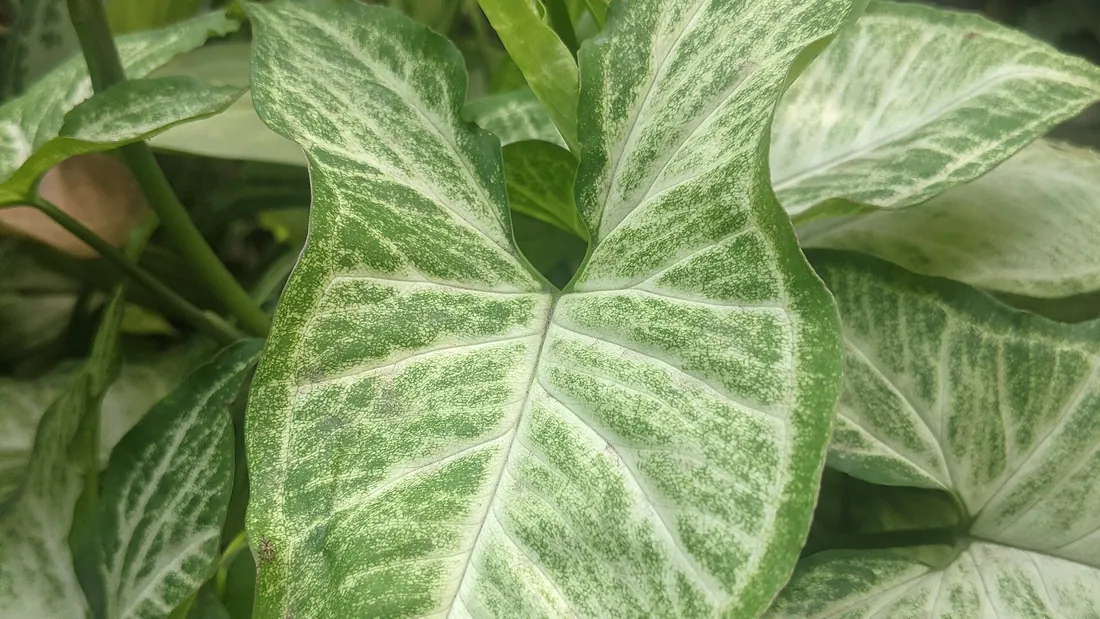
The syngonium (Syngonium podophyllum) is a climbing plant from the tropical forests of the Americas, grown strictly indoors in temperate climates. It is called arrowhead plant because of its arrow-shaped leaves, which split into several lobes as they age. It is an easy, forgiving and fast-growing plant, perfect for beginners. It spends the whole year at home, warm and sheltered from draughts, because it tolerates neither cold nor frost.
Light and exposure
The syngonium likes bright but filtered light, never direct sun, which scorches its foliage and washes out the colours. Place it near an east-facing window, or a little back from a south or west window behind a sheer curtain. Varieties variegated with pink or white need slightly more light to keep their tints, while the plain green ones make do with a more modest spot.
Under often grey skies, especially through the dark season, move the plant closer to the window to make up for the lack of brightness. A syngonium that stretches out with long bare stems and small leaves is simply asking for more light. Turn the pot a quarter turn each week so it grows straight and even.
Watering
Water when the top few centimetres of the substrate start to dry out. The syngonium likes a potting mix that stays slightly moist in spring and summer, without ever getting soggy. Always empty the saucer after watering, because roots left standing in water eventually rot. Water at room temperature, left to sit so the chlorine escapes, suits it better than cold tap water.
In winter the plant slows down and drinks far less: space the waterings out clearly and let the surface dry more between them. The heating dries out the air in our homes, so the plant enjoys a little ambient humidity. Mist the foliage, set the pot on a bed of damp clay pebbles, or place it near other plants to create a microclimate.
Soil and repotting
A light, free-draining potting mix for foliage plants does the job perfectly. Lighten it with a handful of perlite or a little fine bark so water passes through well and the roots can breathe. The syngonium dislikes a heavy, compact substrate that holds water against its roots.
Repot in spring, every one to two years, into a pot barely larger with a hole at the bottom. The plant grows fast and fills its pot with roots: when they poke out through the drainage holes, that is the sign it is time. A layer of clay pebbles at the bottom of the pot helps drain off excess water, valuable in winter when everything dries more slowly.
Temperature and humidity
The syngonium is a tropical plant that thrives between 18 and 27 degrees, exactly the temperatures of an ordinary home. It dislikes dropping below 15 degrees and clearly suffers under 12 degrees, with leaves that go limp and blacken. Frost kills it outright.
That means one simple rule: it stays indoors all year. Never leave it outside, not even in the warm season, because cool nights wear it out and one forgotten evening on the terrace at the end of summer can be fatal. Keep it away too from cold draughts near doors and poorly insulated windows in winter, and from direct contact with an icy pane at night.
Pruning and upkeep
The syngonium prunes very easily and takes it well. Pinch or cut the overly long stems just above a node to keep a compact, bushy plant. Without pruning it tends to lengthen and climb or trail in long vines, which can look pretty as a hanging plant but goes bare in the centre.
You choose its look: let it trail from a shelf, or give it a moss pole to climb, which pushes the leaves to grow larger and more deeply divided. Over time remove the yellowed or damaged leaves at the base. Every cut stem is a potential cutting, so throw nothing away.
Pests and diseases
The main trouble comes from too much water: rotting roots and crown, soft stems, leaves yellowing in numbers. It is almost always a matter of overly generous watering or a saucer never emptied. Put it right by letting it dry out, and repot into fresh substrate if the smell of waterlogged soil is already there.
As for pests, watch for spider mites, which appear when the air is too dry and warm, recognisable by their fine webs and speckled foliage. Mealybugs, small cottony clusters in the leaf axils, sometimes turn up too. Shower the plant, raise the ambient humidity, and dab the mealybugs with alcohol on a cotton bud. Brown, dry leaf tips almost always give away air that is too dry, typical of heated homes during the cold season.
Propagation
Water propagation is disarmingly simple and it is the greatest pleasure this plant offers. Cut a stem bearing one or two nodes, just below a node, and remove the bottom leaf. Look for the little aerial roots that often already poke out at the nodes, they are the ones that will get going.
Place the cutting in a glass of clean water, in filtered light, and change the water every few days. Roots appear in one to two weeks. When they reach four to five centimetres, pot up into a small pot of light mix and keep the substrate moist while the plant settles in. You can also take cuttings straight into soil, but water lets you follow the rooting by eye and reassures beginners.
Toxicity
Syngonium is toxic if eaten and irritating on contact. Like most aroids, it holds needle-shaped crystals of calcium oxalate (raphides) throughout its leaves and stems. Biting or chewing a piece triggers an immediate burning feeling in the mouth, heavy drooling, swollen lips and tongue, and sometimes trouble swallowing. The sap can also irritate the skin and cause redness in sensitive people.
Keep the plant out of reach of young children, cats and dogs, who like to nibble the tender foliage. It is not a deadly poison at the usual doses, but the discomfort is real and sometimes alarming. Wear gloves if your skin reacts easily, and wash your hands after pruning or taking cuttings.
Climate and hardiness
Where and in which climate it thrives
The syngonium is a pure houseplant in a temperate climate. In zone 8a, as anywhere it freezes, it never overwinters outdoors and has no place in the garden in the warm season either: it is a tropical house plant, all year round, and that is that.
The real challenge is not the cold, easy to avoid by keeping it indoors, but the light and the dry air from the heating. Through the darkest months the days are short and grey: move the plant closer to the best-lit window and accept that it will grow little during this period. At the same time, radiators and stoves dry out the air, which the syngonium hates, hence the frequent brown tips in winter. Mist it, group your plants, or set the pot on damp clay pebbles. When the light returns, the plant takes off vigorously: that is the right moment to repot, prune and take cuttings. In the warm season, enjoy the more generous light, but keep it out of direct sun behind glass, which heats up and scorches fast. Finally, watch the first cool nights if a window stays open near it.
Growing syngonium?
Green Hub keeps a dated history of your own plant: its photos, its progress, its repottings. An AI answers about yours specifically, not a generic sheet, for free.
Identify my plantMonth-by-month care calendar
| January | Winter rest. Water little, let the surface dry well between times. Set the plant as close as possible to the window to catch the meagre light. |
|---|---|
| February | Still ticking over slowly. Keep the waterings spaced out and mist the foliage to fight the dry air from the heating. Watch for spider mites. |
| March | The light returns and the plant starts up again. Resume slightly more regular waterings. A good time to prepare for repotting. |
| April | Full growth resumes. Repot if the roots poke out through the pot holes. Prune the overly long stems to bush it out. |
| May | Active growth. Take cuttings from the trimmed stems in a glass of water. Resume a light feed of diluted fertiliser every two to three weeks. |
| June | In full swing. Water as soon as the surface dries and keep the air nicely humid. Turn the pot for even growth. |
| July | Enjoy the fine light, but keep it out of direct sun behind the glass. Carry on with feeding and misting. |
| August | Still growing. Watch for mealybugs in the leaf axils. Mind the cool nights if a window stays open at night. |
| September | Growth slows gently. Last possible repotting in early month. Space the waterings out gradually. |
| October | Stop feeding. Cut back on watering as the days shorten. Move the plant closer to the window. |
| November | Going into rest. Keep the pot away from cold draughts and contact with icy panes at night. Water sparingly. |
| December | Full rest. Little water, no feed. Mist now and then and wipe the dust off the leaves so they catch the light better. |
Green Hub tips
- Keep the syngonium out of reach of children and pets: its irritating sap burns the mouth if chewed.
- A moss pole makes the plant climb and its leaves grow bigger, a hanging basket makes it trail in a cascade. The look is yours to choose.
- Brown leaf tips in winter? That is the dry air from the heating. Mist it or set the pot on damp clay pebbles.
- Throw away no trimmed stem: a cutting in a glass of water roots in two weeks and gives you a new plant for free.
Related species
Aglaonema
Aglaonema commutatum
The aglaonema (Aglaonema commutatum) is a robust, easy houseplant, prized for its foliage variegated with green,…
Alocasia
Alocasia
The alocasia, nicknamed elephant ear, charms with its large, dramatically veined leaves. It is a demanding tropical…
Anthurium
Anthurium andraeanum
The anthurium (Anthurium andraeanum) is a tropical houseplant known for its smooth, waxy red spathe, which people often…
Dieffenbachia
Dieffenbachia seguine
Dieffenbachia (Dieffenbachia seguine) is a houseplant with large foliage variegated in cream and green, native to the…
Heartleaf philodendron
Philodendron hederaceum
The heartleaf philodendron (Philodendron hederaceum), also known as the sweetheart plant, is a vine from the tropical…
Peace lily
Spathiphyllum
The peace lily (Spathiphyllum) is a tropical understorey plant from Central America, prized for its glossy green…
The guides that mention it
Updated on
How this sheet is written
Written for Green Hub with the help of language models, then reviewed. It offers gardening guidance, not professional advice: if you are unsure whether a plant is toxic to a child or an animal, ask a vet, a doctor or your national poison centre.