Areca palm
Dypsis lutescens
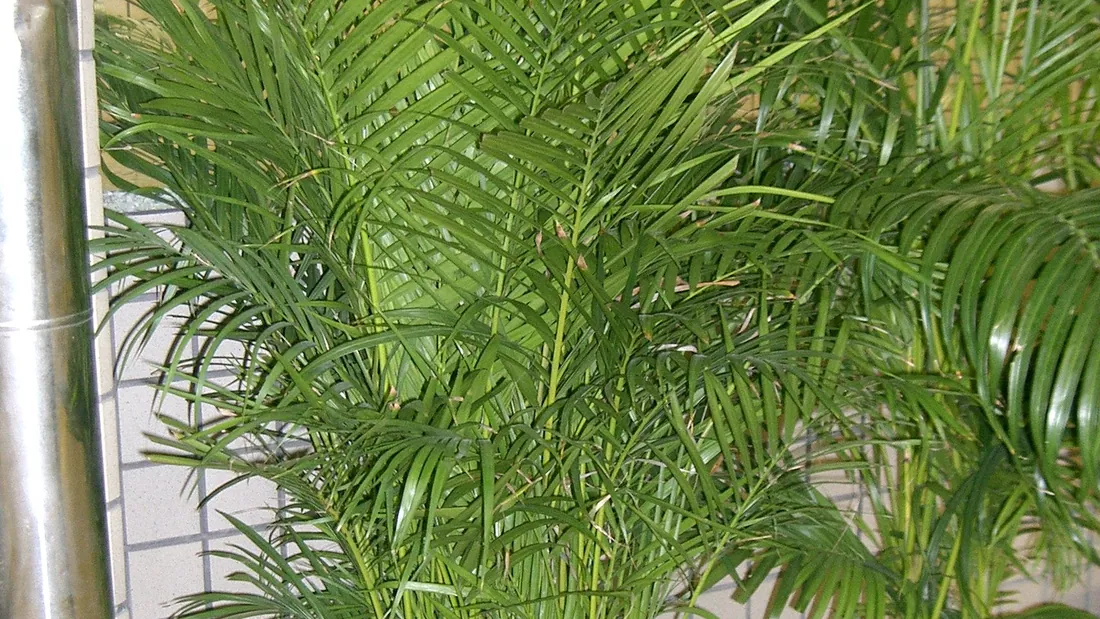

The areca (Dypsis lutescens) is a tropical palm from Madagascar, frost-tender, grown indoors wherever winter freezes. It forms a fine clump of thin, arching fronds, but it has one clear requirement: bright light without direct sun, and above all humidity in the air. In winter, the dry air from central heating is its number one enemy and browns the tips of the fronds.
Light and exposure
The areca wants bright but indirect light. Place it near a well-lit window, facing east or west, or a few metres from a bay window in full sun. Direct sun striking the fronds behind a pane scorches them and leaves dry yellowish patches, especially in summer.
A corner that is too dark, on the other hand, makes it leggy: the fronds spread apart, pale, and the clump thins out. Turn the pot a quarter turn every two or three weeks so it grows straight and does not lean towards the light.
Watering
Keep the substrate constantly fresh, without ever letting it become soggy. Water when the top centimetre of potting soil begins to dry out, then systematically empty the saucer: the areca hates sitting in water, and roots left soaking rot quickly. In summer, often count on two waterings a week, far fewer in winter.
Tap water, hard and chlorinated here, marks the fronds over time. Prefer rainwater or water left to stand overnight at room temperature. An excess of fertiliser also leaves salts in the pot that burn the tips: flush the substrate thoroughly with water once a month during the growing season.
Soil and repotting
A potting soil for green plants lightened with coarse sand or perlite works well. The water must pass through quickly: at the bottom of the pot, a layer of clay pebbles keeps the roots from stagnating in moisture.
Repot every two to three years, in spring, into a pot only slightly larger. The areca likes to be a little cramped and hates having its roots disturbed, so handle the root ball gently and never go down a pot size. A heavy container at the base is useful, as a large clump eventually becomes tall and unbalanced.
Temperature and humidity
The areca is happy between 18 and 24 degrees, the normal temperature of an interior. It slows below 15 degrees and clearly suffers below 12 degrees. It is completely frost-tender: never outdoors in winter, and it hates cold draughts near a door or a poorly insulated window.
Air humidity is the real critical point indoors. Through the heating season, the air in rooms dries out and the frond tips brown almost inevitably. Mist the foliage several times a week, set the pot on a bed of moist clay pebbles, or group your plants together to create a more humid bubble. Above all, keep it away from radiators.
Pruning and upkeep
The areca is not pruned. You only cut what is dry: a frond entirely yellowed or browned is removed at the base with clean secateurs. Never cut off a still-green frond, even a damaged one, because the plant is still drawing energy from it.
When only the tip browns, cut just the dry part following the shape of the frond, which stays discreet and stops the brown from spreading. Dust the foliage from time to time with a damp cloth: clean fronds breathe better and you spot the arrival of pests sooner.
Pests and diseases
The real problem rarely comes from a disease and more often from care. Root rot, caused by too much water and a saucer that is never emptied, is the most frequent cause of decline: fronds yellowing en masse, a soft base, a smell of stagnant soil. It is prevented by a draining substrate and measured watering.
As for pests, two enemies keep coming back in our heated interiors. Red spider mites proliferate in the dry air of winter: fine webs in the frond axils, foliage speckled with light spots. Air humidity discourages them, a lukewarm shower dislodges them. Mealybugs, floury or armoured, settle along the veins and on the stems: remove them with cotton soaked in diluted methylated spirit.
Propagation
Propagation is difficult for the amateur, let us be frank. The most accessible method is dividing the clump when repotting in spring: free the root ball, gently separate a group of stems with its own roots, and repot it separately. It is a brutal operation that the areca tolerates poorly, so expect the division to sulk for several weeks.
Sowing is possible but slow and demanding: fresh seeds germinate at 25 degrees minimum, with constant bottom heat, and come up irregularly over one to three months. For most people, buying a young plant remains simpler and more reliable than propagating yourself.
Climate and hardiness
Where and in which climate it thrives
In any climate with a freezing winter, the areca is a houseplant all year round. It never spends the cold season outside: the slightest frost kills it, and it already suffers when nights drop below 10 degrees. You can put it out in the warm season, once the last frosts have passed, but always in bright shade, never in direct sun which scorches the fronds. The delicate point is bringing it back in: return it indoors well before the cool nights, without waiting for the first 10-degree nights.
The real battle is in the heating season. Heating then runs for weeks on end and dries out the air in rooms, which is what browns the frond tips year after year. Two moves change everything: keep the pot away from radiators and hot air vents, and raise the humidity through misting or a bed of moist clay pebbles under the pot. Water with rainwater, easy to collect, to avoid lime marks.
One last advantage that matters in a home shared with cats and dogs: the areca is not toxic. You can place it in the living room without fear for the animals, which is not the case for many indoor green plants.
Growing areca palm?
Green Hub keeps a dated history of your own plant: its photos, its progress, its repottings. An AI answers about yours specifically, not a generic sheet, for free.
Identify my plantMonth-by-month care calendar
| January | Peak heating season. Keep the pot away from radiators and mist the foliage two to three times a week. Water little, the substrate dries slowly. |
|---|---|
| February | Watch for red spider mites, favoured by dry air. A lukewarm shower at the slightest doubt. Still no fertiliser, the plant is idling. |
| March | Growth resumes with the return of the light. Repot if the roots are coming out of the pot, into a container only slightly larger. Resume more regular watering. |
| April | First light feed of the year, diluted green plant fertiliser. Flush the substrate thoroughly to clear out the winter salts. |
| May | Once the last frosts are past, it can go out into bright shade. Acclimatise it gradually, never in full sun. |
| June | Full growth. Water twice a week, empty the saucer. Feed every fortnight. Turn the pot for straight growth. |
| July | Strong heat: the substrate dries fast, check it often. Mist in dry weather. Keep the plant in the shade, direct sun scorches the fronds. |
| August | Continue watering and fertilising. Dust the fronds and inspect the underside to spot mealybugs and mites before bringing it back in. |
| September | Bring the plant in before the cool nights, without waiting for the 10-degree nights. Last feed of the season. Set it near a bright window. |
| October | Growth slowing down. Space out the watering. Stop the fertiliser. Place the pot away from future heat sources before the heating comes on. |
| November | The heating starts: resume misting and the bed of moist clay pebbles. Remove the entirely dry fronds at the base. |
| December | Rest. Water sparingly, with settled rainwater. Check the air humidity, the enemy of winter, and watch for browning tips. |
Green Hub tips
- Brown tips in winter? It is the dry air from the heating nine times out of ten. Keep the plant away from radiators and mist, before thinking of disease.
- Water with rainwater or water left to stand overnight. The lime and chlorine of tap water mark the fronds over time.
- Always empty the saucer after watering. The areca dies far more often drowned than dried out.
- Non-toxic to cats and dogs: one of the few palms you can place without worry in a living room shared with animals.
Related species
Aglaonema
Aglaonema commutatum
The aglaonema (Aglaonema commutatum) is a robust, easy houseplant, prized for its foliage variegated with green,…
Alocasia
Alocasia
The alocasia, nicknamed elephant ear, charms with its large, dramatically veined leaves. It is a demanding tropical…
Aloe vera
Aloe vera
Aloe vera (Aloe vera) is a succulent from the Arabian Peninsula, grown since antiquity for the soothing gel of its…
Anthurium
Anthurium andraeanum
The anthurium (Anthurium andraeanum) is a tropical houseplant known for its smooth, waxy red spathe, which people often…
Boston fern
Nephrolepis exaltata
The Boston fern (Nephrolepis exaltata) is a hanging indoor fern, born in the humid undergrowth of the tropics. Here,…
Calathea (peacock plant)
Goeppertia (anciennement Calathea)
The calathea (genus Goeppertia, long classified under Calathea), or peacock plant, brings together tropical understorey…
The guides that mention it
Updated on
How this sheet is written
Written for Green Hub with the help of language models, then reviewed. It offers gardening guidance, not professional advice: if you are unsure whether a plant is toxic to a child or an animal, ask a vet, a doctor or your national poison centre.