Aloe vera
Aloe vera
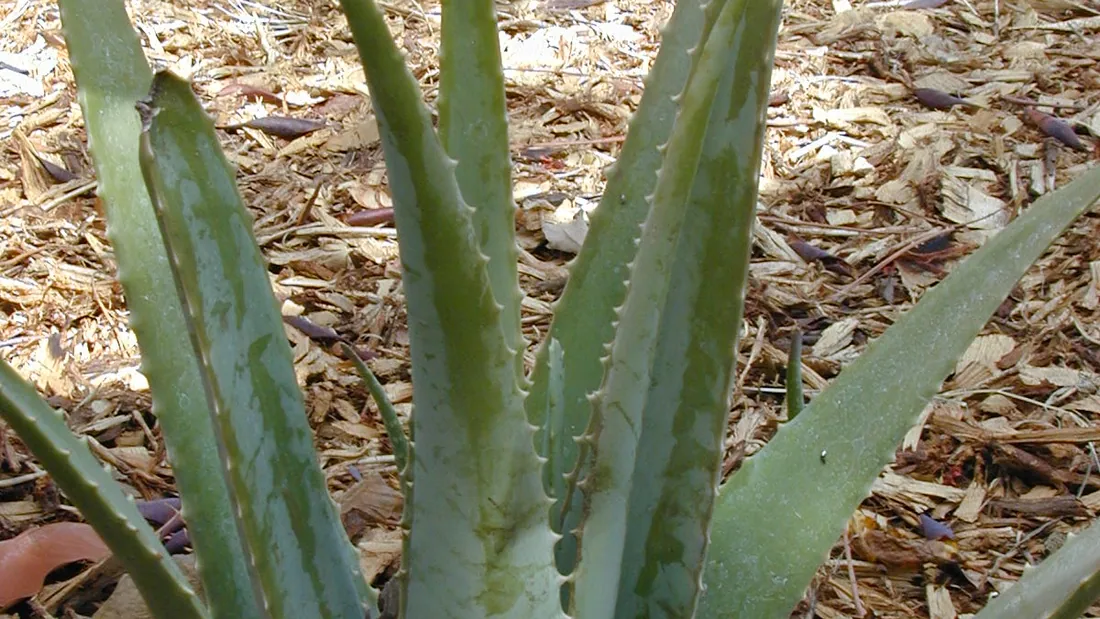

Aloe vera (Aloe vera) is a succulent from the Arabian Peninsula, grown since antiquity for the soothing gel of its thick leaves. Adapted to dry, hot climates, it stores water in its fleshy leaves and dreads excess moisture above all. In a temperate climate, it lives in a pot indoors, where the dry air of central heating doesn’t bother it at all: its real risk, wherever the air turns damp and cool, is overwatering in the cold season, which rots the crown. It is a robust plant, ideal for anyone who often forgets to water.
Light and exposure
Aloe wants the maximum of light. The best spot is the ledge of the window that catches the most sun, ideally into the late afternoon. The more light it gets, the more it stays compact, stocky and coloured, sometimes tinged with pink or brown at the tips, a sign of good exposure. In the light, the sap flows and the plant stays firm.
In a dark corner, aloe grows leggy: the leaves lengthen, soften and spread apart, and the rosette loses its shape. In weak winter light, when the days are at their shortest, give it the brightest spot in the home. Be careful, though, of putting it back into full sun too abruptly in spring, which can scorch the foliage: reacclimatise it gradually.
Watering
This is the decisive point. Water thoroughly, then let the substrate dry out completely before starting again. In practice, this comes down to watering every ten to fifteen days in spring and summer, and barely once a month, or even less, in winter. Push a finger into the soil: if it is still cool, wait.
Always empty the saucer and never water into the heart of the rosette, where standing water rots the crown. In a damp climate, the classic mistake is to water in winter as in summer. Soft, yellowed and translucent leaves at the base signal excess water and the beginning of rot: this is far more serious and frequent than a lack of water, which aloe takes without flinching.
Soil and repotting
Aloe demands a very free-draining substrate. Use a special potting mix for cacti and succulents, or mix ordinary compost with a third of coarse sand or perlite. A terracotta pot, which lets the root ball breathe and dries faster than a plastic pot, is ideal here.
The pot must have drainage holes without fail. Repot in spring every two or three years, or when the offsets fill the pot. Choose a container barely larger: a large volume of soil stays damp too long and puts the roots in danger.
Temperature and humidity
Aloe likes 18 to 25 degrees in full growth and tolerates heat without a problem. It withstands coolness down to 10 degrees, but survives no frost: below 5 degrees, the water-filled leaves freeze and turn to mush.
Unlike most green plants, aloe loves the dry air of central heating, which reproduces its native climate. The real trap of the cold season is therefore not the dry air but the damp cold: never leave it in an unheated conservatory or near an icy single-glazed window, especially if the soil is damp.
Pruning and upkeep
Aloe is not pruned as such. You simply remove the dried or damaged outer leaves by cutting them at the base, flush with the stem, with a clean knife. It is always the lower leaves that age first, that is normal.
To harvest gel, cut a mature leaf from the outside of the rosette and first let the yellow latex, irritant, drain away before opening the leaf. The plant heals over on its own at the cut. Never remove too many leaves at once, the plant needs them to feed itself.
Pests and diseases
Aloe is little prone to disease when you don’t overwater it. The real danger is rot of the roots and crown, caused by excess water and a substrate that doesn’t drain: soft leaves, a brown and soft base, a musty smell. In that case, take out the root ball, cut away all the rotten tissue, let the wound dry for a day or two and repot in dry conditions.
As for pests, watch for mealybugs, small white cottony clusters in the axils of the leaves, more frequent in winter. Remove them with cotton wool soaked in diluted methylated spirits. Red spider mites remain rare on this succulent.
Propagation
Aloe is very easily propagated by its offsets, those small rosettes that grow at the foot of the mother plant. At the spring repotting, gently detach an offset with a few roots, let the cut dry for a day or two so it heals over, then plant it in a barely damp free-draining substrate.
Wait a week before the first watering, the time for the roots to mend: an offset planted and watered straight away often rots. Sowing exists but remains slow and reserved for enthusiasts; dividing the offsets is far simpler and quicker.
Toxicity
The translucent gel from the inside of the leaves is used on the skin, but the yellow latex just under the rind is a powerful laxative and causes digestive upset if swallowed. The plant is toxic to cats and dogs. Do not eat a leaf without knowing how to separate the gel from the latex.
Climate and hardiness
Where and in which climate it thrives
Wherever the cold season dips below freezing, aloe vera spends the year indoors. It survives no frost, so there is no question of leaving it out, and a damp cold would make it rot well before the hard frosts: under an oceanic climate it is the wet, not the thermometer, that kills it.
Through the whole warm season, it benefits enormously from a stay outdoors in full sun, on a terrace or window ledge, where it colours up and firms up. Put it out gradually to avoid scorching and protect it from rain, as it doesn’t like water sitting in its rosette. Bring it back in as soon as the nights drop below 10 degrees. This plant’s asset indoors is that it couldn’t care less about the dry air of central heating, which tortures other green plants. The one gesture that matters in winter: water very little, almost nothing, to avoid rot.
Growing aloe vera?
Green Hub keeps a dated history of your own plant: its photos, its progress, its repottings. An AI answers about yours specifically, not a generic sheet, for free.
Identify my plantMonth-by-month care calendar
| January | Complete rest. Water barely at all, once during the month at most, only if the soil has been dry for a long time. Full light at the sunniest window. |
|---|---|
| February | Still resting, minimal watering. Watch for mealybugs. The plant tolerates the dry air of the heating very well. |
| March | The light returns, growth restarts. Gently resume watering, always letting it dry out between two. Repotting is possible. |
| April | Resumption. Repot if needed and detach the offsets. Gradually reacclimatise the plant to stronger light. |
| May | Active growth. Water every 10 to 15 days after complete drying. A very diluted cactus fertiliser once is enough. |
| June | Put the plant outdoors in the sun, gently to avoid scorching. Protect it from rain. |
| July | Full summer outdoors. Water when the soil is thoroughly dry, avoiding the heart of the rosette. The plant colours up in the sun. |
| August | Still outdoors in the sun. Detach and pot up the offsets if you didn’t do it in spring. |
| September | Bring the plant in as soon as the nights drop below 10 degrees. Start spacing out the watering. |
| October | Back to quiet. Reduce water sharply. Place the plant in the brightest light of the house. |
| November | Going into rest. Water very little. Move the plant away from cold single-glazed windows. |
| December | Winter rest. Almost no water. The damp cold is the only real danger: keep the plant warm and dry. |
Green Hub tips
- Aloe’s worst enemy here is not drought but excess water in winter: when in doubt, don’t water.
- A terracotta pot and a special cactus substrate dry fast and protect the roots from rot.
- Never water into the heart of the rosette: water sitting there rots the crown and kills the plant.
- Before using the gel on skin, let the yellow latex under the skin drain away, it is irritant and laxative.
Related species
Haworthia
Haworthia
The haworthia is a small rosette succulent from South Africa, most often the species fasciata or attenuata,…
Aglaonema
Aglaonema commutatum
The aglaonema (Aglaonema commutatum) is a robust, easy houseplant, prized for its foliage variegated with green,…
Alocasia
Alocasia
The alocasia, nicknamed elephant ear, charms with its large, dramatically veined leaves. It is a demanding tropical…
Anthurium
Anthurium andraeanum
The anthurium (Anthurium andraeanum) is a tropical houseplant known for its smooth, waxy red spathe, which people often…
Areca palm
Dypsis lutescens
The areca (Dypsis lutescens) is a tropical palm from Madagascar, frost-tender, grown indoors wherever winter freezes.…
Boston fern
Nephrolepis exaltata
The Boston fern (Nephrolepis exaltata) is a hanging indoor fern, born in the humid undergrowth of the tropics. Here,…
The guides that mention it
Indestructible Houseplants: Tolerating Drought Is Not Tolerating Shade
Tolerating drought and tolerating shade are two different adaptations, and almost every list mixes them up. What these…
Watering Plants Properly: Deciding Rather Than Following a Schedule
Beginners water too often and too little at the same time. How to read the soil instead of the calendar, tell thirst…
Overwintering your plants without losing them
Clivia, lavender, verbena, geranium, olive: which to bring indoors, which to protect outside, which to leave to face…
Repotting your plants and choosing the right potting mix
The right moment, the right technique and the right substrate for each plant, so you can repot without rotting the…
Toxic Plants for Cats and Dogs: Recognising the Danger Rather Than Memorising a List
A list of toxic plants is easily forgotten and always incomplete. What actually protects a cat or dog is recognising…
Updated on
How this sheet is written
Written for Green Hub with the help of language models, then reviewed. It offers gardening guidance, not professional advice: if you are unsure whether a plant is toxic to a child or an animal, ask a vet, a doctor or your national poison centre.