Beech
Fagus sylvatica
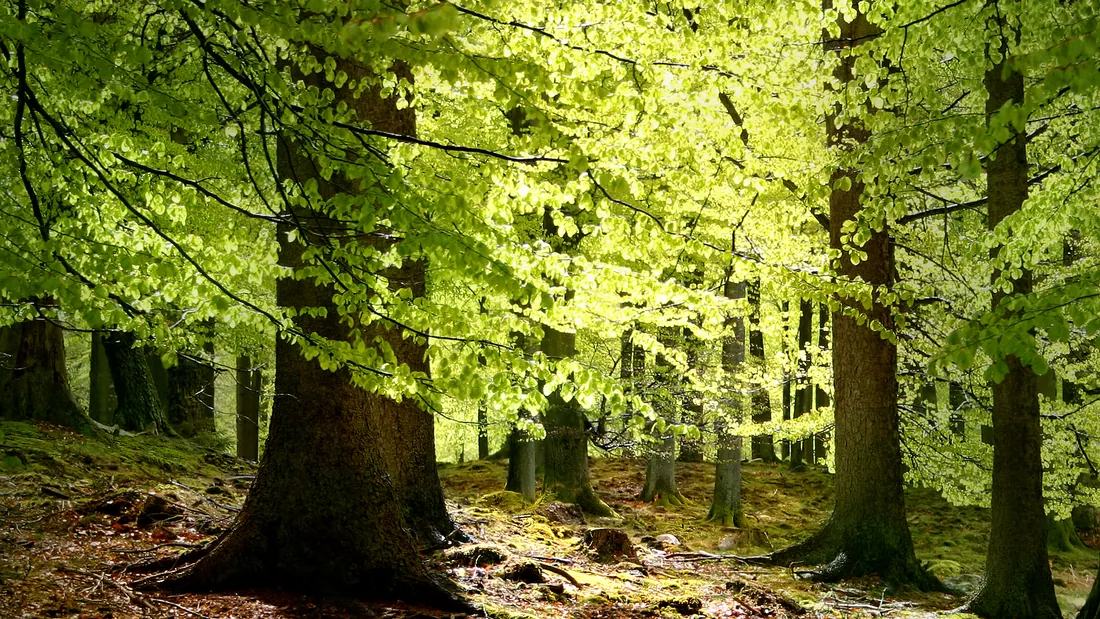

Beech (Fagus sylvatica) is the most common broadleaf tree in the temperate forests of Europe, just as happy standing alone as a stately specimen as it is clipped square into a hedge. It grows without fuss on deep loamy soils and shrugs off frosts well below minus 15 degrees: it is one of the few trees that takes full sun and partial shade equally well, and forgives heavy soil as long as it never sits waterlogged.
Light and exposure
Beech grows equally well in full sun and partial shade, which makes it an unusually easy-going tree among the giants of the forest. When young it even appreciates a little shade, as it would find at a woodland edge or under a thin canopy, a shelter that limits drying out and softens late spring frosts while it gets its roots down properly.
As a clipped hedge, beech tolerates any orientation, including an aspect that never sees direct sun, which is why it is the most reliable boundary hedge in temperate gardens. Once mature and grown as a standalone specimen, it spreads a wide crown and needs room, allow several metres of clearance on each side for it to develop fully.
Watering
Once well established, beech makes do with ordinary temperate rainfall and needs no particular watering after the first two or three years following planting. Young trees, though, need generous watering in dry summers, especially in their first season, while the roots are still reaching down to find moisture below.
In a freshly planted hedge, mulching at the base cuts down evaporation and spaces out watering. The real danger, in fact, is not too little water but too much: soil that stays waterlogged all winter suffocates the roots and can weaken even a mature beech.
Soil and repotting
Beech likes soil that is cool, deep and well drained, ideally slightly acidic to neutral. Deep loamy soils suit it perfectly, they are the ones that carry the great natural beech woods.
What it cannot stand is standing water: heavy, poorly drained soil rots the roots within a few seasons. It also copes badly with pure chalk and soil that is too compacted lower down, which blocks root growth. An ordinary garden soil, neither too dry nor waterlogged, suits it just fine.
Temperature and humidity
Beech is properly hardy and unbothered by cold winters: once well established, it takes frosts well below minus 15 degrees without any damage, and a mature tree goes down to around minus 30 (USDA zones 4 to 7).
Its real weak point lies elsewhere: young trunks, still thin and without thick bark, suffer sunscald when they are suddenly exposed to the full midday sun, for example after a nearby tree is felled or thinned and leaves them exposed overnight. Mulching at the base and, for young standalone specimens, a trunk guard for the first few years prevent this problem.
Pruning and upkeep
For a beech hedge, a single yearly trim is plenty, done at the end of summer once the growth of the season has stopped. That timing is the key: pruning then prompts the beech to put out fresh leaves that stay dry and clinging to the twigs all winter, a phenomenon called marcescence, which is exactly what makes a beech hedge such a good windbreak in the depths of winter.
An earlier trim, in spring or early summer, gives a hedge that drops its leaves normally in autumn, without that effect. For a standalone tree, pruning is limited to removing dead wood or badly placed branches, done outside the sap-rising period, ideally at the end of winter.
Pests and diseases
Beech scale is the most common problem on this tree, recognisable by a white, cottony fuzz that covers the bark of branches and trunk. It weakens the tree and opens the door to secondary problems if it takes hold heavily. Woolly aphid causes similar damage on young shoots.
Mildew mostly affects young plants and freshly planted hedges, showing as a white felting on the leaves in warm, humid weather, with no real harm to an otherwise healthy tree. The real silent enemy remains sunscald on the bark of young trunks, which opens wounds that fungi then settle into for good.
Propagation
Sowing beechnuts is the natural method, but it takes patience: collect the beechnuts in autumn, as soon as they drop, they need a spell of cold, either outdoors or in the fridge, all winter before they will germinate the following spring.
For a hedge, the cheapest and most widely used option remains buying bare-root plants, put in during the dormant season, from leaf fall to the start of growth. It costs noticeably less than container-grown stock, and take-up is excellent as long as planting happens before any hard frost.
Climate and hardiness
Where and in which climate it thrives
Beech is a properly hardy tree of the temperate zone: an established specimen takes frosts well below minus 15 degrees without damage, and a mature one goes down to around minus 30. That puts it in USDA zones 4 to 7, and it stays perfectly comfortable in the milder parts of zone 8. Cold is almost never what stops it.
It is at home in a mild, damp oceanic climate, where it forms whole high forests on deep loamy soils, and it copes just as well with a cold continental winter as long as the summer stays wet. What limits it is dry heat: in a Mediterranean climate, and anywhere summer combines high temperatures with prolonged drought, it yellows, drops its leaves in mid-season and eventually declines. Nor does it hold on in a subtropical climate, where winter never gives it the cold rest it needs.
Two settings change with the climate. Where summers are hot and dry, plant it somewhere cool, in partial shade rather than full sun, and mulch generously: beech roots shallowly, which makes it very sensitive to a lack of water in its first years. Where winters are mild and wet, the opposite excess is the threat: soil that stays soaked for months suffocates the roots and kills even a mature tree. And where the growing season is short, the hedge trim that triggers marcescence comes earlier, as soon as summer growth stops, so the regrowth has time to harden before the first frosts.
Growing beech?
Green Hub keeps a dated history of your own plant: its photos, its progress, its repottings. An AI answers about yours specifically, not a generic sheet, for free.
Identify my plantMonth-by-month care calendar
| January | Complete rest for the tree. A good time to look at the shape of a standalone specimen and plan any tidying cuts, as long as frost is not too severe. |
|---|---|
| February | The last comfortable month to plant bare-root before the sap wakes up, as long as the ground is not frozen. |
| March | The soil warms up and the sap starts moving again. Last chance for planting, water generously any trees put in over winter. |
| April | Buds break and the tender young leaves appear. Watch for late frosts on young, still fragile plants. |
| May | Active leaf growth. Watch for mildew on recently planted hedges in warm, humid weather. |
| June | Foliage is in full expansion. Water generously any trees planted this year if summer starts out dry. |
| July | Check the bark on young trunks that catch the full midday sun, mulching eases water stress in hot weather. |
| August | The key month for trimming a beech hedge. Prune at the end of August to trigger marcescence and keep the dried leaves all winter. |
| September | Beechnuts start to ripen and fall. Collect them if you want to sow, they need cold before they will germinate. |
| October | Beechnuts fall in earnest. Foliage yellows then browns on standalone trees, while the clipped hedge keeps its russet leaves. |
| November | The start of the ideal window for planting bare-root, as long as the ground stays workable and frost-free. |
| December | Bare-root planting continues in mild weather. The tree goes into complete rest, nothing else to do in the garden. |
Green Hub tips
- Always plant bare-root during the dormant season, from leaf fall to the start of growth, it costs far less than container stock and take-up is just as good.
- To keep the dried leaves all winter on a beech hedge, trim it just once, at the end of summer, never in spring.
- Allow roughly 20 centimetres between each plant for a dense hedge, that is 5 to 7 plants per metre of run.
- Shield the bark of young standalone trunks from direct full sun in the first few years, sunscald leaves wounds that last.
Related species
Althea
Hibiscus syriacus
Althea (Hibiscus syriacus) is a hardy deciduous garden shrub that flowers when every other one has finished, from…
Begonia
Begonia
Begonia is the star summer flower of window boxes, hanging baskets and shady borders. Hundreds of hybrids exist, but…
Box
Buxus sempervirens
Box (Buxus sempervirens) is an evergreen shrub that has been clipped into balls, cones and low borders in formal…
Butterfly bush
Buddleja davidii
Buddleia (Buddleja davidii), better known as the butterfly bush, is a nearly indestructible shrub that has taken over…
Cherry laurel
Prunus laurocerasus
Cherry laurel (Prunus laurocerasus) is the most widely planted evergreen hedging shrub in temperate gardens, and it is…
Clematis
Clematis
Clematis is the queen of flowering climbers, able to cover a wall, a trellis or an old apple tree with hundreds of…
The guides that mention it
Which Hedge to Plant, and How to Get It Right
Evergreen, deciduous or marcescent, annual growth, hardiness, soil, shade and sea spray: the real criteria for…
Pruning Flowering Shrubs and Roses: Deducing Instead of Memorising
New wood or old wood: this single question gives you the pruning time for any shrub at all, including ones whose name…
How to Attract Birds to Your Garden, Season After Season
Winter feeding, well-positioned nest boxes, clean water and berry hedges: the complete method, season by season, for…
Updated on
How this sheet is written
Written for Green Hub with the help of language models, then reviewed. It offers gardening guidance, not professional advice: if you are unsure whether a plant is toxic to a child or an animal, ask a vet, a doctor or your national poison centre.