Butterfly bush
Buddleja davidii
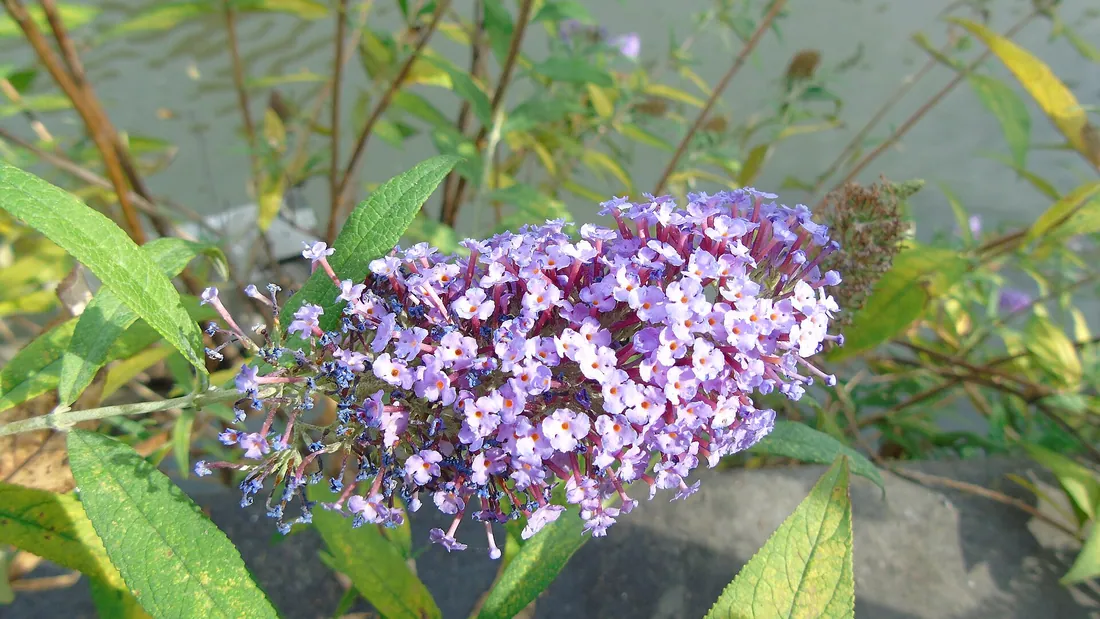

Buddleia (Buddleja davidii), better known as the butterfly bush, is a nearly indestructible shrub that has taken over gardens, for better and for worse. All summer and into early autumn its long, richly scented purple spikes are covered in butterflies and bumblebees, a sight that makes it one of the best-loved shrubs there is. But that vigour has a real downside, it is also one of the most invasive plants of wasteland and railway embankments, listed as such in several countries, and it is worth knowing that before you plant one.
Light and exposure
Buddleia wants sun, as much as possible. Give it a spot in full sun, sheltered from prevailing winds if you can, though it copes very well with windy spots once well rooted. The less light it gets, the shorter and thinner its flower spikes.
In the garden, the foot of a wall that catches the sun for much of the day, or an open bank, suits it beautifully. It also does very well planted on its own in the middle of a lawn, as long as you give it room, a mature plant easily reaches two to three metres across in every direction.
Watering
Buddleia is not fussy about water. In the first year after planting, water it regularly to help it settle in, especially through dry summers. Once well rooted, it manages perfectly well on its own and copes with long dry spells without flinching.
In open ground, a good deep soak now and then always beats light, frequent watering, which encourages roots to stay near the surface. In a pot, which is fairly unusual for this shrub, keep an eye on the compost in summer, but above all avoid overwatering, which rots the roots far more reliably than drought ever tires the plant.
Soil and repotting
Buddleia is not fussy about soil, it grows just as happily in poor, stony ground as in ordinary garden soil. The one genuinely non-negotiable point is drainage, soil that stays waterlogged all winter will eventually rot the roots.
That tolerance is exactly what explains its spectacular success on railway embankments, wasteland and old walls, anywhere the soil is poor but well drained. In an ordinary garden, even fairly poor soil is more than enough, there is no need to over-enrich the planting hole.
Temperature and humidity
This is a fully hardy shrub, from USDA zone 5 to zone 9, tolerating frosts well below minus fifteen degrees once established. No protection is needed at all, even shrubs planted late in the season come through winter with no trouble whatsoever. In the coldest zones the top growth freezes off entirely and the plant comes again from the base, without the following summer’s flowering suffering for it.
The one point to watch is very young plants grown from cuttings or seed, planted too late in the season, they can be caught by frost in their first year if they have not had time to properly harden off. Past a year in the ground, the question never comes up again.
Pruning and upkeep
Pruning is the one thing that changes everything with buddleia, and it is also the thing most gardeners get wrong. Buddleia flowers only on the current year’s wood, the spikes form on shoots that grow out that same spring, not on last year’s old wood. So it needs a hard prune in late winter, once the hardest frosts have gone and before the buds break, cutting all the stems back to thirty or forty centimetres from the ground. That drastic cut, which looks brutal, is exactly what produces the longest, most generous spikes the following summer. A buddleia that is never pruned soon turns into a tangle of old wood with small, sparse flowers, all held high out of sight.
On top of that, deadhead the spent flower spikes right through summer, as soon as they turn brown. This encourages a fresh wave of flowering and, just as importantly, stops the plant setting seed, which matters a great deal anywhere the species is considered invasive.
Pests and diseases
Buddleia is one of the healthiest shrubs you can grow, it needs almost no watching for disease. Serious fungal or bacterial problems are practically unheard of on this species.
The one thing that does crop up now and then is red spider mite, especially in very hot, dry summers, they love the warmth and dry air around the foliage. Leaves speckled with tiny yellow dots and looking dull should put you on alert, a regular spray of water over the foliage in dry spells is usually enough to keep them away.
Propagation
Taking cuttings is by far the simplest and most reliable way to propagate a buddleia. Take semi-ripe cuttings fifteen to twenty centimetres long in late summer, from this year’s wood that has already firmed up a little, strip the lower leaves and plant them straight into open ground or a light potting mix. The strike rate is excellent, often close to one hundred per cent.
Sowing works well too, the plant produces an impressive quantity of tiny seeds that germinate easily, and that is exactly the mechanism behind its spontaneous spread in the wild. For that reason, it is better to propagate the varieties you love by cuttings rather than let the seed scatter at random.
Climate and hardiness
Where and in which climate it thrives
Buddleia is hardy from USDA zone 5 to zone 9: an established crown shrugs off frosts well below minus fifteen degrees, and down to minus twenty-five degrees at the cold end of its range. There it behaves as a subshrub, the top growth freezes off completely every winter and the plant comes again from the base. That costs the flowering nothing, since it only flowers on the current year’s wood.
The handling therefore does not change from one climate to another, only the date does: cut back to thirty or forty centimetres from the ground in late winter, once the hardest frosts have gone and before the buds break. Where winters are mild the woody framework survives and this hard prune becomes essential, otherwise the shrub runs to old wood with short spikes. Where winters are continental, the frost has already done the job and you are only tidying the stump.
It is at ease anywhere summers are bright and the soil drains, from dry Mediterranean to humid temperate, and it suffers only from standing water during the cold season. Its real limit is not climatic but regulatory: its tiny seeds travel on the wind and along watercourses, and the species is classed as invasive across much of Europe, in New Zealand and in the north-west of the United States, where Oregon bans its sale other than as sterile cultivars. Check its local status before planting, and cut the spikes before they set seed.
Growing butterfly bush?
Green Hub keeps a dated history of your own plant: its photos, its progress, its repottings. An AI answers about yours specifically, not a generic sheet, for free.
Identify my plantMonth-by-month care calendar
| January | Complete rest. Nothing to do on the buddleia, the hard prune can wait until February or March. A good time to spot the sunny corners that lack colour in summer. |
|---|---|
| February | If the winter is mild and the hardest frosts seem behind us, this is when you can start the hard prune, cutting the stems back to thirty or forty centimetres from the ground. If a serious cold snap is forecast, wait until March. |
| March | Last chance for the big annual prune. Cut back without hesitation to thirty or forty centimetres from the ground, this drastic cut is what gives the longest spikes this summer. |
| April | Regrowth comes fast and strong from the pruned base. No particular watering is needed, except for shrubs planted this same season. |
| May | A good time to plant new buddleias in open ground, they settle in easily before the heat of summer arrives. Water young plants through the first few weeks. |
| June | Foliage fills out fully and the first flower buds appear at the tips of the stems. Watch for red spider mite if summer is already hot and dry. |
| July | The main flowering begins, the purple spikes open and draw in butterflies and bumblebees in real numbers. Deadhead the very first spent spikes as soon as they turn brown. |
| August | Peak butterfly season. Keep deadheading regularly, this brings on fresh flowers and stops seed from forming. |
| September | Flowering slows down gently but can carry on if you have kept deadheading all summer. Last chance to limit seed spread before autumn. |
| October | Flowering is coming to an end. You can still plant new shrubs, they will have time to root before winter. Do not prune yet. |
| November | The plant goes dormant, leaves drop gradually. Leave the stems in place, they give the base a little protection, pruning happens only in late winter. |
| December | Full winter rest. Buddleia takes the cold without any protection at all. Quietly plan the hard prune for February or March. |
Green Hub tips
- Prune hard in late winter, once the hardest frosts have gone and before the buds break, cutting the stems back to thirty or forty centimetres from the ground, this drastic cut is what gives the longest spikes in summer.
- Deadhead the spent spikes right through summer, this prolongs flowering and above all stops the plant setting seed, which matters given how invasive it can be.
- Plant in full sun in well-drained soil, even poor soil, and water almost not at all once the shrub has been in the ground for a year.
- If you are planting a new buddleia, choose a sterile variety from a nursery, you keep the butterfly show without feeding the spread into wasteland and riverbanks.
Related species
Althea
Hibiscus syriacus
Althea (Hibiscus syriacus) is a hardy deciduous garden shrub that flowers when every other one has finished, from…
Beech
Fagus sylvatica
Beech (Fagus sylvatica) is the most common broadleaf tree in the temperate forests of Europe, just as happy standing…
Begonia
Begonia
Begonia is the star summer flower of window boxes, hanging baskets and shady borders. Hundreds of hybrids exist, but…
Box
Buxus sempervirens
Box (Buxus sempervirens) is an evergreen shrub that has been clipped into balls, cones and low borders in formal…
Cherry laurel
Prunus laurocerasus
Cherry laurel (Prunus laurocerasus) is the most widely planted evergreen hedging shrub in temperate gardens, and it is…
Clematis
Clematis
Clematis is the queen of flowering climbers, able to cover a wall, a trellis or an old apple tree with hundreds of…
The guides that mention it
Pruning Flowering Shrubs and Roses: Deducing Instead of Memorising
New wood or old wood: this single question gives you the pruning time for any shrub at all, including ones whose name…
Wildflower Meadows and Beneficial Insects: Gardening for Biodiversity
Ladybirds, hoverflies, wild bees: how a wildflower meadow and a few simple habits turn an ordinary garden into a refuge…
Which Plants to Choose for a Drought-Resistant Garden
Deep roots, silvery foliage, Mediterranean origins: the plants that get through a dry summer without watering, and how…
Which flowering shrub to choose for a garden in bloom all year round
Viburnum in winter, lilac in spring, buddleia in summer, rose of Sharon in autumn: the method for stringing together…
Designing your garden by colour: the combinations that work
Warm harmonies, cool harmonies, monochrome schemes or bold contrasts: colour changes everything in a garden, from the…
Updated on
How this sheet is written
Written for Green Hub with the help of language models, then reviewed. It offers gardening guidance, not professional advice: if you are unsure whether a plant is toxic to a child or an animal, ask a vet, a doctor or your national poison centre.