Box
Buxus sempervirens
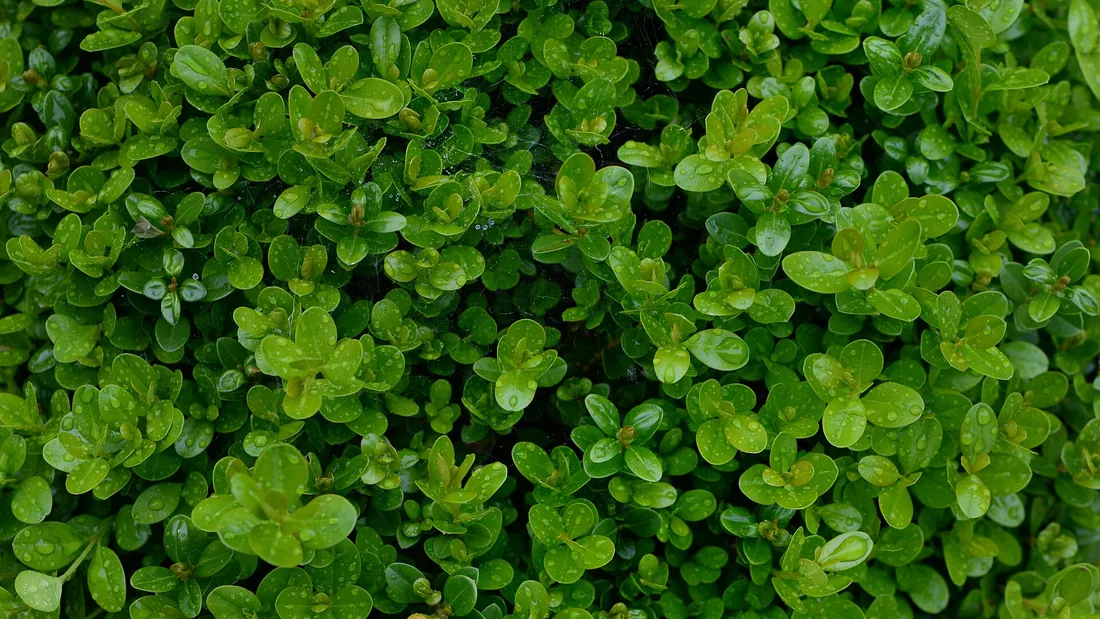

Box (Buxus sempervirens) is an evergreen shrub that has been clipped into balls, cones and low borders in formal gardens for generations. It shrugs off cold and lime in the soil without complaint, but its reputation as a foolproof plant has taken a serious hit over the last fifteen years or so: the box tree moth and the box blight fungus have wiped out entire hedges, and many gardeners have ended up switching to Japanese holly for some peace of mind.
Light and exposure
Box grows equally well in full sun or in shade, which is one of its great strengths. In full sun, growth is denser and a clipped shape holds better, but the foliage can turn bronze during cold, windy winters. In shade, even deep shade under large trees, it grows more slowly but stays healthy and green all year round.
In a garden exposed to the prevailing cold winter winds, choose a sheltered spot or plant a windbreak hedge in front of your most exposed box plants. That unsightly orange winter bronzing almost always comes from cold wind and sun combined over frozen ground.
Watering
A freshly planted young box needs regular watering for the first two years, while its roots settle in deeply. Give it a good soak once a week when there is no rain during the first season, more often during the hot dry summers we now see more and more.
Once established, box copes well with drought thanks to its deep roots, but a topiary in a pot or planter stays vulnerable and needs close attention in summer. Always water at the base, never over the foliage: standing moisture on the leaves is exactly what favours the blight fungus.
Soil and repotting
Box is not fussy about soil type and tolerates both limy and slightly acidic ground equally well, as long as it drains properly. It actually grows wild on the limestone soils of western Europe.
What it really cannot stand is waterlogging around the roots: heavy, compacted soil that holds moisture in winter encourages root rot and weakens the plant against disease. On heavy ground, plant on a slight mound or work in coarse sand and compost when planting.
Temperature and humidity
Box is remarkably hardy, tolerating frosts down to minus twenty degrees once well established. USDA zones 6 to 8 are simply not a problem for this species, and a spot sheltered from the wind lets it hold in zone 5.
The real danger comes from frost combined with wind and winter sun, which dries out the foliage and causes that characteristic late-winter bronzing. After a heavy snowfall, gently shake the branches of a clipped topiary so the weight does not permanently distort its shape.
Pruning and upkeep
Pruning is best done in early summer, never in full sun or humid weather: both conditions directly help the blight fungus spread through fresh cutting wounds. Pick a dry, overcast day, early morning or late afternoon.
Always wipe your pruning tools with alcohol between plants, especially if one shows any sign of disease: it is the single most effective habit for stopping the fungus spreading from one bush to the next through a whole hedge. Collect and burn or bin the clippings, never leave them to compost on site.
Pests and diseases
The box tree moth (Cydalima perspectalis) has become problem number one since it reached Europe in the late 2000s. This green caterpillar with a black head devours foliage at an alarming rate and can strip an entire topiary bare in just a few days. Watch your box plants from the moment growth restarts until the first cool nights, with two or three activity peaks through the warm season depending on the generation.
At the first signs, silk threads and green droppings visible in the foliage, treat with Bacillus thuringiensis, a bacterium harmless to other insects. Pheromone traps set out from the end of winter let you detect the first moths and treat before the damage is done. The second scourge, the fungus Cylindrocladium buxicola (also called Calonectria pseudonaviculata), causes brown spots on the leaves, a characteristic white felting on the underside in humid weather, then rapid defoliation that can kill an entire plant within one season.
Propagation
Cuttings are by far the most common way to propagate box, and the most reliable for a home gardener. Take semi-ripe cuttings in midsummer, about ten centimetres long from this year’s wood as it starts to harden.
Strip the leaves off the bottom third, plant the cuttings in a light mix of potting soil and sand, and keep them shaded and cool until they root, which takes several months given how slowly box grows. Expect two to three years before you get a young plant of saleable size.
Toxicity
Box is toxic to humans and pets. Every part of the plant, leaves and stems included, contains alkaloids, buxine among them, which cause digestive upset, vomiting and nervous disorders that can be serious if swallowed. Keep young children away from prunings left on the ground and watch dogs and cats that might chew on the stems.
Climate and hardiness
Where and in which climate it thrives
Once well established, box is hardy to around minus twenty degrees, which puts it comfortably in USDA zones 6 to 8 and still lets it hold in zone 5 where it is sheltered from cold wind. Cold is almost never what kills it. That toughness, together with a lifespan that leaves century-old specimens standing in old gardens, is why it became the plant of formal gardens everywhere: balls, cones and spirals, borders clipped razor-straight around beds, low hedges structuring the vegetable garden.
It is most at home in a mild, damp oceanic climate, where it grows wild on limestone soils, and it also copes with a genuinely cold continental winter provided it escapes dry wind. The bronzing of the foliage at the end of the cold season is not frost burn: cold wind and low sun make the leaves transpire while the roots are locked in frozen ground. A spot sheltered from the prevailing cold winds is enough to avoid it. In a Mediterranean climate or under a hot, dry summer it asks for little once rooted, but it needs deep watering for its first two years; beyond zone 9 the warm nights wear it out.
What really changes the way you grow it is summer humidity. Box blight needs several hours of liquid water on the leaves and temperatures around twenty to twenty-five degrees: under a stormy summer it establishes in a single season. Space the plants, prune in dry weather, never wet the foliage. The box tree moth, for its part, follows the warm season wherever it has settled, across Europe, western Asia and more recently North America: watch from the moment growth restarts until the first cool nights. Where both are present, many gardeners have ended up replacing old box with Ilex crenata, Japanese holly, which gives the same clipped look without either problem.
Growing box?
Green Hub keeps a dated history of your own plant: its photos, its progress, its repottings. An AI answers about yours specifically, not a generic sheet, for free.
Identify my plantMonth-by-month care calendar
| January | Complete rest. With the foliage less dense, take the chance to inspect an old topiary’s framework and spot any dead branches to remove with secateurs. |
|---|---|
| February | Still the winter pause. A good time to plant a new box, bare-root or in a container, as long as the ground is not frozen, before growth picks up again. |
| March | Sap starts moving again. Finish off any planting and work a little mature compost into the soil around established plants without compacting it. |
| April | Put out pheromone traps against the box tree moth: the first moths fly this month and it is better to get ahead of the damage than chase it later. |
| May | Close watching against the moth begins. Check the heart of the foliage every week, silk threads and green caterpillars signal an attack starting. |
| June | The ideal pruning window, on a dry, overcast day, never in full sun. Keep watching for the moth, the first generation is often active this month. |
| July | The best time to take semi-ripe cuttings. Keep an eye out for the moth and for fungus symptoms, especially after a spell of rain. |
| August | A second moth generation is possible some years, sometimes the most damaging one. Treat with Bacillus thuringiensis as soon as you see the first damage. |
| September | The last month of serious vigilance against the moth before things slow down in autumn. A light tidying prune is still possible early in the month if the weather is dry. |
| October | Growth slows down. Clear away pruning debris and fallen leaves from around the plants to reduce damp pockets that favour the fungus. |
| November | Last chance to plant before frost sets in. Mulch lightly around young plants to protect roots that are not yet well developed. |
| December | Winter rest. Check that no branch is bending under snow or heavy frost and gently shake the foliage free if needed. |
Green Hub tips
- Never let your guard down through the whole warm season: the box tree moth can strip a topiary that took years to shape in under a week.
- Always prune on a dry, overcast day, never after rain or in full sun: it is the simplest habit for slowing down the blight fungus.
- If your box plants keep declining no matter what you do, consider Ilex crenata: Japanese holly gives the same clipped look without the moth or the fungus.
- Wipe your secateurs with alcohol between every plant: that is how the blight fungus most often spreads from one box to the next.
Related species
Althea
Hibiscus syriacus
Althea (Hibiscus syriacus) is a hardy deciduous garden shrub that flowers when every other one has finished, from…
Beech
Fagus sylvatica
Beech (Fagus sylvatica) is the most common broadleaf tree in the temperate forests of Europe, just as happy standing…
Begonia
Begonia
Begonia is the star summer flower of window boxes, hanging baskets and shady borders. Hundreds of hybrids exist, but…
Butterfly bush
Buddleja davidii
Buddleia (Buddleja davidii), better known as the butterfly bush, is a nearly indestructible shrub that has taken over…
Cherry laurel
Prunus laurocerasus
Cherry laurel (Prunus laurocerasus) is the most widely planted evergreen hedging shrub in temperate gardens, and it is…
Clematis
Clematis
Clematis is the queen of flowering climbers, able to cover a wall, a trellis or an old apple tree with hundreds of…
The guides that mention it
Which Hedge to Plant, and How to Get It Right
Evergreen, deciduous or marcescent, annual growth, hardiness, soil, shade and sea spray: the real criteria for…
Garden Mulching: Every Mulch Has an Effect and a Drawback
Mulching is presented everywhere as a benefit with no downside. There is one for every material: what nitrogen drawdown…
Pruning Flowering Shrubs and Roses: Deducing Instead of Memorising
New wood or old wood: this single question gives you the pruning time for any shrub at all, including ones whose name…
Lawn Care: From Seeding to Mowing, and Renovation
Mowing higher changes more than any fertilizer can: turf density, drought resistance, weeds, moss. Everything else in…
Dividing, Taking Cuttings, Sowing: Multiplying Your Plants for Free
Dividing a perennial, taking cuttings from a shrub, or sowing seed straight from the garden: the techniques that fill a…
What to Plant in a Shade Garden, Under Trees and Against Sunless Walls
Under a large tree or against a wall the sun never reaches, shade doesn’t rule out a planting bed: it calls for a…
Updated on
How this sheet is written
Written for Green Hub with the help of language models, then reviewed. It offers gardening guidance, not professional advice: if you are unsure whether a plant is toxic to a child or an animal, ask a vet, a doctor or your national poison centre.