Begonia
Begonia
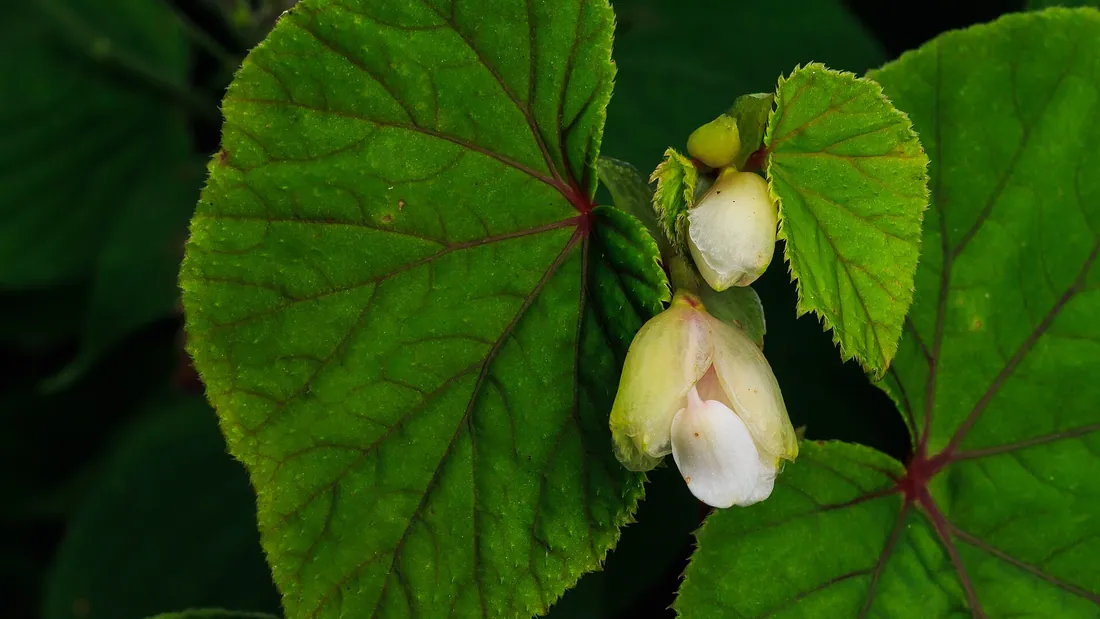

Begonia is the star summer flower of window boxes, hanging baskets and shady borders. Hundreds of hybrids exist, but two main groups dominate the garden: the garden begonia, with small single flowers and often bronze foliage, and the tuberous begonia, with spectacular double blooms. The latter has a clearly identified birthplace: the region around Ghent, Lochristi above all, has been the world’s leading production centre for tuberous begonias for more than a century, celebrated there every year with a flower parade.
Light and exposure
Begonia likes light but dislikes scorching afternoon sun, which burns the petals and browns the foliage, especially on the large-flowered tuberous varieties. A partly shaded spot, under a tree with light foliage, on a terrace that only catches the morning sun or against a wall shaded in the afternoon, suits it beautifully.
The garden begonia, hardier by nature, copes with more sun under often hazy skies, provided the soil never dries out completely. Where the midday sun beats down hard, keep the open spots for well-watered bedding displays and save the shade for hanging baskets of tuberous begonias.
Watering
Begonia needs soil that stays consistently moist through the growing season, without ever becoming waterlogged. Water at the base and avoid wetting the flowers and foliage: standing moisture on the petals opens the door to grey mould, a real risk in a cool, rainy summer.
In a pot or hanging basket, the compost dries out quickly once temperatures rise and can need watering every day in high summer. The opposite problem, too much water around the tuber, causes it to rot within days, the single most common cause of death for tuberous begonias.
Soil and repotting
A humus-rich, light and above all well-drained potting mix is essential. Heavy clay soils, which hold water right through the cold season, need lightening with well-rotted compost and possibly some coarse sand before planting.
In a pot, always choose one with drainage holes and add a layer of clay pebbles or gravel at the bottom. A begonia left standing in waterlogged soil after rain will almost always develop tuber or crown rot.
Temperature and humidity
Begonia tolerates absolutely no frost, neither in the tuber nor in the foliage. Growth already slows below fifteen degrees and stops completely below ten.
Tubers are therefore only started outdoors, and plants only moved into open ground, once the last frost has passed and the soil has warmed, never before. At the end of the season the same rule works in reverse: at the first cold snap forecast, bring the plant in or lift it without delay, a single frosty night is enough to destroy both tuber and foliage.
Pruning and upkeep
Deadhead regularly: removing spent flowers is a simple habit that clearly extends flowering by stopping the plant from putting its energy into seed production. Pinch out the tips of young garden begonias too, to encourage a denser, bushier habit.
As the first frosts approach, cut the foliage back to a few centimetres above the ground before lifting the tubers. This trim makes drying and winter storage easier and lowers the risk of rot while the tubers are kept.
Pests and diseases
Powdery mildew, that floury white coating on the leaves, tends to appear in dry, still conditions when air does not circulate enough between plants. Grey mould, or botrytis, favours damp, cool weather, typical of oceanic summers, and attacks spent flowers left on the plant first.
Tuber rot, caused by standing water, remains the most serious problem because it is often irreversible. Slugs and snails happily go for the tender young shoots in spring, a ring of ash or a physical barrier keeps the damage down.
Propagation
Tuberous begonia divides easily at the tuber when growth restarts in spring: each piece needs at least one eye to sprout. The soft young shoots also root well from cuttings, either in water or straight into light, evenly moist compost.
Garden begonia is grown from tiny seed, sown on the surface under heated cover some three months before the planting-out date, since the seeds need light and steady warmth to germinate. It is a fiddly sowing job best left to patient gardeners, most people prefer to buy young plants or pre-started tubers instead.
Climate and hardiness
Where and in which climate it thrives
Begonia is completely frost-tender, tuber and foliage alike: a single frosty night destroys the plant. Growth already slows below fifteen degrees and stops below ten, and it only stays in the ground from one year to the next in USDA zone 9 and above, where the soil never freezes. Everywhere else it is grown as an annual, or the tubers are lifted for the winter and kept dry and frost-free, in peat or sand, at around ten degrees.
The timing therefore follows your frosts, never a date: start the tubers somewhere warm and bright about two months before your last expected frost, and move plants outside only once that risk has passed and the soil has warmed past ten degrees. At the end of the season the rule is just as sharp in reverse, lift at the first cold snap forecast, before a frost takes the tuber.
The tuberous begonia is a cool-climate plant: it is at its best where summers stay mild and the air humid, along oceanic coasts, and it visibly sulks once nights no longer drop below twenty degrees, in hot continental or subtropical climates. There, the garden begonia, far more heat-tolerant, is the right choice. A cool, rainy summer brings the opposite problem: grey mould settles on wet flowers, so space the plants out and deadhead every week. And in a frost-free climate the tuber can stay in the ground, but it still needs a dry resting period if it is not to rot.
Growing begonia?
Green Hub keeps a dated history of your own plant: its photos, its progress, its repottings. An AI answers about yours specifically, not a generic sheet, for free.
Identify my plantMonth-by-month care calendar
| January | Complete rest. The tubers sleep dry in their crate of peat or sand, kept frost-free. Check them once and discard any showing signs of rot. |
|---|---|
| February | Still dormant. This is the time to order new tubers and choose varieties for the season, from compact garden begonias to large-flowered tuberous types. |
| March | Take the tubers out of storage and start them indoors, warm and bright, in light compost kept just barely moist. The first shoots appear within a few weeks. |
| April | Growth continues under cover. Plants develop well, but the risk of frost has not gone, so nothing goes into open ground while it remains. |
| May | Harden the plants off gradually. Plant out and move pots outside only once the last frosts have passed. |
| June | Full growth and the first flowers. Water regularly at the base and remove the first faded blooms to keep new ones coming. |
| July | Generous flowering. Watch pot watering closely, daily in hot spells. Keep deadheading. |
| August | Flowering is at its peak. Give beds some air in humid weather to hold off powdery mildew and grey mould, and watch for slugs on young shoots. |
| September | Flowering carries on but eases off gently. Watch the forecast for early morning frost, the season is winding down for the tuberous types. |
| October | At the first cold snap forecast, cut back the foliage and lift the tubers before a frost destroys them. Let them dry for a few days somewhere sheltered. |
| November | Store the well-dried tubers in peat or sand, somewhere dry and frost-free, at around ten degrees. Garden begonias, being annuals, cannot be kept over winter. |
| December | Give the storage a final check before deep winter sets in. Remove any soft or blemished tuber before it spreads to the rest. |
Green Hub tips
- Never plant or move begonia outside while a frost is still possible. A tuber or young plant caught by a late frost will not recover.
- Lift the tubers before the first autumn frosts, let them dry, then store them somewhere dry and frost-free, in peat or sand, at around ten degrees all winter.
- Choose light shade over scorching afternoon sun, especially for large-flowered tuberous begonias, which burn quickly in direct high-summer sun.
- Deadhead every week. It is the simplest habit for keeping a begonia in flower from early summer right through to the first frosts.
Related species
Althea
Hibiscus syriacus
Althea (Hibiscus syriacus) is a hardy deciduous garden shrub that flowers when every other one has finished, from…
Beech
Fagus sylvatica
Beech (Fagus sylvatica) is the most common broadleaf tree in the temperate forests of Europe, just as happy standing…
Box
Buxus sempervirens
Box (Buxus sempervirens) is an evergreen shrub that has been clipped into balls, cones and low borders in formal…
Butterfly bush
Buddleja davidii
Buddleia (Buddleja davidii), better known as the butterfly bush, is a nearly indestructible shrub that has taken over…
Cherry laurel
Prunus laurocerasus
Cherry laurel (Prunus laurocerasus) is the most widely planted evergreen hedging shrub in temperate gardens, and it is…
Clematis
Clematis
Clematis is the queen of flowering climbers, able to cover a wall, a trellis or an old apple tree with hundreds of…
The guides that mention it
Perennial Flowers: Choosing, Planting and Blooming Without a Gap All Season
What genuinely comes back year after year, how to read hardiness by zone rather than by promise, and how to string…
Gardening on a Balcony or Terrace: Vegetables and Flowers in Pots
Weight, wind, exposure: what really changes when you garden up high instead of in open ground, and how to choose your…
What to Plant in a Shade Garden, Under Trees and Against Sunless Walls
Under a large tree or against a wall the sun never reaches, shade doesn’t rule out a planting bed: it calls for a…
Sowing Seeds Successfully: Why It Fails, and What Fixes It
A seed that never comes up was not unlucky. Germination temperatures by species, correct depth, seeds that need light,…
Updated on
How this sheet is written
Written for Green Hub with the help of language models, then reviewed. It offers gardening guidance, not professional advice: if you are unsure whether a plant is toxic to a child or an animal, ask a vet, a doctor or your national poison centre.