Peach
Prunus persica
.jpg)
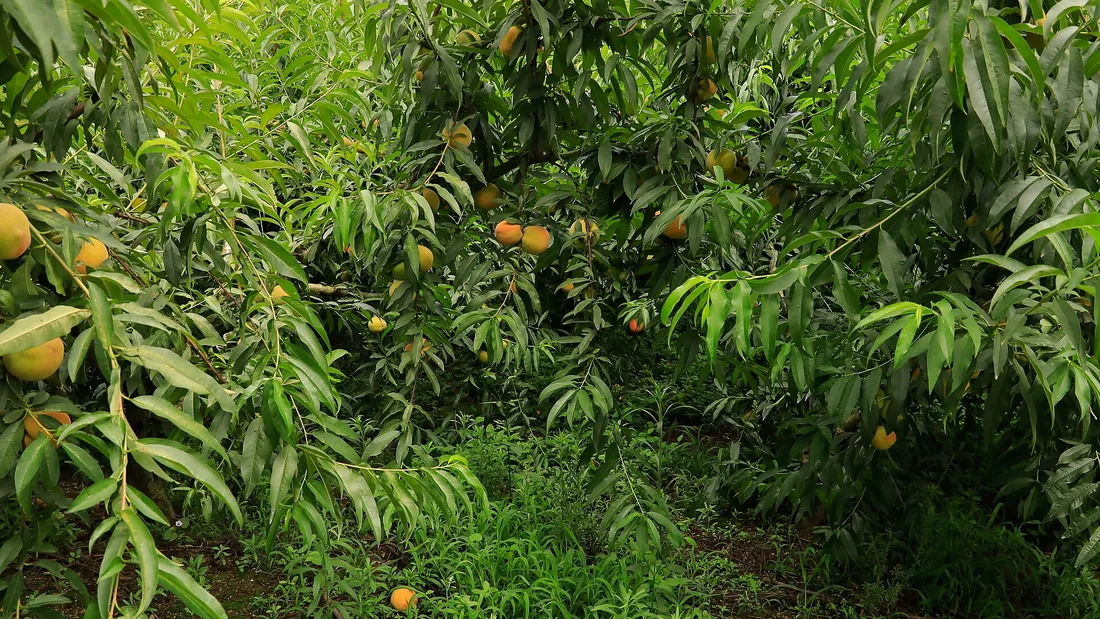
The peach tree (Prunus persica) is a fruit tree that loves far more warmth and sun than a cool temperate climate naturally provides. Even so, with the right spot and a bit of attentive care, you can grow one successfully well outside its comfort zone: the real challenge is not so much the winter cold, which a mature peach handles well, but two specific enemies, frost striking the early blossom at the tail end of winter and leaf curl, a fungal disease that attacks the foliage whenever the weather turns cool and damp.
Light and exposure
A peach tree wants full sun and as much warmth as you can give it. In a cool climate, forget planting it out in the open exposed to every wind: give it the warmest corner of the garden, against a wall that catches the midday and afternoon sun, sheltered from the prevailing cold winds.
A sheltered spot does double duty: it stores up the day’s heat and gives it back at night, which brings blossom and fruit ripening forward, and it cuts the wind that dries out and weakens the tree. Avoid dips where cold air pools at the end of winter, those frost pockets that can scorch the blossom in a single night. In a hot climate the question reverses: sun is a given, it is the water at the base you have to watch.
Watering
A young, freshly planted peach needs regular watering in its first year, while its roots are still colonising the soil. Give it a good soak once a week when there is no rain, more during a heatwave, always at the base and never over the foliage.
Once established, a mature tree copes better with dry spells, but stays sensitive to a lack of water while the fruit is swelling, in the weeks leading up to harvest. Mulching the base holds moisture and avoids the feast-and-famine watering that makes fruit split. On the other hand, permanently waterlogged soil suffocates the roots and invites disease, a peach hates wet feet.
Soil and repotting
Peach trees like a light, well-drained soil, ideally neutral to slightly acidic. Soil that is too chalky or too heavy and clay-based suits them poorly, they sulk and turn yellow in it. If your ground is clay, plant on a small mound to raise the collar and help water drain away.
Enrich the planting hole with well-rotted compost, without overdoing the nitrogen, which pushes soft growth that is more prone to disease. Good drainage matters more than rich soil: a peach prefers average but healthy ground to a fat soil that holds winter wet.
Temperature and humidity
A peach tree copes with winter cold down to around minus twenty degrees without trouble once it is fully dormant, the hardiest varieties taking a few degrees more, which places it in USDA zones 5 to 9 depending on the variety. Winter itself is not the problem. Its real weak point is how early it flowers, at the tail end of winter, often before the last frosts have finished.
A frost of minus two or minus three degrees at blossom time is enough to wipe out the flowers and with them the whole year’s crop. That is the number one risk anywhere spring stays hesitant, and it is why choosing the right spot matters just as much as choosing the right variety.
Pruning and upkeep
A peach tree fruits on last year’s wood, unlike an apple tree which fruits on older branches. That means an annual prune, in late winter before the buds break, is essential to keep renewing these young fruit-bearing shoots and stop the tree from going bare lower down.
Also thin the fruit soon after set, once they are the size of a hazelnut, leaving only one every ten to fifteen centimetres along each branch. It looks harsh, but it is the price of a few plump, juicy peaches rather than a crowd of small, stunted ones that exhaust the tree.
Pests and diseases
Peach leaf curl, caused by the fungus Taphrina deformans, is enemy number one anywhere the end of winter is cool and wet. It is easy to spot: young leaves blister, pucker and turn red as they break bud, in cool damp weather. A weakened tree produces less and becomes more prone to other problems.
A preventive spray of Bordeaux mixture is still the best defence: one application when the leaves fall in autumn, and a second at bud swell right at the end of winter, before the flowers open. Sheltering the foliage from spring rain with a simple removable cover or awning helps a great deal, leaf curl spreads through water. In a climate that is dry at bud break, it almost stops being an issue. Also watch for brown rot, which rots fruit on the tree, powdery mildew in the hot dry season, and the green aphids that crimp and curl young leaves.
Propagation
Grafting is the method nurseries use, and the only one that guarantees a variety identical to the parent tree, usually grafted onto peach seedling rootstock or plum rootstock depending on the vigour wanted. It is a fiddly technique, hard to get right without experience, so it is usually worth buying a young grafted tree from a good nursery instead.
You can also sow a peach stone out of curiosity, the seedling germinates easily after a winter outdoors in the cold, but it will not necessarily give fruit identical to the parent and will take several years before it fruits at all. Fun to try, but do not count on it for real, reliable production.
Climate and hardiness
Where and in which climate it thrives
The peach is hardy in USDA zones 5 to 9 depending on the variety: once fully dormant, the wood takes minus twenty degrees without trouble, the toughest varieties a few degrees more. Winter is never what decides the crop, two other things do. The first is the cold it needs to break dormancy: from 100 to 1000 hours between 0 and 7 degrees according to the variety. In a Mediterranean or subtropical climate, where winter is short, you pick a low chill variety, under 300 hours; under a sharp winter those same varieties break bud too early and get cut down.
The second, and this is the real risk, is late winter frost. The peach flowers ahead of every other fruit tree, and a frost of minus two to minus three degrees during blossom wipes out the entire crop. Wherever spring stays hesitant, train it against a wall that catches the midday and afternoon sun, due south in the northern hemisphere, due north in the southern one: the wall stores heat, brings ripening forward and shelters the flowers. A simple horticultural fleece put up on nights when frost is forecast often saves the whole harvest. In a cool damp climate, leaf curl becomes the second opponent and is dealt with by prevention. Most varieties are self-fertile, so a single tree is enough, there is no need to plant in pairs the way you would for some pears; where springs are cold and summers grey, choose varieties known to be hardy and open-grown rather than southern ones, which flower beautifully but only ripen properly under a hot summer.
Growing peach?
Green Hub keeps a dated history of your own plant: its photos, its progress, its repottings. An AI answers about yours specifically, not a generic sheet, for free.
Identify my plantMonth-by-month care calendar
| January | The peach tree is fully dormant. This is the time to choose a variety at the nursery and, if the ground is not frozen, plant a bare-root tree. |
|---|---|
| February | Continue the fruiting prune in dry, frost-free weather, before the buds break. Right at the end of the month, give a second Bordeaux mixture spray against leaf curl, at bud swell. |
| March | Blossom begins, often ahead of the other fruit trees. Watch the frost forecast and protect the flowers with horticultural fleece on cold nights. |
| April | Blossom finishes and fruit starts to set. Keep protecting it if frost still threatens. The first signs of leaf curl show up on young leaves in cool, damp weather. |
| May | The young fruit is swelling. Watch for leaf curl and remove affected leaves. Water if spring turns dry, especially for young trees. |
| June | Thin the fruit, leaving only one peach every ten to fifteen centimetres. Water regularly, the tree must not go short of water at this stage. |
| July | Fruit swells quickly now. Mulch the base to hold moisture and water during dry spells to stop the fruit splitting. |
| August | Harvest of the early varieties. Pick the ripe peaches, they come away easily in the hand when ready. Watch for aphids and powdery mildew. |
| September | Main harvest for most varieties. Pick as each fruit ripens, peaches do not really ripen further once picked. |
| October | Last harvest for late varieties. Rake up and destroy fallen leaves carrying leaf curl rather than composting them. |
| November | Once the leaves have fully fallen, give the first Bordeaux mixture spray of the season against leaf curl, a preventive step that really pays off the following spring. |
| December | Winter rest. A good time to plant a bare-root tree in frost-free weather, or to lightly shape young trees. |
Green Hub tips
- Spray with Bordeaux mixture twice a year without fail, once when the leaves fall in autumn and once at bud swell in late winter: that is what makes the difference against leaf curl, the real scourge of peach trees wherever the end of winter is cool and wet.
- Train your peach against a wall that catches the midday and afternoon sun if you can, the stored warmth protects the blossom from frost and clearly brings the fruit’s ripening forward.
- Do not be afraid to thin the young fruit hard soon after set, one every ten to fifteen centimetres: that is what gives you a few plump, juicy peaches rather than a crowd of small ones.
- Where springs are cold and summers grey, choose a variety known to be hardy and open-grown rather than a southern one, it will cope far better.
Related species
Apple tree
Malus domestica
The apple tree (Malus domestica) is the king of fruit trees in temperate climates, the one that has filled family…
Cherry laurel
Prunus laurocerasus
Cherry laurel (Prunus laurocerasus) is the most widely planted evergreen hedging shrub in temperate gardens, and it is…
Cherry tree
Prunus avium
The cherry tree (Prunus avium) is a vigorous, hardy fruit tree, perfectly at ease in a temperate climate, from USDA…
Pear tree
Pyrus communis
The pear tree (Pyrus communis) is the apple tree’s cousin, a fruit tree for the family orchard that gives melting fruit…
Photinia
Photinia x fraseri
Photinia (Photinia x fraseri) is an evergreen shrub in the rose family that has become one of the most widely planted…
Plum tree
Prunus domestica
The plum tree (Prunus domestica) is the classic family fruit tree, the one you find at the back of the garden or along…
The guides that mention it
Garden Mulching: Every Mulch Has an Effect and a Drawback
Mulching is presented everywhere as a benefit with no downside. There is one for every material: what nitrogen drawdown…
Pruning Fruit Trees: Deducing Instead of Memorising
An apple tree and a cherry tree are pruned neither at the same time nor for the same reason, and the peach is like…
Updated on
How this sheet is written
Written for Green Hub with the help of language models, then reviewed. It offers gardening guidance, not professional advice: if you are unsure whether a plant is toxic to a child or an animal, ask a vet, a doctor or your national poison centre.