Spirea
Spiraea
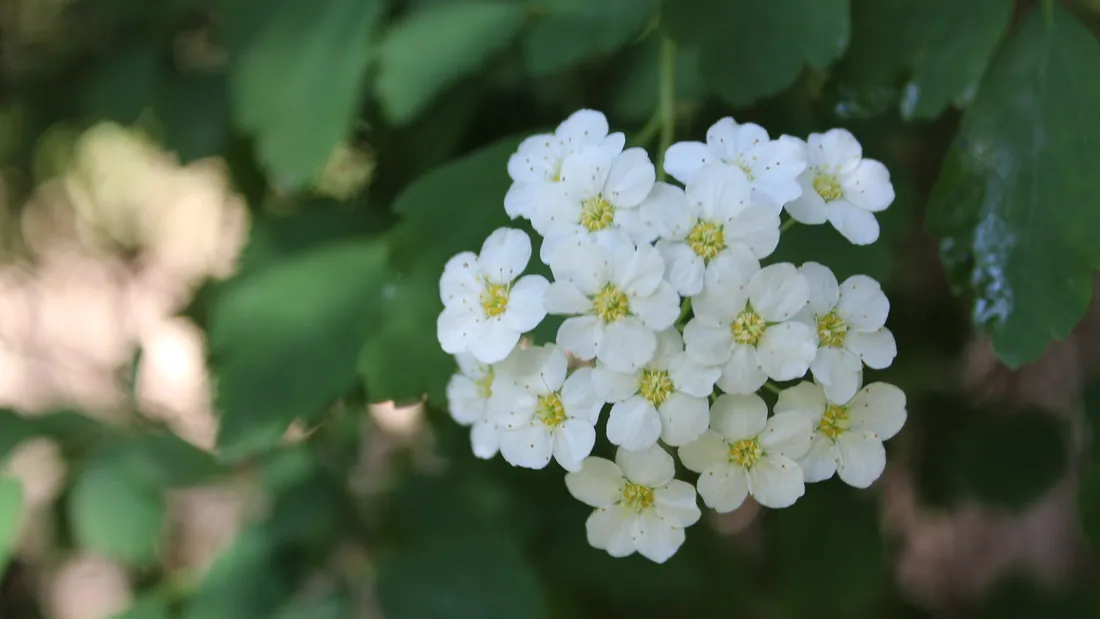

Spirea (Spiraea) is one of the easiest and most rewarding flowering shrubs you can plant. It shows up in almost every low hedge and shrub border, often without its owner even knowing its name. There are in fact two broad groups of spirea depending on when they flower: spring spireas, which cover their branches in cascades of white blossom from early spring, and summer spireas, which carry pink or carmine flower heads from early summer to early autumn. This is not just a botanical footnote, it directly determines how you prune the shrub, and getting it backwards is the single most common mistake gardeners make with it.
Light and exposure
Spirea grows equally well in full sun or partial shade, which makes it one of the easiest shrubs to place anywhere in the garden. It flowers most generously in full sun, especially the summer varieties such as Japanese spirea, whose pink flower heads look a little duller in shade. Spring-flowering spireas are more forgiving and still put on a fine show even against a wall that never gets direct sun.
You see it everywhere: as an informal low hedge, in a mixed shrub border, or as a stand-alone specimen near a terrace. It asks for no special siting or wind shelter, and copes perfectly well planted alongside other shrubs in a mixed hedge.
Watering
A well-established spirea needs almost no watering at all. During its first year after planting, water it once or twice a week in dry spells to help the roots settle in, especially if you planted in spring rather than autumn. After that, it manages perfectly well on natural rainfall alone, even through the drier summers that come round more and more often.
A generous watering during flowering, if a dry spell hits in spring or high summer depending on the type, keeps the blooms going longer and stops them from scorching too quickly. Grown in a pot, which is unusual for this shrub outside of nurseries, keep an eye on the compost, since it dries out faster than open ground.
Soil and repotting
Spirea is not fussy about soil at all. Ordinary garden soil, even on the poor or slightly chalky side, suits it without any special preparation. This is one of its real strengths on heavy clay ground: it shrugs off conditions that would make other shrubs sulk.
It does prefer soil that is not permanently waterlogged, though. On very heavy, compacted clay, loosen the planting hole well and work in some compost or coarse sand to help drainage. Once settled in, spirea tolerates dry, poor ground just as readily as the richer soil found elsewhere in the garden.
Temperature and humidity
This is a genuinely hardy shrub. Most garden spireas shrug off -30 °C without damage, and Vanhoutte spirea more still, which puts them out of danger under just about every temperate and cold climate. No winter protection is needed, not even for a shrub planted that same year.
In summer it copes just as well with heat and dry spells without visible suffering, apart from a slightly shortened flowering period during a prolonged heatwave. You will never need to mulch or fleece a spirea against frost, nor worry about it during a summer hot spell.
Pruning and upkeep
Pruning is the one technical point that needs some thought with spireas, and it is where most gardeners get it wrong. Everything depends on which type you have. Spring-flowering spireas, such as bridal wreath spirea with its white early-spring cascades, or Vanhoutte spirea, flower on wood formed the previous year. Prune these right after flowering, never in winter: shorten the branches that have just flowered and, every two or three years, remove a few of the oldest stems at the base to open up the shrub. Prune these spireas in late winter and you cut off almost all of next year’s flowers, the classic mistake.
Summer-flowering spireas, such as Japanese spirea or its golden-leaved varieties, flower instead on the current year’s growth. Cut these back hard in late winter, before the buds break, leaving only twenty to thirty centimetres of old wood above ground. This hard pruning does not weaken the plant, it actually spurs the vigorous new growth that will carry the summer flowers. A summer spirea that never gets this treatment gradually loses vigour, flowers less each year, and ends up bare at the base.
Pests and diseases
Spirea is one of the healthiest shrubs you can plant, sailing through the seasons without any treatment in the vast majority of gardens. The one recurring nuisance is aphids, which sometimes colonise the tender new shoots of summer spireas just after the hard late-winter prune. A firm jet of water or a spray of soft soap is usually enough to see them off without reaching for an insecticide.
Powdery mildew can occasionally leave a white felting on the foliage in hot, humid weather, mostly on plants that are too crowded or poorly ventilated at the centre. In a temperate climate this stays a minor issue and rarely calls for treatment: an annual prune that opens up the centre of the shrub is usually enough to keep the risk down.
Propagation
Taking cuttings is by far the easiest way to multiply a spirea, and it works almost every time. In early summer, take softwood cuttings ten to fifteen centimetres long from the current year’s still-flexible growth, strip the lower leaves and plant them in a light mix of compost and sand, in partial shade. Rooting usually takes three to six weeks, and the young plants can go into the ground the following autumn or spring.
A slower but equally reliable option is to take hardwood cuttings in autumn or winter, fifteen to twenty centimetres of firmer wood, and plant them straight into open ground in a sheltered corner. Some spireas also send up suckers from the base that you can simply sever with some roots attached to start a new plant.
Climate and hardiness
Where and in which climate it thrives
Spirea is a shrub of uncommon hardiness: most of the cultivated species take -30 °C with no protection at all, and Vanhoutte spirea goes down towards -35 °C, which makes them growable from USDA zone 3 or 4 up to 8, and Japanese spirea up to 9. No fleece, no protective mulch, not even for a shrub planted that same year.
It is as much at home in a mild, rainy oceanic climate as in a continental one with a long, dry winter: what limits it is neither the cold nor the humidity of the air, it is water standing at its feet. Under a hot, dry summer the flowering of the summer spireas is shorter and the flower heads scorch faster; some afternoon shade and a generous watering at flowering time are enough to put that right. In a warm climate with mild winters it still grows but stays less vigorous, and asks for more regular watering.
One point to check before planting: in eastern North America, Japanese spirea (Spiraea japonica) has naturalised beyond gardens and appears on the invasive species lists of several states. Look up its status in your own region, and where needed prefer a low-fertility variety or a native species. For the rest, how you handle the plant depends not on the climate but on which type of spirea you have: cold governs nothing here, the flowering season governs everything.
Growing spirea?
Green Hub keeps a dated history of your own plant: its photos, its progress, its repottings. An AI answers about yours specifically, not a generic sheet, for free.
Identify my plantMonth-by-month care calendar
| January | Complete rest for the shrub. A good time to plant a bare-root spirea if the ground is not frozen. Do not prune summer spireas yet, wait until late winter. |
|---|---|
| February | Prune summer spireas hard now, such as Japanese spirea, cutting the stems back to twenty or thirty centimetres before the buds break. Leave spring spireas well alone, their flower buds are already formed. |
| March | Finish pruning summer spireas if you have not already. Spring spireas start budding out, leave them untouched until after they flower. |
| April | Spring spireas begin flowering, such as bridal wreath spirea, in cascades of small white blooms along the branches. No pruning during this period. |
| May | Spring spireas reach full flower. As soon as the blooms fade, prune without delay: shorten the branches that flowered and remove a few of the oldest stems at the base. |
| June | Summer spireas form their first flower buds. A good time to take softwood cuttings if you want to multiply a plant. |
| July | Summer spireas reach full flower, with their pink or carmine flower heads. Watch for aphids on the young shoots and hose them off if needed. |
| August | Summer flowering continues. Deadhead the faded blooms if you have time, this can sometimes trigger a smaller second flush. |
| September | Summer flowering tapers off gradually. Still a good time to plant a new container-grown shrub, the soil stays warm. |
| October | An ideal time to plant a spirea, container-grown or bare-root: the roots have time to settle before winter. Clean up around older plants. |
| November | Last window for bare-root planting before the first real frosts. Mulch around the base of recently planted shrubs. |
| December | Complete rest. Study the bare outline of your spireas to spot which stems to remove at the next pruning. |
Green Hub tips
- Before you reach for the secateurs, always identify your spirea’s type: white spring flowers mean pruning right after flowering, pink summer flowers mean a hard cut back in late winter.
- Never prune a spring spirea in winter or late winter, you would be cutting off almost all of next year’s flowers.
- To multiply a fine plant for free, take a soft shoot in early summer and root it in a light mix in partial shade, it almost always takes.
- Do not hold back on cutting summer spireas hard every year in late winter: the harder the prune, the more generous the summer flowering.
Related species
Apple tree
Malus domestica
The apple tree (Malus domestica) is the king of fruit trees in temperate climates, the one that has filled family…
Cherry laurel
Prunus laurocerasus
Cherry laurel (Prunus laurocerasus) is the most widely planted evergreen hedging shrub in temperate gardens, and it is…
Cherry tree
Prunus avium
The cherry tree (Prunus avium) is a vigorous, hardy fruit tree, perfectly at ease in a temperate climate, from USDA…
Peach
Prunus persica
The peach tree (Prunus persica) is a fruit tree that loves far more warmth and sun than a cool temperate climate…
Pear tree
Pyrus communis
The pear tree (Pyrus communis) is the apple tree’s cousin, a fruit tree for the family orchard that gives melting fruit…
Photinia
Photinia x fraseri
Photinia (Photinia x fraseri) is an evergreen shrub in the rose family that has become one of the most widely planted…
The guides that mention it
Pruning Flowering Shrubs and Roses: Deducing Instead of Memorising
New wood or old wood: this single question gives you the pruning time for any shrub at all, including ones whose name…
Lawn Care: From Seeding to Mowing, and Renovation
Mowing higher changes more than any fertilizer can: turf density, drought resistance, weeds, moss. Everything else in…
Which flowering shrub to choose for a garden in bloom all year round
Viburnum in winter, lilac in spring, buddleia in summer, rose of Sharon in autumn: the method for stringing together…
Updated on
How this sheet is written
Written for Green Hub with the help of language models, then reviewed. It offers gardening guidance, not professional advice: if you are unsure whether a plant is toxic to a child or an animal, ask a vet, a doctor or your national poison centre.