Weigela
Weigela florida
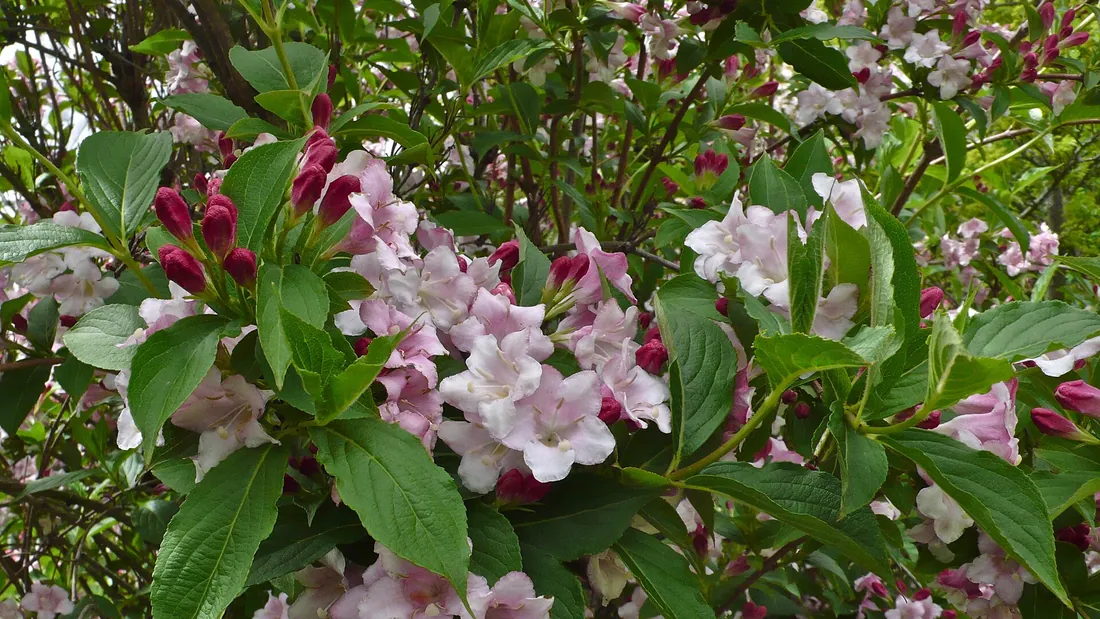

Weigela (Weigela florida) is a deciduous shrub from East Asia that has become an unkillable classic of temperate gardens. In late spring it covers itself in hundreds of small pink or purple bell shaped flowers depending on the variety, often set against purple or variegated foliage that stays attractive right through the growing season. It is one of the easiest shrubs to grow well, thriving almost anywhere and asking for barely any care once established.
Light and exposure
Weigela is happy in full sun or in part shade, it is not really fussy about either. In full sun the flowering is denser and lasts longer, and full sun is essential for purple leaved cultivars such as 'Wine and Roses' or 'Bristol Ruby', whose colour fades to a dull green as soon as light is lacking.
In part shade the shrub still grows very well but flowers a little less generously. A spot sheltered from wind is always a plus, especially in the first year after planting while the shrub settles in.
Watering
Once well rooted, weigela is happy with the rainfall of a temperate climate and needs almost no watering, except through a particularly dry summer, when a few generous but well spaced soakings do it good. The first year after planting is the sensitive period, water regularly while the roots take hold of the soil.
A mulch at the base, bark or dried grass clippings, helps keep the soil cool and cuts watering right down. In a pot, keep a closer eye on the moisture of the compost, especially at the height of the warm season.
Soil and repotting
Weigela is not fussy, an ordinary garden soil suits it well, whether slightly chalky, clay or sandy, as long as it is not permanently waterlogged. Adding compost at planting helps it get going, though it is not essential afterwards.
The one real point to watch is drainage, soil that is too heavy and stays wet in winter can rot the roots. In compact clay, loosen the planting hole and add a little gravel at the bottom to avoid this problem.
Temperature and humidity
Weigela is hardy from USDA zone 4 to zone 8, which means minimums of around minus thirty degrees, and it takes the winters of the whole temperate belt without any protection at all. There is no reason to mulch it against frost or bring it indoors, it is a shrub built to stay outside all year round.
Since flowering arrives in late spring, the last of the late frosts never threaten the flower buds, unlike some shrubs that bloom earlier in the year. That is one of the things that makes it so reliable. In the harshest winters of its range only the shoot tips are killed, and the shrub starts again from lower down the following season.
Pruning and upkeep
The one thing to remember is that weigela flowers on the previous year’s wood. Any pruning done during winter dormancy or in early spring removes a good part, or even all, of the coming flowering. The right window is right after flowering, never before.
At that point, cut back the stems that have just flowered, either to their base or just above a young break, which renews the clump and stops it going bare at the bottom over the years. This pruning also sometimes brings on a second small flush of flowers at the end of summer.
Pests and diseases
Weigela is one of the most trouble free shrubs in the garden, it is practically disease free. No preventive treatment is needed, it is a shrub you plant and forget about on the health front.
The only occasional bother comes from aphids, which sometimes settle on the tender young shoots in spring. A firm jet of water or a little soft soap easily deals with them, and ladybirds often take care of it on their own in a garden that welcomes them.
Propagation
Taking cuttings is by far the simplest and most reliable way to multiply a weigela, and that is how most plants circulate between gardeners in the region. In summer, take a still soft stem about ten to fifteen centimetres long, remove the lower leaves and plant it in a mix of compost and sand.
In autumn you can also take cuttings from harder, ripened wood, which root just as well either in open ground in a sheltered spot or in a pot in a corner of the garden. Either way, success is generally excellent, no rooting hormone needed.
Climate and hardiness
Where and in which climate it thrives
Weigela is rated for USDA zones 4 to 8, and up to zone 9 where winters are at their mildest. The stock takes minimums of around minus thirty degrees, which makes it one of the most cold tolerant flowering shrubs of its size, and across that whole range it asks for no winter protection at all.
What really changes the procedure from one climate to another is that it flowers on the previous year’s wood. In a mild, damp oceanic climate, as in a temperate continental one, the stems come through winter intact and flowering is full. In the harshest zone 4 winters the shoot tips are often killed: the shrub starts again from lower down with no lasting damage, but it loses part of its flower buds with those tips and flowers less the following season. A spot sheltered from the prevailing cold winds clearly reduces that setback.
Because flowering arrives in late spring, after the bulk of the late frosts, the buds are rarely caught by frost, unlike those of shrubs that bloom early. At the other end of the scale, under a hot dry summer or a Mediterranean climate, what limits weigela is no longer cold but drought: it holds on, but flowering is shorter and the foliage of the purple leaved cultivars suffers, unless you mulch the base generously and water deeply through heatwaves. The only soil truly hostile to it is one that stays waterlogged through the cold season, whatever the climate.
Growing weigela?
Green Hub keeps a dated history of your own plant: its photos, its progress, its repottings. An AI answers about yours specifically, not a generic sheet, for free.
Identify my plantMonth-by-month care calendar
| January | Complete rest, nothing to do in the garden. If the soil is not frozen, this is still a possible window to plant a bare root or container grown shrub. |
|---|---|
| February | Still resting. Last chance for winter planting if the weather allows, otherwise wait, the buds are only just starting to swell. |
| March | The buds swell noticeably. Last moment to plant or move a weigela before growth gets going. |
| April | The foliage develops quickly and flower buds are already visible at the tips of the stems. Watering during a dry spring helps prepare a good flowering. |
| May | Flowering begins late in the month, in pink or purple bells depending on the variety. Do not prune now, you would be cutting off the flowers to come. |
| June | Full flowering early in the month, then it fades. As soon as the flowers are spent, prune without delay, cutting the flowered stems back to the base. |
| July | The clump grows back after pruning. This is a good time to take cuttings from still soft stems. |
| August | Watch for aphids on the tender young shoots. A small second flush of flowers can appear on shrubs pruned in June. |
| September | Growth slows as the days shorten. You can still take cuttings from semi ripened wood. |
| October | An excellent time to plant a new weigela, the still warm soil helps it root well before winter. Cuttings of ripened wood can also be taken now. |
| November | An ideal month for bare root or container planting, the soil is still warm enough to encourage rooting before the cold. A mulch at the base protects young plants settled in this season. |
| December | Winter rest, no pruning to do, you would remove next year’s flower buds. Just remove dead or broken wood if needed. |
Green Hub tips
- Never prune during winter dormancy or in early spring, weigela flowers on the previous year’s wood, and pruning too early removes the coming flowering.
- The right pruning window is right after flowering. Cut the stems that have just flowered back to the base to renew the clump.
- To keep a well coloured purple leaf on cultivars like 'Wine and Roses', plant them in full sun, in shade the purple fades to a dull green.
- Taking cuttings is child’s play, a soft stem in summer or a ripened one in autumn roots without any trouble, no hormone or special kit needed.
Related species
Corn salad
Valerianella locusta
Corn salad (Valerianella locusta) is the winter salad par excellence, the tender rosette that fills the vegetable…
Honeysuckle
Lonicera
Honeysuckle (Lonicera) is a familiar plant in hedgerows and gardens, known for its very fragrant tubular flowers whose…
Althea
Hibiscus syriacus
Althea (Hibiscus syriacus) is a hardy deciduous garden shrub that flowers when every other one has finished, from…
Beech
Fagus sylvatica
Beech (Fagus sylvatica) is the most common broadleaf tree in the temperate forests of Europe, just as happy standing…
Begonia
Begonia
Begonia is the star summer flower of window boxes, hanging baskets and shady borders. Hundreds of hybrids exist, but…
Box
Buxus sempervirens
Box (Buxus sempervirens) is an evergreen shrub that has been clipped into balls, cones and low borders in formal…
The guides that mention it
Improving Clay Soil: Diagnosis, Amendments and Drainage
Ground that clings to your boots in winter and cracks open in summer: a clay soil is not condemned, it changes with the…
Pruning Flowering Shrubs and Roses: Deducing Instead of Memorising
New wood or old wood: this single question gives you the pruning time for any shrub at all, including ones whose name…
Which flowering shrub to choose for a garden in bloom all year round
Viburnum in winter, lilac in spring, buddleia in summer, rose of Sharon in autumn: the method for stringing together…
Designing your garden by colour: the combinations that work
Warm harmonies, cool harmonies, monochrome schemes or bold contrasts: colour changes everything in a garden, from the…
Updated on
How this sheet is written
Written for Green Hub with the help of language models, then reviewed. It offers gardening guidance, not professional advice: if you are unsure whether a plant is toxic to a child or an animal, ask a vet, a doctor or your national poison centre.