Corn salad
Valerianella locusta
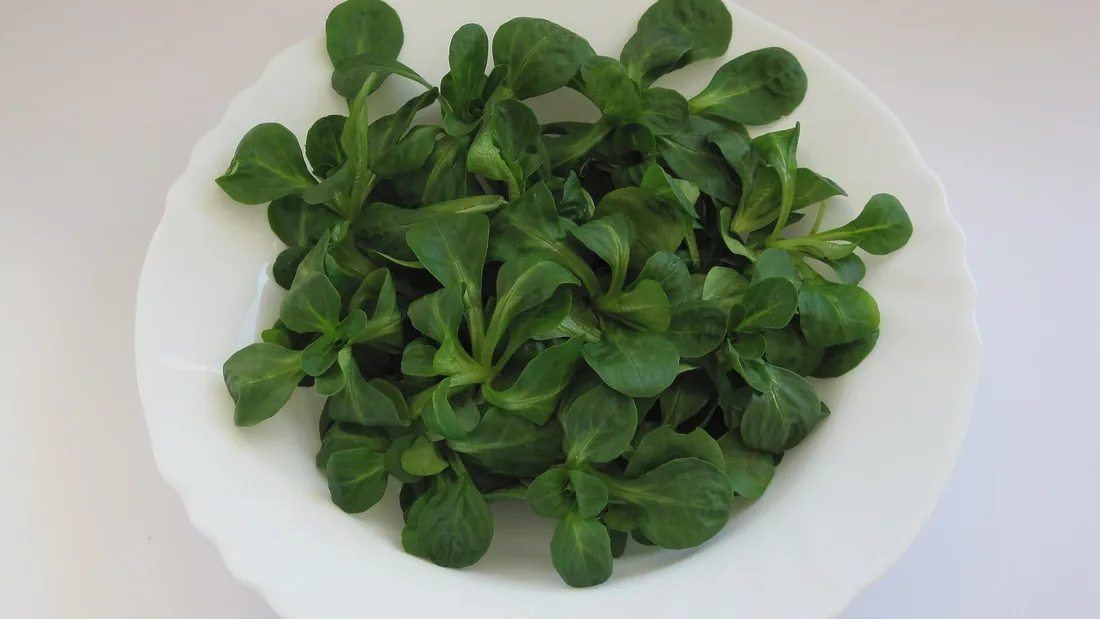

Corn salad (Valerianella locusta) is the winter salad par excellence, the tender rosette that fills the vegetable garden while everything else sleeps. It is picked flat against the ground, from full autumn right through to early spring, and it takes frost down to -10 °C, sometimes -15 °C for the small-seeded varieties. Rain, cold and sodden soil leave it unmoved. Its only real fussiness happens at the late-summer sowing, when heat and drought make germination difficult.
Light and exposure
In the cold season, give corn salad the brightest spot in the garden. At that time of year the sun sits low and daylight is scarce, and every hour of light counts toward forming nice tight rosettes. An open bed, with no shade cast by a wall or a hedge, suits it perfectly.
The earliest late-summer sowings are the exception. Under a still warm sun, an overly scorching position dries out the soil and stops the seeds from germinating. For these first sowings, a corner that gets a little early-afternoon shade, or a bed shaded by a neighbouring crop still in place, clearly improves emergence.
Watering
The key moment is at emergence. Corn salad seed germinates poorly if the soil dries out, which happens quickly with late-summer sowings. After sowing, keep the surface moist with fine, regular watering, in a soft rain, until the young plants are well up. A cloth or a light mulch helps hold that moisture.
Once established and once autumn arrives, corn salad asks for almost nothing. In a temperate climate the rains of the cold season are more than enough, and too much water on cold soil would even be counterproductive. In winter you stop watering and let the sky do the work.
Soil and repotting
Corn salad likes firm soil, rather compact, cool and clean. Unlike many vegetables, it does not need freshly dug and fluffed earth: sow it preferably after an already harvested crop, on soil simply scratched at the surface, then firmed down well after sowing. This close contact between seed and soil encourages germination.
There is no need to manure the bed for it. Soil too rich in nitrogen gives soft leaves that rot more easily in winter. Ordinary earth, neither too acidic nor waterlogged, suits it fine. A former spot for beans or potatoes, cleared of its residue, makes an ideal bed.
Temperature and humidity
This is corn salad’s great strength: cold does not scare it. It grows slowly but surely between 5 and 15 degrees, keeps going under grey weather and withstands sharp frosts, down to -10 or even -15 degrees for the hardy varieties. A touch of frost even firms up its flavour.
Heat, on the other hand, is what bothers it. Above 20 degrees germination becomes unreliable and the plants quickly bolt to flower once the days lengthen again. In a cool, damp temperate climate it is therefore perfectly at home, and it really is summer, not winter, that remains its impossible season.
Pruning and upkeep
Corn salad is not pruned in the classic sense, but its upkeep comes down to weeding. Its rosettes are small and low, quickly smothered by weeds. Hoe gently between the rows while the plants are young, without loosening the rosettes, which hold weakly to the soil.
Thin out if the sowing is too dense. Plants that are too crowded lack air, grow leggy and rot faster in damp weather. Leave a few centimetres between each rosette so they form nice round heads and stay healthy all winter.
Pests and diseases
Corn salad has few enemies, which is part of its charm. The main concern is powdery mildew, a white felting that appears when plants are too crowded and poorly aired, especially in a mild, damp late season. Prevention comes down to one thing: sow thinly, or thin out, to let air circulate between the rosettes.
Slugs are the other threat, particularly on the young tender plants in autumn. They can level a sowing in a single night. Collecting them in the evening, dry ash or mulch around the beds, and keeping watch after each gentle rain limit the damage. Rot can also affect rosettes in contact with waterlogged soil: well-drained earth and a not too dense sowing prevent it.
Propagation
Corn salad is grown solely from direct sowing in place, shallow. Sow on the surface or barely covered, under just a few millimetres of fine soil, then firm down hard with the back of a rake or a small board. This firming is essential: it ensures the seed-to-soil contact that triggers germination. Then keep moist until emergence, which takes one to three weeks depending on the warmth.
To save your own seed, let a few plants bolt to flower in spring. Corn salad flowers in small bluish clusters and readily self-seeds around the garden on its own. Harvest the seeds when they turn brown, dry them and keep them dry: they hold their germinating power for several years.
Climate and hardiness
Where and in which climate it thrives
Corn salad is one of the hardiest salads in the vegetable garden. It grows actively between 12 and 15 °C, slows below 10 °C and almost stops below 5 °C without suffering for it: it simply waits out the cold in dormancy, still green, until milder weather returns. Survival is another matter, and there it goes much further, commonly to -10 °C and to -15 °C in a hard winter for the small-seeded varieties such as 'Verte de Cambrai', hardier than the large-seeded types. There is no need to cover it as long as the thermometer stays above -5 °C; below that, a simple winter fleece mostly keeps the foliage clean and makes picking easier.
It is therefore at home in a cool, damp oceanic temperate climate, where it holds the bed through the whole cold season with no protection, from USDA zone 7 upwards. Under a drier, harsher continental winter, a cold frame or a tunnel takes over, less against the cold itself than against roots lifted out of bare soil by repeated freeze-thaw cycles. In a Mediterranean or subtropical climate the window flips: the cool season becomes the growing season, and summer stays impossible.
Its real limit is heat. Above 18 to 20 °C germination turns erratic, a form of thermal dormancy known in several salad crops, and established plants bolt as soon as the days lengthen. So you sow in late summer and autumn, the first sowing about ten weeks before the first frosts, then for as long as the soil stays above 5 °C. That first, warmest sowing is the trickiest: fine watering, a little early-afternoon shade, a well-firmed surface, and preferably a vigorous large-seeded variety.
Growing corn salad?
Green Hub keeps a dated history of your own plant: its photos, its progress, its repottings. An AI answers about yours specifically, not a generic sheet, for free.
Identify my plantMonth-by-month care calendar
| January | Harvesting in the depths of winter. Cut the rosettes at the collar as needed, even in frosty weather. Under fleece the foliage stays cleaner. |
|---|---|
| February | Continuing the harvest of the autumn sowings. The rosettes firm up in the cold. Plan out the freed-up beds for spring. |
| March | Last harvests before bolting. Possibility of a spring sowing on warming soil, for a quick harvest before the heat. |
| April | Harvesting the March sowings. Optionally let a few plants bolt to flower to save your own seed. |
| May | End of the season’s corn salad. The plants flower and self-seed. Harvest the seed from the finest plants when it turns brown. |
| June | Rest time for corn salad, heat does not suit it. The bed can host a summer crop while waiting for the late-season sowings. |
| July | Nothing to sow, it is too hot. Prepare and mark out the beds that will be freed up in August for the future sowings. |
| August | First sowings in place, in partial shade. Water finely and regularly, firm down well: this is the trickiest emergence of the year. |
| September | Peak sowing period. The soil cools down and germination becomes easier. Thin out and weed the August sowings. |
| October | Last sowings of the season. First harvests from the August sowings. Watch for slugs on the young tender plants. |
| November | Full harvest of the well-formed rosettes. A winter fleece keeps the foliage clean and makes picking easier. |
| December | Harvesting as needed. Corn salad takes the frost without damage. Cut at the collar and rinse well after picking. |
Green Hub tips
- The secret of the first late-summer sowing is moisture: water fine and often, sow in partial shade and firm down hard, otherwise the seed will not come up.
- Sow thinly or thin out. Rosettes that are too crowded smother themselves, catch powdery mildew and rot as soon as the weather turns mild and damp.
- A touch of frost firms up the flavour of corn salad: no need to protect it, it is a genuine fresh vegetable of deep winter.
- Harvest by cutting the whole rosette level with the collar, and rinse carefully: the low leaves easily hold on to soil.
Related species
Honeysuckle
Lonicera
Honeysuckle (Lonicera) is a familiar plant in hedgerows and gardens, known for its very fragrant tubular flowers whose…
Weigela
Weigela florida
Weigela (Weigela florida) is a deciduous shrub from East Asia that has become an unkillable classic of temperate…
Artichoke
Cynara scolymus
The artichoke (Cynara scolymus) is a large perennial with silvery, deeply cut foliage, as striking in an ornamental…
Asparagus
Asparagus officinalis
Asparagus (Asparagus officinalis) is an unusual perennial for a vegetable patch: once established, an asparagus bed…
Bean
Phaseolus vulgaris
The green bean (Phaseolus vulgaris) is one of the easiest vegetables in the kitchen garden, provided you respect one…
Beetroot
Beta vulgaris
Beetroot (Beta vulgaris) is an easy root vegetable, one of the most forgiving in the kitchen garden. You sow it…
The guides that mention it
The vegetable garden calendar, from sowing to harvest
Two dates are enough to build an entire vegetable garden year: your last spring frost and your first autumn frost.…
Gardening Under a Greenhouse or Cold Frame: Growing All Year Round
A greenhouse or even a simple cold frame changes everything: sowings brought forward by several weeks, harvests…
Updated on
How this sheet is written
Written for Green Hub with the help of language models, then reviewed. It offers gardening guidance, not professional advice: if you are unsure whether a plant is toxic to a child or an animal, ask a vet, a doctor or your national poison centre.