ZZ plant
Zamioculcas zamiifolia
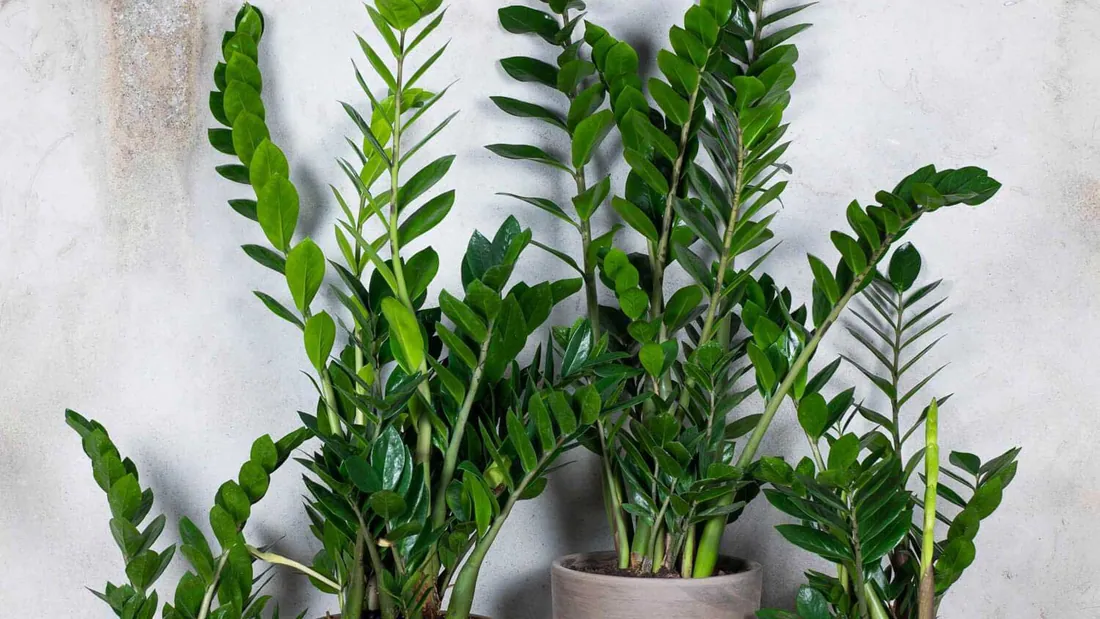

The ZZ plant (Zamioculcas zamiifolia) is a perennial from East Africa with upright stems lined with glossy, deep-green leaflets. Beneath its shiny leaves hides a large underground rhizome that stores water, which makes it an almost indestructible plant, built for neglect and shade. Wherever winter freezes, it lives indoors all year and copes remarkably with the low light of the dark season and the dry air of heating. Its only weak point is excess water, which rots its rhizome in silence.
Light and exposure
The ZZ plant tolerates a wide range of light, from bright filtered light to a distinctly dark corner. In good filtered light it grows faster and forms compact, well-filled stems. In shade it slows down sharply but survives where almost everything else gives up, which explains its reputation as an office and corridor plant.
Avoid direct summer sun, which yellows and scorches the leaflets. Its very good shade tolerance makes it one of the few plants that gets through the low light of the dark season without harm, without needing to be right up against a window.
Watering
This is where everything is decided. The ZZ plant’s rhizome is a water reserve: it fears excess far more than drought. Let the substrate dry out completely before watering again, meaning a watering every two to three weeks in summer, and about one a month in the cold season.
At rest and in little light, the plant consumes almost nothing. The classic mistake is to water it at the same pace as in summer and rot the rhizome. Stems that yellow and soften at the base betray this excess water. A ZZ plant forgotten for an extra month risks nothing, whereas an overwatered plant is quickly lost. When in doubt, do not water.
Soil and repotting
It needs a free-draining substrate that does not trap water around the rhizome. Mix potting soil for green plants with a good share of perlite and a little coarse sand, or use a lightened cactus mix. The pot must be pierced, without exception.
The ZZ plant grows slowly and likes to be cramped. Repot only every three or four years, in spring, when the rhizome makes the pot bulge or crack. A terracotta container, which lets the root ball breathe, reduces the risk of rot compared with a watertight plastic one.
Temperature and humidity
The comfortable range is between 18 and 26 degrees. Below 12 degrees, growth stops and marked cold damages the foliage. The ZZ plant tolerates no frost and dislikes cold draughts.
Its strength is to tolerate very well the dry air of heating throughout the heating season, without misting. It lives at room temperature all year. The only winter pitfall is not the cold but the watering: at rest, the plant needs barely any water, and it is the overflow, not the drought, that puts it at risk.
Pruning and upkeep
The ZZ plant is not pruned into shape, it grows on its own in even upright stems. Just cut off at the base, with a clean tool, whole stems that yellow, dry out or collapse. A damaged stem cannot be repaired.
Wipe the leaflets regularly with a damp cloth. Their glossy surface gathers dust, which dulls their fine shine and limits the light captured. No need for a leaf-shine product: a simple damp cloth is enough to restore their natural gloss.
Pests and diseases
The ZZ plant is very little prone to disease. The only real risk is rot of the rhizome and roots, caused by excess water: the stems yellow and soften at the base, the rhizome smells bad. You must take the plant out, cut back cleanly everything that is soft, let the healthy parts dry and repot in a dry, free-draining substrate.
As for pests, you sometimes meet mealybugs and, when the air is very dry, red spider mites. They remain rare on this thick, tough foliage. Cotton soaked in diluted methylated spirit is enough to treat mealybug outbreaks spotted early.
Propagation
Dividing the rhizome is the fastest method. At the spring repotting, gently separate the clumps, making sure each piece carries a section of rhizome and a few roots, then repot them. Establishment is reliable.
Leaflet cuttings are possible but very slow: detach a leaflet with a small piece of its base, let the cut dry for a day, plant it in a barely moist free-draining mix, and arm yourself with patience. It often takes several months for a tiny rhizome to form beneath the surface before a new stem appears. It is an exercise in patience more than a method in a hurry.
Toxicity
The whole plant contains calcium oxalate crystals. Chewed, a leaf strongly irritates the mouth and throat; the sap can irritate skin and eyes. Keep the ZZ plant out of reach of cats, dogs and young children, and rinse your hands after handling it.
Climate and hardiness
Where and in which climate it thrives
The ZZ plant’s comfortable range lies between 18 and 26 degrees. Below 12 °C growth stops, below 10 °C the foliage is damaged, and no frost at all is tolerated. In the open ground it only holds in a frost-free climate, USDA zones 10 to 12; everywhere else it is a year-round houseplant. A summer spell in bright shade is still possible, to be brought in as soon as nights drop below 12 °C.
It is one of the few plants that gets through a dark season without harm. Where the day falls to eight or nine hours, it slows down sharply but does not waste away, and it does not need to be right up against a window. Air dried out by heating does not reach it either: no misting is needed.
The trap of the cold season is not the cold, it is the watering schedule. At rest and in low light, the rhizome consumes almost nothing: move to one watering a month while the days are short. Stems that yellow and soften at the base betray excess water. An extra month of neglect does it no harm; one watering too many loses it.
Growing zz plant?
Green Hub keeps a dated history of your own plant: its photos, its progress, its repottings. An AI answers about yours specifically, not a generic sheet, for free.
Identify my plantMonth-by-month care calendar
| January | Full rest. Water barely, once in the month, and only if the substrate is dry deep down. No misting. |
|---|---|
| February | Still at rest. A single watering is enough. Dust the glossy leaflets with a damp cloth. |
| March | Growth restarts gently with the light. Resume slightly more frequent watering. A good time to divide and repot if the pot is full. |
| April | Clear resumption. Divide the rhizome to propagate the plant. First very light feeding, diluted fertiliser. |
| May | Active growth, new stems unfurl. Water about every two weeks, letting it dry out well. Feed once in the month. |
| June | Fine growth. You can put the plant out in bright shade on a sheltered terrace, away from direct sun. |
| July | Full summer. Water every two to three weeks. The plant takes heat well, never scorching sun. |
| August | Growth still sustained. Last division possible. Prepare the return indoors if the plant is outside. |
| September | Bring the plant in as soon as the nights drop below 12 degrees. Start spacing out the waterings. |
| October | Growth slows. Last light feeding. Reduce water markedly as winter approaches. |
| November | Entering rest. Switch to monthly watering. Stop the fertiliser. Keep the pot away from cold panes and draughts. |
| December | Winter rest. Minimal watering in the month. This is the season when excess water most threatens the rhizome: hold off at the slightest doubt. |
Green Hub tips
- The underground rhizome is a water reserve: the ZZ plant fears overwatering far more than a long spell of neglect. When in doubt, do not water.
- In winter, a single monthly watering is enough. At rest and in the low light of the dark season, the plant consumes almost nothing.
- Stems that yellow and soften at the base signal a rotting rhizome: stop watering and check the roots without delay.
- Dust the leaflets with a damp cloth to keep their glossy shine, without a leaf-shine product.
Related species
Aglaonema
Aglaonema commutatum
The aglaonema (Aglaonema commutatum) is a robust, easy houseplant, prized for its foliage variegated with green,…
Alocasia
Alocasia
The alocasia, nicknamed elephant ear, charms with its large, dramatically veined leaves. It is a demanding tropical…
Anthurium
Anthurium andraeanum
The anthurium (Anthurium andraeanum) is a tropical houseplant known for its smooth, waxy red spathe, which people often…
Dieffenbachia
Dieffenbachia seguine
Dieffenbachia (Dieffenbachia seguine) is a houseplant with large foliage variegated in cream and green, native to the…
Heartleaf philodendron
Philodendron hederaceum
The heartleaf philodendron (Philodendron hederaceum), also known as the sweetheart plant, is a vine from the tropical…
Peace lily
Spathiphyllum
The peace lily (Spathiphyllum) is a tropical understorey plant from Central America, prized for its glossy green…
The guides that mention it
Indestructible Houseplants: Tolerating Drought Is Not Tolerating Shade
Tolerating drought and tolerating shade are two different adaptations, and almost every list mixes them up. What these…
Watering Plants Properly: Deciding Rather Than Following a Schedule
Beginners water too often and too little at the same time. How to read the soil instead of the calendar, tell thirst…
How to Compost in an Apartment with Worm Composting
Tiered bin, red worms and worm tea: how to compost your kitchen scraps without a garden or odor, even in a city…
Updated on
How this sheet is written
Written for Green Hub with the help of language models, then reviewed. It offers gardening guidance, not professional advice: if you are unsure whether a plant is toxic to a child or an animal, ask a vet, a doctor or your national poison centre.