Hosta
Hosta
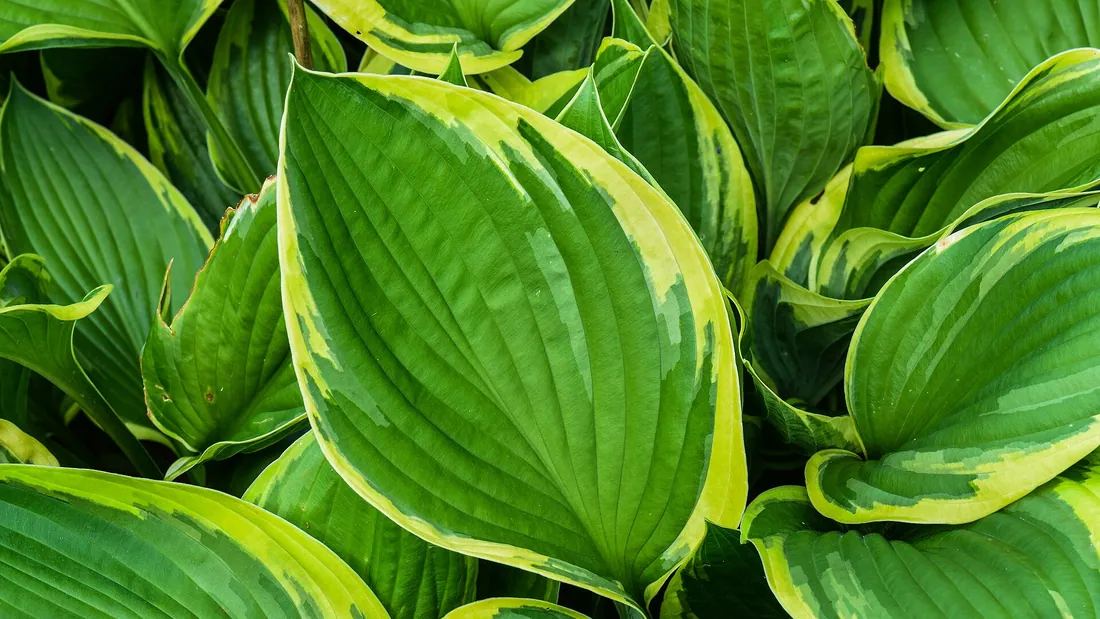

The hosta (Hosta spp.) is a perennial native to the damp woodlands of East Asia, from Japan through China to Korea. It is the undisputed queen of the shade garden, grown above all for its lush, sculptural foliage rather than its flowers, which are modest and short-lived in summer. But that reputation comes with a well-known downside for every gardener in a damp climate: slugs and snails love it, and an unprotected hosta can be reduced to lace in a single damp night.
Light and exposure
Hostas grow in partial shade to full shade, never in full sun in a temperate climate. The general rule follows the leaf colour: cultivars with blue or dark green leaves need denser shade to keep their colour and avoid scorching, while yellow, gold or variegated varieties tolerate a bit more light, especially in the morning, and often look brighter for a few hours of gentle sun.
In the garden, the base of a tree, the shaded side of a hedge or a shady corner of the terrace all work well. Avoid afternoon sun in summer above all, it scorches the leaf edges even on the more tolerant varieties.
Watering
Hostas want soil that stays consistently moist and never dries out completely, especially during the first couple of years after planting. Their large leaves lose a lot of water, and prolonged drought quickly shows up as drooping foliage and browning edges.
A good organic mulch, leaf mould, bark or coarse compost, helps hold moisture in the soil and cuts down on watering. In pots you need to be even more careful: the compost dries out fast, and a potted hosta left unwatered for a week in high summer suffers for it quickly.
Soil and repotting
Hostas like rich, humus-laden, moisture-retentive soil, close to what they find naturally in woodland. Working in compost or leaf mould at planting, and topping it up each spring, makes a real difference to how vigorous the clump becomes.
The soil should stay moist without ever being waterlogged: standing water around the crown encourages crown rot. In heavy clay soil, common enough in many gardens, a little coarse sand or well-rotted compost improves drainage without drying the soil out.
Temperature and humidity
Hostas are remarkably hardy and cause no worries at all in a temperate climate: once dormant they shrug off temperatures well below minus twenty degrees, which makes them reliable across USDA zones 3 to 8. There is strictly nothing to protect over winter.
What often surprises new gardeners is that this is a herbaceous perennial: all the foliage disappears completely in winter, the plant looks dead, and the clump is entirely invisible underground for several months. Never worry about this winter disappearance, hostas come back reliably as soon as the soil warms up in spring.
Pruning and upkeep
Hostas need almost no pruning during the season. The only useful jobs are cutting off spent flower stalks if you prefer to focus attention on the foliage, and removing damaged leaves or ones badly chewed by slugs as you go.
In autumn, once frost has flattened the foliage and it has turned yellow then brown, cut everything back to ground level and tidy the area. This clean-up removes slug hiding spots for the following winter and stops rotting foliage from encouraging crown disease.
Pests and diseases
The number one enemy of the hosta, without question, is the slug and the snail. A damp summer and soil that stays cool and moist are ideal for them, and the tender, sugary young shoots of spring are especially vulnerable: a whole clump can be turned to lace in a single rainy night.
Several methods work well together: ferric phosphate slug pellets scattered around the clumps as soon as the first leaves appear, a ring of wood ash or crushed eggshells around the plant, beer traps sunk flush with the soil, and hand-picking at dusk or early morning after rain, when slugs are most active. A coarse mulch of bark rather than fine material also puts them off. Another line of defence: cultivars with thick, waxy, deeply textured leaves, often among the blue varieties, resist attack noticeably better than thin, smooth-leaved ones. As for disease, crown rot lurks in waterlogged soil, and the rarer HVX virus shows up as discoloured streaks and blotches on the foliage: there is no cure, the only option is to dig up and destroy the affected plant to stop it spreading to its neighbours.
Propagation
Dividing the clump in spring is by far the simplest and most reliable method, and it is what gardeners actually do. As soon as the first shoots, known as noses, poke through the soil, dig up the whole clump and split it with a spade or knife into several pieces, each with at least one eye and a few roots.
Division can also be done in late summer or early autumn, once the worst of the heat has passed. Growing from seed is possible but slow and rarely used by home gardeners: germination is uneven and, more importantly, seedlings do not reliably reproduce the colours and variegation of named cultivars, often reverting to plain green foliage. To multiply a fine variegated variety, division remains the only real guarantee.
Climate and hardiness
Where and in which climate it thrives
The hosta is hardy to an uncommon degree: once dormant, the crown shrugs off temperatures well below minus twenty degrees, which makes it reliable across USDA zones 3 to 8, and up to 9 for a few cultivars. There is nothing to protect over winter, and in fact the opposite is what counts: the hosta needs a genuine cold rest, a few weeks below 5 degrees, to come back strongly in spring. Deprived of that spell, in a subtropical or tropical climate, it exhausts itself year after year and eventually disappears.
It is at home in a cool, damp temperate climate, in the light shade of woodland: that is where the genus comes from, in East Asia. Under a hot dry summer, or in a Mediterranean climate, it is still possible but becomes demanding, full shade all day, heavily mulched soil and regular watering, without which the leaf edges scorch at the first heatwave. In a continental climate with a dry winter, a winter mulch serves less against the cold than against the heaving caused by freeze and thaw cycles.
What really changes the handling is summer moisture. Where summers are mild and rainy, slugs and snails become subject number one and have to be dealt with from the moment the first shoots appear. Where summers are dry, they are scarce and watering takes their place at the top of the worry list. The climate does not decide whether the hosta grows, it decides what you will have to defend it against.
Growing hosta?
Green Hub keeps a dated history of your own plant: its photos, its progress, its repottings. An AI answers about yours specifically, not a generic sheet, for free.
Identify my plantMonth-by-month care calendar
| January | Nothing to see or do in the garden, the clump is completely invisible underground. A good time to plan divisions or scout new cultivars for spring. |
|---|---|
| February | The last weeks of full rest. Prepare the compost or leaf mould you will spread on the surface once growth resumes. |
| March | The first shoots, the noses, break through the soil. This is the trickiest month: watch for slugs from the moment these tender young shoots appear, they are especially vulnerable. |
| April | Foliage unfurls quickly. Put down slug pellets or your barriers of choice without delay and refresh the mulch. |
| May | Leaves are in full growth. Water if the soil dries out, and divide older clumps just after they emerge if you want to multiply them. |
| June | Foliage is fully out and flower stalks appear on early varieties. Keep checking for slugs after every rain. |
| July | Little upkeep needed: water during prolonged dry spells and remove spent flowers if you would rather the plant put its energy into foliage. |
| August | Late varieties come into flower. Stay alert for slugs in muggy, humid weather, they take advantage of every shower. |
| September | Growth slows gently. A good time to divide clumps towards the end of the month, once the worst heat has passed. |
| October | The first cold snaps turn the foliage yellow. Let it die back naturally, it keeps feeding the crown as it fades. |
| November | Frost flattens the faded foliage. Cut it back to ground level and tidy up to remove slug hiding spots for next year. |
| December | Full dormancy, the clump is invisible underground. No care needed at all, hostas need no protection from the cold. |
Green Hub tips
- Combine several slug tactics as soon as young shoots appear in spring: ferric phosphate pellets, wood ash or crushed eggshells, beer traps and hand-picking at dusk. This is when the foliage’s survival is decided.
- Divide your clumps in spring, as soon as the noses break through the soil. It costs nothing, carries no risk, and is the best moment to expand a bed or share a piece with a neighbour.
- Choose cultivars with thick, waxy, deeply textured leaves, often among the blue varieties, they hold up noticeably better against slugs than thin, smooth foliage.
- Never worry about a hosta disappearing completely in winter, that is normal for this herbaceous perennial. The foliage is toxic to dogs and cats in large amounts, so keep pets away from young shoots all the same.
Related species
Asparagus
Asparagus officinalis
Asparagus (Asparagus officinalis) is an unusual perennial for a vegetable patch: once established, an asparagus bed…
Hyacinth
Hyacinthus orientalis
The hyacinth (Hyacinthus orientalis) is a spring bulb whose heady scent announces the return of fine weather in gardens…
Lily of the valley
Convallaria majalis
Lily of the valley (Convallaria majalis) is the small perennial with white, fragrant bell flowers traditionally given…
Madagascar dragon tree
Dracaena marginata
The Madagascar dragon tree (Dracaena marginata) is a houseplant with a slender trunk and a tuft of strap-like leaves…
Snake plant
Dracaena trifasciata
The snake plant (Dracaena trifasciata), long classed under the name Sansevieria trifasciata and nicknamed…
Spider plant
Chlorophytum comosum
The spider plant (Chlorophytum comosum), also called ribbon plant, is a South African perennial that has become the…
The guides that mention it
Perennial Flowers: Choosing, Planting and Blooming Without a Gap All Season
What genuinely comes back year after year, how to read hardiness by zone rather than by promise, and how to string…
Watering Plants Properly: Deciding Rather Than Following a Schedule
Beginners water too often and too little at the same time. How to read the soil instead of the calendar, tell thirst…
Improving Clay Soil: Diagnosis, Amendments and Drainage
Ground that clings to your boots in winter and cracks open in summer: a clay soil is not condemned, it changes with the…
Vegetable Garden Pests: The Natural Method That Holds All Season
A leaf riddled with holes, a lettuce shaved to the ground overnight, a twisted and sticky shoot: every kind of damage…
Lawn Care: From Seeding to Mowing, and Renovation
Mowing higher changes more than any fertilizer can: turf density, drought resistance, weeds, moss. Everything else in…
Gardening on a Balcony or Terrace: Vegetables and Flowers in Pots
Weight, wind, exposure: what really changes when you garden up high instead of in open ground, and how to choose your…
Dividing, Taking Cuttings, Sowing: Multiplying Your Plants for Free
Dividing a perennial, taking cuttings from a shrub, or sowing seed straight from the garden: the techniques that fill a…
What to Plant in a Shade Garden, Under Trees and Against Sunless Walls
Under a large tree or against a wall the sun never reaches, shade doesn’t rule out a planting bed: it calls for a…
Updated on
How this sheet is written
Written for Green Hub with the help of language models, then reviewed. It offers gardening guidance, not professional advice: if you are unsure whether a plant is toxic to a child or an animal, ask a vet, a doctor or your national poison centre.