Witloof chicory
Cichorium intybus var. foliosum
_Jungpflanzen--Josef_Schlaghecken.jpg)
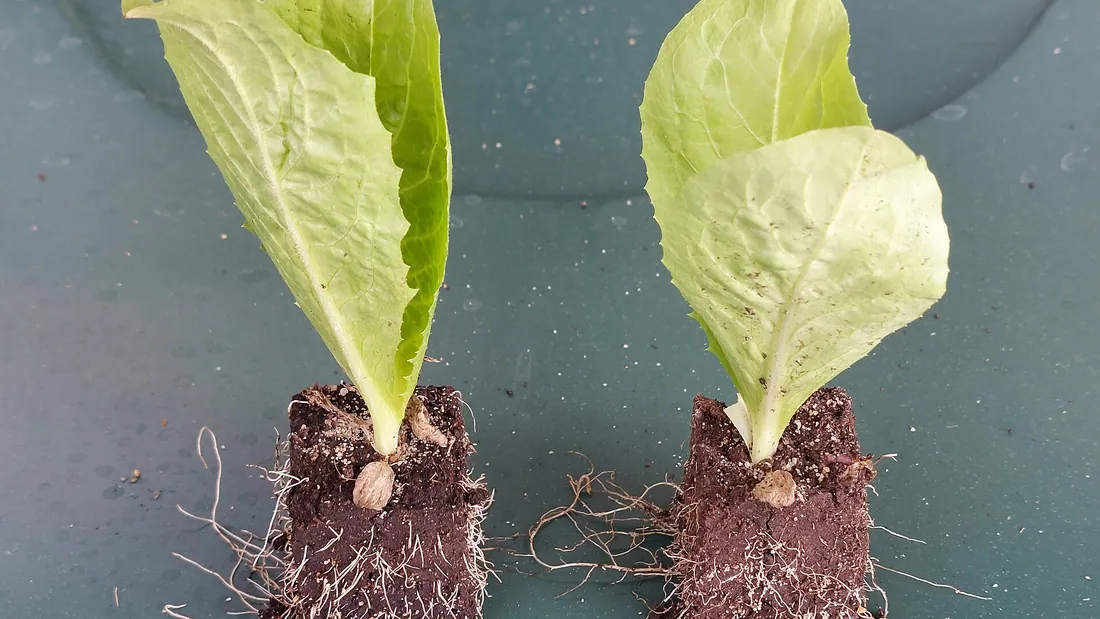
Witloof (Cichorium intybus var. foliosum), the forced chicory better known as endive or chicon, is grown in two stages: first a root that you fatten all summer in open ground, then a forcing in darkness that produces the small, tight white bud you eat. It was selected in Brussels in the nineteenth century, and its Dutch name means white leaf. It is a cold-season vegetable, harvested when the kitchen garden has little else to give. Nothing complicated, but you have to accept the wait and the work over two seasons.
Light and exposure
For the first phase, that of the root, witloof wants full sun or generous light. The rosette of green leaves must capture as much energy as possible right through the growing season, from spring to autumn, to build a good fleshy root, and it is that root that will feed the bud later. A shaded corner gives thin roots and a disappointing forcing.
The second phase, the forcing, takes place on the contrary in complete darkness. A cellar, a dark garage, a cardboard box turned upside down over a bin, any place without the slightest light will do. It is precisely the absence of light that keeps the endive white and mild: in the light it turns green and becomes frankly bitter.
Watering
During the growing of the root, water regularly in summer so the plant does not suffer a dry spell. A root short of water bolts faster and gives a poor forcing. Soil that stays cool, without being drowned, is the ideal all summer long.
At forcing, moisture must be constant but moderate. If you force in a bin of compost or sand, keep the substrate damp like a wrung-out sponge. In hydroponic forcing, the roots stand with their base in a few centimetres of water that is renewed. Too much stagnant water rots the collar, too little and the bud stays stunted.
Soil and repotting
For the root, aim for deep, loose, stone-free soil, rather cool and not too rich. An excess of nitrogen or fresh manure makes the roots fork and gives soft endives. Ordinary garden soil, loosened deeply, gives the best nice straight roots.
Avoid sowing witloof right after a generous addition of compost: keep it for a plot that was manured the previous year. Soil too rich swells the foliage at the expense of the root, exactly the opposite of what we are looking for here.
Temperature and humidity
The root does not mind moderate cold and grows quietly all summer long. It even withstands the first autumn frosts, which leaves time to lift it without rushing before the hard cold sets in.
The forcing, on the other hand, calls for gentle, steady warmth, between 12 and 18 degrees. Below that, the bud takes far too many weeks to form; above 20 degrees it runs, loosens and opens up. A cellar holding around 15 degrees is almost perfect. It is that constant mildness in the dark that wakes the root and makes the endive grow.
Pruning and upkeep
There is no pruning in the classic sense, but two cutting gestures matter. When lifting the roots in autumn, cut the foliage about 2 to 3 centimetres above the collar, without harming the central bud, which is the starting point of the future endive. Cut too short and you damage the heart, too long and the forcing goes awry.
Also trim the tip of the roots if they are very long, so they stand upright in the forcing bin. A root of about twenty centimetres, the size of a nice carrot, is the ideal format. Roots that are too thin are discarded, they will give nothing.
Pests and diseases
In the field, watch mainly for rust and powdery mildew on the foliage in a damp summer, as well as slugs that nibble the young rosettes. Nothing dramatic in general, crop rotation and well-drained soil usually suffice.
It is at forcing that trouble really lurks. Grey mould, Botrytis, and collar rot settle in fast if the air is confined, damp and stagnant. Air out the forcing spot from time to time, never wet the heart of the endives, and remove without delay any root that starts to soften or smell, before it contaminates its neighbours.
Propagation
Witloof is propagated by sowing, once a year in spring. Sow directly in place as soon as the soil has warmed to 10 or 12 degrees, in rows spaced 30 centimetres apart, then thin out to keep only one plant every 10 centimetres. It is this thinning that decides the size of the roots, so do not neglect it.
Witloof is not taken from cuttings and you do not harvest its seed in the garden, because it is a biennial: it only flowers in the second year, and a forced root is eaten before that anyway. So buy fresh seed each spring, choosing a variety suited to forcing without a covering of soil, simpler for the amateur.
Climate and hardiness
Where and in which climate it thrives
The chicory that witloof comes from is a hardy field plant: the wild species comes through USDA zone 3 winters unharmed, and the first-year rosette takes a few degrees of frost without flinching. So it is never the cold that decides whether the crop works, but the length of the season: you need about five months between emergence and lifting for a root to reach the 3 to 5 centimetres of collar diameter that make a good forcing.
In a mild, damp oceanic climate the crop goes without a hitch, that being the plant's natural playing field. In a continental climate with hot summers and dry winters, sow as soon as the soil holds 10 to 12 degrees and mulch the row, because a prolonged dry spell sends the plant to seed and the root never makes up the lost ground. Under a short summer or at altitude, the five months are only just there: better to accept slightly thinner roots than to sow into still-cold soil, which triggers bolting. In a Mediterranean or subtropical climate the difficulty moves elsewhere: summer heat makes the plant run, and it is the cool season that becomes the right growing period for the root.
The forcing itself could not care less about the weather outside, since it happens in the dark, but it does demand a steady 12 to 18 degrees. Where winters stay mild, a cellar often runs above that and the bud goes soft and open: look instead for the coolest room in the house, an unheated pantry or an air-conditioned space. Conversely, a cellar that drops below 10 degrees does not stop the forcing, it simply slows it down markedly. The cold rest has to be arranged by hand in any case: the fortnight near zero degrees that precedes the forcing is given in the fridge or in a sand clamp kept cool, failing which the buds start in scattered order.
Growing witloof chicory?
Green Hub keeps a dated history of your own plant: its photos, its progress, its repottings. An AI answers about yours specifically, not a generic sheet, for free.
Identify my plantMonth-by-month care calendar
| January | Peak forcing season. Take out the endives formed in the cellar and start a new bin of roots to spread the harvest. Watch for grey mould and air it a little. |
|---|---|
| February | Still forcing. Harvest the last buds from the roots put in the cellar in January. Order the seed for the spring sowing. |
| March | End of forcing with the last stored roots. Clean and store the cellar equipment. Prepare the plot that will host the sowing, without any fresh manure. |
| April | Loosen the soil deeply, remove the stones. Still too early to sow outdoors, the earth is cold and the endive would bolt. |
| May | First sowings in open ground, in rows spaced 30 centimetres apart. Wait until the soil is warmed. Water to ensure a good emergence. |
| June | Continue the sowings and thin out to one plant every 10 centimetres. It is the thinning that makes fine roots. Watch for slugs on the young rosettes. |
| July | The root fattens quietly. Water in dry weather to avoid any heat spell that would make the plant bolt. Weed between the rows. |
| August | Keep holding the soil cool. Watch for rust and powdery mildew on the foliage in damp weather. Nothing to harvest yet, patience is working for you. |
| September | The roots finish filling out. Let the rosette capture the autumn light. Mark out the finest roots for the first forcing. |
| October | First liftings of roots. Cut the foliage 2 or 3 centimetres from the collar without harming the bud. Start the first forcing bin in the cellar, dark and gently warm. |
| November | Lift the rest of the roots before the hard frosts and store them in the cool. Stagger the forcing batches every two or three weeks. First harvests of white endives. |
| December | Peak forcing harvest. Cut the formed endives at the base and immediately start a new bin. Check that the cellar stays between 12 and 18 degrees and in complete darkness. |
Green Hub tips
- Absolute darkness is the key: the slightest leak of light turns the bud green and makes it bitter. An opaque cardboard box turned over the bin is enough in a cellar.
- Do not manure the plot the year of the endive. Soil too rich makes the roots fork and gives soft, loose endives.
- Stagger the forcing batches, a crate of roots every two or three weeks, to harvest fresh endive all winter rather than all at once.
- Keep the cellar between 12 and 18 degrees. Warmer, the endive runs and opens; colder, it drags on for weeks before it heads up.
Related species
Artichoke
Cynara scolymus
The artichoke (Cynara scolymus) is a large perennial with silvery, deeply cut foliage, as striking in an ornamental…
Coneflower
Echinacea purpurea
Coneflower (Echinacea purpurea) is a tall, sturdy perennial from the prairies of North America, recognisable by its…
Dahlia
Dahlia
The dahlia (Dahlia) is a tuberous plant that offers one of the longest and most spectacular displays of the summer…
Lettuce
Lactuca sativa
Lettuce (Lactuca sativa) is the most widely grown salad in the vegetable garden, easy and quick, harvested six to ten…
Oxeye Daisy
Leucanthemum vulgare
The oxeye daisy (Leucanthemum vulgare) is that white flower with a yellow centre that pops up on its own in our…
Tarragon
Artemisia dracunculus
Tarragon (Artemisia dracunculus) is an aromatic perennial with an aniseed scent, a cornerstone of French cooking. The…
Updated on
How this sheet is written
Written for Green Hub with the help of language models, then reviewed. It offers gardening guidance, not professional advice: if you are unsure whether a plant is toxic to a child or an animal, ask a vet, a doctor or your national poison centre.