Coneflower
Echinacea purpurea
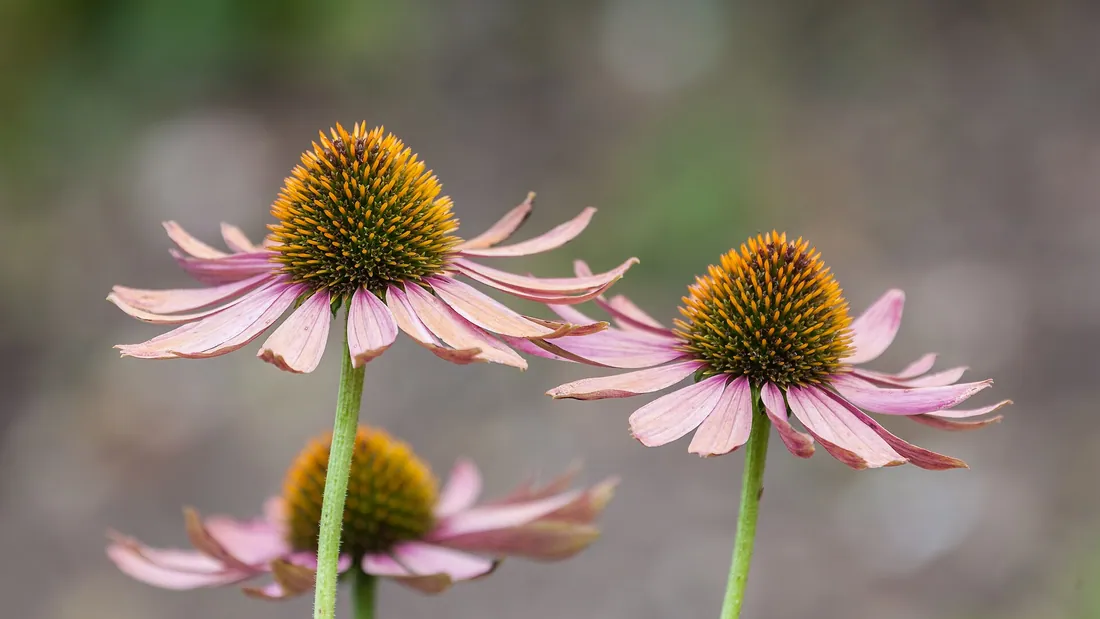

Coneflower (Echinacea purpurea) is a tall, sturdy perennial from the prairies of North America, recognisable by its pink daisy-like flowers with a domed, coppery centre. Everywhere in temperate climates it has become a favourite of naturalistic gardens and a magnet for pollinators, standing strong through the whole summer without asking for much in return.
Light and exposure
Coneflower wants full sun, at least six hours a day, to produce a generous flush of flowers on strong stems that will not flop. Too much shade gives you a leggy, sparse-flowering plant that is more prone to powdery mildew later in summer.
It copes with a little light shade in the late afternoon without much trouble, but avoid any dark, sheltered corner under trees. In a border, pair it with other sun-loving prairie perennials such as rudbeckia or ornamental grasses that enjoy the same open exposure.
Watering
Once well established, coneflower copes very well with drought thanks to a deep taproot that reaches for moisture far below the surface. In the first year after planting, though, water it regularly to help it root in, especially through dry summers.
Avoid any standing water, particularly in winter: that is the plant’s real weak point in a rainy climate. Soil that stays waterlogged for weeks rots the crown far more reliably than cold ever does.
Soil and repotting
Coneflower is not a demanding feeder: poor to average soil, even chalky or stony, suits it perfectly, as long as it drains well. Soil that is too rich in nitrogen produces soft, floppy stems that go down at the first gust of wind or summer storm.
Drainage is the real criterion. On heavy clay, common enough in many gardens, work in gravel, coarse sand or well-rotted compost at planting time to open up the structure and stop water pooling around the crown in winter.
Temperature and humidity
Coneflower is a tough perennial, hardy down to USDA zone 3: it shrugs off frosts down to minus 20 degrees while dormant, and a good deal lower still under snow cover. Cold on its own is never really the issue.
What puts it at risk is the combination of wet and cold: a crown that stays waterlogged through a rainy winter rots far more easily than it ever freezes. In zone 8a it overwinters outdoors with no protection at all, provided the soil drains freely.
Pruning and upkeep
Resist the urge to cut everything back in autumn. Leave the stems and spent flower heads standing all winter: the seeds feed goldfinches and other seed-eating birds, and the dry silhouettes under frost or snow are one of the real pleasures of the winter garden.
Cut back to ground level only at the very end of winter, just before new growth starts from the crown. During the flowering season you can deadhead some spent blooms to extend the display, but always let the last flush go to seed at the end of the season.
Pests and diseases
Crown rot, encouraged by soil that stays too wet in winter, is the main risk for coneflower in a climate with rainy winters. It shows up as a crown that fails to sprout in spring or stems that blacken at the base: good drainage at planting time is the best prevention.
Powdery mildew can appear on the foliage in hot, humid summers, especially where clumps are too dense and poorly aired, showing up as a white, powdery coating. More rarely, aster yellows, caused by a phytoplasma spread by leafhoppers, distorts the flowers and yellows the foliage; there is no cure, so affected plants are best pulled and destroyed.
Propagation
Division is the most reliable way to get new plants that match the parent exactly. Do it in spring, only every three to four years: coneflower dislikes being disturbed too often and can take a whole season to settle back in after being divided.
Sowing also works but germination is uneven; a few weeks of cold stratification in the fridge improves it noticeably. Given the right conditions, coneflower also self-seeds readily in the garden, a real asset for anyone who likes a naturalistic border that keeps evolving on its own.
Climate and hardiness
Where and in which climate it thrives
Purple coneflower is hardy from USDA zone 3 to zone 8: while dormant it takes winters whose lows go well below minus 20 degrees, and cold is never what kills it. Water is what kills it.
In a mild, rainy oceanic climate the danger is crown rot through a waterlogged winter. On heavy soil, plant on a low mound or work in gravel and coarse sand, and leave the dry stems standing rather than cutting back in autumn: the crown stays drier that way.
In a continental climate with cold, dry winters it is at home, since that is the climate of its native prairies. It overwinters with no protection at all, all the better where snow cover insulates it.
Under hot, humid summers powdery mildew settles quickly on dense clumps: space plants 45 to 60 cm apart and divide to open the planting up.
In a Mediterranean climate or under dry heat its taproot makes it very tough once established, but the first season calls for regular watering. Its warm limit is around zone 9: beyond that, without a real winter rest, the clumps exhaust themselves within a few seasons.
Flowering lasts about two months at the height of summer and runs on into a fine late season; it starts earlier the warmer the spring has been.
Growing coneflower?
Green Hub keeps a dated history of your own plant: its photos, its progress, its repottings. An AI answers about yours specifically, not a generic sheet, for free.
Identify my plantMonth-by-month care calendar
| January | Nothing to do in the garden. The plant rests under its crown; leave the dry stems standing for the birds and for the frosted look. |
|---|---|
| February | Still resting. Last month before cutting back if you have not done it yet; a mild spell now is a fine time to tidy up. |
| March | Cut back last year’s stems to the ground if you have not already. Clear the way for new shoots and divide clumps that are three to four years old. |
| April | Active growth. Shoots rise quickly; weed around them. No flowers yet, just building strength. |
| May | Foliage fills out well. Watch for slugs on the young shoots and plant out any new pot-grown coneflowers now. |
| June | Flowering begins. The first cone-shaped blooms open; water only if drought sets in. |
| July | Full flower. The domed, coppery centres draw bees and butterflies in numbers; deadhead a few spent blooms if you want to stretch the display. |
| August | Flowering continues through the heat. Check dense clumps for powdery mildew on the foliage and thin them out for better air if needed. |
| September | Flowering winds down. Let the last blooms go to seed for the goldfinches. |
| October | Growth slows right down. Leave everything uncut, stems and seed heads stay up all winter. |
| November | Rest sets in. The dry seed heads decorate the garden and feed the birds. |
| December | Full dormancy. Enjoy the frosted silhouettes and start planning next spring’s divisions. |
Green Hub tips
- Good drainage is non-negotiable: work gravel or coarse sand into heavy soil, since what kills coneflower is winter crown rot, not the cold itself.
- Never cut back the spent stems in autumn: leave the dry seed heads standing to feed goldfinches all winter, and cut back only at the end of winter.
- Divide only every three to four years, in spring: coneflower dislikes frequent disturbance and takes a while to settle back in after being split.
- Let a few seed heads ripen at the end of the season: coneflower self-seeds readily and hands you fresh plants for free.
Related species
Artichoke
Cynara scolymus
The artichoke (Cynara scolymus) is a large perennial with silvery, deeply cut foliage, as striking in an ornamental…
Dahlia
Dahlia
The dahlia (Dahlia) is a tuberous plant that offers one of the longest and most spectacular displays of the summer…
Lettuce
Lactuca sativa
Lettuce (Lactuca sativa) is the most widely grown salad in the vegetable garden, easy and quick, harvested six to ten…
Oxeye Daisy
Leucanthemum vulgare
The oxeye daisy (Leucanthemum vulgare) is that white flower with a yellow centre that pops up on its own in our…
Tarragon
Artemisia dracunculus
Tarragon (Artemisia dracunculus) is an aromatic perennial with an aniseed scent, a cornerstone of French cooking. The…
Witloof chicory
Cichorium intybus var. foliosum
Witloof (Cichorium intybus var. foliosum), the forced chicory better known as endive or chicon, is grown in two stages:…
The guides that mention it
Perennial Flowers: Choosing, Planting and Blooming Without a Gap All Season
What genuinely comes back year after year, how to read hardiness by zone rather than by promise, and how to string…
Lawn Care: From Seeding to Mowing, and Renovation
Mowing higher changes more than any fertilizer can: turf density, drought resistance, weeds, moss. Everything else in…
Wildflower Meadows and Beneficial Insects: Gardening for Biodiversity
Ladybirds, hoverflies, wild bees: how a wildflower meadow and a few simple habits turn an ordinary garden into a refuge…
Dividing, Taking Cuttings, Sowing: Multiplying Your Plants for Free
Dividing a perennial, taking cuttings from a shrub, or sowing seed straight from the garden: the techniques that fill a…
The Cutting Garden: How to Pick Flowers and Make Your Bouquet Last
Dahlias, peonies, hydrangeas: what separates a flower that lasts ten days in a vase from one that droops by the next…
Which Plants to Choose for a Drought-Resistant Garden
Deep roots, silvery foliage, Mediterranean origins: the plants that get through a dry summer without watering, and how…
Designing your garden by colour: the combinations that work
Warm harmonies, cool harmonies, monochrome schemes or bold contrasts: colour changes everything in a garden, from the…
Updated on
How this sheet is written
Written for Green Hub with the help of language models, then reviewed. It offers gardening guidance, not professional advice: if you are unsure whether a plant is toxic to a child or an animal, ask a vet, a doctor or your national poison centre.