Lettuce
Lactuca sativa
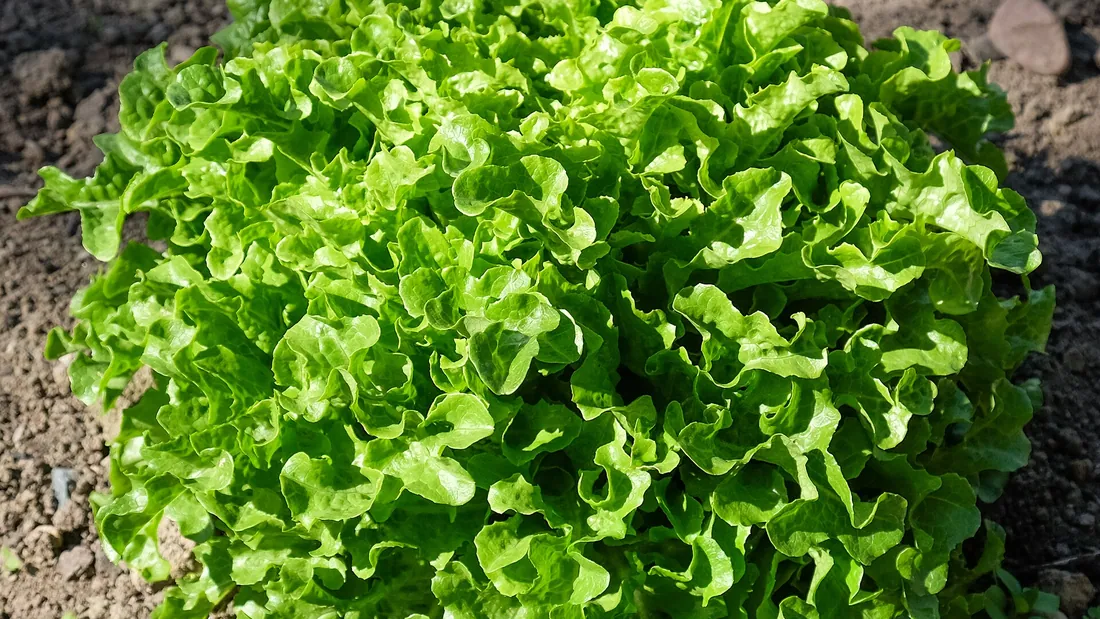

Lettuce (Lactuca sativa) is the most widely grown salad in the vegetable garden, easy and quick, harvested six to ten weeks after sowing. It does particularly well in cool climates, because it fears heat far more than cold. The secret to having it all through the good season is staggered sowing: a few plants every fortnight rather than one big bed all at once. Its two watch points are bolting as soon as it turns hot, and slugs that love young plants in damp weather.
Light and exposure
In spring and autumn, lettuce likes the sun, which gives it well-formed, crunchy heads. A sunny position is ideal for sowings from early spring to early summer, and for those of late summer.
In high summer, give it partial shade. Heat and full sun make it bolt and turn bitter. The light shade of a row of tomatoes or beans, or the side of a hedge that only catches the morning sun, clearly extends the summer harvest.
Watering
Lettuce is mostly made of water and has shallow roots, so it needs a soil that stays cool at all times. Water regularly, preferably in the morning, at the base and avoiding soaking the heart of the heads.
Water stress is the first trigger of bolting and bitterness. A soil that dries out then is rehydrated all at once also makes the heart split and rot. A light mulch keeps the moisture steady and limits soil splashing onto the lower leaves.
Soil and repotting
Lettuce likes a loose, cool soil, rich in humus and well drained. A little mature compost worked in before planting supports its quick growth. It has no great demands, but a soil that holds moisture makes all the difference.
Avoid soils that dry out on the surface or compact after rain. In heavy soil, an addition of compost lightens the structure and improves water retention without excess, because the roots rot in a waterlogged soil.
Temperature and humidity
Lettuce is a cool-season plant. It germinates and grows best between 12 and 20 degrees, and tolerates light frosts late in the season, especially the winter varieties. It is a vegetable cut out for cool temperate climates.
Its constraint is not cold but heat. Above 25 degrees the seed germinates poorly and the plant bolts. Direct sowing in open ground is possible as soon as the soil has drained at the end of winter, and continues until the end of summer. The very first sowings are done rather under cover, in a cold frame or in pots, to be transplanted once the last frosts have passed.
Pruning and upkeep
Lettuce is not pruned, but it needs thinning or transplanting at a good distance. Crowded, lettuces head up poorly and rot at the heart. Leave twenty-five to thirty centimetres between the head varieties, a little less for cutting lettuces.
For cutting varieties and oak-leaf types, harvest leaf by leaf as needed, taking the outer leaves. The heart keeps producing, and a single plant thus supplies several weeks. Remove the yellowed lower leaves along the way to air the plant and cut short the slugs.
Pests and diseases
Slugs are lettuce’s number one enemy in a damp climate. They devour young plants in a night and hide under the lower leaves. Pick them off in the evening, clear the collar of the plants, and think of barriers or traps around the sowings.
As for diseases, watch for lettuce downy mildew, caused by Bremia lactucae, which marks the top of the leaves with yellow patches and the underside with a white felting in mild, damp weather. Grey mould and collar rot lie in wait for plants that are too crowded or too watered at the heart. Air them, space them out and water at the base in the morning.
Propagation
Lettuce is sown very simply, on the surface or barely covered, because the seed needs light to germinate. Sow in pots or trays to transplant, or directly in place and thin out afterwards. Emergence takes a few days.
The key move is staggered sowing. Sow a small quantity every fortnight, from spring to the end of summer, rather than one big bed all at once. You thus spread out the harvest instead of ending up with twenty salads ready the same week. In high summer, sow in partial shade and in the cool, because the seed germinates poorly in the heat.
Climate and hardiness
Where and in which climate it thrives
Lettuce is a cool-season plant: it germinates and grows best between 12 and 20 degrees, most varieties take light frosts, and winter cos types such as 'Rouge d’Hiver' hold out down to around minus 10 degrees. Grown as an annual, it can be sown in every USDA zone, but not in every season: its real constraint is not cold, it is heat. Between 25 and 30 degrees the seed goes into thermal dormancy and simply refuses to germinate, and a plant that has bolted turns bitter within days.
In a temperate oceanic or mildly continental climate it is completely at home: the crop runs from the end of winter, under a cold frame or in pots, right through to the first frosts, with direct sowing in open ground as soon as the soil has drained. In a Mediterranean or subtropical climate it becomes a cool-season crop in the strict sense: sow during the mild season and skip high summer, or sow in the shade, late in the day, on soil kept cool. In a continental climate with a hard winter the window narrows to spring and late summer, and late sowings are protected under a cold frame.
Two reflexes work everywhere. Staggered sowing first: a few plants every fortnight rather than one big bed all at once, so you do not end up with twenty salads ready the same week. Then the choice of cultivar: during the hot period a slow-bolting variety such as the crisphead 'Reine des Glaces' or 'Grosse Blonde Paresseuse' changes everything, sown in partial shade and watered without fail. A slightly acid to neutral soil, around pH 6.5, suits it with no particular amendment, which is the case of most garden soils. Finally, wherever the air stays damp, slugs are the other major constraint on young plants: an evening round and barriers around the sowings.
Growing lettuce?
Green Hub keeps a dated history of your own plant: its photos, its progress, its repottings. An AI answers about yours specifically, not a generic sheet, for free.
Identify my plantMonth-by-month care calendar
| January | Rest. Order the seeds and choose the varieties, one for spring, one summer variety resistant to bolting, one for winter. |
|---|---|
| February | In a heated cold frame or a bright indoor spot, the very first sowings are possible. In open ground, still too cold and wet. |
| March | Sowing under cover, in a cold frame or in pots, to transplant later. Prepare the beds by enriching them with compost. |
| April | Direct sowing in open ground becomes possible once the soil has drained. Transplant the March plants. Watch for slugs. |
| May | Transplanting in open ground once the last frosts have passed. Regular direct sowings. Space the head varieties well, water at the base in the morning. |
| June | Sow in partial shade to delay bolting. Water without fail. Harvest of the first spring lettuces. |
| July | High summer. Sowing only in partial shade and in the cool, the seed germinates poorly in the heat. Harvest in the morning, leaf by leaf for the cutting types. |
| August | End of the month, the coolness returns. Resume sowings for autumn. Water the young plants regularly. |
| September | A very good period. Sowings and transplantings for autumn harvests. The coolness gives fine, firm heads. |
| October | Last harvests in open ground. Transplant the hardy winter lettuces under a cold frame for the end of the season. |
| November | The season ends outdoors. Under a cold frame, the winter lettuces carry on slowly. Clean the empty beds. |
| December | Rest. Under cover, the winter varieties wait. Note what worked well for next season. |
Green Hub tips
- Sow in stages, a few plants every fortnight from spring to the end of summer. You will have salad continuously instead of twenty heads ready the same week.
- In high summer, sow in partial shade and water without fail. It is heat and lack of water that make lettuce bolt and turn bitter.
- Against slugs, clear the collar of the plants, remove the lower leaves and do an evening round. They love damp nights.
- For cutting varieties, harvest leaf by leaf taking the outside. The heart starts again and a single plant feeds you for several weeks.
Related species
Artichoke
Cynara scolymus
The artichoke (Cynara scolymus) is a large perennial with silvery, deeply cut foliage, as striking in an ornamental…
Coneflower
Echinacea purpurea
Coneflower (Echinacea purpurea) is a tall, sturdy perennial from the prairies of North America, recognisable by its…
Dahlia
Dahlia
The dahlia (Dahlia) is a tuberous plant that offers one of the longest and most spectacular displays of the summer…
Oxeye Daisy
Leucanthemum vulgare
The oxeye daisy (Leucanthemum vulgare) is that white flower with a yellow centre that pops up on its own in our…
Tarragon
Artemisia dracunculus
Tarragon (Artemisia dracunculus) is an aromatic perennial with an aniseed scent, a cornerstone of French cooking. The…
Witloof chicory
Cichorium intybus var. foliosum
Witloof (Cichorium intybus var. foliosum), the forced chicory better known as endive or chicon, is grown in two stages:…
The guides that mention it
The vegetable garden calendar, from sowing to harvest
Two dates are enough to build an entire vegetable garden year: your last spring frost and your first autumn frost.…
Watering Plants Properly: Deciding Rather Than Following a Schedule
Beginners water too often and too little at the same time. How to read the soil instead of the calendar, tell thirst…
Making Compost: Steering the Thermal Biology of the Heap
A compost heap is not a pile of waste you stir, it is a thermal process you steer. The real carbon/nitrogen ratio of…
Garden Mulching: Every Mulch Has an Effect and a Drawback
Mulching is presented everywhere as a benefit with no downside. There is one for every material: what nitrogen drawdown…
Vegetable Garden Pests: The Natural Method That Holds All Season
A leaf riddled with holes, a lettuce shaved to the ground overnight, a twisted and sticky shoot: every kind of damage…
Garden Diseases: Recognising What Is Attacking Your Plants, and Acting Before the Spot Appears
A white bloom that wipes off on a fingertip, an angular lesion stopped dead by a vein, a fruit browned from the bottom…
Gardening on a Balcony or Terrace: Vegetables and Flowers in Pots
Weight, wind, exposure: what really changes when you garden up high instead of in open ground, and how to choose your…
Gardening Under a Greenhouse or Cold Frame: Growing All Year Round
A greenhouse or even a simple cold frame changes everything: sowings brought forward by several weeks, harvests…
Updated on
How this sheet is written
Written for Green Hub with the help of language models, then reviewed. It offers gardening guidance, not professional advice: if you are unsure whether a plant is toxic to a child or an animal, ask a vet, a doctor or your national poison centre.