Oxeye Daisy
Leucanthemum vulgare
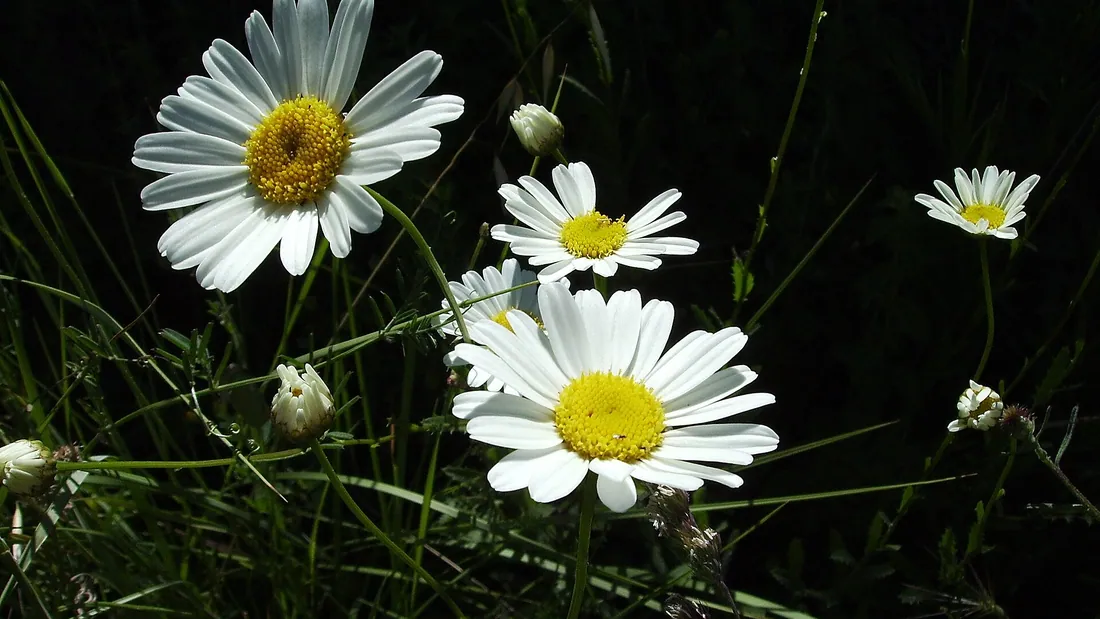

The oxeye daisy (Leucanthemum vulgare) is that white flower with a yellow centre that pops up on its own in our meadows, along paths and on banks left unmown. A tough, no-fuss perennial, it asks for so little care that people often file it under wildflowers rather than garden plants, yet it earns its place in a border just as well. It is the classic field flower, the one people have plucked petal by petal for generations.
Light and exposure
The oxeye daisy wants full sun to flower generously. Plant it in the most open spot in the garden, along the edge of a wildflower meadow, in a border or at the foot of a low hedge. It tolerates light half shade, but flowering suffers noticeably, with fewer blooms and stems that stretch and flop as they search for light.
Under a cool, often overcast summer, it pays not to skimp on sun. A spot that catches the midday and afternoon sun, away from large trees, gives it the best chance of flowering from the first warm spells of spring and holding on until autumn if you cut it back at the right time. In a hot dry climate the opposite excess applies: a few hours of afternoon shade extend the flowering rather than cutting it short.
Watering
Once established, the oxeye daisy is perfectly happy on rainfall alone. It is a meadow plant, used to soils that dry out in summer, and overwatering does it more harm than good, since the stems stretch, turn soft and flop over at the first gust of wind.
Only in the first year, while the roots are settling in, does the odd watering during a long dry spell help the young plant get going. After that, forget the watering can. The oxeye daisy manages perfectly well on its own, even through dry summers, which is exactly what makes it such a safe bet for a border you would rather not fuss over.
Soil and repotting
The oxeye daisy is not fussy about soil, and that is one of its great strengths. It grows just as happily in poor, stony ground as in an ordinary garden soil, as long as it drains well. Soil that is too rich in nitrogen pushes it to put out plenty of leaf at the expense of flowers.
The one thing to watch is drainage. It dislikes standing water in winter, which rots the crown. On heavy clay soil, common enough in many gardens, mixing a little sand or coarse grit into the planting hole avoids a lot of disappointment.
Temperature and humidity
The oxeye daisy is fully hardy from USDA zone 3 to zone 8 and shrugs off any winter, even the harshest. Once established, it takes frosts of minus thirty degrees without flinching, making it a safe choice in open ground, unlike its cousin the shrub daisy, which gives up at the first frost.
It likes moderately warm summers, between eighteen and twenty-five degrees, and copes very well with cooler, wetter spells. Prolonged heat above thirty degrees, on the other hand, shortens the flowering: the plant runs to seed faster and the clump thins out at the centre. It is this intolerance of heat, not cold, that marks its limit.
Pruning and upkeep
Deadhead the spent flowers as you go, cutting the stem just above a leaf or a side shoot. This simple habit, sometimes called deadheading, stops the plant from putting its energy into seed and clearly extends the flowering period.
After the first big flush of flowers, once most of the flowerheads have faded, cut the whole clump back to about ten centimetres above the ground. The oxeye daisy then regrows from the base and often rewards you with a second, more modest but welcome flush of flowers before the growing season ends.
Pests and diseases
The oxeye daisy is a tough plant, not prone to serious disease. The main concern is powdery mildew, that white felting that sometimes shows up on the foliage in late summer, especially in seasons that swing between heat and humidity. It is rarely serious and does not stop the plant flowering the following year.
Aphids sometimes settle on the young shoots and flower buds in spring, with little consequence as long as the colony stays small. Leaf miners, which tunnel visible galleries through the foliage, occasionally affect the oxeye daisy without putting its survival at risk. Soil that drains well remains the best defence against crown rot.
Propagation
The oxeye daisy self-seeds readily if you let a few flowers go to seed at the end of the season. It is often the simplest way to watch it spread naturally through a border or a wildflower meadow, with no effort on your part at all.
Dividing the clump remains the most reliable way to get new plants quickly that are identical to the parent. Every two to three years, in spring or autumn, dig up the clump and split it into several pieces with a spade, making sure each piece keeps some roots and shoots. It is also the best way to keep a clump vigorous, since the centre tends to wear itself out and flower less well as the years go by.
Climate and hardiness
Where and in which climate it thrives
The oxeye daisy is hardy from USDA zone 3 to zone 8: an established clump comes through winter with no protection at all under frosts of minus thirty degrees, and its low foliage stays green as a rosette under snow. It is a European meadow perennial, now naturalised on almost every continent, and its limit is not cold but heat. Beyond zone 8, a long scorching summer sears the clump and sends it to seed within weeks, while a winter that stays too mild denies it the cold rest that triggers one concentrated flush of flowers.
It is at its best in a temperate climate, oceanic or continental, as long as summers stay moderate. Under a cool, often overcast summer, flowering is slow to start: give it the most open position in the garden, the one that catches the midday sun, well away from the shade of large trees. In a hot dry climate it holds up better in part shade with some extra watering. Where winters are mild and sodden, it is not frost that kills it but standing water, which rots the crown: plant on free-draining soil or on a slight mound.
One thing worth knowing before you sow it: outside its native range it is listed as an invasive or regulated weed in several US states, in Australia and in New Zealand, where selling it is sometimes prohibited. Check your local regulations before turning it into a wildflower meadow.
It earns its keep in a natural border or a wildflower meadow, where it draws in butterflies and wild bees in good numbers. Be careful, though, not to confuse it with the shrub daisy (Argyranthemum), commonly sold at garden centres in spring among the bedding plants. That is a completely different plant, tender to frost, that will not sit out a winter outdoors and is grown in a pot to be brought indoors before the frosts.
Growing oxeye daisy?
Green Hub keeps a dated history of your own plant: its photos, its progress, its repottings. An AI answers about yours specifically, not a generic sheet, for free.
Identify my plantMonth-by-month care calendar
| January | Nothing to do in the garden. The clump rests, and the low foliage stays green even under snow. |
|---|---|
| February | Still resting. A good time to plan a new border or wildflower meadow to plant it in come spring. |
| March | The clump visibly stirs back to life, with new leaves appearing at the centre. If it is in a pot, now is the time to plant it out in open ground. |
| April | Fast leaf growth. Weed around young clumps, which cope poorly with competition from taller grasses. |
| May | Flowering begins. The first white, yellow-centred flowers open, sometimes as early as the end of the month depending on the weather. |
| June | Full bloom, the daisy’s big moment. Deadhead the spent flowers as you go to extend the display. |
| July | The first flush of flowering ends. Cut the clump back to about ten centimetres above the ground to encourage a second flush later in summer. |
| August | The cut-back clump puts out fresh foliage and sometimes a more modest second flush of flowers. Watch for powdery mildew if the summer has been damp. |
| September | A good time to divide clumps that are two or three years old and starting to wear out at the centre. |
| October | The foliage persists as a low rosette. Leave a few flowers to set seed if you want the plant to self-sow. |
| November | The clump goes dormant. No particular care needed, and do not cut back the low foliage that protects the crown. |
| December | Full rest. The oxeye daisy sees out the winter with no protection at all, even through the hardest frosts. |
Green Hub tips
- Deadhead the spent flowers as you go. This one simple habit clearly extends the flowering, from the first blooms right through to autumn.
- Divide the clump every two to three years, in spring or autumn, to keep it vigorous. The centre wears out and flowers less well with age.
- Do not confuse the true oxeye daisy with the shrub daisy (Argyranthemum) sold at garden centres in spring. That one is tender to frost and grown in a pot, while the true oxeye daisy is an indestructible perennial in open ground.
- Leave a few flowers to set seed at the end of the season if you want it to self-sow around the border or meadow on its own.
Related species
Artichoke
Cynara scolymus
The artichoke (Cynara scolymus) is a large perennial with silvery, deeply cut foliage, as striking in an ornamental…
Coneflower
Echinacea purpurea
Coneflower (Echinacea purpurea) is a tall, sturdy perennial from the prairies of North America, recognisable by its…
Dahlia
Dahlia
The dahlia (Dahlia) is a tuberous plant that offers one of the longest and most spectacular displays of the summer…
Lettuce
Lactuca sativa
Lettuce (Lactuca sativa) is the most widely grown salad in the vegetable garden, easy and quick, harvested six to ten…
Tarragon
Artemisia dracunculus
Tarragon (Artemisia dracunculus) is an aromatic perennial with an aniseed scent, a cornerstone of French cooking. The…
Witloof chicory
Cichorium intybus var. foliosum
Witloof (Cichorium intybus var. foliosum), the forced chicory better known as endive or chicon, is grown in two stages:…
The guides that mention it
Perennial Flowers: Choosing, Planting and Blooming Without a Gap All Season
What genuinely comes back year after year, how to read hardiness by zone rather than by promise, and how to string…
Lawn Care: From Seeding to Mowing, and Renovation
Mowing higher changes more than any fertilizer can: turf density, drought resistance, weeds, moss. Everything else in…
Wildflower Meadows and Beneficial Insects: Gardening for Biodiversity
Ladybirds, hoverflies, wild bees: how a wildflower meadow and a few simple habits turn an ordinary garden into a refuge…
Dividing, Taking Cuttings, Sowing: Multiplying Your Plants for Free
Dividing a perennial, taking cuttings from a shrub, or sowing seed straight from the garden: the techniques that fill a…
The Cutting Garden: How to Pick Flowers and Make Your Bouquet Last
Dahlias, peonies, hydrangeas: what separates a flower that lasts ten days in a vase from one that droops by the next…
Designing your garden by colour: the combinations that work
Warm harmonies, cool harmonies, monochrome schemes or bold contrasts: colour changes everything in a garden, from the…
Updated on
How this sheet is written
Written for Green Hub with the help of language models, then reviewed. It offers gardening guidance, not professional advice: if you are unsure whether a plant is toxic to a child or an animal, ask a vet, a doctor or your national poison centre.