Leyland Cypress
Cupressus x leylandii
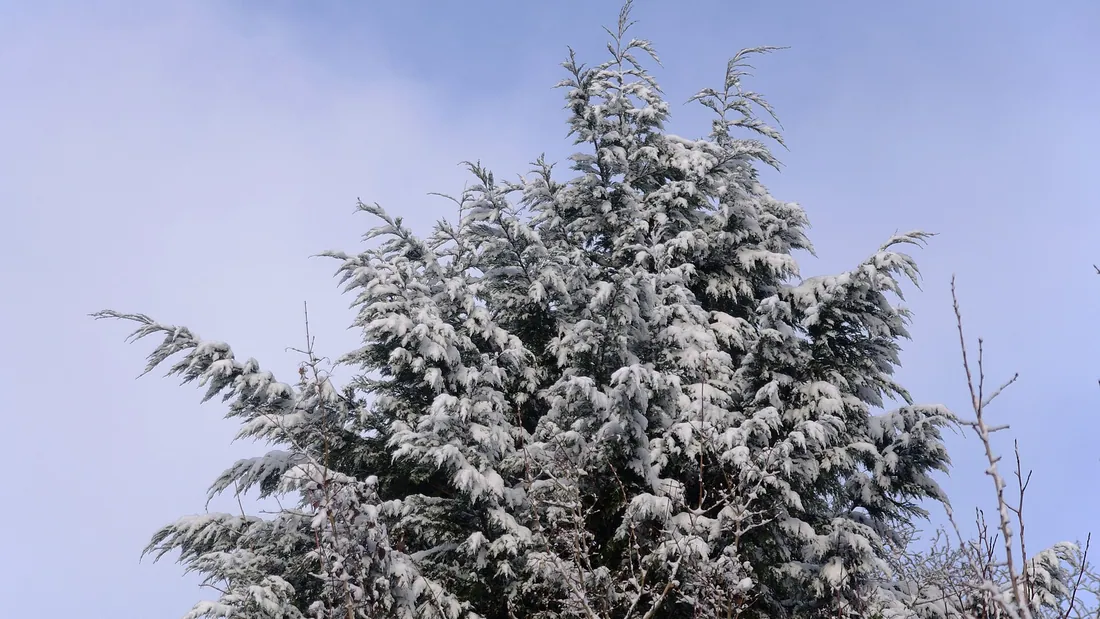

Leyland cypress (Cupressus x leylandii) is the fastest growing conifer hedge you can plant, capable of putting on up to a metre a year in its first seasons. That is exactly what made it so popular in north-west European gardens during the 1980s and 1990s: people chose it to put up a screening hedge in record time, and it is exactly what turns it, for many owners today, into a maintenance headache. Kept in check, trimmed early and often, it stays a dense and effective hedge. Left to its own devices, it turns into a green wall ten to fifteen metres tall that cannot be cut back without ruining it.
Light and exposure
Leyland cypress grows equally well in full sun or partial shade, without much fuss either way. It copes very well with wind, which makes it an excellent windbreak for exposed gardens, on open plateaux as much as near the coast.
A spot that is too shady at the back of the garden slows its growth and gives thinner foliage on the shaded side. For an even hedge over its whole height, give it a spot that gets sun for a good part of the day.
Watering
At planting and for the first two seasons, water regularly to help the roots establish, especially in sandy soil or during a dry summer. A Leyland cypress that fails to root well in its first year stays stunted for a long time and never really catches up with the rest of the hedge.
Once established, it becomes remarkably drought tolerant. Its root system, though, is powerful and hungry: it dries out the soil for several metres around the hedge, which is often bad news for beds or plantings put in right next to it.
Soil and repotting
Leyland cypress adapts to almost any soil, including the chalky, poor soils found in parts of the region. Ordinary, even middling soil is more than enough for it to thrive.
Its real weak point is waterlogging. In heavy, poorly drained soil the roots suffer and the door opens to Phytophthora dieback. On ground that holds water in winter, it is better to plan for drainage or a planting mound than to put it straight into soaked soil.
Temperature and humidity
Leyland cypress is perfectly hardy down to about minus twenty degrees, USDA zone 6 and above: in a temperate climate it comes through winter without any damage. Cold is never its problem.
What it minds more is drying wind combined with frost on young plants in their first year, which can brown foliage exposed to cold draughts. Once the hedge is established and has thickened up, this risk almost disappears.
Pruning and upkeep
This is the point that makes all the difference between a fine hedge and a dispute with the neighbours. Leyland cypress does not resprout from old wood, exactly like thuja: if you cut too hard into the brown part with no green needles left, that branch never turns green again and leaves a permanent gap in the hedge.
The rule is simple: trim early and often, two to three times over the growing season, cutting only into this year’s growth and always staying within the green. Never let the hedge get away from you thinking you will catch up later, that is the classic trap that leads straight to a wall several metres tall that can no longer be brought back into shape without disfiguring it.
Pests and diseases
Phytophthora dieback mainly affects plants in heavy, wet soil: the crown yellows then browns in patches, and sometimes a whole stretch of hedge declines over a couple of seasons without an obvious cause at first glance. Seiridium and Coryneum canker shows up as isolated branches browning and dying in the middle of an otherwise healthy hedge, often following a pruning wound or a bout of water stress.
In hot, dry summers, spider mites happily move in and leave the foliage dull, speckled and turning bronze. Watering at the base during heatwaves helps keep them at bay. None of these problems is inevitable, but they are reason enough to check on the hedge now and then rather than forgetting about it once it is planted.
Propagation
Leyland cypress is a sterile hybrid: it produces no viable seed and so never self-sows in the garden, unlike many other conifers. The only way to propagate it is from cuttings.
Take semi-ripe cuttings around ten centimetres long in late summer or autumn, from this year’s wood that has not yet fully hardened. Rooting hormone clearly improves the strike rate. It is slow going, expect several months before roots appear, which is why young plants in garden centres stay fairly pricey for such a common plant.
Climate and hardiness
Where and in which climate it thrives
Leyland cypress is hardy to about minus twenty degrees Celsius, which makes it usable from USDA zone 6 to zone 10 with no winter protection. Cold is almost never what limits it: its vigour is, and every climate changes that vigour.
In a mild, damp oceanic climate it grows fastest, up to a metre a year in its early seasons, and that is where it gets out of hand soonest: count on two to three trims per growing season, without exception. Where winters are wet and heavy soil stays waterlogged, the real danger is not frost but Phytophthora dieback: plant on a low mound, or drain the site before planting.
In a continental climate with dry, windy winters, the weak point is drying wind combined with frost on first-year plants, which browns the exposed foliage. A windbreak screen for the first season is enough to get past it, and the risk disappears once the hedge has thickened up.
In a Mediterranean climate or under dry heat it copes well with drought once established, but hot summers favour spider mites and Seiridium canker: water the base during heatwaves and avoid trimming in full heat.
Where summers average above 25 degrees, or in a humid subtropical climate, growth runs away faster still and the trimming frequency rises with it.
Growing leyland cypress?
Green Hub keeps a dated history of your own plant: its photos, its progress, its repottings. An AI answers about yours specifically, not a generic sheet, for free.
Identify my plantMonth-by-month care calendar
| January | Complete winter rest, no trimming at all: a fresh cut exposed to frost would be weakened. Good time to plan a new hedge and order young plants. |
|---|---|
| February | Still too early to trim, and the soil is often too frozen or too wet to plant in. Use the time to check the hedge for storm damage from winter and spot any broken branches. |
| March | Planting is possible once the soil warms up and drains, whether container grown or balled. No trimming yet, let the hedge get its spring growth going undisturbed. |
| April | Growth picks up noticeably. Hold off on trimming until the new growth has settled in properly. Watch for dull foliage, a sign of soil that is too poor or too dry. |
| May | First trim of the season, once spring growth is well developed. Cut only into the green, never into brown wood, to keep the hedge dense with no gaps. |
| June | Peak growth. A second trim may already be needed on vigorous hedges. In hot, dry weather, watch for spider mites appearing on the foliage. |
| July | A maintenance trim if growth has come back strongly. Water young plants during heatwaves, they cope less well with drought than hedges established for years. |
| August | Often the last big trim of the season on very vigorous hedges. Late in the month is a good time to take semi-ripe cuttings if you want to propagate the hedge. |
| September | A light catch-up trim is still possible early in the month. After that, leave the hedge alone so the cuts heal properly before the cold sets in. |
| October | No more trimming from now on. A good time to plant new container-grown plants and check the drainage will hold up through winter. |
| November | A good month to plant bare-root or balled plants, the soil is still workable and rain helps them establish. Last check of the hedge before winter rest. |
| December | Complete rest. Check the hedge has not bent under a heavy snowfall and clear it if needed, but never trim at this time of year. |
Green Hub tips
- Never let the hedge get away from you thinking you will catch up later: trimming early and often, two to three times a season, is the only way to keep a Leyland cypress dense and manageable.
- Never cut into brown wood with no green needles left: unlike many shrubs, Leyland cypress does not resprout from old wood, and a branch cut back too hard never turns green again.
- Before planting a Leyland hedge on a property line, check the distance and height rules that apply where you live: it is the hedge that causes the most disputes between neighbours, between height they consider excessive, shade cast over the garden next door and roots that dry out their beds.
- If the idea of trimming several times every summer for the rest of your life does not appeal, go for yew or hornbeam instead: slower to establish, but far easier to live with in the long run.
Related species
Thuja
Thuja occidentalis
Thuja (Thuja occidentalis) is the conifer behind most of the evergreen hedges in temperate gardens, the one that has…
Althea
Hibiscus syriacus
Althea (Hibiscus syriacus) is a hardy deciduous garden shrub that flowers when every other one has finished, from…
Beech
Fagus sylvatica
Beech (Fagus sylvatica) is the most common broadleaf tree in the temperate forests of Europe, just as happy standing…
Begonia
Begonia
Begonia is the star summer flower of window boxes, hanging baskets and shady borders. Hundreds of hybrids exist, but…
Box
Buxus sempervirens
Box (Buxus sempervirens) is an evergreen shrub that has been clipped into balls, cones and low borders in formal…
Butterfly bush
Buddleja davidii
Buddleia (Buddleja davidii), better known as the butterfly bush, is a nearly indestructible shrub that has taken over…
The guides that mention it
Which Hedge to Plant, and How to Get It Right
Evergreen, deciduous or marcescent, annual growth, hardiness, soil, shade and sea spray: the real criteria for…
Pruning Flowering Shrubs and Roses: Deducing Instead of Memorising
New wood or old wood: this single question gives you the pruning time for any shrub at all, including ones whose name…
Updated on
How this sheet is written
Written for Green Hub with the help of language models, then reviewed. It offers gardening guidance, not professional advice: if you are unsure whether a plant is toxic to a child or an animal, ask a vet, a doctor or your national poison centre.