Thuja
Thuja occidentalis
.jpg)
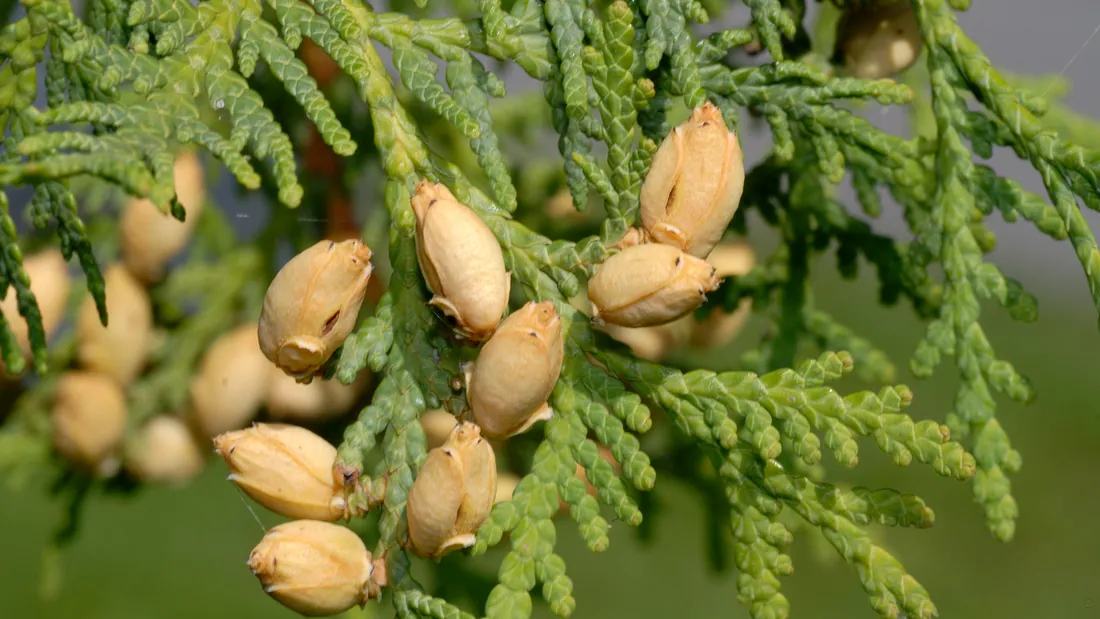
Thuja (Thuja occidentalis) is the conifer behind most of the evergreen hedges in temperate gardens, the one that has been marking off properties for generations. Once established it is a plant that is almost impossible to kill: hardy down to minus 30 degrees, it fears neither frost nor wind. Its real weakness lies elsewhere: too little water in the first year, standing water in heavy soil, and one move that ruins everything, cutting into the old brown wood that never grows back.
Light and exposure
Thuja grows equally well in full sun or partial shade, which makes it one of the few conifers that copes with a poorly lit spot. It gives its best foliage, dense and full from top to bottom, once it gets at least 4 hours of direct sun a day.
In a hedge planted on the shaded side of the garden or squeezed between two walls, the shadier side tends to thin out at the base over the years, something many gardeners notice after 8 to 10 years. Spacing the plants a little further apart at planting, or choosing a less shaded spot, avoids this thinning.
Watering
A mature, well-rooted thuja copes very well with summer drought and is happy with natural rainfall the rest of the year in a temperate climate. The real risk lies elsewhere: during the first 2 summers after planting, the root system is not yet developed enough to reach water deep down, and a dry summer easily scorches, then kills, a whole hedge planted the previous spring.
So water generously, once or twice a week, for young plants during their first 2 summers, especially on sandy soil that drains fast. Running a hose at the base for an hour, rather than a quick pass with a watering can, encourages the roots to grow down deep instead of staying near the surface.
Soil and repotting
Thuja adapts to most garden soils, from light loam to heavier clay, as long as water does not sit around the roots for long. A soil that stays cool and slightly moist suits it better than a dry, poor one, but the opposite excess is more dangerous than the shortfall.
On compacted clay soil, or in a low spot where water collects after heavy rain, it is worth loosening the ground deeply and raising the planting line slightly. Permanently waterlogged soil opens the door to phytophthora, a root rot that browns and kills plants one by one along the hedge.
Temperature and humidity
This is rarely a worry: thuja is hardy down to minus 30 degrees and shrugs off winters far harsher than those of an oceanic climate, late frosts included. It is in fact planted precisely for this toughness, in spots where more tender conifers would struggle.
It is, however, entirely normal to see the foliage turn an orange-brown or bronze shade in winter, especially on the plants most exposed to wind and frost. This is a natural protective response, not a sign of disease, and the green returns as soon as spring arrives. Only browning that persists after growth resumes should raise concern.
Pruning and upkeep
A thuja hedge is trimmed twice a year to stay dense and neat: once the spring flush is finished, in late spring or at the very start of summer, and again at the end of summer, before the wood hardens for winter. A hedge trimmed only once a year opens up and thins out faster.
The rule that shows no mercy: never cut into brown wood with no green needles left. Unlike hornbeam or beech, thuja has no dormant buds on old wood, so it never regrows after a cut that goes too far, the branch stays bare and dead for good. Always trim so that a little green foliage remains on every shoot.
Pests and diseases
The thuja bark beetle mainly attacks plants already weakened by lack of water or overly compacted soil, boring galleries under the bark that brown, then kill, whole branches. A vigorous, well-watered thuja resists it far better and is rarely troubled.
Phytophthora, encouraged by permanently waterlogged soil, causes browning that starts at the base and works upward, often one plant at a time along the hedge, which sets it apart from simple drought stress by its steady progression. Summer dieback, on the other hand, mainly affects young, unwatered hedges during heatwaves, with widespread, rapid scorching rather than localised browning.
Propagation
Cuttings are by far the most common way to propagate thuja, including in nurseries. In autumn or winter, take a semi-ripe side shoot about 15 centimetres long, ideally with a small heel of bark at the base, and plant it in a well-draining mix of potting soil and sand. Rooting is slow, expect several months before new growth appears.
Sowing from seed is possible but gives uneven plants that take much longer to reach a usable hedge size. It suits curious hobby growers more than anyone wanting a hedge quickly. For a new hedge, it is better to buy container-grown plants already shaped than to attempt propagation yourself.
Climate and hardiness
Where and in which climate it thrives
Thuja is a conifer of cold to temperate climates: it is hardy down to minus 30 degrees, which puts it around USDA zone 4 and lets it hold a hedge across most of the temperate northern hemisphere, harsh continental winters included. Cold is not what limits it, dry heat is.
It is at ease in a mild, damp oceanic climate, where regular rainfall makes up for its fairly shallow rooting, and in a continental climate with a hard winter, close to the conditions of its native North American range. It struggles as soon as summers turn long, hot and dry: beyond USDA zone 8, in a Mediterranean climate or a continental one with a scorching summer, the hedge scorches in patches and spider mites move in. In that kind of climate, summer watering stays necessary even on mature plants, and a spot that gets some shade during the hottest hours beats full sun all day long.
Two details change with the climate. Where winters are mild and wet, water sitting around the roots does more damage than frost: raising the planting line slightly becomes the main precaution. Where winters are cold, dry and windy, the browning of the foliage is far more pronounced, without being a disease: the green returns once growth resumes. In every case, allow 60 to 80 centimetres between plants and serious watering for the first 2 summers.
Growing thuja?
Green Hub keeps a dated history of your own plant: its photos, its progress, its repottings. An AI answers about yours specifically, not a generic sheet, for free.
Identify my plantMonth-by-month care calendar
| January | Little work needed on the hedge. If heavy snow bends branches down, shake it off gently to prevent breakage. |
|---|---|
| February | Last chance to plant a bare-root hedge, frost permitting. Check that no shoot has browned in a suspicious way over winter. |
| March | Growth resumes. The bronzed winter foliage gradually greens up again, which is normal and nothing to worry about. |
| April | Ideal time to plant young container-grown plants. Water generously right after planting to help them settle in. |
| May | Toward the end of the month, first trim of the year once the spring flush is finished. |
| June | Finish the first trim if needed. Keep an eye on watering for young hedges planted this spring. |
| July | Water hedges under 2 years old regularly, especially in dry spells. Mature plants manage on their own. |
| August | Toward the end of the month, the second and final trim of the year, before the wood hardens for winter. |
| September | Keep watering young plantings if the summer was dry. A good month to plant new hedges. |
| October | Excellent planting time, the soil is still warm and the rain returns. One last supporting water for young hedges. |
| November | Planting is still possible as long as the ground is not frozen. The hedge settles into dormancy. |
| December | Complete rest. Foliage browning with the cold is normal and will green up again next spring. |
Green Hub tips
- Never cut into brown wood with no green needles: unlike hornbeam or beech, thuja does not regrow from old wood, and the branch stays bare for good.
- Water thoroughly for the first 2 summers after planting. A thuja hedge that scorches suddenly in summer is almost always a case of roots not yet settled in, not disease.
- Foliage turning bronze in winter is not a disease, it is a natural response to cold and wind. The green comes back with the warmer days.
- Space plants 60 to 80 centimetres apart at planting. A hedge planted too tightly from the start chokes itself and thins out at the base faster.
Related species
Leyland Cypress
Cupressus x leylandii
Leyland cypress (Cupressus x leylandii) is the fastest growing conifer hedge you can plant, capable of putting on up to…
Althea
Hibiscus syriacus
Althea (Hibiscus syriacus) is a hardy deciduous garden shrub that flowers when every other one has finished, from…
Beech
Fagus sylvatica
Beech (Fagus sylvatica) is the most common broadleaf tree in the temperate forests of Europe, just as happy standing…
Begonia
Begonia
Begonia is the star summer flower of window boxes, hanging baskets and shady borders. Hundreds of hybrids exist, but…
Box
Buxus sempervirens
Box (Buxus sempervirens) is an evergreen shrub that has been clipped into balls, cones and low borders in formal…
Butterfly bush
Buddleja davidii
Buddleia (Buddleja davidii), better known as the butterfly bush, is a nearly indestructible shrub that has taken over…
The guides that mention it
Which Hedge to Plant, and How to Get It Right
Evergreen, deciduous or marcescent, annual growth, hardiness, soil, shade and sea spray: the real criteria for…
Pruning Flowering Shrubs and Roses: Deducing Instead of Memorising
New wood or old wood: this single question gives you the pruning time for any shrub at all, including ones whose name…
Updated on
How this sheet is written
Written for Green Hub with the help of language models, then reviewed. It offers gardening guidance, not professional advice: if you are unsure whether a plant is toxic to a child or an animal, ask a vet, a doctor or your national poison centre.