Marjoram
Origanum majorana
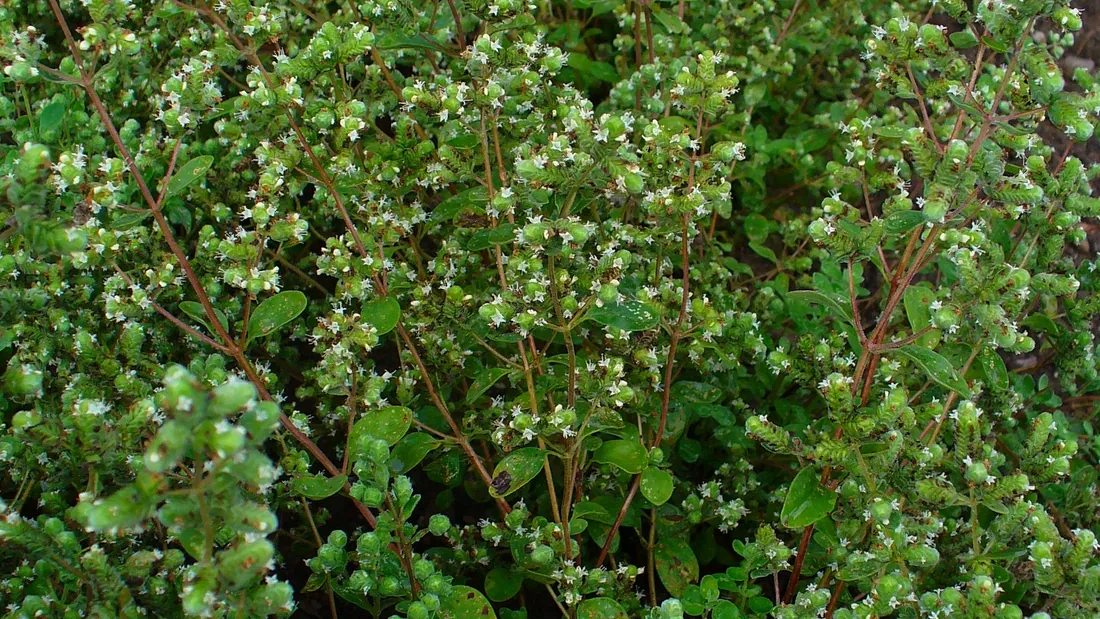

Marjoram is the gentle cousin of oregano: same family, but a finer, sweeter and less pungent scent, much prized in cooking. It is also a far more tender plant than its cousin. The distinction is crucial: oregano (Origanum vulgare) is perfectly hardy and lasts for years in the garden, while marjoram (Origanum majorana) does not survive the winter outdoors as soon as frost sets in. So it is grown as an annual, sown under cover and put out once the last frosts have passed, or you bring a pot into a frost-free spot to see it through the cold season. Full sun, light and draining soil, measured watering: it stays easy in summer, everything comes down to the cold.
Light and exposure
Marjoram demands full sun, like all Mediterranean herbs. Give it the warmest and brightest spot you have, open to the midday sun, sheltered from wind, against a wall that holds the heat. It needs at least six hours of direct sun to develop that soft, sweet scent that sets it apart from oregano.
In shade it grows limply, stretches and loses its aroma. Under an often overcast sky, growing it in a pot is a real help: you follow the sun, move the plant close to a warm wall, and can easily bring it in as soon as the nights cool. That is in fact the growing method best suited to its tender nature anywhere winter brings frost.
Watering
Marjoram needs moderate watering, without excess. It likes soil that stays fresh at the surface during active summer growth, but it hates having its roots in water. Let the top few centimetres of soil dry between waterings, and water preferably in the morning, at the base, without wetting the foliage.
In a pot, where the substrate dries faster, watch closely in summer and water as soon as the surface is dry, without ever soaking it. A marjoram that gets too much water, especially in cool weather, develops collar rot. At the end of the season and for a plant you bring in for winter, cut watering back sharply: at rest and in the cool, it wants almost no water.
Soil and repotting
A light, loose and above all well-draining soil suits it perfectly. It does not demand rich earth: an over-fed substrate makes it grow soft leaves and reduces its scent. A little mature compost at planting is enough to support its growth.
In heavy, clayey soils, lighten with coarse sand and plant on a slight mound so the water runs off. In a pot, a mix of good potting soil and sand, over a drainage layer at the bottom, recreates its original conditions and limits the risk of rot, its main weak point wherever the climate is damp.
Temperature and humidity
This is where everything is decided, and it is what separates it from oregano. Marjoram is markedly more tender: it grows well between 18 and 25 degrees and already suffers when the nights turn cool. It is perennial in USDA zones 9 and 10 only, and does not survive the winter outdoors anywhere frost sets in.
In practice, two strategies. Either you treat it as an annual: sown in the warmth, put out only once the last frosts have passed and the nights hold above 10 degrees, harvested all summer, then left to finish with the first cold. Or you grow a plant in a pot that you bring in before the frosts to a bright, frost-free spot, a cool conservatory or a sunny windowsill, to restart it the following spring. Never count on it to come back on its own in the garden the way oregano does.
The exact threshold is worth knowing so as not to be caught out: marjoram takes a very light, brief frost without great damage, down to about -1 degree, but a few degrees lower and its foliage browns and wilts in a single night, a stage it almost never recovers from once the cold season has set in.
Pruning and upkeep
Pinch the stem tips regularly during the growing season. The plant branches, stays compact and bushy instead of bolting, and each pinch triggers new tender shoots to harvest. It is the same gesture as for basil, and it almost doubles production.
The main harvest is done before and during flowering, when the foliage is most fragrant: cut the stems fairly low to prompt regrowth. For a plant brought in for winter, cut it back after summer to give it a compact shape before its rest period in the cool, and remove dry or damaged stems.
Pests and diseases
Marjoram is little prone to disease when its conditions are met, sun and good drainage. Problems almost always come from moisture: collar and root rot threaten in soil that is too heavy or too watered, especially under a damp summer and on plants brought in for the cold season and over-watered while at rest.
Too much water and a lack of air also favour powdery mildew, that white felt on the leaves. The defence is cultural: space the plants, give air, water at the base in the morning and let it dry between waterings. A few aphids may appear on the young shoots in warm weather, without real seriousness.
Propagation
Sowing is the most common method. Sow under cover, warm between 18 and 20 degrees, from March or April, on the surface as the fine seeds need light to germinate. Emergence is a little slow and capricious, allow two to three weeks, and keep the sowing nice and warm. Only transplant and put the plants out after mid-May.
Marjoram also takes easily from cuttings in summer: take a non-flowering stem of ten centimetres, remove the lower leaves and place it in water or in a light, moist substrate until it roots. It is a good way to keep a plant from one year to the next by overwintering the cutting in a frost-free spot.
Climate and hardiness
Where and in which climate it thrives
Marjoram is a warm-climate perennial, lasting from one year to the next only in USDA zones 9 and 10, where frost stays exceptional. Its threshold is low and clear-cut: it takes a brief ground frost, of the order of -1 degree, and next to nothing below that. A sharper cold browns the foliage in a single night and the plant does not come back. Everywhere else, meaning the great majority of temperate gardens, it is grown as an annual or in a pot you bring in. It never behaves like oregano (Origanum vulgare), which is hardy far lower and turns up again every spring.
Under a temperate climate with a real winter, the schedule follows the frosts, not the calendar: sow under cover six to eight weeks before your region’s last frost date, harden off gradually, put the plants out once the nights hold above 10 degrees, harvest all summer, and let it finish with the first cold. Under a mild, damp oceanic climate, the real risk is not frost but water: a wet summer and cool nights rot the collar long before winter arrives, hence the pot, the raised mound and careful drainage. Under a Mediterranean or subtropical climate, it lasts several years in open ground and forms a small woody clump to cut back in early spring; there it is drought and scorching sun on young seedlings that need watching. Indoors, a very bright windowsill keeps it alive through the cold season provided you keep it cool, between 8 and 15 degrees, and water almost not at all: dry heating and weak light make it stretch, then rot.
So, two choices at the end of the season. The simplest: treat it as an annual and sow again, its seed comes true from one year to the next, so keep a little from the most fragrant plants. The thriftiest: grow a plant in a pot from the start and bring it in before the first forecast frost, into a bright, frost-free spot, a cool conservatory, an unheated bright room, a windowsill. Water very sparingly while it rests, and start it up again gradually as the days lengthen.
Growing marjoram?
Green Hub keeps a dated history of your own plant: its photos, its progress, its repottings. An AI answers about yours specifically, not a generic sheet, for free.
Identify my plantMonth-by-month care calendar
| January | The plant brought in rests in the cool and the light, almost without water. Nothing to do outside. Order seeds and choose between growing as an annual or an overwintered plant. |
|---|---|
| February | Patience. Too early to sow for lack of warmth and light. Check that the overwintered plant is not rotting and has not had too much water. Prepare pots and light potting soil. |
| March | First sowings under cover, warm between 18 and 20 degrees, on the surface near a bright window. Germination is slow, do not lose heart. |
| April | Continue the sowings. Transplant the young plants into pots. Keep everything under cover, it still frosts at night. Start gently waking the overwintered plant. |
| May | Harden the plants outside for a few hours in fine weather. Planting and putting out the pots only once the last frosts have passed and the nights are mild. |
| June | Full growth in full sun. Pinch the stem tips to make it branch. First real harvest. Water moderately, at the base and in the morning. |
| July | Generous harvest before and during flowering, when the scent is at its peak. Take cuttings if you want to keep a plant for next year. Let the soil dry between waterings. |
| August | Harvest continues. Cut bunches to dry head-down in an airy room. Watch for powdery mildew in damp weather, give the plants air. |
| September | Last fine pickings. Cut back and bring in the pot you wish to overwinter before the first cold nights. Start reducing watering. |
| October | The season ends outside, the annual marjoram declines with the cold. The plant to keep must be frost-free, bright and cool. Water very little. |
| November | End of cycle for the plants left outside, pull them. The overwintered plant is at rest, just keep it frost-free and barely moist. |
| December | Complete rest. The plant brought in waits for spring in the cool and the light. Note what worked and keep seeds from the most fragrant plants. |
Green Hub tips
- Never confuse marjoram and oregano. Oregano (Origanum vulgare) stays outdoors and comes back every spring; marjoram (Origanum majorana) is tender and does not survive a freezing winter outdoors.
- Two strategies for winter: either grow it as an annual and resow each year, or bring a pot into a bright, frost-free spot, watered to the minimum.
- Put it out only after mid-May. Like basil, a mild April is a trap, the late frosts kill it.
- Harvest before and during flowering: that is when the foliage is most fragrant, before the plant exhausts itself making seeds.
- Pinch the stem tips often for a bushy, compact plant. Each pinch triggers tender shoots and almost doubles the harvest.
Related species
Basil
Ocimum basilicum
Basil (Ocimum basilicum) is an annual, cold-sensitive herb that comes from the warm regions of Asia. It is a summer…
Lavender
Lavandula angustifolia
True lavender (Lavandula angustifolia) is a hardy Mediterranean plant that scents the air and draws bees all summer…
Lemon balm
Melissa officinalis
Lemon balm (Melissa officinalis) is a hardy perennial with crinkled foliage that gives off a lemon scent the moment you…
Mint
Mentha
Mint (Mentha) covers several species and hybrids, from spearmint to peppermint, all perennial and fragrant. It is a…
Oregano
Origanum vulgare
Oregano (Origanum vulgare) is a tough, perennial herb built for sun and dry soils. Here is the good news: it is fully…
Rosemary
Salvia rosmarinus
Rosemary (Salvia rosmarinus, long known as Rosmarinus officinalis) is an evergreen Mediterranean shrub with needle-like…
The guides that mention it
Easy herbs to grow
Thyme, rosemary, basil, parsley, mint: which ones make it through the winter outdoors, which ones self-seed, and how to…
Which Plants to Choose for a Drought-Resistant Garden
Deep roots, silvery foliage, Mediterranean origins: the plants that get through a dry summer without watering, and how…
Which Garden Flowers Are Edible, and How to Cook With Them
From flower bed to plate: the flowers that are genuinely edible, the harvesting method that preserves their flavour,…
Updated on
How this sheet is written
Written for Green Hub with the help of language models, then reviewed. It offers gardening guidance, not professional advice: if you are unsure whether a plant is toxic to a child or an animal, ask a vet, a doctor or your national poison centre.