Mint
Mentha
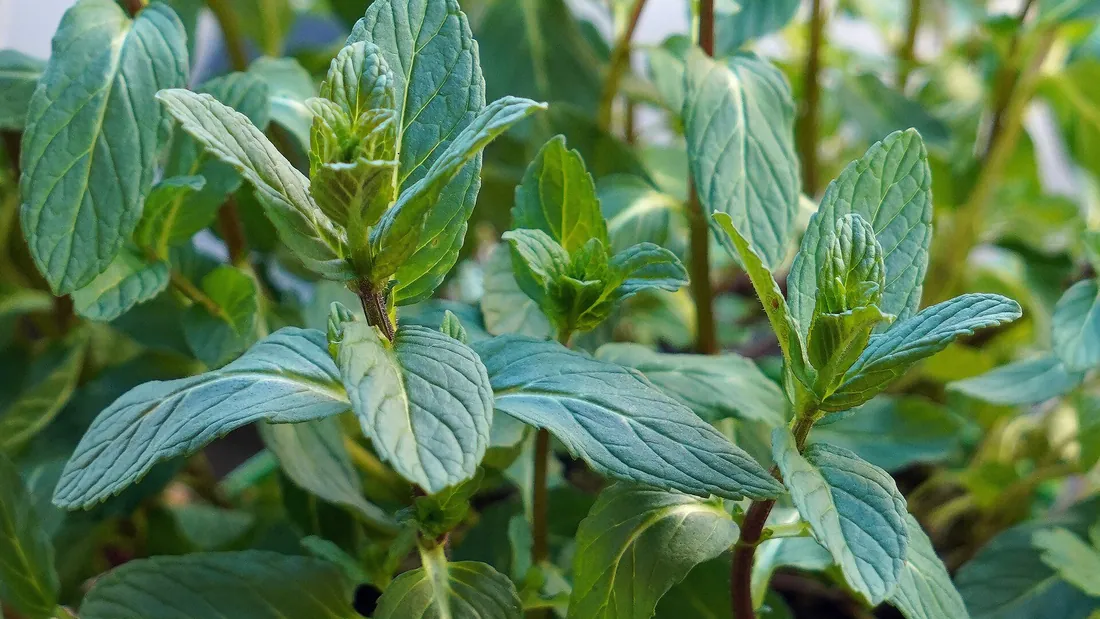
.jpg)
Mint (Mentha) covers several species and hybrids, from spearmint to peppermint, all perennial and fragrant. It is a disconcertingly easy plant: hardy across a very wide range, USDA zones 3 to 9 depending on the species, it overwinters outdoors without trouble and comes back every spring with a vigour that borders on invasiveness. Its running roots quickly colonise a whole bed, so the real challenge is not to make it grow but to keep it in check. Growing it in a pot or a sunken container settles the matter.
Light and exposure
Mint grows in sun as in part shade, and in a temperate climate it even appreciates a slightly shaded position that keeps the soil cool. In full sun it demands more water so as not to wilt during the hot hours.
In a pot, place it in a bright spot without scorching sun all day long. A cool corner of the garden, against a wall that catches the morning sun then falls into shade at the hottest hours, suits it perfectly and spares it from suffering in summer.
Watering
Mint likes moisture, it is a plant of cool places. Water generously and regularly so the soil does not dry out, or you will see the foliage wilt and the stems go bare at the bottom.
In a pot, watch it constantly in summer: the substrate dries fast and a thirsty potted mint declines quickly. It is one of the few aromatics that tolerates a truly moist soil, provided it is not permanently waterlogged.
Soil and repotting
Mint is not fussy about soil, it thrives in ordinary earth, cool and rich in organic matter. An addition of compost in spring boosts the production of tender stems.
In open ground, its running roots shoot off in all directions. To contain it, plant it in a large sunken bottomless pot or in a well-defined area. In an above-ground pot, repot or divide every two or three years, because it quickly exhausts its substrate and coils around itself.
Temperature and humidity
Mint is a fully hardy perennial, rated USDA zones 3 to 9 depending on the species. It comes through damp winters with no protection at all: the aerial parts vanish at the first frosts, but the crown and running roots overwinter underground and start up again in spring with renewed energy.
This hardiness is total, cold does not threaten it. A plant established once returns every year and spreads a little further. In a pot exposed to frost, a very small container can freeze right through during a harsh winter: in that case, a slightly larger pot or one placed against a wall is enough to protect the crown. In open ground, no worries at all.
Pruning and upkeep
Harvest by cutting the stems above a pair of leaves, the plant branches out and stays bushy. Regular pruning stops it shooting up and going bare. Cut a tired clump back hard, it comes back with new, more fragrant leaves.
Remove the flower stems as soon as they appear if you want to favour the foliage: once in flower, mint slows its production of tender leaves. At the end of the season, cut the whole clump back close to the ground, it will come back clean in spring.
Pests and diseases
Mint rust, Puccinia menthae, is the most common disease in a humid climate: bright orange pustules appear under the leaves, then the stems distort. Cut off and dispose of the affected parts without composting them, and in the event of a severe attack cut the whole clump back to start again on healthy growth.
Powdery mildew can also felt the foliage white in mild, damp weather. To limit these troubles, aerate overly dense clumps, avoid wetting the foliage in the evening and divide the plants regularly so they do not pile up.
Propagation
Mint propagates effortlessly. Dividing the clump in spring or autumn is the simplest way: dig up a piece of crown with its running roots and replant it elsewhere, it takes at once.
Cuttings are just as easy: cut a ten-centimetre stem, strip the lower leaves and place it in a glass of water. Roots appear within one to two weeks. A simple fragment of running root laid on moist soil is even enough to produce a new plant, which explains its invasive side.
Climate and hardiness
Where and in which climate it thrives
Mint is the herb that asks for the least care and gives the most, and that across almost the whole temperate world. Depending on the species it is rated USDA hardiness zones 3 to 9, which covers winters dropping well below minus twenty degrees Celsius: the top growth melts away at the first frosts, the crown and running roots overwinter underground with no protection at all and start up again more vigorous than the year before. Only Corsican mint, Mentha requienii, is the exception and already suffers below minus six degrees.
It is at home in a cool, well-watered oceanic climate, where summers that are rarely scorching suit it marvellously: it is one of the few aromatics that literally benefits from rainy summers rather than suffering from them, where thyme or rosemary cope less well. In a continental climate with a dry winter it disappears for longer but starts up again undamaged. Where summers are hot and dry, Mediterranean or subtropical, it needs part shade and steady watering, otherwise it wilts and its foliage turns hard.
What really changes from one climate to another is the speed at which it spreads: in soil that stays moist, its running roots take over a bed in one or two seasons, far faster than in dry ground. Contain it from planting in a large pot, a tub or a sunken bottomless container, and divide the clump every two or three years. Under a damp autumn, rust settles above all on old, crowded clumps: cut back to ground level at the end of the growing season and it will come back clean as soon as the soil warms up.
Growing mint?
Green Hub keeps a dated history of your own plant: its photos, its progress, its repottings. An AI answers about yours specifically, not a generic sheet, for free.
Identify my plantMonth-by-month care calendar
| January | The crown sleeps underground, sheltered from frost. Nothing to do outside. A pot brought into the light can provide a few leaves. |
|---|---|
| February | Still at rest. Prepare the spot and the containers to contain the running roots before it starts up again. |
| March | First signs of regrowth in mild weather. A good time to divide a clump and replant the pieces in a pot or tub. |
| April | Growth settling in. Add compost. Planting or cuttings possible. Harvests starting. |
| May | Full growth. Harvest and pinch the stems to make them branch. Water regularly, mint likes a cool soil. |
| June | Abundant production. Cut the clumps back hard for tender leaves. Watch the watering in hot weather. |
| July | Generous harvest. Cut the flower stems to keep tender foliage. Water well, a thirsty pot declines fast. |
| August | Continuous picking. Watch for orange rust under the leaves in damp weather and cut off the affected parts. |
| September | Renewed vigour with the cool weather. A good second time to divide the plants. End-of-season harvests. |
| October | The foliage declines with the cold. Last harvests. Cut the tired clumps back close to the ground. |
| November | Cut the whole clump back to ground level. The aerial parts melt away, the crown overwinters with no protection. |
| December | Complete winter rest. Mint is hardy, no cause for worry. Note where to contain it next year. |
Green Hub tips
- Always plant mint in a pot, a tub or a sunken bottomless container: in free open ground, its roots invade the whole bed.
- Cut a tired or rust-hit clump back hard, it comes back with new, more fragrant leaves.
- Express cuttings: a stem in a glass of water roots in two weeks. A fragment of root laid on moist soil is enough too.
- Divide the clump every two or three years. As it ages, mint piles up, exhausts itself and catches rust more easily.
Related species
Basil
Ocimum basilicum
Basil (Ocimum basilicum) is an annual, cold-sensitive herb that comes from the warm regions of Asia. It is a summer…
Lavender
Lavandula angustifolia
True lavender (Lavandula angustifolia) is a hardy Mediterranean plant that scents the air and draws bees all summer…
Lemon balm
Melissa officinalis
Lemon balm (Melissa officinalis) is a hardy perennial with crinkled foliage that gives off a lemon scent the moment you…
Marjoram
Origanum majorana
Marjoram is the gentle cousin of oregano: same family, but a finer, sweeter and less pungent scent, much prized in…
Oregano
Origanum vulgare
Oregano (Origanum vulgare) is a tough, perennial herb built for sun and dry soils. Here is the good news: it is fully…
Rosemary
Salvia rosmarinus
Rosemary (Salvia rosmarinus, long known as Rosmarinus officinalis) is an evergreen Mediterranean shrub with needle-like…
The guides that mention it
Easy herbs to grow
Thyme, rosemary, basil, parsley, mint: which ones make it through the winter outdoors, which ones self-seed, and how to…
Watering Plants Properly: Deciding Rather Than Following a Schedule
Beginners water too often and too little at the same time. How to read the soil instead of the calendar, tell thirst…
Overwintering your plants without losing them
Clivia, lavender, verbena, geranium, olive: which to bring indoors, which to protect outside, which to leave to face…
Repotting your plants and choosing the right potting mix
The right moment, the right technique and the right substrate for each plant, so you can repot without rotting the…
Which Garden Flowers Are Edible, and How to Cook With Them
From flower bed to plate: the flowers that are genuinely edible, the harvesting method that preserves their flavour,…
Updated on
How this sheet is written
Written for Green Hub with the help of language models, then reviewed. It offers gardening guidance, not professional advice: if you are unsure whether a plant is toxic to a child or an animal, ask a vet, a doctor or your national poison centre.