Lemon balm
Melissa officinalis
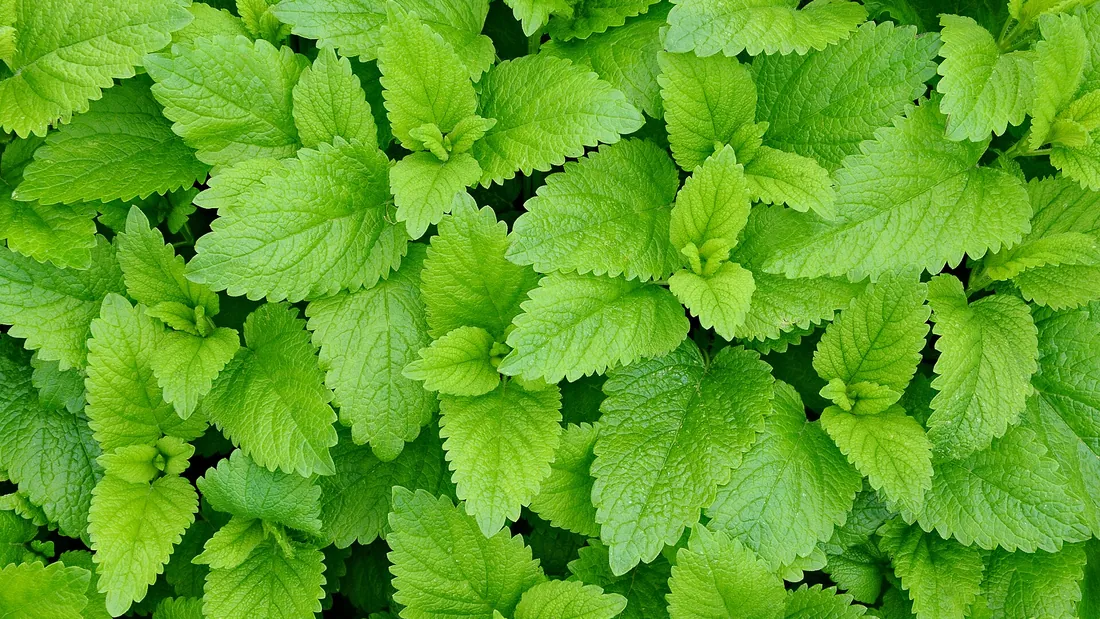

Lemon balm (Melissa officinalis) is a hardy perennial with crinkled foliage that gives off a lemon scent the moment you crush it. It is probably one of the easiest herbs to succeed with in a temperate climate: planted once, it starts again each spring from its rootstock and settles in for years. It likes partial shade and cool soils, and shows such vigour that you have to contain it rather than pamper it. Its only downside is that same vigour: it self seeds readily and can quickly take up too much space if you let it go to seed.
Light and exposure
Lemon balm is happy in partial shade, which makes it a precious ally for the somewhat shaded corners of the garden where many herbs sulk. A bright position but without scorching midday sun suits it perfectly: there the foliage stays tender, green and fragrant. In full sun and dry conditions, the leaves tend to yellow and dry out at the edges.
A spot that gets the morning sun, or the foot of a wall that shields it from the strongest part of the day, is ideal. In a pot too it accepts partial shade without flinching. Do not try to give it your best sunny spot: keep that for thyme or rosemary, and give the lemon balm a cool corner you did not know what to do with.
Watering
Lemon balm appreciates soil that stays cool. It bears prolonged drought badly, which makes its foliage wilt then brown. Water regularly in dry periods, especially the first year and for plants in pots, and mulch the base to hold moisture longer.
Once well established in the open ground, it becomes fairly self reliant and often makes do with the rain wherever summers stay wet. It is mainly during summer heat spells that you have to think of it. In a pot, the watch must be more regular because the compost dries fast; a morning watering at the base is generally enough.
Soil and repotting
Lemon balm is not fussy about the nature of the soil. Ordinary garden soil, cool and a little rich in humus, suits it very well. It grows in almost anything, as long as the soil does not stay waterlogged all winter, which could rot the rootstock.
An addition of compost in spring vigorously restarts the clump, but it is not essential, so resourceful is the plant. In a pot, good ordinary compost is enough; provide a fairly wide container, because the rootstock fills out year after year and ends up feeling cramped.
Temperature and humidity
This is where lemon balm shines: it is perfectly hardy and comes through winter without the slightest care. The aerial part disappears at the first frosts, but the rootstock stays well alive underground and starts again the following spring, often with even more vigour. No winter protection is needed in the open ground.
It starts early in the season as soon as the days lengthen and the soil warms. Late spring frosts do not worry an established clump; at most they scorch a few young shoots that start again at once. In a pot, a very harsh winter can freeze the rootball right through: then move the pot closer to a wall or mulch it to secure the rootstock.
Its hardiness goes far beyond what a temperate garden asks of it: horticultural references rate it robust from USDA zone 3 to 7, and it is commonly grown up to zone 9. A rootstock well anchored for at least a season takes cold well below -20 degrees. At the other end of the thermometer, it is dry heat that limits it more surely than cold: in full sun and dry soil the foliage yellows, dries at the edges and loses some of its scent.
Pruning and upkeep
Pruning is the real maintenance gesture for lemon balm, and it comes down to one word: cut back. After flowering, cut the clump fairly short, to about fifteen centimetres from the ground. It then starts again cleanly with new foliage, tender and fragrant, far more pleasant than the old stems that have run up and flowered. This cutting back also relaunches a second wave of harvest.
Above all, cut back before full seeding if you do not want it to self seed everywhere. That is the main point of vigilance for this plant: left to seed, it quickly becomes invasive and spreads throughout the bed. Cutting the flowers in time is the simplest way to keep the upper hand. A second cut at the end of summer keeps the clump low and neat before winter.
Pests and diseases
Lemon balm is robust and rarely diseased. Its main trouble is powdery mildew, that white powdery felt that appears on the leaves at the end of summer, especially when the clump is dense and the air stagnant. It is not serious: cut back the affected clump and the lemon balm starts again cleanly with healthy foliage.
To limit the problem, air the plants, avoid crowding them too much and do not wet the foliage in the evening. Rust can sometimes touch a few leaves without serious consequence. As for pests, the plant is rather peaceful and above all attracts bees, which are wild about its flowers. That, incidentally, is where its name comes from, from the Greek melissa, the bee.
Propagation
Lemon balm is very easily propagated by dividing the clump, the fastest and most reliable method. In spring, when the new shoots appear, dig up an established clump and separate it into pieces with a spade or by hand, each fitted with roots and a few shoots. Replant at once, water, and you have new plants guaranteed to match the parent.
It is also sown, on the surface in spring because the seeds need light to germinate, but emergence is sometimes slow and uneven. Stem cuttings in summer work too. In practice, you rarely need to propagate it deliberately: it self seeds so well on its own that each year you recover young spontaneous plants at the foot of the mother clump, ready to be transplanted elsewhere or given away.
Climate and hardiness
Where and in which climate it thrives
Lemon balm is one of the hardiest herbs in the kitchen garden. Horticultural references rate it robust from USDA zone 3 to 7, and it grows without difficulty up to zone 9: the rootstock takes cold well below -20 degrees, the aerial part disappears completely at the first frosts, and everything starts again in spring, fuller than before. In open ground no winter protection is needed, under any temperate climate whatever.
Under a mild, damp oceanic climate it is entirely at home: wet winters without consequence, cool soil, partial shade, it asks for nothing else. Under a continental climate with a dry, harsh winter the rootstock comes through as well, but mulch the base the first year, until the roots have gone down. Under a hot, dry climate, Mediterranean or subtropical, it is summer that becomes the hard part: full sun and drought yellow the foliage and dry it out at the edges. Set it in real partial shade, mulch, water, and cut the clump back after flowering to get tender regrowth in the cool season. In a pot, whatever the climate, a very harsh winter can freeze the rootball right through: move the pot close to a wall or wrap it, open ground never has that problem.
The only real work is containing it, everywhere it is happy. It grows fast and self seeds with enthusiasm: without intervention it colonises the bed within a few seasons. The gesture that changes everything is to cut it back right after flowering, before the seeds ripen: the spread stops dead and fresh foliage comes back. If you are short of space or fear its invasive side, grow it in a pot, it will be just as happy there and far more disciplined. On heavy, clayey soils, a compost amendment and planting on a slight rise are enough to secure drainage through the cold season; it tolerates a slightly acid soil as readily as a chalky one. For a town courtyard shaded by high party walls, the golden-leaved variety 'All Gold' adds a touch of light where few herbs agree to grow. The harvest itself runs from the spring regrowth until the first frosts, crushing the leaves to release that lemon scent that makes delicious infusions.
Growing lemon balm?
Green Hub keeps a dated history of your own plant: its photos, its progress, its repottings. An AI answers about yours specifically, not a generic sheet, for free.
Identify my plantMonth-by-month care calendar
| January | Winter rest, the rootstock sleeps underground. Nothing to do in the garden. This is the time to plan where to install or move a plant in spring. |
|---|---|
| February | Still at rest. On potted plants, check that the rootball has not frozen right through and move the pot closer to a wall if needed. |
| March | The rootstock restarts, the first shoots appear. Ideal moment to divide an established clump and create new plants. An addition of compost relaunches the vigour. |
| April | Active growth. Plant the young divisions in partial shade in cool soil. Recover the spontaneous seedlings that came up at the foot of the old clumps. |
| May | First harvests of tender, fragrant foliage. The plant gains bulk. Water during dry spells, especially the young plants. |
| June | Full harvest. Flowering approaches and attracts the bees. Pick the leaves before the flower, when they are most aromatic. |
| July | Cut the clump back after flowering, to about fifteen centimetres, to avoid seeding and relaunch new foliage. Water in case of heat. |
| August | Second wave of fresh foliage from the cutting back. Watch for powdery mildew on dense clumps and cut back the affected parts if needed. |
| September | Last good harvests of the season. A second cut keeps the clump low and neat. Pull out the surplus spontaneous seedlings to limit the spread. |
| October | Growth slows. A good month to plant or divide a clump again before winter. Harvest the last leaves to dry. |
| November | The foliage yellows and disappears at the first frosts. Cut the dry stems at ground level and mulch the base if you like. The rootstock is safe underground. |
| December | Complete rest. The lemon balm sleeps and will come back on its own in spring. Use the dried leaves of the season in an evening infusion. |
Green Hub tips
- Cut the clump back after flowering, before the seeds ripen: it is the key gesture to stop it self seeding everywhere and becoming invasive.
- Divide an old clump in spring to get new plants for free, all identical to the parent.
- If you are short of space, grow it in a pot: it stays just as vigorous but much easier to contain.
- In case of white powdery mildew at the end of summer, cut back without hesitation: the lemon balm starts again cleanly with healthy foliage.
Related species
Basil
Ocimum basilicum
Basil (Ocimum basilicum) is an annual, cold-sensitive herb that comes from the warm regions of Asia. It is a summer…
Lavender
Lavandula angustifolia
True lavender (Lavandula angustifolia) is a hardy Mediterranean plant that scents the air and draws bees all summer…
Marjoram
Origanum majorana
Marjoram is the gentle cousin of oregano: same family, but a finer, sweeter and less pungent scent, much prized in…
Mint
Mentha
Mint (Mentha) covers several species and hybrids, from spearmint to peppermint, all perennial and fragrant. It is a…
Oregano
Origanum vulgare
Oregano (Origanum vulgare) is a tough, perennial herb built for sun and dry soils. Here is the good news: it is fully…
Rosemary
Salvia rosmarinus
Rosemary (Salvia rosmarinus, long known as Rosmarinus officinalis) is an evergreen Mediterranean shrub with needle-like…
The guides that mention it
Easy herbs to grow
Thyme, rosemary, basil, parsley, mint: which ones make it through the winter outdoors, which ones self-seed, and how to…
Wildflower Meadows and Beneficial Insects: Gardening for Biodiversity
Ladybirds, hoverflies, wild bees: how a wildflower meadow and a few simple habits turn an ordinary garden into a refuge…
Updated on
How this sheet is written
Written for Green Hub with the help of language models, then reviewed. It offers gardening guidance, not professional advice: if you are unsure whether a plant is toxic to a child or an animal, ask a vet, a doctor or your national poison centre.