Lavender
Lavandula angustifolia
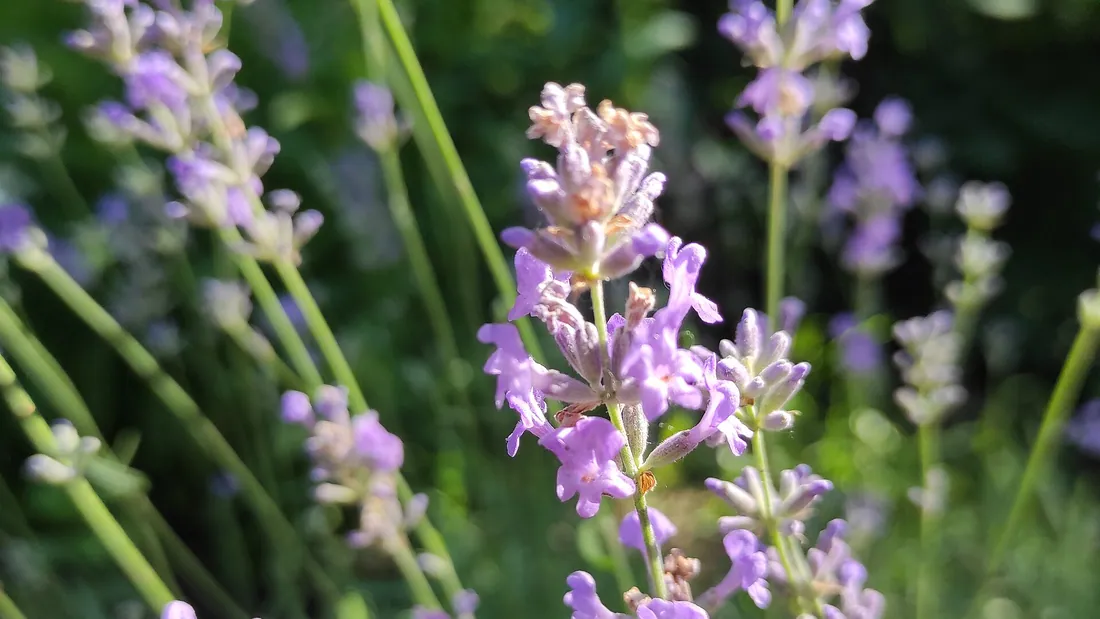

True lavender (Lavandula angustifolia) is a hardy Mediterranean plant that scents the air and draws bees all summer long. It takes frosts well below -15 °C, but its real enemy is not the cold: it is winter moisture in heavy soil. A lavender dies far more often waterlogged than frozen. The secret to growing it well comes down to one word: drainage. Free-draining soil, full sun and an annual prune after flowering, and it will last for many years.
Light and exposure
Lavender demands full sun, no compromise. It is a plant of the garrigue, used to light and heat; in shade it grows leggy, flowers poorly and rots easily. Give it the sunniest, warmest spot in the garden.
A position on a slope, in a rock garden or on top of a bank is ideal: the sun warms it and water drains away instead of sitting. Against a wall that catches the midday sun it also benefits from the stored heat, which makes up a little for the coolness of a temperate climate.
Watering
Lavender hates excess water. Once established, it is very drought-resistant and needs almost no watering: the rain of a temperate climate is more than enough. Watering an adult lavender means risking rot.
The only time a little water is justified is the first year, after planting, while the roots settle in, and only if the summer is truly dry. In a pot, let the substrate dry well between waterings and never leave water in the saucer.
Soil and repotting
This is the decisive point wherever the winter is wet. Lavender wants a poor, stony, chalky and above all perfectly drained soil. It thrives where other plants suffer from drought. What it cannot tolerate are the heavy, clay and moist soils of most lowland and valley-bottom gardens.
To succeed in heavy soil you have to lighten it: plant on a mound or in a rock garden, work plenty of coarse sand, gravel or pozzolana into the planting soil, and raise the level so water runs off. A bed of gravel at the bottom of the planting hole helps too. Without this drainage work, lavender rarely survives more than one or two winters in heavy ground.
Temperature and humidity
True lavender, Lavandula angustifolia, is the hardiest of the lavenders and takes frosts well below -15 °C without harm, which places it in USDA zones 6 to 9. Dry cold does not frighten it, it is far more resistant than French lavender or the lavandins.
The trap is therefore not the temperature but the combination of cold plus moisture. A mild, sodden winter, the kind an oceanic climate delivers, is far more fatal to it than a properly cold but dry one. Its roots rot in waterlogged soil. Everything comes down to soil and drainage: a lavender planted in free-draining soil sails through a wet winter with no special protection, a lavender with its feet in water dies.
Pruning and upkeep
The annual prune is essential to keep lavender compact and stop it going bare and woody at the centre. The right moment is just after flowering, at the end of summer. Cut back the spent stems and trim the foliage by a good third, always keeping some green parts: never cut into old bare wood, it will not regrow.
A light shaping prune can also be done in early spring, to tidy the clump before it starts up again. Without regular pruning, lavender ages fast, opens up at the centre and ends as a bush of dead wood barely in flower. A plant pruned well every year stays dense and lives much longer.
Pests and diseases
Lavender is little prone to disease when its conditions are respected. The main problem comes from excess moisture, which causes root rot (Phytophthora) and makes the plant die back from the base. Here again it all comes back to drainage: a lavender yellowing and browning from the bottom is almost always a lavender whose feet are too wet.
Among the few pests, the lavender leafhopper can transmit the stolbur phytoplasma, which gradually kills off plants in some production areas, but this stays marginal in a garden. Most often, an ailing lavender is simply suffering from soil that is too heavy and too wet, not from a disease.
Propagation
Lavender propagates very easily from cuttings, far more reliably than from seed. At the end of summer, take non-flowering stems of the year, about ten centimetres long, strip the lower leaves and plant these cuttings in a sandy, free-draining mix. Keep them sheltered, watered sparingly, and they will root within a few weeks.
Seed sowing is possible but slower and more unpredictable, the seeds often needing a cold period to germinate. To get plants identical to the mother plant, cuttings are better. Bring the young rooted cuttings under shelter for their first winter before planting them out in the garden the following spring.
Climate and hardiness
Where and in which climate it thrives
True lavender is the hardiest of the lavenders: it takes frosts well below -15 °C and is commonly grown from USDA zone 6 to 9, with zone 5 still possible in perfectly drained soil and under snow cover. That hardiness is conditional, and this is where everything is decided: it only holds in free-draining soil. Under a continental climate with a cold, dry winter, lavender comes through the cold season with no protection, often under snow, and starts away again all the stronger. Under a mild, rainy oceanic climate, where the ground stays sodden for weeks on end around freezing point, it dies of root rot even though the thermometer never drops far: damp cold kills it where dry cold does nothing at all. That is the commonest case in temperate gardens on clay, and the answer there is structural rather than climatic: plant on a mound or in a rock garden, work in coarse sand, gravel or pozzolana generously, and choose the warmest, brightest spot in the garden. Under a Mediterranean climate or dry heat it is on home ground and asks for nothing, not even watering. Where the summer is short and cool, flowering comes later and the wood ripens less well: prune straight after flowering so the new shoots have time to harden before the first cold.
Growing lavender?
Green Hub keeps a dated history of your own plant: its photos, its progress, its repottings. An AI answers about yours specifically, not a generic sheet, for free.
Identify my plantMonth-by-month care calendar
| January | Winter rest. Do nothing, above all do not prune or water. Check that water is not pooling at the base. |
|---|---|
| February | Still at rest. Be patient, dry cold does not trouble it as long as its roots are not sitting in water. |
| March | A light tidying prune is possible to reshape the clump before it starts up again, without touching the old wood. |
| April | A good planting time. Look after drainage, plant on a mound, lighten the soil with sand and gravel. |
| May | Planting still possible. Water the young plants moderately while they establish, then let the rain take over. |
| June | The foliage develops, the first spikes form. Nothing in particular, above all no watering on an established plant. |
| July | Full flowering, the bees are busy. Harvest the spikes for bouquets or drying at the start of flowering, in dry weather. |
| August | End of flowering. Prune just after, cut back by a third keeping some green. Take cuttings from non-flowering stems. |
| September | The plant slows down. The August cuttings root under shelter. No watering needed. |
| October | Going into rest. Make sure one last time that the drainage is good before the winter rains. |
| November | Rest. Bring the young potted cuttings under shelter for their first winter. Nothing to do on established plants. |
| December | Complete rest. The lavender sleeps. Its only risk is a sodden soil, not the cold. |
Green Hub tips
- Lavender dies of moisture far more often than of cold: drainage is everything. Plant on a mound and lighten the soil with sand and gravel.
- Do not water it once established. The rain of a temperate climate is enough, and excess water is the leading cause of death.
- Prune every year just after flowering, by a good third, never cutting into old bare wood, which does not regrow.
- Take cuttings straight after flowering from non-flowering stems: it is far more reliable than sowing and you get free new plants.
Related species
Basil
Ocimum basilicum
Basil (Ocimum basilicum) is an annual, cold-sensitive herb that comes from the warm regions of Asia. It is a summer…
Lemon balm
Melissa officinalis
Lemon balm (Melissa officinalis) is a hardy perennial with crinkled foliage that gives off a lemon scent the moment you…
Marjoram
Origanum majorana
Marjoram is the gentle cousin of oregano: same family, but a finer, sweeter and less pungent scent, much prized in…
Mint
Mentha
Mint (Mentha) covers several species and hybrids, from spearmint to peppermint, all perennial and fragrant. It is a…
Oregano
Origanum vulgare
Oregano (Origanum vulgare) is a tough, perennial herb built for sun and dry soils. Here is the good news: it is fully…
Rosemary
Salvia rosmarinus
Rosemary (Salvia rosmarinus, long known as Rosmarinus officinalis) is an evergreen Mediterranean shrub with needle-like…
The guides that mention it
Perennial Flowers: Choosing, Planting and Blooming Without a Gap All Season
What genuinely comes back year after year, how to read hardiness by zone rather than by promise, and how to string…
Watering Plants Properly: Deciding Rather Than Following a Schedule
Beginners water too often and too little at the same time. How to read the soil instead of the calendar, tell thirst…
Overwintering your plants without losing them
Clivia, lavender, verbena, geranium, olive: which to bring indoors, which to protect outside, which to leave to face…
Making Compost: Steering the Thermal Biology of the Heap
A compost heap is not a pile of waste you stir, it is a thermal process you steer. The real carbon/nitrogen ratio of…
Improving Clay Soil: Diagnosis, Amendments and Drainage
Ground that clings to your boots in winter and cracks open in summer: a clay soil is not condemned, it changes with the…
Garden Mulching: Every Mulch Has an Effect and a Drawback
Mulching is presented everywhere as a benefit with no downside. There is one for every material: what nitrogen drawdown…
Pruning Flowering Shrubs and Roses: Deducing Instead of Memorising
New wood or old wood: this single question gives you the pruning time for any shrub at all, including ones whose name…
Lawn Care: From Seeding to Mowing, and Renovation
Mowing higher changes more than any fertilizer can: turf density, drought resistance, weeds, moss. Everything else in…
Updated on
How this sheet is written
Written for Green Hub with the help of language models, then reviewed. It offers gardening guidance, not professional advice: if you are unsure whether a plant is toxic to a child or an animal, ask a vet, a doctor or your national poison centre.