Oregano
Origanum vulgare
.jpg)
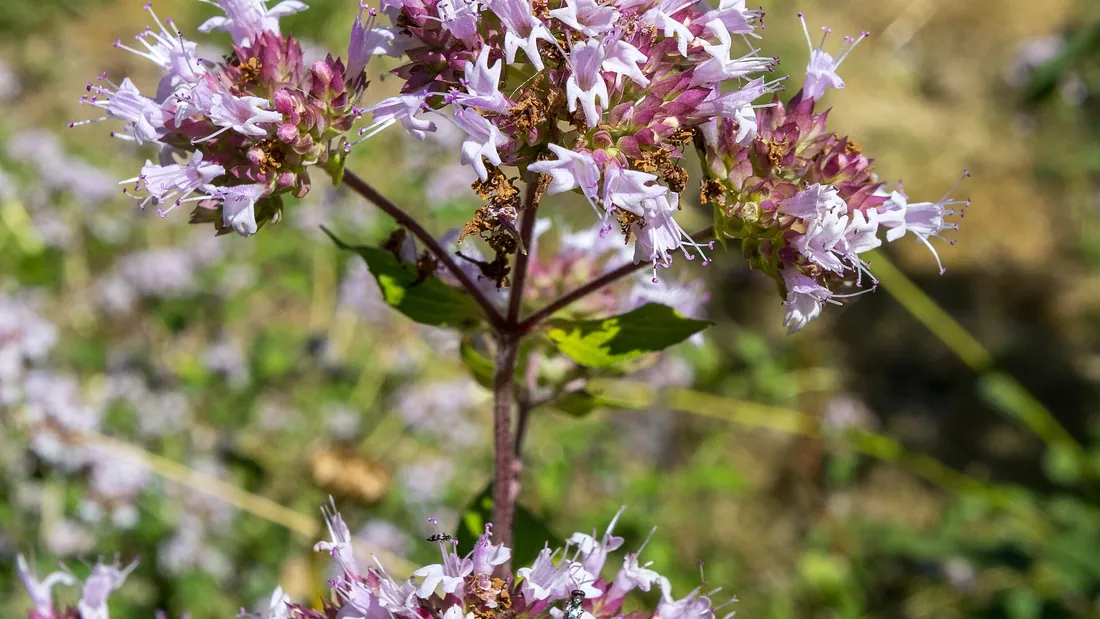
Oregano (Origanum vulgare) is a tough, perennial herb built for sun and dry soils. Here is the good news: it is fully hardy down to minus twenty degrees Celsius and overwinters outdoors without protection. The clump vanishes from the surface at the first cold spells, then regrows from the rootstock in spring. The real challenge is not frost but moisture: give it the warmest and best-drained corner of the garden, otherwise the aromas stay bland.
Light and exposure
Oregano wants full sun, no compromise. It is a scrubland plant used to scorching slopes, and it is the sun that concentrates its essential oils. In shade or partial shade it still grows, but it stretches, stays soft green, and produces bland foliage without the peppery fragrance you expect from it.
So give it the warmest exposure you have: the foot of a wall that catches the midday sun, a rock garden, a well-cleared border. The more light and heat it receives, the more fragrant the leaves will be. In a pot on a sunny terrace, it does just as well.
Watering
Once established, oregano tolerates drought very well: its roots seek water deep down and it gets through a dry summer without flinching. Water only in the first year, while the clump takes root, and during real heatwaves. An oregano planted in open ground barely needs you after that.
Excess water is far more dangerous than shortage. Soil that stays waterlogged rots the crown and roots. In a pot, let the substrate dry out between waterings and always empty the saucer: water standing at the bottom is the classic mistake that kills an oregano that is otherwise unkillable in the garden.
Soil and repotting
Oregano likes free-draining soils, poor to average, rather dry. It thrives where many plants would struggle: stony, sandy, chalky ground. Limestone does not bother it at all, quite the opposite. Avoid heavy, clay soils that hold water, or amend them with coarse sand and gravel to open up the soil.
At planting, there is no need to enrich: soil that is too rich pushes the plant to make plenty of soft, unscented foliage. Instead add a handful of gravel at the bottom of the hole to guarantee drainage. In a pot, use a potting mix lightened with a third of sand or clay pebbles, in a container with drainage holes.
Temperature and humidity
The hardiness of oregano is a real asset. The Royal Horticultural Society rates it H6, covering cold from minus fifteen to minus twenty degrees Celsius, roughly USDA zone 7: it takes a temperate-climate winter without any problem and regrows every spring from the rootstock. No winter protection is needed in open ground.
The critical point is not the cold but winter moisture combined with cold. Waterlogged soil that freezes does far more damage than frost alone: it is the standing water that rots the rootstock. Hence the importance of a drained spot and a warm exposure. In a pot, raise the container on blocks through the cold season so the water drains away and the base does not sit in water.
Pruning and upkeep
Cut back the clump after flowering, at the end of summer, cutting the stems by half. This prevents the plant from thinning out at the centre and forces it to produce fresh, compact growth. An oregano that is never pruned becomes woody at the base and hollows out in its middle after a few years.
In autumn, leave the dry stems in place or cut them short, as you prefer: the rootstock is protected underground anyway. In spring, a small clean-up of the dead stems is enough to get the clump going again. Every three to four years, divide the clump to regenerate it and prevent it from wearing out.
Pests and diseases
Oregano is very rarely subject to diseases, provided it stays dry. The rare problems always come from moisture. In soil that is too damp and confined, you can see powdery mildew appear, that white powdery felting on the leaves, and sometimes rust, with its little orange pustules on the underside of the foliage. A humid summer and overly crowded plantings favour these two.
The remedy is always the same: air it out. Space the plants, prune to let air circulate, and above all guarantee drainage. Root rot, caused by waterlogged soil in winter, remains the real deadly risk. As for pests, oregano is fairly untroubled; aphids can settle on the young tender shoots but without seriousness.
Propagation
Dividing the clump in spring is the simplest and most reliable method. Dig up an established clump when it starts up again, split it into pieces with roots, and replant right away. It is also a chance to regenerate an old plant that is thinning out. Each piece regrows vigorously.
Cuttings work well in spring or summer: take ten-centimetre stems, remove the lower leaves and set them in a free-draining mix. Oregano also self-seeds if you let a few flowers run to seed, and you will find young spontaneous plants around the mother plant the following spring.
Climate and hardiness
Where and in which climate it thrives
Oregano is one of the easiest herbs to establish for the long term, and it takes far more cold than people give it credit for. The Royal Horticultural Society rates it H6, its highest hardiness category for unsheltered outdoor growing, covering cold from minus fifteen to minus twenty degrees Celsius, roughly USDA zone 7. You plant it once, it stays there for years: the clump disappears completely from the surface during the cold season, sleeps underground and pokes back up as soon as the soil warms.
Its natural ground is the Mediterranean climate it comes from, dry and bright, and it copes very well with a continental climate whose winter is cold but dry. It is under a mild, rainy oceanic climate that it struggles: it is not the degrees that kill it, it is heavy soil left waterlogged all winter, which rots the rootstock far more surely than frost. Under a humid summer, powdery mildew also settles on crowded clumps.
So what changes the procedure is drainage far more than latitude. Where the winter is wet, give it the warmest and best-drained corner of the garden, against a wall that catches the midday sun or in a rock garden, and plant it on a small mound with gravel underneath if your soil is clay. In a pot, raise the container on blocks through the cold season. Where the summer is hot and dry it asks for nothing: heat alone is no problem at all, it is heat combined with standing moisture that damages it. Harvest just before and during flowering, when the aromas peak, and divide the clump every three to four years.
Growing oregano?
Green Hub keeps a dated history of your own plant: its photos, its progress, its repottings. An AI answers about yours specifically, not a generic sheet, for free.
Identify my plantMonth-by-month care calendar
| January | Nothing to do. The clump sleeps underground, invisible at the surface. Just check that water is not standing at the base during a thaw. |
|---|---|
| February | Still at rest. This is the time to order seeds or scout out where to establish a new plant in spring, in the driest and sunniest corner. |
| March | Clean up last year’s dry stems to clear the rootstock. Sowing possible indoors in the warmth for new plants. |
| April | The clump pokes back up. Divide old plants to regenerate them and replant the pieces. A good month to establish a new oregano in open ground. |
| May | Growth fully resumes. First leaves to harvest. Easy cuttings on the young stems. Plant out potted seedlings once the last frosts have passed. |
| June | The clump develops. Harvest starting up, the aromas are rising. No need to water except marked drought on a plant from this year. |
| July | Flowering. The aromas are at their peak just before and during flowering, this is the best time to harvest and dry. The flowers attract bees, leave some for them. |
| August | End of flowering. Generous harvest to dry or freeze. Watch for powdery mildew if the weather is damp and the plants too crowded: air them out. |
| September | Last harvests. Cut the stems back by half after flowering to keep a compact clump and prevent it from thinning out. |
| October | Growth declines with the cold. Cut the faded stems short if you like, or leave them. Ensure drainage before the damp winter. |
| November | The clump disappears from the surface, this is normal. No protection to plan, oregano is hardy. Just avoid standing water at the base. |
| December | Complete rest underground. Nothing to do. Note the plants to divide next spring to regenerate them. |
Green Hub tips
- Give oregano the warmest and best-drained corner of the garden. Under a damp winter, standing water kills more surely than frost.
- It is full sun that makes the aromas. In shade, oregano grows but stays bland: never plant it in a dark corner.
- Harvest just before and during flowering, in July: that is when the leaves are the most fragrant. Dry them for the winter.
- Divide the clump every three to four years in spring to rejuvenate it. An old plant hollows out and thins at the centre if it is never regenerated.
Related species
Basil
Ocimum basilicum
Basil (Ocimum basilicum) is an annual, cold-sensitive herb that comes from the warm regions of Asia. It is a summer…
Lavender
Lavandula angustifolia
True lavender (Lavandula angustifolia) is a hardy Mediterranean plant that scents the air and draws bees all summer…
Lemon balm
Melissa officinalis
Lemon balm (Melissa officinalis) is a hardy perennial with crinkled foliage that gives off a lemon scent the moment you…
Marjoram
Origanum majorana
Marjoram is the gentle cousin of oregano: same family, but a finer, sweeter and less pungent scent, much prized in…
Mint
Mentha
Mint (Mentha) covers several species and hybrids, from spearmint to peppermint, all perennial and fragrant. It is a…
Rosemary
Salvia rosmarinus
Rosemary (Salvia rosmarinus, long known as Rosmarinus officinalis) is an evergreen Mediterranean shrub with needle-like…
The guides that mention it
Easy herbs to grow
Thyme, rosemary, basil, parsley, mint: which ones make it through the winter outdoors, which ones self-seed, and how to…
Wildflower Meadows and Beneficial Insects: Gardening for Biodiversity
Ladybirds, hoverflies, wild bees: how a wildflower meadow and a few simple habits turn an ordinary garden into a refuge…
Which Plants to Choose for a Drought-Resistant Garden
Deep roots, silvery foliage, Mediterranean origins: the plants that get through a dry summer without watering, and how…
Which Garden Flowers Are Edible, and How to Cook With Them
From flower bed to plate: the flowers that are genuinely edible, the harvesting method that preserves their flavour,…
Updated on
How this sheet is written
Written for Green Hub with the help of language models, then reviewed. It offers gardening guidance, not professional advice: if you are unsure whether a plant is toxic to a child or an animal, ask a vet, a doctor or your national poison centre.