Spinach
Spinacia oleracea
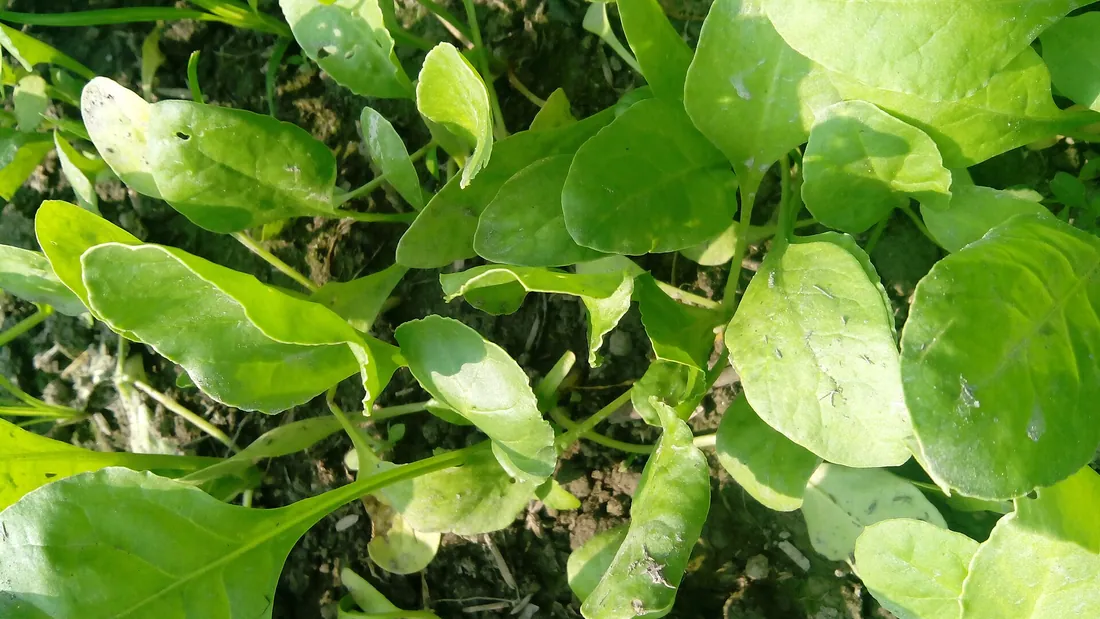

Spinach (Spinacia oleracea) is a cool-season leaf vegetable, hardy and in a hurry to live. Coolness suits it very well: it is a spring and late-season vegetable, not a high-summer one. As soon as the heat and days longer than fourteen hours arrive, it bolts to flower and stops making leaves. It is sown in place at two moments, in spring and above all at the end of summer, and the late-summer sowing is the best: it spends the winter outside under light protection and restarts early.
Light and exposure
In spring and autumn, spinach takes the sun without a problem, it even needs it to grow fast. It is in the hot season that it must be protected: in partial shade, at the foot of a row of beans or behind a taller plant, it bolts to seed distinctly later.
The trap here is not the lack of light but the excess of heat combined with long days. Spinach standing in full sun once the days pass fourteen hours is doomed to flower. So save the open, sunny spots for the cool-season sowings, in early spring and in late summer, and keep a cool corner to attempt a hot-season crop.
Watering
Spinach wants permanently cool soil. This is the point that decides everything: soil that dries out, and the plant takes the water stress as a signal of the end of life and bolts to seed at once. Water regularly, without jolts, especially in dry, windy spring weather.
A light mulch between the rows keeps the base cool and spaces out the watering. In autumn, the rain often does the job for you, but keep an eye on the young late-summer sowings while it is still hot and dry: this is the moment when they are thirstiest.
Soil and repotting
A rich soil, cool and well supplied with nitrogen gives the best leaves. Spinach is greedy for nitrogen, that is what makes it green and fleshy. An addition of ripe compost before sowing, or a bed that received manure the previous season, suits it perfectly. It appreciates a soil that does not become too acidic.
Sow directly in place, spinach transplants poorly. Draw shallow furrows, one to two centimetres, spaced twenty-five to thirty centimetres apart. Sow thinly then thin out to ten centimetres along the row once the young plants have come up: crowded, they grow leggy and bolt faster.
Temperature and humidity
Spinach is a cool-season vegetable, and that is where all its character lies. It germinates and grows well between 10 and 20 degrees, resists frost and withstands sub-zero temperatures once established. Above 25 degrees and under days longer than fourteen hours, it triggers its bolting and becomes unusable.
The critical point here is therefore not the cold, which it takes, but the heat and the length of the day. Avoid high summer. A hardy late-summer sowing spends the winter outside under a cold frame or a simple winter fleece, gets through frosts of around -10 degrees and restarts at the end of winter as soon as the light returns.
Pruning and upkeep
There is no pruning as such, but a piece of care that counts: thinning. As soon as the seedlings have two or three true leaves, pull out the weakest to leave about ten centimetres to those that remain. The young ones pulled out are eaten in salad, nothing is wasted.
Hoe and weed regularly, spinach hates the competition of weeds. Watch for the appearance of a central stem that lengthens and leaves that become pointed: this is the start of bolting. At this signal, harvest everything that remains without waiting, the quality will only decline.
Pests and diseases
Spinach downy mildew, caused by Peronospora farinosa, is enemy number one in a humid climate. It shows as yellow spots on the top of the leaves and a greyish-purple felting on the underside, and progresses fast in mild, damp weather, exactly the conditions of a cool oceanic late season. Air the rows, water at the base in the morning, and choose so-called mildew-resistant varieties, common today, which settle a good part of the problem.
As for pests, slugs and snails devour the young seedlings, especially the late-summer ones when the soil stays moist: this is the main risk at emergence. Collect them in the evening, set barriers, or sow a little thicker to compensate for losses. Aphids can also colonise the underside of the leaves in spring.
Propagation
Spinach is propagated only by sowing, directly in place because it copes poorly with transplanting. The seeds germinate in the cold, from 5 degrees, which allows very early sowings. Emergence takes one to two weeks depending on temperature, slower in the cold.
If you want to harvest your own seeds, let a few plants bolt at the end of the season. Spinach is dioecious, there are male plants and female plants: keep several to ensure pollination by the wind. The ripe seeds are harvested dried on the plant, at the end of summer, and keep for four to five years.
Climate and hardiness
Where and in which climate it thrives
Spinach is a cool-season plant, and its hardiness is its greatest asset: once well rooted, the rosette takes frost and starts again, down to around -10 °C with no protection at all. In USDA zone 8 and milder it therefore overwinters outside bare; in zone 7 and colder, a winter fleece or a cold frame takes over and is amply enough. The leaves stay green under the snow, growth stops in the heart of winter, then restarts as soon as the light returns, for a very early harvest well before the spring sowings.
What rules the calendar, though, is not the cold but day length: as soon as the day passes fourteen hours, the plant gets its flowering signal and bolts, even in cool weather. Hence the rule of two windows, never high summer. The first runs from the end of winter to early spring, for a quick harvest; the second, the best one, opens in late summer when the days finally shorten, for a late-season harvest followed by overwintering.
In a mild, humid oceanic climate that second window gives the best results: a long, cool, rainy late season. In a continental climate with a dry, severe winter it shortens and the cold frame becomes essential. In a Mediterranean or subtropical climate it is the other way round: spinach grows all winter and it is the hot season that becomes impossible. For overwintering, a hardy variety such as 'Géant d’Hiver', reputed to take severe frosts well, or a slow-bolting mid-early one such as 'Matador', are two safe bets from seed houses.
If you insist on a warm-season spinach, put it in partial shade, keep the soil cool without waterlogging it, with a mulch, and water without fail, but accept that it will bolt faster than the cool-season ones.
Growing spinach?
Green Hub keeps a dated history of your own plant: its photos, its progress, its repottings. An AI answers about yours specifically, not a generic sheet, for free.
Identify my plantMonth-by-month care calendar
| January | The spinach sown in autumn sleeps outside under fleece or cold frame. Nothing to do except check that the protection holds and harvest a few leaves in mild weather. |
|---|---|
| February | The overwintered plants restart as soon as the light returns. Air the cold frame on mild days. First sowing possible under cover at the end of the month if the soil allows it. |
| March | Big window for spring sowing. Sow in place in furrows, thin out at emergence. Harvest the last overwintered plants before they bolt. |
| April | Continue the spring sowings every two or three weeks to spread the harvest. Keep the soil cool, hoe, watch for slugs on the young plants. |
| May | Last spring harvests. Avoid sowing now in full sun, the coming heat will make the plants bolt. Save partial shade if you insist. |
| June | Lean season. The heat and the long days make everything that remains bolt to seed. Harvest before flowering and make way for other vegetables. |
| July | Too hot for spinach. Prepare the bed for the autumn sowing: compost, cool soil. Be patient, the main thing arrives in a few weeks. |
| August | The best sowing of the year begins. Sow in place from mid-August, water well while it is hot and dry, protect the emergence from slugs. |
| September | Continue the autumn sowings at the start of the month. Thin out the August plants. Growth accelerates with the coolness, watch for mildew in damp weather. |
| October | Full autumn harvest, leaf by leaf. The latest-sown plants settle in for the winter. Prepare fleeces and cold frames for the first frosts. |
| November | Harvest again before the hard cold. Cover the plants meant to overwinter with a winter fleece or a cold frame. They will spend the winter outside. |
| December | The overwintered spinach waits under protection. Take a few leaves in mild weather. Note the varieties that held up well for next year. |
Green Hub tips
- The late-summer sowing is the real winner: a generous late-season harvest, overwintering under fleece, and a very early restart at the end of winter.
- Never let the soil dry out. Water stress is the first trigger of bolting, even before the heat.
- Choose mildew-resistant varieties: under a mild, damp late season, it is the disease that spoils the most harvests.
- Always sow in place and thin out to ten centimetres. Spinach transplants poorly and bolts faster when it is crowded.
Related species
Beetroot
Beta vulgaris
Beetroot (Beta vulgaris) is an easy root vegetable, one of the most forgiving in the kitchen garden. You sow it…
Swiss chard
Beta vulgaris subsp. cicla
Swiss chard (Beta vulgaris subsp. cicla), also called leaf beet, is a generous, easy leafy vegetable, a close relative…
Artichoke
Cynara scolymus
The artichoke (Cynara scolymus) is a large perennial with silvery, deeply cut foliage, as striking in an ornamental…
Asparagus
Asparagus officinalis
Asparagus (Asparagus officinalis) is an unusual perennial for a vegetable patch: once established, an asparagus bed…
Bean
Phaseolus vulgaris
The green bean (Phaseolus vulgaris) is one of the easiest vegetables in the kitchen garden, provided you respect one…
Bell pepper
Capsicum annuum
The bell pepper (Capsicum annuum) is an annual fruiting vegetable and a genuinely cold-shy one, the sweet cousin of the…
The guides that mention it
The vegetable garden calendar, from sowing to harvest
Two dates are enough to build an entire vegetable garden year: your last spring frost and your first autumn frost.…
Making Compost: Steering the Thermal Biology of the Heap
A compost heap is not a pile of waste you stir, it is a thermal process you steer. The real carbon/nitrogen ratio of…
Garden Diseases: Recognising What Is Attacking Your Plants, and Acting Before the Spot Appears
A white bloom that wipes off on a fingertip, an angular lesion stopped dead by a vein, a fruit browned from the bottom…
Rainwater Harvesting for the Garden: Choosing and Sizing Your System
Rain barrel, above-ground tank, or underground cistern: how to choose the right size so your vegetable garden no longer…
Gardening Under a Greenhouse or Cold Frame: Growing All Year Round
A greenhouse or even a simple cold frame changes everything: sowings brought forward by several weeks, harvests…
Living soil: the no-dig method for a garden that thrives without a spade
Giving up digging means letting earthworms and mycorrhizae build a living soil that feeds the garden in your…
Square Foot Gardening: Fitting More Crops Into Less Space
A twelve-inch grid and a well-placed trellis: how a square foot garden yields more vegetables than a traditional row on…
Sowing Seeds Successfully: Why It Fails, and What Fixes It
A seed that never comes up was not unlucky. Germination temperatures by species, correct depth, seeds that need light,…
Updated on
How this sheet is written
Written for Green Hub with the help of language models, then reviewed. It offers gardening guidance, not professional advice: if you are unsure whether a plant is toxic to a child or an animal, ask a vet, a doctor or your national poison centre.