Broccoli
Brassica oleracea var. italica
.JPG)
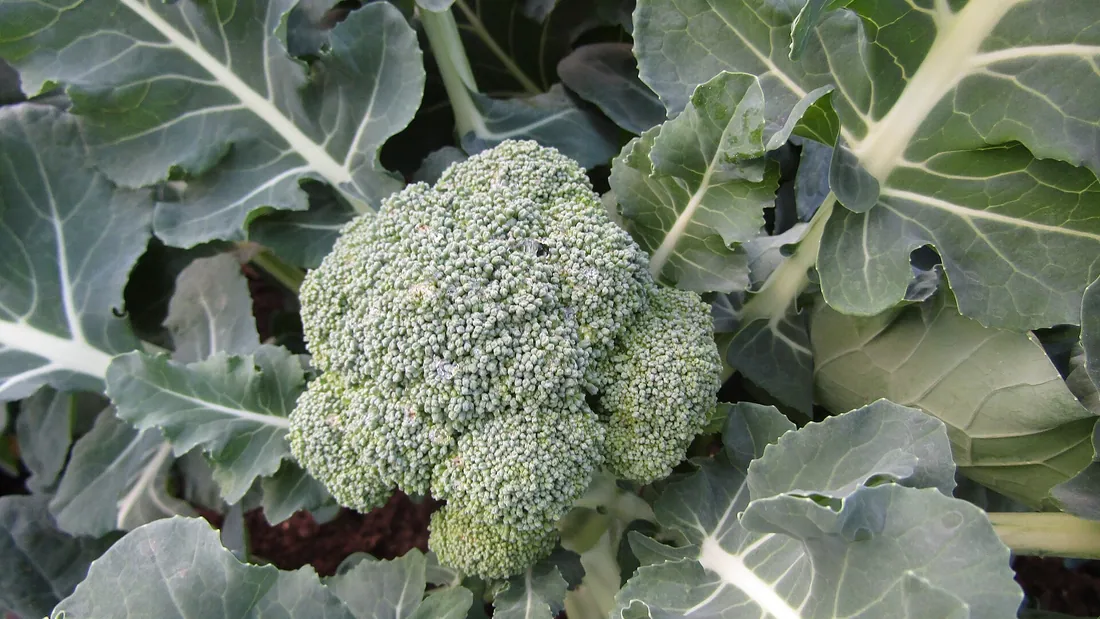
Broccoli (Brassica oleracea var. italica) is a cabbage whose central head we harvest, a cluster of flower buds still tightly closed, before they open into yellow flowers. It is a hungry vegetable that likes coolness and water, and gives its best in a temperate climate rather than in real heat. It is sown in spring, under cover first then in the ground after transplanting, for a harvest that runs from summer to autumn. Its big asset: once the central head is cut, the plant keeps producing small side shoots for weeks. Well managed, it feeds the table for a good part of the growing season.
Light and exposure
Broccoli wants sun, but it does not crave heat the way a tomato does. A sunny to lightly shaded spot suits it, with at least five to six hours of light a day. In a cool temperate climate, full sun does not bother it, provided the soil stays cool underneath.
Avoid hot, dry spots against a wall that takes the full midday sun, where it would bolt too quickly in strong heat. An open, well-aired corner of the vegetable garden also limits the leaf diseases that a humid summer encourages. Air circulation matters as much as light.
Watering
It is a drinker. Broccoli needs a soil that stays cool at all times, especially when the head is forming. Water stress at this stage gives small, loose heads that bolt before their time. Water regularly and generously, at the base, preferably in the morning.
In a temperate climate, summer often brings rain, but not always at the right moment. During the dry spells of high summer, a generous watering two to three times a week is better than a daily trickle. A good mulch of dried grass clippings or straw keeps the moisture in and stops the soil from drying out between showers.
Soil and repotting
Broccoli demands a rich, deep soil well supplied with nitrogen. Prepare the spot in autumn or early spring with a good dose of mature compost or well-rotted manure. Poor soil gives puny plants and disappointing heads.
It likes rather heavy, cool soils, which makes it one of the few vegetables genuinely at ease in clay ground. A neutral to slightly limy pH suits it, around 6.5 to 7, and also limits clubroot. If your soil is acidic, an application of lime a few months before planting is useful. Still, ensure proper drainage, because standing water through the cold season is not its friend.
Temperature and humidity
Broccoli is a cool-season vegetable. It grows best between 15 and 22 degrees and easily takes cool spring and autumn nights. Young plants tolerate light frosts, and a well-established plant takes a few degrees below zero at the end of the season.
Heat, on the other hand, presses it: above a sustained 25 degrees, it tends to bolt too early and open its head prematurely. In a mild temperate climate this risk stays moderate, but during summer heatwaves, generous watering and a little shade help it hold on. That is exactly why autumn harvests are often the finest there.
Pruning and upkeep
You do not really prune broccoli, you harvest it at the right moment, which comes down to managing the plant. Cut the central head when it is well formed and still tight, before the little buds turn yellow. A head that starts to flower is past its point, it stays edible but loses flavour and texture.
After this cut, do not pull the plant out on any account. Leave it in place and keep watering it: it will produce a series of side shoots, mini-heads in the leaf axils. They are smaller but just as good, and this regrowth extends the harvest by several weeks. Pick them regularly to encourage the plant to make more.
Pests and diseases
Cabbages pay a heavy tribute to pests, and broccoli is no exception. The cabbage white, that white butterfly, lays on the foliage and its green caterpillars devour the leaves; inspect the underside of the leaves and remove the eggs by hand, or fit an insect net right from planting. The cabbage root fly lays at the collar and its larvae attack the roots, a cardboard collar at the base of the plant discourages it. Flea beetles riddle young leaves with little holes in dry weather, and slugs love freshly transplanted plants.
As for diseases, clubroot is the most feared in damp, acidic soils: a soil fungus that deforms the roots into galls and makes the plant waste away. It persists in the soil for years, hence the crucial importance of rotation. Never replant a cabbage, turnip or radish in the same spot before three or four years. A well-drained soil that is not too acidic also limits its establishment.
Propagation
Broccoli is propagated by seed, the only practical way. Sow warm, between 15 and 20 degrees, from the end of winter onwards, in a seed tray or pots under cover. Emergence is quick, four to seven days. Then prick out the seedlings into individual pots as soon as they have two or three true leaves.
Plant out in the garden when the plants are about fifteen centimetres tall and the risk of hard frosts has passed, spacing them generously by 50 to 60 centimetres, because an adult broccoli is bulky. Set them a little deeper than in the pot, up to the first leaves, for better anchorage. Saving your own seed is possible but tricky, because cabbages cross easily between varieties and are biennial; for a family garden, it is better to buy seeds or plants.
Climate and hardiness
Where and in which climate it thrives
Broccoli is not a plant you file under a hardiness zone: it is a cool-season annual that grows under almost any climate, provided you aim at the right window. It gives its best heads between 15 and 22 °C. Above a sustained 25 °C it opens its head and bolts before its time; a well-rooted adult plant, on the other hand, takes a few degrees below zero, down to about -4 or -5 °C, with no damage to the head, and a light frost actually improves the flavour by turning starch into sugars. The costly trap is cold suffered too early, not the frost at the end of the season: a young plant with fewer than four true leaves that spends several nights below 10 °C reacts as though it had already been through winter and forms a premature button head it never recovers from. Under a mild, humid oceanic climate the crop runs without a break from late winter to autumn, and the autumn harvest is almost always the finest. Under a continental climate with a hot, dry summer you need two windows and must avoid high summer: a very early sowing for an early-summer harvest, a second in midsummer for autumn, with afternoon shade and soil kept cool. Under a Mediterranean or subtropical climate it is a cool-season crop: you sow when the heat drops, to harvest in winter. The reliable markers are temperatures, never dates: sow under cover between 18 and 20 °C, plant out when nights settle above 10 °C, and count 60 to 100 days from planting to head depending on the variety.
Growing broccoli?
Green Hub keeps a dated history of your own plant: its photos, its progress, its repottings. An AI answers about yours specifically, not a generic sheet, for free.
Identify my plantMonth-by-month care calendar
| January | Rest. This is the time to order seeds and choose varieties, from classic calabrese to sprouting broccoli to spread the harvest. |
|---|---|
| February | Prepare the ground as soon as it has drained: a good dose of compost or well-rotted manure will feed this hungry plant. Still too early to sow without warmth. |
| March | First sowings under cover, in the warm between 15 and 20 degrees, in a seed tray or pots near a bright window or under a frame. |
| April | Carry on sowing. Prick out into individual pots the plants that emerged in March. Harden them off gradually outdoors on mild days. |
| May | Plant out the most advanced plants, spaced 50 to 60 centimetres apart. Fit an insect net and a cardboard collar against the cabbage root fly. |
| June | Water generously and mulch the base. Watch for the cabbage white: inspect the underside of the leaves and remove the yellow eggs by hand. |
| July | First central heads on the early sowings. Harvest them nice and tight, before they yellow. Water abundantly in dry weather to prevent bolting. |
| August | Full harvest. After the central head, leave the plants in place and water: they form side shoots to pick as they come. |
| September | The autumn harvests are on the way, often the finest. Keep picking the side shoots. Watch for slugs and caterpillars still active. |
| October | Last heads and shoots before the real cold. The plants take the first light frosts well. Harvest before the hard ones. |
| November | End of season. Pull up the exhausted plants and compost the healthy foliage. Note the spot so as not to put a cabbage back there for three or four years. |
| December | Rest. Plan next year’s rotation and keep in mind where the cabbages grew this year to avoid clubroot. |
Green Hub tips
- Cut the central head nice and tight, before the buds yellow, then leave the plant in the ground: it makes side shoots again for weeks.
- Never replant a cabbage in the same spot two years running. Rotation over three or four years is your only real defence against clubroot.
- An insect net fitted right at planting settles the cabbage white and the cabbage root fly in one go, without spraying anything.
- Never let the broccoli go thirsty when the head is forming: one dry spell and it bolts before its time.
- Autumn harvests are often the best in cool climates: the coolness gives firm, tightly packed heads.
Related species
Brussels sprout
Brassica oleracea var. gemmifera
Brussels sprouts (Brassica oleracea var. gemmifera) are harvested from autumn into the heart of winter, and every frost…
Cauliflower
Brassica oleracea var. botrytis
Cauliflower (Brassica oleracea var. botrytis) is a demanding vegetable that thrives in a cool, damp climate but never…
Curly kale
Brassica oleracea var. sabellica
Curly kale (Brassica oleracea var. sabellica), also known simply as kale, is a leafy vegetable of uncommon hardiness.…
Radish
Raphanus sativus
The radish (Raphanus sativus) is the fastest vegetable in the garden, ready to bite into in three to five weeks. It is…
Rocket
Eruca vesicaria
Rocket (Eruca vesicaria) is a salad with a pungent, peppery taste, one of the fastest in the garden: barely four to six…
Turnip
Brassica rapa
The turnip (Brassica rapa) is a hardy, fast-growing root, one of the easiest crops in the vegetable garden. Count on 6…
The guides that mention it
Making Compost: Steering the Thermal Biology of the Heap
A compost heap is not a pile of waste you stir, it is a thermal process you steer. The real carbon/nitrogen ratio of…
Vegetable Garden Pests: The Natural Method That Holds All Season
A leaf riddled with holes, a lettuce shaved to the ground overnight, a twisted and sticky shoot: every kind of damage…
Sowing Seeds Successfully: Why It Fails, and What Fixes It
A seed that never comes up was not unlucky. Germination temperatures by species, correct depth, seeds that need light,…
Updated on
How this sheet is written
Written for Green Hub with the help of language models, then reviewed. It offers gardening guidance, not professional advice: if you are unsure whether a plant is toxic to a child or an animal, ask a vet, a doctor or your national poison centre.