Brussels sprout
Brassica oleracea var. gemmifera
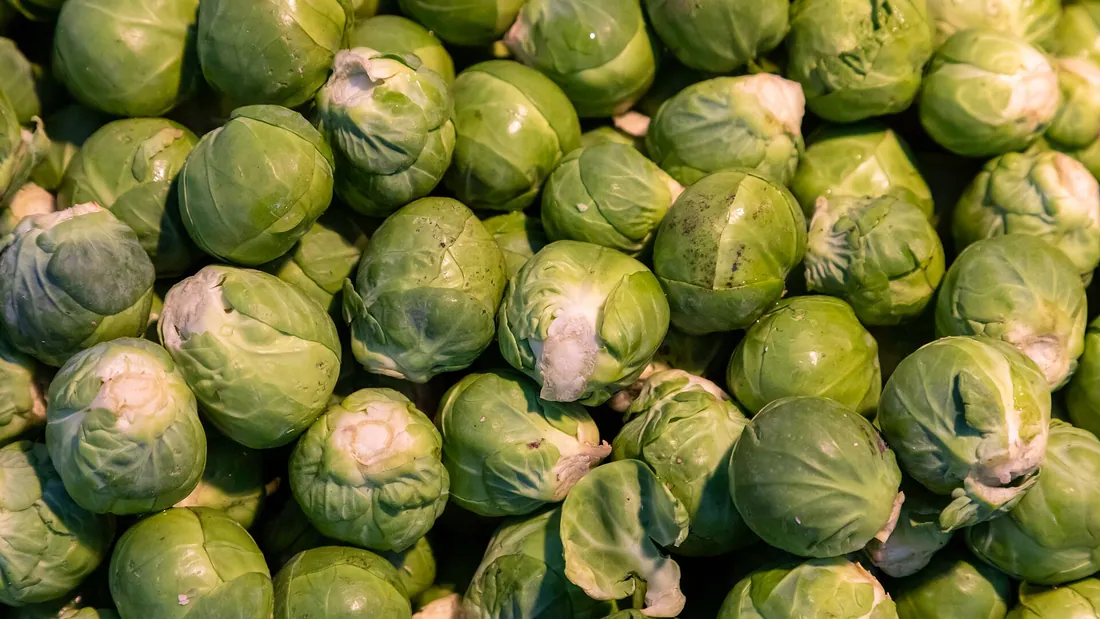

Brussels sprouts (Brassica oleracea var. gemmifera) are harvested from autumn into the heart of winter, and every frost makes them better: the little sprouts, in fact tight axillary buds stacked along a tall stem, lose their bitterness as soon as the cold turns their starch into sugar. Selected in the market gardens around Brussels, the plant has carried the city’s name for centuries. It is a vegetable of long cycle and patience: sown in spring, planted in summer, harvested right through the cold season. It is the vegetable that holds the garden when everything else has thrown in the towel.
Light and exposure
The Brussels sprout wants a sunny, open spot. Give it at least five to six hours of sun a day, in an open corner of the garden where the air moves well. Light supports steady growth and tight sprouts; in shade, it runs up tall and forms loose buds.
An airy spot counts double for this cabbage, because its long foliage holds moisture and attracts disease in a mild, damp summer. Avoid enclosed, permanently damp bottoms of the garden. Watch out for wind too: its tall stem catches a lot, a point we will come back to under pruning.
Watering
The Brussels sprout has a long growing season and needs a cool soil from sowing to autumn. Water regularly and copiously through the summer, at the base, especially during the leaf-development phase and the start of sprout formation. A lack of water at this point gives small, widely spaced buds.
In autumn and winter, the plant slows down and the rain of the cold season is more than enough, often too much. Space out the watering then and let the sky do the work. A summer mulch at the base keeps the soil cool during the hottest weeks of summer, the most critical period for this cabbage that hates going thirsty.
Soil and repotting
This cabbage is hungry and holds the ground for a long time, so it needs a rich, well-supplied soil. Prepare the spot with a good dose of mature compost or well-rotted manure, ideally applied the previous autumn or early in spring. Poor soil gives puny plants that never sprout properly.
It thrives in heavy, deep, cool soils, which suits a clay ground well. A firm soil is even an asset: it anchors the tall stem better. Aim for a neutral to slightly limy pH, around 6.5 to 7, which also helps to hold clubroot in check. On acidic soil, an application of lime a few months before planting is welcome.
Temperature and humidity
The Brussels sprout is a genuine cool-climate vegetable, perfectly at ease in a cool temperate climate. It grows quietly through the mild summer, then gives its best in the cold. It is one of the few vegetables that not only withstands frost but is improved by it.
The first autumn frosts turn part of the sprouts’ starch into sugar: they lose their bitterness and become sweet and fine. An established plant takes frosts of several degrees below zero without flinching and can stay in the ground all winter in an oceanic climate. Only prolonged hard cold below minus 10 degrees can damage exposed sprouts. It is summer heat, more than the cold, that bothers it: growth during a spell that is too hot and dry gives loose sprouts that open.
Pruning and upkeep
The key gesture is not classic pruning but staking and earthing up. The Brussels sprout’s stem rises high, often 60 to 80 centimetres loaded with sprouts, and catches a lot of the autumn wind. Earth up the soil at the base at the end of summer to anchor the base, and put a solid stake for exposed plants, otherwise a gust lays them flat.
Two optional gestures help the harvest. You can remove the large lower leaves as you pick the sprouts, which airs the base. And towards the end of summer, some gardeners top the plant, that is they cut the terminal bud at the top, to concentrate the energy on the sprouts and make them swell faster and more evenly, useful if the autumn looks like being short.
Pests and diseases
Like all cabbages, this one feeds its little army of pests. The cabbage white lays on the foliage and its green caterpillars devour it; inspect the underside of the leaves and remove the eggs, or fit an insect net right from planting. The cabbage root fly attacks the roots of young plants, a cardboard collar at the neck discourages it. Mealy cabbage aphids settle in the heart of the sprouts late in the season, a real nuisance, watch for them and hose the colonies off with a jet.
Clubroot remains the major threat on damp soils: this fungus deforms the roots and makes the plant waste away, and it persists in the soil for years. The only real defence is strict rotation: never replant a cabbage, turnip or radish in the same spot before three or four years. Given the very long cycle of this cabbage that occupies the plot for almost a year, plan its place with care. A drained soil that is not too acidic also slows the fungus.
Propagation
The Brussels sprout is propagated by seed, the only sensible way in the garden. Sow early, at the very start of spring, because its cycle is long and it needs the whole growing season to develop. Sow in a nursery bed under cover or in pots, warm between 15 and 18 degrees, then prick out the seedlings into individual pots as soon as they have a few true leaves.
The final planting takes place in early summer, when the plants are robust. Space them widely, 60 to 70 centimetres in all directions, because they grow big and need air. Plant deep, up to the first leaves, and firm the soil well around the neck for a firm anchorage. Saving your own seed is tricky, because cabbages cross between varieties and are biennial; for a family garden, it is better to start from bought seeds or plants each year.
Climate and hardiness
Where and in which climate it thrives
Brussels sprouts are a cool-climate plant with a long cycle: count five to six months between sowing and the first sprouts, and remember that the plant is at its best when the harvest falls in the cold. A well-rooted, hardened-off plant takes frosts of minus 10 degrees, down to minus 15 for old varieties known for their hardiness such as 'Roodnerf': that places it comfortably in USDA zone 7, and it stays in the ground all winter anywhere the soil does not freeze deep.
It is at ease where the summer stays mild and the autumn stretches out: oceanic climates, upland climates, cool maritime coasts. It struggles in dry heat, because sustained growth above 24 degrees gives loose sprouts that open instead of packing tight. In those climates, shift the sowing so that sprout formation falls late in the season, or grow it as a winter crop where winters stay mild. In a continental climate with a hard winter, harvest before the deep cold settles in rather than counting on storage on the stem.
Read the calendar in intervals, never in dates: sow four to five months before the first expected frost, plant out when the seedlings have six to eight true leaves, earth up and stake at the end of summer, top the plant four to six weeks before the first hard frosts, then pick from the bottom up as you need them. Under a mild, wet winter, watch the neck: it is standing water, and the clubroot it encourages, that loses this cabbage, not the cold. Strict rotation remains the condition for everything else.
Growing brussels sprout?
Green Hub keeps a dated history of your own plant: its photos, its progress, its repottings. An AI answers about yours specifically, not a generic sheet, for free.
Identify my plantMonth-by-month care calendar
| January | Harvest the last sprouts on the plants still in the ground: they are at the peak of their sweetness after the frosts. Pick from bottom to top as needed. |
|---|---|
| February | End of harvest for the latest plants. Pull up the exhausted plants and compost the healthy foliage. Order the seeds for the new season. |
| March | Prepare the future plot with mature compost, respecting the cabbage rotation. Still a little early to sow without enough warmth. |
| April | Sow in a nursery bed under cover, warm between 15 and 18 degrees. The cycle is long, so it is better not to sow too late. |
| May | Carry on or start the sowings. Prick out into individual pots the plants that emerged in April and harden them off outdoors on mild days. |
| June | Plant the robust plants out in the garden, spaced 60 to 70 centimetres apart. Fit an insect net and a collar against the cabbage root fly. |
| July | Planting is still possible early in the month. Water copiously in dry weather and mulch the base, this is the phase when the foliage develops. |
| August | Earth up the soil at the base to anchor the stem and put in stakes. Watch for cabbage white caterpillars and aphids in the heart of the young sprouts. |
| September | The first sprouts form at the bottom of the stem. You can top the plant to concentrate the energy and swell the buds faster. |
| October | Harvest begins after the first frosts, which clearly sweeten the sprouts. Pick from bottom to top, leave the plant in the ground for the rest. |
| November | Full harvest. The sprouts keep perfectly on the stem under the cold. Remove the large lower leaves to air the plant and ease picking. |
| December | Winter harvest as needed, a true festive-season vegetable. The plants take the frost; pick only what you eat to keep the rest fresh outside. |
Green Hub tips
- Do not harvest before the first frosts: they turn the starch into sugar and make the sprouts sweet instead of bitter.
- Earth up and stake before autumn. A tall stem loaded with sprouts topples at the first gust of wind if the base is not anchored.
- Pick from bottom to top, sprout by sprout, leaving the plant in the ground: it keeps ripening all winter and supplies you on demand.
- Given the cycle that occupies the plot for almost a year, plan its place in the cabbage rotation from the start to avoid clubroot.
- Brussels sprout seed stays viable for six years and more if it is kept dry, cool and dark, in an airtight bag in the fridge: there is no need to buy fresh seed every year.
Related species
Broccoli
Brassica oleracea var. italica
Broccoli (Brassica oleracea var. italica) is a cabbage whose central head we harvest, a cluster of flower buds still…
Cauliflower
Brassica oleracea var. botrytis
Cauliflower (Brassica oleracea var. botrytis) is a demanding vegetable that thrives in a cool, damp climate but never…
Curly kale
Brassica oleracea var. sabellica
Curly kale (Brassica oleracea var. sabellica), also known simply as kale, is a leafy vegetable of uncommon hardiness.…
Radish
Raphanus sativus
The radish (Raphanus sativus) is the fastest vegetable in the garden, ready to bite into in three to five weeks. It is…
Rocket
Eruca vesicaria
Rocket (Eruca vesicaria) is a salad with a pungent, peppery taste, one of the fastest in the garden: barely four to six…
Turnip
Brassica rapa
The turnip (Brassica rapa) is a hardy, fast-growing root, one of the easiest crops in the vegetable garden. Count on 6…
The guides that mention it
The vegetable garden calendar, from sowing to harvest
Two dates are enough to build an entire vegetable garden year: your last spring frost and your first autumn frost.…
Making Compost: Steering the Thermal Biology of the Heap
A compost heap is not a pile of waste you stir, it is a thermal process you steer. The real carbon/nitrogen ratio of…
Vegetable Garden Pests: The Natural Method That Holds All Season
A leaf riddled with holes, a lettuce shaved to the ground overnight, a twisted and sticky shoot: every kind of damage…
Living soil: the no-dig method for a garden that thrives without a spade
Giving up digging means letting earthworms and mycorrhizae build a living soil that feeds the garden in your…
Sowing Seeds Successfully: Why It Fails, and What Fixes It
A seed that never comes up was not unlucky. Germination temperatures by species, correct depth, seeds that need light,…
Updated on
How this sheet is written
Written for Green Hub with the help of language models, then reviewed. It offers gardening guidance, not professional advice: if you are unsure whether a plant is toxic to a child or an animal, ask a vet, a doctor or your national poison centre.