Cauliflower
Brassica oleracea var. botrytis
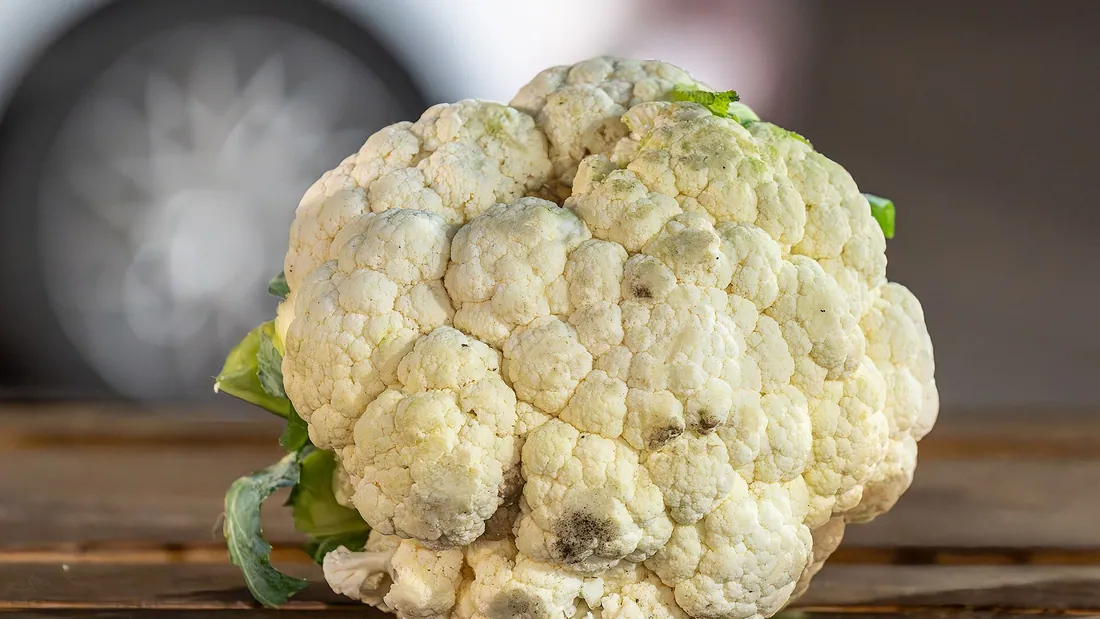
.jpg)
Cauliflower (Brassica oleracea var. botrytis) is a demanding vegetable that thrives in a cool, damp climate but never forgives stress. Its head is neither a flower nor a root: it is a bouquet of tightly packed flower buds that you harvest before it opens. Everything comes down to consistency: rich soil, steady watering and a well-timed season. The slightest dry spell and the head stays tiny, aborts or bolts to seed.
Light and exposure
Cauliflower wants sunshine, but not a furnace. An open spot, sunny in the morning and a little sheltered during the hottest hours, suits it well. Six hours of light a day are enough to form a fine head, provided the soil below stays cool.
Where summers are rarely scorching, that is one more asset: cauliflower dreads dry heat more than coolness. Give it a corner where the wind does not dry out the soil too much, and plan for the space it will take, a mature plant easily occupies 50 to 60 centimetres.
Watering
This is the crux of the matter. Cauliflower needs permanently cool soil, never dry, never waterlogged. Water regularly and generously, at the base, without letting the soil dry out completely between two waterings. Water stress, even brief, is enemy number one: the plant responds by forming a dwarf head, aborting, or bolting to seed all at once.
In high summer, count on a thorough watering every two to three days in open ground, more often in dry, windy weather. A mulch of grass clippings or straw at the base keeps the moisture in and saves you a lot of trouble. It is better to water less often but deeply than to trickle a little water on the surface every day.
Soil and repotting
Cauliflower calls for rich, deep and cool soil, well supplied with nitrogen and not acidic. Before planting, work in plenty of mature compost or well-rotted manure, it is a heavy feeder. Soil that is too light and dries out quickly, or too poor, will never form a fine head.
Transplant at the 4 to 5 leaf stage. Bury the young plant up to the first leaves, firm it well and water generously to bind the roots to the soil. Space the plants 50 to 60 centimetres apart. Liming during the cold season or before planting raises the pH and helps: cauliflower hates acidic soils, and lime also holds back clubroot.
Temperature and humidity
Cauliflower likes it cool. It grows ideally between 15 and 20 degrees and tolerates heat above 25 degrees poorly, which makes the heads abort or run to seed. A mild spring and a cool autumn suit it very well. Winter varieties withstand light frosts, but a head caught by a hard frost is lost.
Damp air does not bother it, quite the opposite. The real risk is not the cold but the dry heat of high summer on the summer varieties: cover the soil, water without fail. For winter varieties harvested through the cold season, a well-formed head overwinters outdoors, especially if you fold a few leaves over it for protection.
Pruning and upkeep
No pruning as such, but one key gesture: blanching. As soon as the head reaches the size of an egg, snap or fold two or three large leaves over it to cover it. Sheltered from the light, it stays nicely white instead of yellowing or greening in the sun. A rubber band or a folded leaf is enough.
For the rest, keep watch and hoe. Remove the yellowed lower leaves, weed at the base without harming the shallow roots, and earth up slightly the tall plants that the wind shakes. A dose of nitrogen fertiliser at mid-growth supports head formation on slightly poor soils.
Pests and diseases
Cauliflower attracts the whole cabbage clientele. The cabbage white lays its eggs on the foliage and its green caterpillars devour the leaves in summer: inspect the undersides of the leaves and remove the egg clusters by hand. The cabbage root fly lays at the collar, its maggots gnaw the roots and make the young plant wilt: a collar of cardboard or felt laid flat around the stem at transplanting blocks the egg-laying. Flea beetles that riddle the leaves with holes and grey cabbage aphids in grey colonies round off the picture.
As for diseases, clubroot is the most feared on damp soils: the fungus deforms the roots into galls, the plant yellows and does nothing. It survives for years in the soil. The defence comes down to two gestures: a long rotation of 4 to 5 years with no cabbage at all on the same bed, and liming that raises the pH, because the fungus hates chalky soils.
Propagation
Cauliflower is propagated by sowing, in a nursery bed or in pots, then transplanting. Sow shallow, at one centimetre, in a fine compost kept cool. Emergence takes about a week at the right temperature. Transplant once at the 4 to 5 leaf stage, this transplanting strengthens the root system.
Stagger the sowings to spread the harvest: under cover, eight to ten weeks before the last expected frost, for spring and summer varieties; in a nursery bed in early summer for the autumn ones; and in late spring for the slow winter varieties. Saving your own seed is possible but tricky, because cauliflower crosses easily with other brassicas: it is better to start from bought seed each year.
Climate and hardiness
Where and in which climate it thrives
Cauliflower is a cool-climate plant: it forms its head between 15 and 20 degrees and suffers above 25 degrees, where the flower buds stretch, bolt or abort. Summer varieties take a light ground frost; winter varieties hold frosts of minus 5 to minus 8 degrees once the head is formed and a few leaves are folded over it, which places them around USDA zone 8. A head that has already opened is lost outright to a hard frost.
It is at home in a mild, damp oceanic climate, where spring stretches out and autumn stays cool: damp air does not bother it as long as the soil drains. It struggles in dry heat and in a short summer. In a hot climate, grow it as a late-season or winter crop rather than in high summer, with light shade during the hottest hours. In a continental climate with a brief summer, choose fast varieties, 60 to 80 days from transplanting, rather than winter varieties that will never have the time.
Read the calendar in intervals, never in dates: sow spring and summer varieties under cover eight to ten weeks before the last expected frost, transplant once the last frosts have passed, harvest through the growing season; sow autumn varieties in early summer for a late-season harvest; sow winter varieties in late spring for a harvest spread across the whole cold season, wherever the winter stays mild. Two reflexes hold in every climate: a rotation of four to five years with no cabbage at all on the bed, and a pH brought back towards 7 by liming, which cuts the ground from under clubroot.
Growing cauliflower?
Green Hub keeps a dated history of your own plant: its photos, its progress, its repottings. An AI answers about yours specifically, not a generic sheet, for free.
Identify my plantMonth-by-month care calendar
| January | Harvest of well-headed winter varieties. Choose your seed and plan the rotation: note where the brassicas have grown so as not to return there before 4 to 5 years. |
|---|---|
| February | First sowings of spring and summer varieties under heated cover, in pots. Prepare and lime the beds if the pH is low. |
| March | Continue the sowings under cover. Transplant into individual pots at the 4 to 5 leaf stage. Work in mature compost where the summer brassicas will go. |
| April | Sow the autumn varieties in an outdoor nursery bed. Harden off the young spring plants before putting them out. Frost still strikes, take care. |
| May | Transplant into open ground after mid-May, buried up to the first leaves, with an anti-cabbage-fly collar. Sow the winter varieties at the end of the month. |
| June | Full growth. Water generously and steadily, mulch the base. Watch out for cabbage whites and flea beetles. Harvest of the very first spring heads. |
| July | The month of danger: dry heat. Water without fail every two to three days. Blanch the formed heads by folding leaves over them. |
| August | Harvest of summer varieties when the head is firm and tight, before it opens into grains. Keep watering and blanching. Transplant the winter brassicas. |
| September | Harvest of the last summer heads and the first autumn ones. Remove the spent plants, one brassica after another to avoid clubroot. Hoe. |
| October | Harvest of the autumn varieties. Fold the foliage over the forming heads to protect them from the first cold. Clean up the cleared beds. |
| November | Start of the harvest of winter varieties. Protect the exposed heads with their leaves. Lime the beds intended for next year’s brassicas. |
| December | Harvest as needed from the hardy winter varieties. Take stock of the season and plan the rotation for the year ahead. |
Green Hub tips
- Enemy number one is water stress. Water regularly and generously: a dwarf head or one gone to seed almost always comes from a lack of water at the wrong moment.
- For a nicely white head, snap two or three leaves over it as soon as it reaches the size of an egg. In the shade of its own foliage, it does not yellow.
- Lay a cardboard collar flat around the stem at transplanting: it stops the cabbage root fly laying at the collar and spares you maggots at the roots.
- Long rotation and liming against clubroot: never grow a brassica where one has grown in the last 4 to 5 years, and chalky rather than acidic soil.
Related species
Broccoli
Brassica oleracea var. italica
Broccoli (Brassica oleracea var. italica) is a cabbage whose central head we harvest, a cluster of flower buds still…
Brussels sprout
Brassica oleracea var. gemmifera
Brussels sprouts (Brassica oleracea var. gemmifera) are harvested from autumn into the heart of winter, and every frost…
Curly kale
Brassica oleracea var. sabellica
Curly kale (Brassica oleracea var. sabellica), also known simply as kale, is a leafy vegetable of uncommon hardiness.…
Radish
Raphanus sativus
The radish (Raphanus sativus) is the fastest vegetable in the garden, ready to bite into in three to five weeks. It is…
Rocket
Eruca vesicaria
Rocket (Eruca vesicaria) is a salad with a pungent, peppery taste, one of the fastest in the garden: barely four to six…
Turnip
Brassica rapa
The turnip (Brassica rapa) is a hardy, fast-growing root, one of the easiest crops in the vegetable garden. Count on 6…
The guides that mention it
Making Compost: Steering the Thermal Biology of the Heap
A compost heap is not a pile of waste you stir, it is a thermal process you steer. The real carbon/nitrogen ratio of…
Vegetable Garden Pests: The Natural Method That Holds All Season
A leaf riddled with holes, a lettuce shaved to the ground overnight, a twisted and sticky shoot: every kind of damage…
Garden Diseases: Recognising What Is Attacking Your Plants, and Acting Before the Spot Appears
A white bloom that wipes off on a fingertip, an angular lesion stopped dead by a vein, a fruit browned from the bottom…
Sowing Seeds Successfully: Why It Fails, and What Fixes It
A seed that never comes up was not unlucky. Germination temperatures by species, correct depth, seeds that need light,…
Updated on
How this sheet is written
Written for Green Hub with the help of language models, then reviewed. It offers gardening guidance, not professional advice: if you are unsure whether a plant is toxic to a child or an animal, ask a vet, a doctor or your national poison centre.