Curly kale
Brassica oleracea var. sabellica
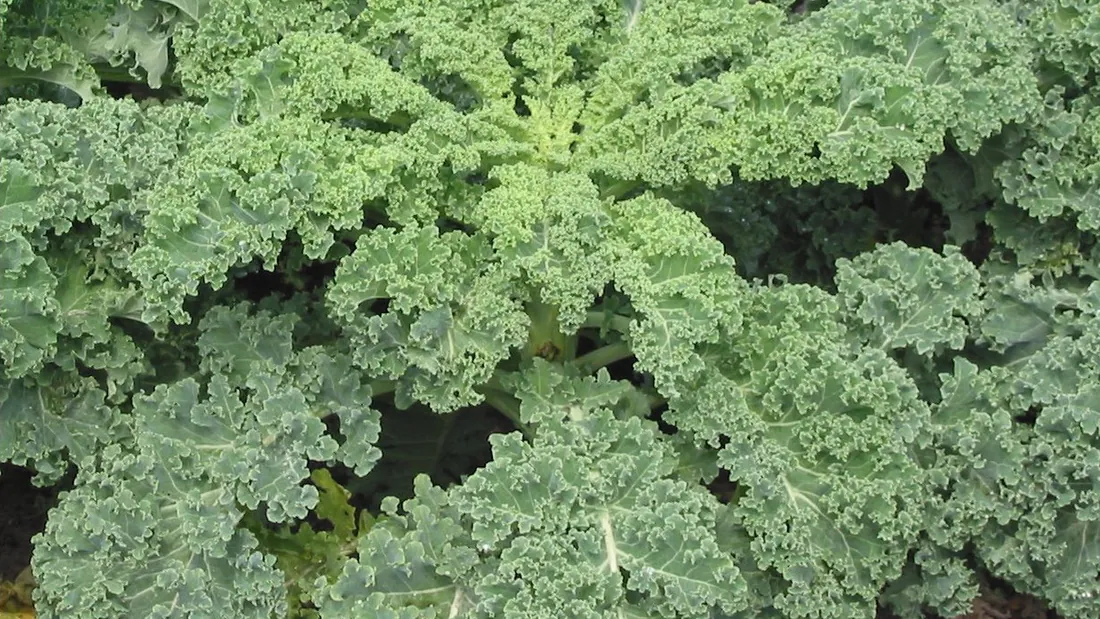

Curly kale (Brassica oleracea var. sabellica), also known simply as kale, is a leafy vegetable of uncommon hardiness. It stands upright under snow and shrugs off hard frosts, which makes it one of the few fresh vegetables left in the kitchen garden in the depths of winter. Better still, cold suits it: frost softens the leaves and takes away their bitterness. You sow it in spring or summer and pick it leaf by leaf from autumn through to the shortest days. For a beginner it is a safe bet: almost no disease, no pruning, and a single rule, never touch the central crown.
Light and exposure
Kale likes full sun, but it makes do with light shade without any fuss. Allow at least five to six hours of direct light for stocky, well-leafed plants. In deep shade it stretches and turns lanky.
Give it room and air. A mature plant easily takes up half a metre across, and good airflow around the foliage limits the standing damp of a long, wet autumn. In an open, wind-exposed spot, earth up the base a little or stake tall plants so they do not topple.
Watering
During establishment and all summer, keep the soil cool and moist. A young plant short of water stays stunted and gets off to a poor start. Water generously at planting, then regularly in dry weather, preferably at the base so the foliage can dry off.
In autumn and winter, seasonal rain takes care of everything and there is nothing more to do on that front. The only risk at this season is not drought but excess water on heavy soil: good drainage then matters more than a watering can.
Soil and repotting
Kale is a hungry crop and likes rich, deep soil well supplied with organic matter. A dose of ripe compost or well-rotted manure the previous autumn, or at planting, sets it up in the best conditions. Cool clay soils suit it perfectly, as long as they drain.
It prefers fairly firm ground over soil that is too loose: a well-anchored plant stands up better to wind and to lodging. Aim for a neutral to slightly alkaline pH. A light liming, besides feeding the soil structure, discourages clubroot, which hates limey ground.
Temperature and humidity
This is where kale shines. It grows happily in the cool of spring and autumn, and takes frosts down to minus 10 degrees without damage, sometimes lower once well rooted. The hardiest varieties withstand even sharper cold snaps.
Better yet: do not harvest before the first frosts if you can wait. Frost turns part of the starch in the leaves into sugars, the bitterness recedes and the flavour clearly sweetens. It is the only vegetable in the garden that you actually want to let get cold before eating. In USDA zone 8 and milder, it comes through winter outdoors without protection in the vast majority of cases.
Pruning and upkeep
You do not really prune kale, you harvest it, and that harvest doubles as pruning. Take the leaves one by one, starting with the lowest and oldest, always leaving the central crown intact. The plant then keeps rising and producing new leaves from the top, sometimes for months.
Remove the yellowed or damaged lower leaves as you go: they are no longer useful and shelter slugs and disease. A regularly picked plant takes on the odd shape of a little palm tree, with a bare stem topped by a tuft of curly leaves, which is perfectly normal.
Pests and diseases
Kale’s enemies are those of the whole family. The cabbage white, that white butterfly whose green caterpillars devour the foliage, is worst through summer and into early autumn: inspect the underside of the leaves and remove the yellow egg clusters, or lay an insect-proof mesh over young plants. The mealy cabbage aphid forms grey, powdery colonies in the heart of the leaves and weakens the plant; a jet of water, ladybirds and removing the clusters see them off.
The real soil trap is clubroot, a fungus that swells the roots into galls and makes the plant waste away. It is hard to correct once established, hence the importance of prevention: keep a strict rotation, do not put brassicas (nor radish, nor turnip) in the same spot for three to four years, and keep the soil well drained and not too acidic.
Propagation
Kale is propagated from seed, and it is easy. Sow in a nursery bed or in pots from mid-spring to early summer, barely covered under half a centimetre of soil, somewhere cool. Emergence takes about ten days. Then transplant the young plants into place once they have four or five true leaves, spacing them well at 40 to 60 centimetres.
Set them a little deeper than they were in the pot, up to the first leaves: kale likes to be planted deep, it anchors better and stands up to wind. Firm the soil well around the collar and water to bond the earth to the roots. If you want your own seed, let a fine plant run to flower in the spring of its second year, but be aware that it crosses readily with the neighbouring brassicas.
Climate and hardiness
Where and in which climate it thrives
Kale is one of the hardiest vegetables in the kitchen garden: once well rooted it takes frosts of minus 10 degrees without damage, and the toughest varieties such as Winterbor come through sharper cold still under a blanket of snow. In USDA zone 8 and milder it spends the cold season outdoors with no protection at all; in zone 7 a thick mulch at the base or a low tunnel is enough to secure the crop; anywhere colder, grow it as an autumn vegetable, sown early and harvested before the hard freezes.
Under a mild, damp oceanic climate it is on home ground: green and available right through the cold season, in rain, frost and snow. The real danger there is not the cold but standing water on heavy soil, which suffocates the roots long before the foliage suffers. Under a continental climate with a dry, severe winter, raw cold troubles it less than the lack of snow: snow cover is what makes the difference, and without it a winter fleece takes over. Under a hot, Mediterranean or subtropical climate the logic reverses: above 25 degrees growth slows and the leaves turn tough and bitter, so sow at the end of summer for an autumn and winter harvest and skip the hot season entirely. Where summers stay short and cool, it grows without interruption instead and can be picked for longer.
The rule that holds at every latitude: set out well-developed plants before the cold season begins, then wait for the first frosts before harvesting in earnest, because it is the cold that turns starch into sugars and takes the bitterness away.
Growing curly kale?
Green Hub keeps a dated history of your own plant: its photos, its progress, its repottings. An AI answers about yours specifically, not a generic sheet, for free.
Identify my plantMonth-by-month care calendar
| January | Peak winter harvest. Pick the leaves as needed, they are at their best after frost. Nothing else to do, nature handles the watering. |
|---|---|
| February | Last pickings from last year’s plants before they run to seed. Order and choose the varieties to sow, from green curly to red Russian kale. |
| March | Clean up the old plants that are starting to flower. Prepare the plot by working in compost. Too early to sow in the open, be patient. |
| April | First sowings possible late in the month, in a nursery bed or in pots, barely covered. Keep cool and in the light. |
| May | Carry on sowing. Transplant the most advanced plants once they have four or five leaves, spacing them well and planting deep. |
| June | Last sowing window. Watch for the arrival of the cabbage white: inspect the underside of the leaves and lay a mesh over young plants. |
| July | Water in dry weather so the plants fill out. Hunt down caterpillars and mealy cabbage aphids in the heart of the leaves. Hoe and earth up the base lightly. |
| August | The plants gain bulk. Keep watching for pests. A feed rich in nitrogen supports the foliage ahead of autumn. |
| September | End of active growth. Stake or earth up large, wind-exposed plants. First small leaves to taste late in the month. |
| October | Harvest begins in earnest. Pick the lower leaves as you go, leaving the crown to keep producing. Remove yellowed leaves. |
| November | Regular harvest in the garden. The first frosts sweeten the flavour, let them. No protection needed in USDA zone 8 and milder. |
| December | Fresh vegetable in the depths of winter. Pick according to your meals, even under snow. Note the varieties that held up best for next year. |
Green Hub tips
- Do not harvest too early: wait for the first frosts, the cold turns starch into sugars and takes away the bitterness.
- Always pick leaf by leaf from the bottom up, leaving the central crown: a single plant then produces for months.
- Plant deep, up to the first leaves, and firm the soil well: a well-anchored kale does not lodge in autumn storms.
- Keep a strict three-to-four-year rotation with no brassicas in the same spot, it is the only real defence against clubroot.
- An insect-proof mesh laid from the first butterfly flights until the end of summer settles the cabbage white problem in one move, with no treatment at all.
Related species
Broccoli
Brassica oleracea var. italica
Broccoli (Brassica oleracea var. italica) is a cabbage whose central head we harvest, a cluster of flower buds still…
Brussels sprout
Brassica oleracea var. gemmifera
Brussels sprouts (Brassica oleracea var. gemmifera) are harvested from autumn into the heart of winter, and every frost…
Cauliflower
Brassica oleracea var. botrytis
Cauliflower (Brassica oleracea var. botrytis) is a demanding vegetable that thrives in a cool, damp climate but never…
Radish
Raphanus sativus
The radish (Raphanus sativus) is the fastest vegetable in the garden, ready to bite into in three to five weeks. It is…
Rocket
Eruca vesicaria
Rocket (Eruca vesicaria) is a salad with a pungent, peppery taste, one of the fastest in the garden: barely four to six…
Turnip
Brassica rapa
The turnip (Brassica rapa) is a hardy, fast-growing root, one of the easiest crops in the vegetable garden. Count on 6…
The guides that mention it
Making Compost: Steering the Thermal Biology of the Heap
A compost heap is not a pile of waste you stir, it is a thermal process you steer. The real carbon/nitrogen ratio of…
Vegetable Garden Pests: The Natural Method That Holds All Season
A leaf riddled with holes, a lettuce shaved to the ground overnight, a twisted and sticky shoot: every kind of damage…
Garden Diseases: Recognising What Is Attacking Your Plants, and Acting Before the Spot Appears
A white bloom that wipes off on a fingertip, an angular lesion stopped dead by a vein, a fruit browned from the bottom…
Companion Planting in the Vegetable Garden: Which Plants Belong Together
Tomatoes and basil get along beautifully, while potatoes and tomatoes make each other sick: companion planting explains…
Sowing Seeds Successfully: Why It Fails, and What Fixes It
A seed that never comes up was not unlucky. Germination temperatures by species, correct depth, seeds that need light,…
Updated on
How this sheet is written
Written for Green Hub with the help of language models, then reviewed. It offers gardening guidance, not professional advice: if you are unsure whether a plant is toxic to a child or an animal, ask a vet, a doctor or your national poison centre.