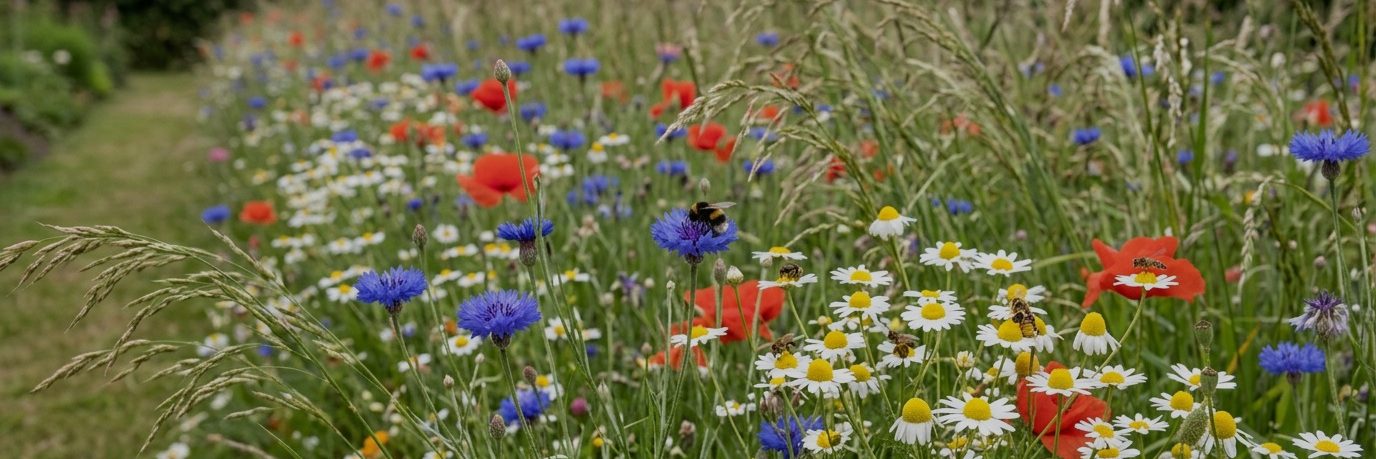
Wildflower Meadows and Beneficial Insects: Gardening for Biodiversity
A wildflower meadow and a handful of simple habits are enough to turn a garden into a refuge for beneficial insects: ladybirds, lacewings and hoverflies devour aphids, while wild bees, bumblebees and butterflies handle pollination. A single small temperate country is home to around 400 species of wild bee, 30 to 40 percent of which are now under threat, chiefly because meadows are disappearing and pesticides remain in use. Three levers really matter for bringing them back: sowing a wildflower meadow with native seed, mowing late and removing the cuttings, and setting up a well positioned insect hotel while banning chemical treatments.
Beneficial Insects: Who They Are and What They Do in the Garden
A beneficial insect does the gardener a favour without needing to be paid for it: it either pollinates flowers or hunts down pests. Pollinators, wild bees, bumblebees, adult hoverflies and butterflies, carry pollen from flower to flower. A single small temperate country hosts around 400 species of wild bee, which do most of the work in a private garden; it is estimated that roughly 75 percent of crops depend at least partly on this pollination.
Predators, for their part, keep pests in check without any chemical intervention. The ladybird larva devours several hundred aphids before turning into an adult. The lacewing larva, nicknamed the aphid lion for its curved jaws, eats between 200 and 500 during its development; the adult feeds only on nectar and pollen, becoming a pollinator in its own right. The hoverfly larva, spindle shaped and legless, gulps down between 400 and 900 aphids in two to three weeks. These three allies alone are often enough to contain an infestation without any treatment at all.
Three Habits That Attract Them: A Hotel, a Fallow Patch and Zero Pesticides
The most effective habit, and the cheapest, is to stop using pesticides, including so called natural products like nettle manure sprayed over a wide area, which also kill hoverfly and lacewing larvae. Specialist nature charities run networks of nurseries certified as gardening without pesticides and help municipalities move toward zero pesticide use: there is often a local equivalent label, well worth looking for.
Second habit: leave one part of the garden unmown for the whole season, even just a square metre against a hedge. Tall grass shelters caterpillars, hollow stems house larvae, and self seeded flowers like dandelion feed the first foragers of the year. Third habit: put up an insect hotel, positioned to catch the morning and midday sun, for at least six hours of sunshine, sheltered from wind and rain, fixed firmly at about chest height, and filled with hollow bamboo or pruned elder stems and logs drilled with holes two to ten millimetres wide: each diameter attracts a different species of solitary bee. Public pollinator protection programmes recommend combining all three habits.
Sowing a Wildflower Meadow: Poor Soil and Native Seed
A wildflower meadow isn’t planted into an existing lawn, it’s sown onto depleted soil. Wildflowers such as cornflower, poppy and knapweed are suited to poor ground and get smothered by grasses the moment fertiliser or compost is added. If the plot is rich, impoverish it by mowing it several times and removing the cuttings, or by working a little sand into the topsoil before sowing. Cultivate only the top two to three centimetres, without digging deep, so as not to bring a buried stock of weed seeds back to the surface.
Two sowing windows work well: early spring, as soon as the soil warms, or the end of summer and the start of autumn, which produces a fuller bloom the following spring and copes better with the dry springs that have become common. Allow around five grams of seed per square metre. Press investigations have reported on the trap set by some cut price seed packets, made up of showy horticultural varieties, cornflowers and cosmos bred for large blooms, that catch an insect’s eye without offering any usable nectar. A seed producer specialising in native stock offers seed of genuinely local provenance, which is far more useful to wildlife.
Late Mowing: The Habit That Decides Everything
A wildflower meadow is mown, not cut like a lawn. The basic rule recommended by nature conservation organisations for a private garden is a single mow a year, in autumn, once the late flowering plants have had time to set seed. A meadow richer in perennial grasses can take two cuts, one in early summer after the early species have flowered and a second in early autumn, which favours floral diversity over time. Always remove the cuttings: leaving them where they fall enriches the soil with nitrogen, to the detriment of the flowers.
Always leave a portion unmown, a quarter to a third of the area, rotating it from one year to the next: this is the refuge where caterpillars, eggs and larvae overwinter. The same principle has been applied on a regional scale since 1995: a western European roadside verges convention, signed by 262 municipalities, allows mowing only from the end of summer in the north of the territory and a month later in the south, across more than 17,000 kilometres of verges. More than 700 plant species, half of the regional flora, have been recorded there since.
Which Flowers to Add, Season After Season
The wildflower meadow feeds insects mainly in summer, but they need resources from the first mild spell at the end of winter right through to the first autumn frosts. Round it out with beds that stagger the flowering. As winter ends, crocus and hazel provide the first pollen for the queen bumblebees and solitary bees that emerge early, sometimes before winter is even over. Through spring and summer, rely on nectar rich herbs: thyme, oregano, sage, rosemary and lavender draw a steady stream of bees, bumblebees and butterflies, and lemon balm, nicknamed bee balm, rounds out the mix.
Buddleia, the butterfly bush, lives up to its name: its scented flower spikes can gather dozens of butterflies in a single sunny afternoon. Nasturtium attracts both aphids and hoverflies at once, which makes it a useful trap plant near the vegetable patch. Marguerite daisies and coneflower give hoverflies easy access to nectar, while petunia and verbena keep the offer going into late summer. Elder and honeysuckle provide flowers for foragers and berries for birds. Staggering the blooms, from crocus to elder, avoids the gaps that send beneficial insects looking elsewhere.
The care sheets to read next
Every plant mentioned has its full sheet: watering, light, soil, pests and a month-by-month calendar.
Lavender
Lavandula angustifolia
True lavender (Lavandula angustifolia) is a hardy Mediterranean plant that scents the air and draws bees all summer…
Butterfly bush
Buddleja davidii
Buddleia (Buddleja davidii), better known as the butterfly bush, is a nearly indestructible shrub that has taken over…
Coneflower
Echinacea purpurea
Coneflower (Echinacea purpurea) is a tall, sturdy perennial from the prairies of North America, recognisable by its…
Oxeye Daisy
Leucanthemum vulgare
The oxeye daisy (Leucanthemum vulgare) is that white flower with a yellow centre that pops up on its own in our…
Sage
Salvia officinalis
Common sage (Salvia officinalis) is a small aromatic shrub with evergreen grey-green foliage, originating from the dry…
Oregano
Origanum vulgare
Oregano (Origanum vulgare) is a tough, perennial herb built for sun and dry soils. Here is the good news: it is fully…
Thyme
Thymus vulgaris
Thyme (Thymus vulgaris) is a small Mediterranean subshrub with woody stems and a powerful fragrance, hardy to about…
Rosemary
Salvia rosmarinus
Rosemary (Salvia rosmarinus, long known as Rosmarinus officinalis) is an evergreen Mediterranean shrub with needle-like…
Nasturtium
Tropaeolum majus
The nasturtium (Tropaeolum majus) is an annual native to the Andean highlands of Peru and Colombia that has become an…
Petunia
Petunia
Petunia (genus Petunia), also sold under the name Surfinia for its trailing varieties, is the queen of summer window…
Elder
Sambucus nigra
Elder (Sambucus nigra) is a large shrub native to temperate Europe that grows wild in hedgerows, along footpaths and on…
Hazel
Corylus avellana
The hazel (Corylus avellana) is a shrub native to Europe and western Asia, found for as long as anyone can remember in…
Honeysuckle
Lonicera
Honeysuckle (Lonicera) is a familiar plant in hedgerows and gardens, known for its very fragrant tubular flowers whose…
Lemon balm
Melissa officinalis
Lemon balm (Melissa officinalis) is a hardy perennial with crinkled foliage that gives off a lemon scent the moment you…
Lemon verbena
Aloysia citriodora
Lemon verbena (Aloysia citriodora) is a shrub whose leaves give off a clean, intense lemon scent, the one in an evening…
Crocus
Crocus
Crocus is the very first splash of colour in the garden as winter loosens its grip. It is not unusual to see it push…
Frequently asked questions
When should you sow a wildflower meadow for the best bloom?
Two periods work well: early spring, as soon as the soil warms, or the end of summer and the start of autumn. Autumn sowing is now often preferred, since it produces a fuller bloom by the following spring and copes better with the dry springs that have become common. Allow around five grams of seed per square metre on soil that has already been impoverished.
How many times a year should a wildflower meadow be mown?
A simple wildflower meadow is mown just once, in autumn, once the late flowering plants have set seed. A meadow richer in perennial grasses can take two mowings, one in early summer and one in early autumn, which strengthens floral diversity over time. Either way, remove the cut hay and always leave a portion of the area unmown as a refuge.
Which beneficial insects control aphids in the garden?
Three main ones: the ladybird, the lacewing, whose larva is nicknamed the aphid lion, and the hoverfly. A lacewing larva eats between 200 and 500 aphids during its development, a hoverfly larva between 400 and 900. Attracting these allies is enough, in most gardens, to avoid any chemical treatment against aphids.
How do you set up an effective insect hotel for solitary bees?
Position it to catch the morning and midday sun, so it gets at least six hours of sun and stays sheltered from wind and driving rain. Fix it firmly in place, at about chest height, and fill it with hollow bamboo or elder stems, logs drilled with holes two to ten millimetres wide, and hollow bricks: each diameter houses a different species of solitary bee.
Green Hub looks after your plants
Photograph a plant: Green Hub identifies it and writes its care sheet, with no account. Sign in afterwards to keep its dated photos and history over time.
Identify a plantUpdated on
How this sheet is written
Written for Green Hub with the help of language models, then reviewed. It offers gardening guidance, not professional advice: if you are unsure whether a plant is toxic to a child or an animal, ask a vet, a doctor or your national poison centre.