Hornbeam
Carpinus betulus
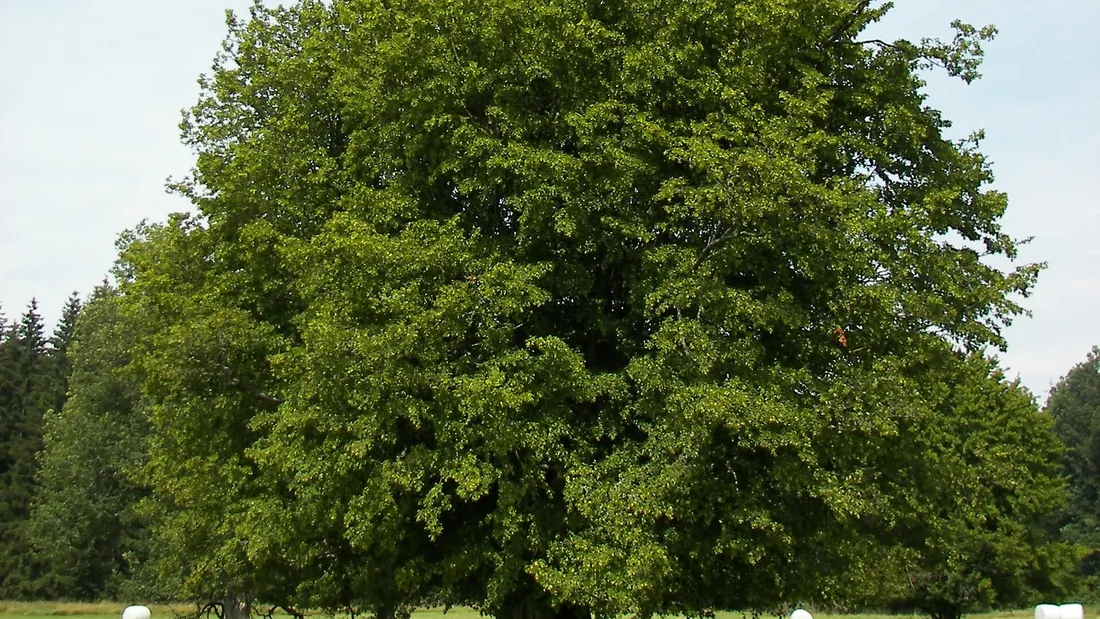

The hornbeam (Carpinus betulus) is a native tree of temperate Europe, so common in hedges and woods that people often forget just how tough it really is. It is the safe choice for a clipped hedge: it grows almost anywhere, in nearly any soil, in full sun as much as in shade, and nobody has ever seen one killed by cold or disease. You plant it bare root during dormancy, as a hedge or as a standalone tree, and it then quietly gets on with things for decades.
Light and exposure
Hornbeam copes with any exposure, from full sun to fairly dense shade under large trees. That is one of its great advantages over beech: where beech starts to sulk in shady woodland, hornbeam keeps growing without complaint, which makes it the natural choice for a hedge along a wall that never sees the sun or under the shadow line of an old lime tree.
As a clipped or free-growing hedge, it copes just as well in full wind as in a sheltered spot. Its only real requirement is not to be planted in a permanently dark, waterlogged corner: a little light, even filtered, is more than enough for it to thrive.
Watering
Once established, hornbeam more or less does without watering: its deep roots let it find water long after the lawn has gone yellow. Only the first year or two after planting call for real attention, while the root system spreads out, especially if you planted in high summer or on soil that dries out fast.
For a new hedge, a good soak once or twice a week during dry summers is plenty, a deep, spaced-out watering works better than small frequent doses. Past that point, even the recent run of heatwaves has not troubled well-established hornbeam hedges.
Soil and repotting
Hornbeam is not fussy about soil type, and that is exactly what makes it such a safe bet in clay-heavy, damp gardens. Unlike beech, which hates heavy, poorly drained soil and eventually declines in it, hornbeam accepts compacted clay, cool to wet ground, and even land that stays waterlogged for part of the winter.
An ordinary garden soil, neither too poor nor too dry, suits it very well without any special amendment. A little compost at planting helps it get going, but once rooted, hornbeam makes do with whatever it finds, including the heavy, chalky ground that puts off many other hedging trees.
Temperature and humidity
Hornbeam is completely hardy: it shrugs off winters well below minus 20 degrees and takes around minus 30 degrees if it has to, which puts it comfortably in USDA zones 4 to 8. No protection is required, even for a young tree planted at the start of the cold season.
Heat does not trouble it much either, as long as the soil stays cool: increasingly dry summers affect it only marginally once it is well rooted. What does make it struggle is prolonged drought on shallow soil, not the thermometer: under a hot, dry summer climate, plant it in deep soil and water generously for the first few years.
Pruning and upkeep
Hedge trimming is traditionally done in two rounds: a first one once the spring flush stops extending, a second at the end of summer, outside the nesting period which broadly runs from early spring to midsummer. For a hedge that looks crisp all season, the late-summer cut is often the more visible one since it sets the look for autumn and winter.
Hornbeam takes hard pruning remarkably well: you can cut it back hard to rejuvenate an old hedge that has gone bare at the base, and it resprouts from everywhere, even from old wood. That is a rare trait among hedging trees and one of the reasons it turns up so often in traditional clipped hedges around old farms.
Pests and diseases
Hornbeam is one of the healthiest trees you can plant in a garden: it has practically no serious disease of its own, unlike some fussier hedging species. That is a real relief for anyone who has already dealt with fire blight on a photinia or hawthorn hedge.
You may occasionally spot a few aphids on young shoots in spring, a touch of powdery mildew in very humid summers, or defoliating caterpillars passing through and nibbling the leaves without ever putting the tree at risk. None of these problems justifies routine treatment, hornbeam takes it in stride and bounces back without lasting harm.
Propagation
Sowing is the method most commonly used to raise young plants, especially in nurseries growing stock for countryside hedges. The seeds, collected in autumn, need several months of cold stratification before they will germinate, which is why they are usually sown in late autumn or kept in the fridge ahead of a spring sowing.
To plant a hedge, most people buy bare-root trees from a nursery and put them in during dormancy, from leaf fall to bud swell. Allow three to five plants per linear metre depending on how dense you want it, staggered across two rows for a hedge that is properly opaque from the first few years.
Climate and hardiness
Where and in which climate it thrives
Hornbeam is a tree of temperate Europe, hardy to around minus thirty degrees: USDA zones 4 to 8 suit it with no protection whatsoever, a freshly planted young tree included. Cold is never what limits a hornbeam hedge.
It is at home in an oceanic climate and in a continental one with a real winter, anywhere summer rainfall is halfway decent. Its true weak point is not the thermometer but a long drought on shallow soil. In a Mediterranean climate or under a hot, dry summer it will hold, provided it has deep, cool soil, a position that does not bake in the middle of the day, and deep watering for its first two or three years; beyond zone 8, an oriental hornbeam (Carpinus orientalis) or another species is the safer bet. Conversely, it excels exactly where beech gives up: heavy ground, compacted clay, land that stays waterlogged for part of the cold season, shady positions. That is what makes it, everywhere, the alternative to beech or its companion along fences and driveways.
Two practical points follow your climate rather than the calendar. Bare-root planting happens during dormancy, from leaf fall to bud swell, on unfrozen ground: that window is wide under a mild winter and very short under a harsh one. Hedge trimming follows growth, not a date: a first cut once the spring flush stops extending, a second at the end of summer to set the look of the hedge until the following spring, avoiding the bird nesting season wherever you are. As for marcescence, those dry russet leaves that hang on through much of the cold season, it happens in every climate where the tree drops its leaves: that is what gives a hornbeam hedge its russet foliage and its privacy in the depths of winter.
Growing hornbeam?
Green Hub keeps a dated history of your own plant: its photos, its progress, its repottings. An AI answers about yours specifically, not a generic sheet, for free.
Identify my plantMonth-by-month care calendar
| January | Complete winter dormancy. A good time to plant a bare-root hedge if the ground is not frozen, and to cut back an old hedge hard to rejuvenate it. |
|---|---|
| February | Last window for bare-root planting before sap starts rising again. The marcescent winter leaves gradually begin to fall. |
| March | The soil is warming up and buds are swelling. Bare-root planting is still possible in the very first days, otherwise wait for next autumn. |
| April | Bud break and first flush of growth. The young leaves appear, distinctly ridged and toothed, pale green. Do not prune yet, let the tree grow freely. |
| May | Active growth. The hornbeam’s discreet catkins have already finished or are forming, depending on the year. Watch for aphids on the tender new shoots. |
| June | End of the month, the season’s first hedge trim. This is the classic time to take back hedges that have grown well in spring, once the nesting period is over. |
| July | Growth slows down with the heat. Check watering on any hedge planted this year if summer is dry, the rest of the garden needs nothing extra. |
| August | End of the month, the second hedge trim that gives it a crisp look for autumn and winter. It is also the more visible cut since it lasts until the following spring. |
| September | Growth stops and the leaves slowly start to change colour. The seeds ripen, recognisable by their small, characteristic wing. |
| October | Seeds can be collected for anyone wanting to sow their own, with cold stratification needed before germination. Leaves turn brown without all falling. |
| November | The start of the bare-root planting season, the best time to put in a new hedge. The dried leaves begin to cling to the branches as marcescence sets in. |
| December | Bare-root planting still possible whenever the ground is not frozen. The hedge keeps its dry, russet foliage, a hornbeam hedge stays dressed all winter unlike many other species. |
Green Hub tips
- To stop mixing up hornbeam and beech in a hedge, remember the old nursery rhyme: hornbeam is toothed, beech is hairy. Hornbeam leaves have a ridged surface with a toothed edge, beech leaves are smooth with fine silky hairs along the margin.
- Do not be surprised if the hedge keeps its dried, russet-brown leaves for a good part of winter: that is marcescence, normal in both hornbeam and beech, and it gives you privacy even in the depths of winter.
- Do not replace an old hornbeam hedge that has gone bare at the base, cut it back hard in late winter instead: the tree resprouts from everywhere, even old wood, and fills back in within a season or two.
- Plant bare-root trees during dormancy, never while the sap is rising: allow three to five plants per linear metre to get a dense, opaque hedge quickly.
Related species
Hazel
Corylus avellana
The hazel (Corylus avellana) is a shrub native to Europe and western Asia, found for as long as anyone can remember in…
Althea
Hibiscus syriacus
Althea (Hibiscus syriacus) is a hardy deciduous garden shrub that flowers when every other one has finished, from…
Beech
Fagus sylvatica
Beech (Fagus sylvatica) is the most common broadleaf tree in the temperate forests of Europe, just as happy standing…
Begonia
Begonia
Begonia is the star summer flower of window boxes, hanging baskets and shady borders. Hundreds of hybrids exist, but…
Box
Buxus sempervirens
Box (Buxus sempervirens) is an evergreen shrub that has been clipped into balls, cones and low borders in formal…
Butterfly bush
Buddleja davidii
Buddleia (Buddleja davidii), better known as the butterfly bush, is a nearly indestructible shrub that has taken over…
The guides that mention it
Which Hedge to Plant, and How to Get It Right
Evergreen, deciduous or marcescent, annual growth, hardiness, soil, shade and sea spray: the real criteria for…
Improving Clay Soil: Diagnosis, Amendments and Drainage
Ground that clings to your boots in winter and cracks open in summer: a clay soil is not condemned, it changes with the…
Pruning Flowering Shrubs and Roses: Deducing Instead of Memorising
New wood or old wood: this single question gives you the pruning time for any shrub at all, including ones whose name…
How to Attract Birds to Your Garden, Season After Season
Winter feeding, well-positioned nest boxes, clean water and berry hedges: the complete method, season by season, for…
What to Plant in a Shade Garden, Under Trees and Against Sunless Walls
Under a large tree or against a wall the sun never reaches, shade doesn’t rule out a planting bed: it calls for a…
Updated on
How this sheet is written
Written for Green Hub with the help of language models, then reviewed. It offers gardening guidance, not professional advice: if you are unsure whether a plant is toxic to a child or an animal, ask a vet, a doctor or your national poison centre.