Hazel
Corylus avellana
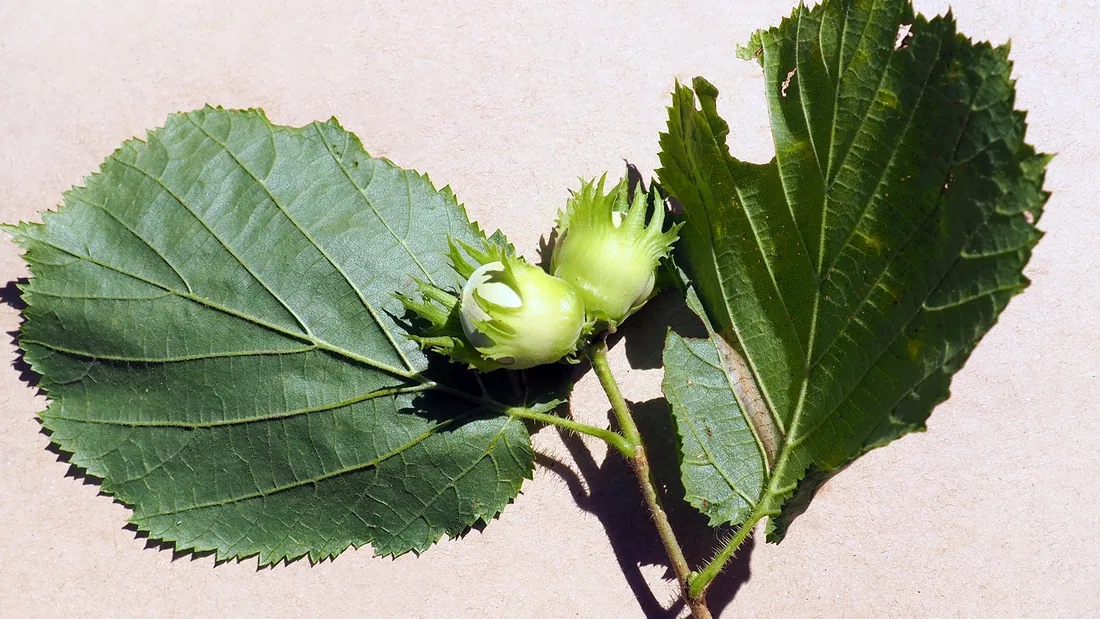
_Corylus_avellana_10.jpg)
The hazel (Corylus avellana) is a shrub native to Europe and western Asia, found for as long as anyone can remember in field hedges and woodland edges. It is one of the easiest fruiting plants to grow: hardy and practically indestructible, it asks for almost no care once established. Its yellow catkins, hanging from the bare branches at the tail end of winter, are often the first sign that the cold season is loosening its grip, well before the snowdrops.
Light and exposure
Hazel grows equally well in full sun or partial shade, which explains why you find it naturally at the edge of woodland as much as out in the open in hedgerows. It copes very well with the light shade of a neighbouring tree or a mixed hedge.
For a good crop of nuts, though, aim for a spot that gets several hours of sun a day. In dense shade the shrub grows and greens up without any trouble, but it flowers and fruits noticeably less. A hedge corner that catches the morning sun always produces more hazelnuts than a shaded back corner. In a hot dry climate the reverse holds: afternoon shade spares the foliage needless stress.
Watering
Once well established, hazel copes perfectly well on normal rainfall in a temperate climate and needs no watering at all. It is a hardy shrub with an extensive root system that draws deep into the soil.
The first two years after planting are really the only time you need to watch the watering, while the roots are spreading out. After that, a can of water is only worth giving during a prolonged drought in the hot season, right when the nuts are filling out: a lack of water at that stage gives smaller, less well-filled nuts. Under a long dry summer, that watering stops being an exception and becomes the rule.
Soil and repotting
Hazel is not fussy and copes with most garden soils, including heavy clay or chalky ground. An ordinary soil, neither too poor nor too rich, suits it just fine.
The one thing it really cannot stand is waterlogging around the roots. On ground that holds water through the cold season, it is better to plant on a slight mound or improve the drainage at planting time. Outside of that, moist, well-drained soil is all it needs to thrive.
Temperature and humidity
This is one of the hardiest shrubs you can grow: USDA zones 4 to 8. Hazel shrugs off severe frost, well below minus twenty degrees, and holds down to around minus thirty while dormant.
The point to watch is its very early flowering: the male catkins open at the tail end of winter, and the tiny female flowers follow shortly after, right in the middle of frost season. A severe late cold snap during that window, below about ten degrees under zero, can damage the flowers and reduce that year’s harvest, but the shrub itself is never harmed. It is the flowering that is vulnerable, not the wood. At the other end, it takes around thirty degrees in summer as long as the soil stays moist: it is drought that penalises it, not heat alone.
Pruning and upkeep
Hazel is traditionally grown as a stool, that is, a clump of several trunks coming from the base rather than a single-stemmed tree. To keep the shrub productive, renew it every winter by cutting one or two of the oldest branches back to the base each year, making room for young wood that is more vigorous and more productive.
Hazel also throws up plenty of suckers, shoots that appear on their own from the roots around the base. If you do not want it spreading and taking over the surrounding hedge, remove them as they appear. On the other hand, these same suckers are exactly what makes the shrub so easy to multiply, see below.
Pests and diseases
The signature pest of hazel is the hazelnut weevil, Curculio nucum, whose female lays an egg inside the young nut in spring. Its white grub develops inside by eating the kernel, and the nut falls to the ground pierced and empty well before harvest time. Systematically picking up and destroying any nuts that drop early breaks a good part of this pest’s cycle.
Squirrels and field mice are often the first to enjoy the harvest, sometimes before the gardener even gets a look in. Another typical problem is the hazel gall mite, which causes buds to swell into abnormally round, fat shapes over winter, easy to spot on the twigs by eye: simply spot them and remove them at pruning time to keep the damage in check, without it ever threatening the overall health of the shrub.
Propagation
The simplest and most reliable method in the garden is to lift an already-rooted sucker from the base of the plant. Dig it up with as much root as possible in autumn or winter, while it is dormant, and replant it straight into its final spot: it nearly always takes without any trouble.
Layering also works very well: bend a low, flexible branch down into the soil, hold it in place with a stone or a peg, and it develops its own roots within a year or two before being cut free from the parent plant. Growing from seed is possible but best left to patient hobbyists: young seedlings take several years before they start fruiting and do not always produce nuts identical to the parent plant.
Climate and hardiness
Where and in which climate it thrives
Hazel is one of the most tolerant fruiting shrubs there is: USDA zones 4 to 8, with dormant wood that shrugs off frost well below minus twenty degrees, down to around minus thirty. A species native to Europe and western Asia, it is at home anywhere winter is a real winter and summer stays temperate: cool damp oceanic climates, continental climates with a marked winter, mid altitude hills. That cold is a requirement: without a properly filled dormancy the flowering goes ragged and the crop collapses. In a mild, Mediterranean or subtropical climate that is where it fails, never on hardiness.
Its real weakness is the timing of the flowering, one of the very first of the year. The long yellow male catkins hang down before any leaves appear, and the female flowers, tiny red stars barely visible to the naked eye, open on the very same twigs almost at the same time. Pollination, carried by the wind, therefore happens in the middle of the cold season: a severe frost during that window, below about ten degrees under zero, burns the flowers and wipes out that year’s crop without touching the shrub. At the other end, a long hot dry summer penalises the filling of the nuts, even though the wood takes around thirty degrees as long as it has water in the soil. Plant two different varieties near each other, cross-pollination noticeably improves fruiting compared with a single shrub on its own. It is also an excellent shrub for biodiversity: it feeds some of the year’s earliest active pollinators and gives shelter to plenty of birds.
Growing hazel?
Green Hub keeps a dated history of your own plant: its photos, its progress, its repottings. An AI answers about yours specifically, not a generic sheet, for free.
Identify my plantMonth-by-month care calendar
| January | Male catkins in full flower, yellow and hanging. The best time to prune and renew the stool by cutting the oldest branches back to the base. |
|---|---|
| February | Flowering continues, watch for the tiny red female flowers. Winter pruning should be finished by the end of the month. |
| March | The catkins fade and drop. The first leaves appear. Spot and cut off any buds swollen by gall mite. |
| April | Full leaf. Remove unwanted suckers around the base if you do not want the shrub to spread, or lift some to multiply it. |
| May | Active growth. Nothing particular to do, just let the shrub get on with it. |
| June | The young nuts are forming, still green and wrapped in their husk. Watch for the first signs of hazelnut weevil. |
| July | The nuts are filling out. A little watering helps during a prolonged dry spell so they fill properly. |
| August | The shells start to harden and, on some varieties, brown by the end of the month. Pick up and destroy any nuts that drop early, usually pierced by weevil. |
| September | Main harvest, once the shells turn brown and come away easily from the husk. Gather from the ground or shake the branches. |
| October | Last of the harvest for later varieties. Dry the picked nuts spread out in an airy spot before storing them. |
| November | The leaves turn yellow and drop. A good time to plant a new hazel or lift a sucker to transplant. |
| December | Full winter rest. The first catkins are already quietly lengthening, a sign that January’s flowering is on its way. |
Green Hub tips
- Always plant two different varieties near each other: wind-borne cross-pollination noticeably improves the harvest compared with a single shrub on its own.
- Pick up and destroy any nuts that fall pierced before their time, it is the single most effective move against the hazelnut weevil.
- Do not let suckers take over the whole hedge, unless that is exactly what you want, since they are also the easiest way to multiply the shrub for free.
- Renew the stool every winter by cutting one or two old branches back to the base: young wood always produces more nuts than old wood.
Related species
Hornbeam
Carpinus betulus
The hornbeam (Carpinus betulus) is a native tree of temperate Europe, so common in hedges and woods that people often…
Apple tree
Malus domestica
The apple tree (Malus domestica) is the king of fruit trees in temperate climates, the one that has filled family…
Blackcurrant
Ribes nigrum
The blackcurrant (Ribes nigrum) is a small hardy fruit shrub that is genuinely happy in a cool climate, down to USDA…
Blueberry
Vaccinium corymbosum
The cultivated blueberry (Vaccinium corymbosum) is the large shrubby cousin of the wild bilberry, also called the…
Cherry tree
Prunus avium
The cherry tree (Prunus avium) is a vigorous, hardy fruit tree, perfectly at ease in a temperate climate, from USDA…
Elder
Sambucus nigra
Elder (Sambucus nigra) is a large shrub native to temperate Europe that grows wild in hedgerows, along footpaths and on…
The guides that mention it
Which Hedge to Plant, and How to Get It Right
Evergreen, deciduous or marcescent, annual growth, hardiness, soil, shade and sea spray: the real criteria for…
Small fruits and fruit trees: where to begin
Raspberry, redcurrant, blackcurrant, blueberry, apple, pear: what to start an orchard with and how to avoid picking the…
Improving Clay Soil: Diagnosis, Amendments and Drainage
Ground that clings to your boots in winter and cracks open in summer: a clay soil is not condemned, it changes with the…
Pruning Flowering Shrubs and Roses: Deducing Instead of Memorising
New wood or old wood: this single question gives you the pruning time for any shrub at all, including ones whose name…
Pruning Fruit Trees: Deducing Instead of Memorising
An apple tree and a cherry tree are pruned neither at the same time nor for the same reason, and the peach is like…
How to Attract Birds to Your Garden, Season After Season
Winter feeding, well-positioned nest boxes, clean water and berry hedges: the complete method, season by season, for…
Wildflower Meadows and Beneficial Insects: Gardening for Biodiversity
Ladybirds, hoverflies, wild bees: how a wildflower meadow and a few simple habits turn an ordinary garden into a refuge…
What to Plant in a Shade Garden, Under Trees and Against Sunless Walls
Under a large tree or against a wall the sun never reaches, shade doesn’t rule out a planting bed: it calls for a…
Updated on
How this sheet is written
Written for Green Hub with the help of language models, then reviewed. It offers gardening guidance, not professional advice: if you are unsure whether a plant is toxic to a child or an animal, ask a vet, a doctor or your national poison centre.