Kalanchoe
Kalanchoe blossfeldiana
.jpg)
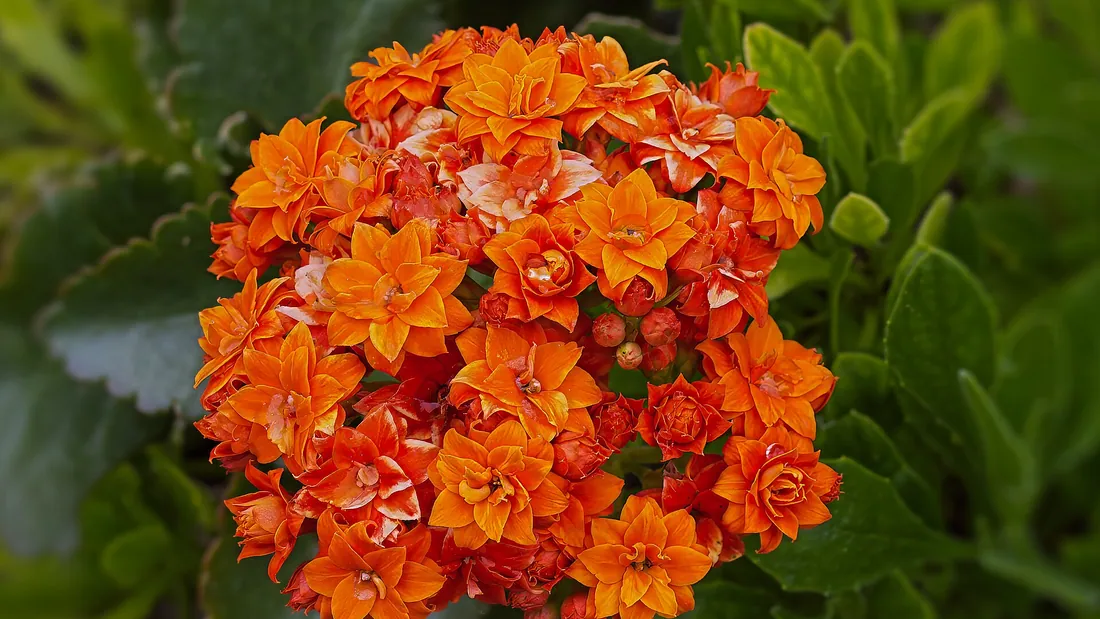
The kalanchoe (Kalanchoe blossfeldiana) is a flowering succulent from Madagascar, with fleshy leaves and small clusters of blooms that last for weeks. It is strictly an indoor plant: it freezes and dies at the first cold snap, so you never put it outside in the cold season. Its great strength is that it flowers in the heart of the dreary season, when everything else is dormant, provided you give it plenty of light.
Light and exposure
The kalanchoe demands a huge amount of light. It is the plant that flowers best in direct sun: give it the brightest windowsill in the house, facing due south if possible. Without strong light it lives perfectly well but stays green and refuses to flower again, which is often a disappointment.
In winter, light is weak and short, and that is the real limiting factor. Move the pot close to a south-facing window and do not be afraid of the direct sun of the dreary season, which does not scorch the plant at that time of year. In summer, full sun behind a window heats up strongly: there, a light net curtain during the hottest hours prevents the foliage from reddening or getting marked.
Watering
This is where most kalanchoes are killed. Like any succulent, it stores water in its leaves and hates excess. Water only when the substrate is thoroughly dry over several centimetres, then soak generously and let the water drain away. In winter this may mean once every two to three weeks, no more.
Never let water sit in the saucer. Roots left permanently soaking rot the collar and the roots, the number one mistake with succulents here, and the plant goes soft from the bottom before it collapses. Water at the base, not on the leaves or the flowers, and when in doubt wait an extra day: a kalanchoe copes far better with thirst than with excess.
Soil and repotting
The kalanchoe wants a very free-draining substrate. A special mix for cacti and succulents suits it perfectly, or a good potting soil lightened with a third of coarse sand or perlite. Water must pass through quickly and never linger.
Repot in spring, after flowering, into a pot barely larger and above all with a hole in the bottom. A layer of clay pebbles or gravel at the bottom improves drainage further. A terracotta pot, which lets the root ball breathe, is a good choice for a plant that dreads stagnant moisture.
Temperature and humidity
The kalanchoe is happy between 15 and 25 degrees, exactly the temperatures of an ordinary home, which makes it a very easy-going houseplant. It tolerates a little coolness at night but stops growing below 10 degrees.
The critical point is frost: this plant is frost-tender, it blackens and dies as soon as the thermometer approaches zero. Never put it out on an outside ledge or the terrace through any season when frost is still possible, and beware of the leaves touching an icy pane directly on winter nights. As for humidity, no problem: it prefers the dry air of a heated home to a damp atmosphere, so there is no need to mist it.
Pruning and upkeep
Routine care comes down to very little. Cut the faded flower stems back to their base once flowering is over: this cleans up the plant and encourages it to start again. Pinch the tips of the stems from time to time to keep a compact, stocky shape, otherwise the kalanchoe stretches out and goes bare at the bottom over the years.
Remove the soft or dried leaves from the base as they appear. An old plant that has sprawled can be cut back hard in spring: it recovers well, and the cut pieces will serve as cuttings. Dust the fleshy leaves with a dry cloth now and then so they capture the light well.
Pests and diseases
Indoors, the kalanchoe is rarely sick, but excess water remains its enemy. Collar and root rot, encouraged by a waterlogged substrate and damp winter air, shows up as a base that browns and softens. At that stage you save the plant by taking an emergency cutting from a healthy head. Powdery mildew, a white felting on the leaves, can appear in a damp, poorly ventilated room.
As for pests, watch out for mealybugs, those little white cottony clusters in the leaf axils, common on indoor succulents: you remove them with a cotton bud soaked in methylated spirit. Aphids sometimes attack the tender flower buds. Sticky or spotted foliage is the signal to watch closely.
Propagation
The kalanchoe multiplies very easily, a real pleasure. The stem cutting is the quickest: cut a ten-centimetre piece, remove the bottom leaves, let the cut dry in the air for a day or two so it heals over, then plant in a barely moist free-draining substrate. Roots come in two to three weeks.
The leaf cutting works too: lay a fleshy leaf flat on potting soil, and a little plantlet eventually forms at its base. Take these cuttings in spring or summer, when light and warmth drive recovery. It is the simple way to renew a tired old plant without buying anything.
Toxicity
Toxic to cats and dogs. The whole plant contains bufadienolides, molecules that act on the heart. An animal that eats some may show vomiting, drooling, diarrhoea, and in serious cases heart rhythm disorders. Keep it out of reach of animals and young children.
Climate and hardiness
Where and in which climate it thrives
The kalanchoe is the easy flowering plant of the cold season. It lives indoors all year round, never outside: being frost-tender, it would not survive a single frosty night on an outside ledge, and even a sheltered terrace kills it from the first cold nights. So you keep it warm, behind a window, from January to December.
The real challenge is getting it to flower again. The kalanchoe is a short-day plant: its buds only trigger when the nights grow long. To restart flowering it needs about six weeks with long, truly dark nights, around fourteen hours of total darkness a day. In practice, about six weeks before you want it in flower, you put the plant in the evening in a room without light or under an upturned box for fourteen hours, then return it to full light during the day. Without this dark treatment it stays green and sulks, and that is the most common disappointment with this plant.
The rest of the year is simple. The natural flowering of shop-bought plants runs from winter to spring, exactly when a home needs colour. Place the pot on the sunniest side to make up for the weak light of the darkest months, water very little while it is dark and cold, and repot once the flowers are over. It is one of the rare plants that brings colour right at the depths of winter without requiring any know-how.
Growing kalanchoe?
Green Hub keeps a dated history of your own plant: its photos, its progress, its repottings. An AI answers about yours specifically, not a generic sheet, for free.
Identify my plantMonth-by-month care calendar
| January | Full flowering. Place the pot as close as possible to a south-facing window to capture what little light there is. Water very little, only when the substrate is dry. |
|---|---|
| February | Flowering continues. Remove the faded flowers as they appear. Still little water, never in the saucer. |
| March | End of flowering for many plants. Cut the flower stems at the base. Light is returning, the plant picks up a little activity. |
| April | Ideal time to repot into a free-draining cactus mix. Resume slightly more regular watering, always letting it dry out in between. |
| May | Active growth. Pinch the stems to keep a compact shape. This is the right time to take cuttings from the pieces cut off. |
| June | Fine light. The plant grows and puts out leaves. Screen the direct sun during the hot hours behind the pane to avoid marks. |
| July | High summer. Slightly more frequent watering in strong heat, but always on dry substrate. Stem and leaf cuttings are easy to succeed with. |
| August | Last month of full growth. Keep pinching to fill out the plant before preparing for reflowering. |
| September | Start of the short-day treatment to reflower: from the end of the month, fourteen hours of total darkness per night for six weeks. |
| October | Continue the dark treatment in the evening. The first buds appear. Reduce watering as the light fades. |
| November | The buds form and swell. Return the plant to full light during the day, facing due south. Rare watering. |
| December | The first flowers open, right on time for winter. Keep it warm, away from icy panes at night, and water barely at all. |
Green Hub tips
- To reflower a kalanchoe, give it fourteen hours of pitch-dark night a day for six weeks from the end of September. Without this darkness it stays green and makes no buds.
- When in doubt, do not water. This succulent dies of excess water, never of thirst. Wait until the substrate is dry over several centimetres.
- Never put it outdoors, even in the warm season on the terrace: the slightest cold autumn night kills it. It is an indoor plant all year round.
- Keep it out of reach of cats and dogs: its leaves and flowers are toxic to them and can affect the heart.
Related species
Echeveria
Echeveria
The echeveria is a rosette-forming succulent, born on the rocky plateaus of Mexico, that stores water in its thick,…
Jade plant
Crassula ovata
The jade plant (Crassula ovata) is a shrubby succulent that comes from the dry zones of South Africa. Its thick, glossy…
Aglaonema
Aglaonema commutatum
The aglaonema (Aglaonema commutatum) is a robust, easy houseplant, prized for its foliage variegated with green,…
Alocasia
Alocasia
The alocasia, nicknamed elephant ear, charms with its large, dramatically veined leaves. It is a demanding tropical…
Aloe vera
Aloe vera
Aloe vera (Aloe vera) is a succulent from the Arabian Peninsula, grown since antiquity for the soothing gel of its…
Anthurium
Anthurium andraeanum
The anthurium (Anthurium andraeanum) is a tropical houseplant known for its smooth, waxy red spathe, which people often…
The guides that mention it
Indestructible Houseplants: Tolerating Drought Is Not Tolerating Shade
Tolerating drought and tolerating shade are two different adaptations, and almost every list mixes them up. What these…
Toxic Plants for Cats and Dogs: Recognising the Danger Rather Than Memorising a List
A list of toxic plants is easily forgotten and always incomplete. What actually protects a cat or dog is recognising…
Updated on
How this sheet is written
Written for Green Hub with the help of language models, then reviewed. It offers gardening guidance, not professional advice: if you are unsure whether a plant is toxic to a child or an animal, ask a vet, a doctor or your national poison centre.