Parsnip
Pastinaca sativa
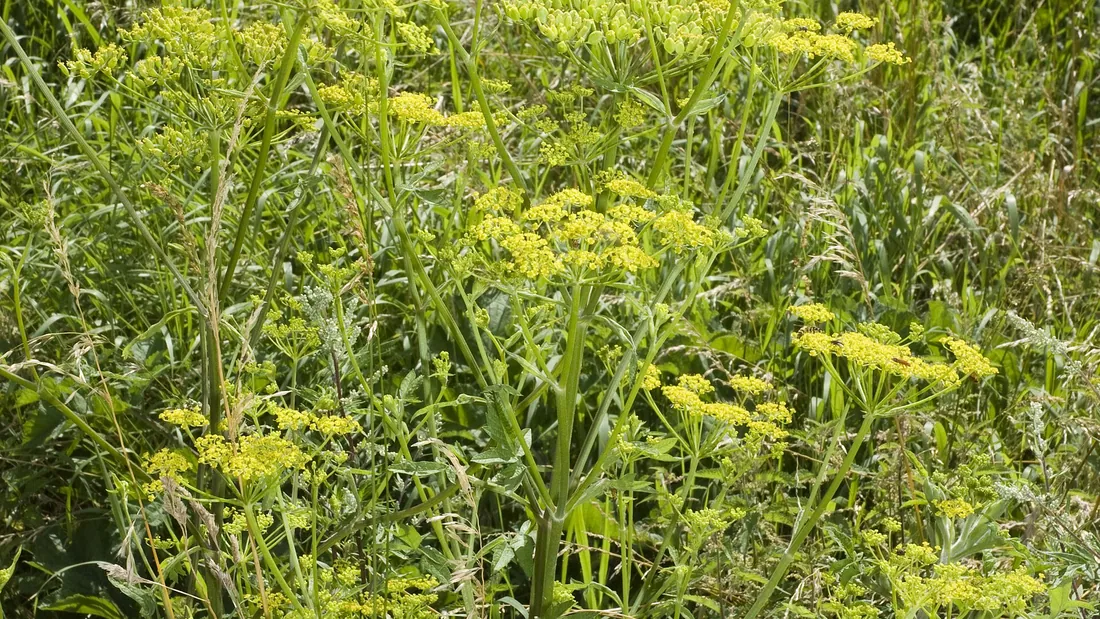

The parsnip (Pastinaca sativa) is an old, hardy root vegetable, a cousin of the carrot, with white flesh and a mild, sweet taste. It is a plant cut out for hard winters: it is sown in spring, occupies the bed all season, and is harvested in autumn and throughout the winter. An important point: the parsnip gets better after the first frosts, when the cold turns its starch into sugar. You can leave it in the ground and pull it up as needed.
Light and exposure
The parsnip likes full sun or very light shade. Give it a well open bed, without a tree or hedge that would compete with it and starve the root of light and water. A good position gives bigger, more regular roots.
Since the crop is long, from spring to winter, choose a spot where the parsnip can stay in place for several months without getting in your way. It is a vegetable you set up and almost forget, provided you gave it light at the start.
Watering
During germination, which is slow, keep the surface of the soil cool. A seedbed that dries out compromises an already fickle emergence, so water in a fine, regular mist until the seedlings appear. This is the most delicate period of the whole crop.
Once the plants are established, the parsnip needs little water. Its long root seeks moisture deep down. Water mainly during the dry spells of summer, without excess. Irregular watering, alternating drought and heavy rain, causes the roots to split, so a moderate but steady supply is better.
Soil and repotting
This is the point that decides everything with the parsnip. It needs deep, loose, stone-free soil. The root plunges straight down, and the slightest obstacle, a stone, a hard clod or poorly rotted fresh manure, makes it fork or twist. Dig deep and crumble the soil well before sowing.
Avoid fresh manuring just before the crop, as it encourages misshapen, forked roots. Soil enriched the previous year, or well matured compost, suits better. In heavy clay soil, common in many plots, lighten it with sand and compost, or choose a short, round-rooted variety.
Temperature and humidity
The parsnip is tough in the cold, one of the hardiest vegetables in the garden. It withstands hard frosts without flinching and stays perfectly edible in soil frozen at the surface. Cold does not harm it, on the contrary it improves it.
The first autumn frosts trigger the conversion of part of the starch into sugar, and this is when the parsnip is at its best. Harvested too early, before the cold, it stays blander. Patience is rewarded: roots pulled after several frosts are markedly sweeter.
Pruning and upkeep
The parsnip is not pruned as such, but two actions matter. The first is thinning: when the young plants have a few true leaves, keep only one plant every ten to fifteen centimetres. Plants too close together give thin roots. The second is regular weeding early on, because the parsnip emerges slowly and is quickly smothered by weeds.
A word of caution for tending the foliage. The sap and leaves of the parsnip, under the sun, can cause photodermatitis, a skin reaction that burns and reddens on combined contact with the sap and the rays. In sunny weather, handle the foliage covered up, long sleeves and gloves, especially at harvest or during heavy weeding.
Pests and diseases
The parsnip has few troubles, but two problems recur in a damp climate. The carrot fly attacks it too: its larvae dig tunnels in the root. An insect-proof mesh laid at sowing and avoiding sowing near carrots limit the damage.
On the disease side, leaf spot and powdery mildew can mark the foliage in a wet late summer, without seriously compromising the harvest. Crop rotation, not putting parsnip or carrot back in the same spot for three or four years, remains the best prevention. Slugs, for their part, watch for the young plants in spring.
Propagation
The parsnip is propagated only by direct sowing in place, because its long root tolerates transplanting poorly. Sow in spring, once the soil has warmed and drained, in rows thirty centimetres apart, covering the seeds with half a centimetre of fine soil. Emergence takes two to four weeks, so you need patience and soil kept cool.
The detail not to neglect: parsnip seeds lose their germinating power very quickly. Always use fresh seed of the year, as a packet from last year emerges poorly or not at all. To mark the rows during the long germination, slip a few radish seeds into the furrow, they come up fast and mark the row.
Climate and hardiness
Where and in which climate it thrives
The parsnip is one of the hardiest vegetables in the garden: the root holds in open ground down to around minus fifteen degrees, and a mulch of dead leaves lets it take sharper cold still. Frost is not its enemy, it is an ingredient: under the cold, the root converts part of its starch into simple sugars, which lowers the freezing point of its cells and clearly sweetens the taste. A parsnip pulled before the first frosts stays bland and fibrous.
The truly limiting factor is not cold but the length of the season: count on one hundred and twenty to one hundred and eighty days between sowing and a root of decent size. Under a mild, rainy oceanic climate, where the soil never freezes long enough to stop a fork, the parsnip simply keeps where it stands and is lifted as needed until the end of winter. Under a continental winter that locks the soil solid for weeks, USDA zones 4 and 5, it is the other way round: lift before the deep freeze and store in a box of damp sand in the cellar, between zero and four degrees. Where the summer is short, sow as soon as the soil rises above eight degrees and accept more modest roots.
In a hot climate, Mediterranean or subtropical, the parsnip is still growable but changes season: sow at the end of summer for a harvest through the cool season, since emergence drops off sharply above twenty-five degrees and the root turns fibrous under continuous heat. Germination is in any case the weak point in every climate, with an optimum around eighteen degrees, two to four weeks of waiting, and seeds that rot rather than emerge below eight degrees. One last point that holds everywhere: the stronger the sun, the more the photosensitising sap of the foliage bites, so handle it covered up.
Growing parsnip?
Green Hub keeps a dated history of your own plant: its photos, its progress, its repottings. An AI answers about yours specifically, not a generic sheet, for free.
Identify my plantMonth-by-month care calendar
| January | Harvest in the garden. Pull the parsnips as needed, they are at their sweetest. Push aside the mulch if the soil is frozen to free the roots. |
|---|---|
| February | End of harvest for the roots left in the ground, before they start back into growth. Order fresh seed of the year for spring. |
| March | Prepare the bed: dig deep, crumble, remove stones and clods. No fresh manuring. Pull the last parsnips before they run to seed. |
| April | Start of direct sowings in place, as soon as the soil is drained and warming. Sow thinly, in rows thirty centimetres apart, seed of the year only. |
| May | Continue or finish the sowings. Keep the seedbed cool until the slow emergence. Weed carefully around the young plants. |
| June | Thin to one plant every ten to fifteen centimetres. Weed regularly, the parsnip lets itself be smothered. Handle the foliage covered up in sunny weather. |
| July | Quiet upkeep. Water during dry spells to keep the roots from splitting. Watch for the carrot fly under mesh. |
| August | The roots swell. Few interventions, a hoeing and moderate watering in case of drought are enough. Watch the foliage at the end of a wet month. |
| September | Growth continues. Wait before harvesting, the parsnip has not yet reached its full taste. Keep weeding and mulching the row. |
| October | First harvests possible, but ideally wait for the frosts. Put in place a mulch of leaves or straw for the winter harvest. |
| November | After the first frosts, the roots turn sweet: this is the real start of the harvest season. Pull as needed, leave the rest in the ground. |
| December | Winter harvest in the ground. Take the roots from under the mulch as needed for the kitchen, purees, soups and gratins. |
Green Hub tips
- Always use fresh parsnip seed of the year. An old packet emerges poorly, it is the number one cause of failure.
- Sow a few radishes in the same furrow: they come up fast and mark the row during the two to four weeks of parsnip germination.
- Do not harvest before the frosts. The cold turns the starch into sugar and makes the parsnip much better.
- Leave the roots in the ground all winter under a mulch and pull as needed: it is the best way to keep them.
- In sunny weather, handle the foliage with arms and hands covered to avoid the skin reaction caused by the sap.
Related species
Carrot
Daucus carota
The carrot (Daucus carota) is a staple root vegetable in the vegetable garden, keeping all winter and sown directly in…
Celery
Apium graveolens
Celery (Apium graveolens) covers two vegetables from the same species: stalk celery, grown for its crisp ribs, and…
Chervil
Anthriscus cerefolium
Chervil (Anthriscus cerefolium) is a fine annual herb with finely cut foliage and a delicate, slightly aniseed flavour.…
Coriander
Coriandrum sativum
Coriander (Coriandrum sativum) is an annual herb grown for both its fresh leaves, with their pronounced flavour, and…
Dill
Anethum graveolens
Dill (Anethum graveolens) is an annual herb with a lacy outline, a cousin of the carrot and fennel. It is a warm-season…
Florence fennel
Foeniculum vulgare var. azoricum
Florence fennel (Foeniculum vulgare var. azoricum) is the fennel grown for its swollen base, crisp and…
The guides that mention it
The vegetable garden calendar, from sowing to harvest
Two dates are enough to build an entire vegetable garden year: your last spring frost and your first autumn frost.…
Improving Clay Soil: Diagnosis, Amendments and Drainage
Ground that clings to your boots in winter and cracks open in summer: a clay soil is not condemned, it changes with the…
Vegetable Garden Pests: The Natural Method That Holds All Season
A leaf riddled with holes, a lettuce shaved to the ground overnight, a twisted and sticky shoot: every kind of damage…
Sowing Seeds Successfully: Why It Fails, and What Fixes It
A seed that never comes up was not unlucky. Germination temperatures by species, correct depth, seeds that need light,…
Updated on
How this sheet is written
Written for Green Hub with the help of language models, then reviewed. It offers gardening guidance, not professional advice: if you are unsure whether a plant is toxic to a child or an animal, ask a vet, a doctor or your national poison centre.