Peperomia
Peperomia
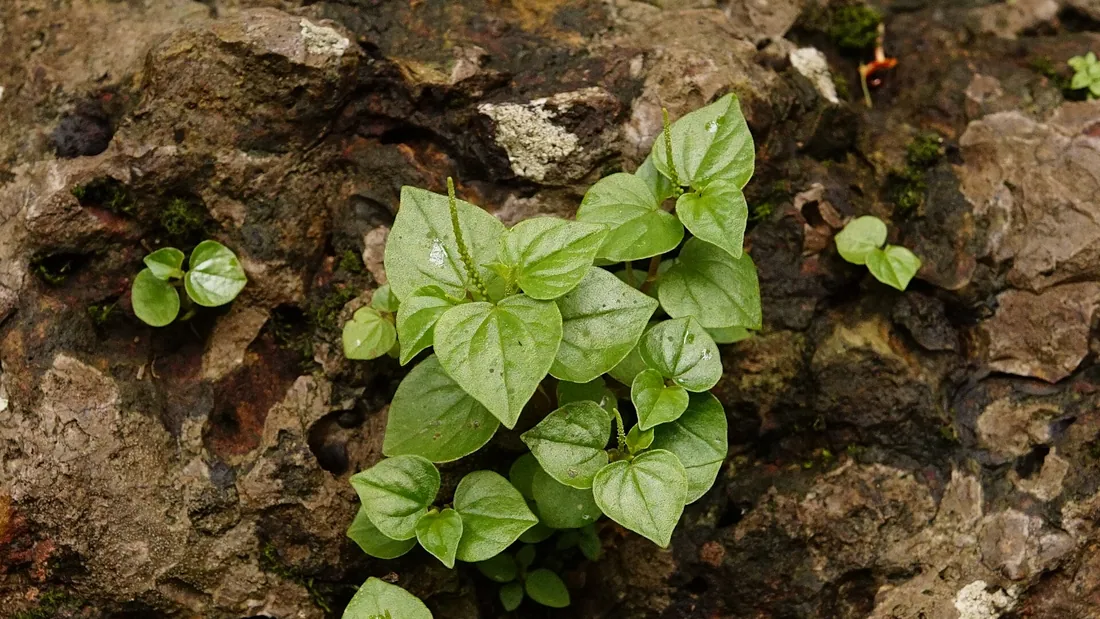

The peperomia (genus Peperomia) brings together a large family of small houseplants with thick, fleshy foliage, such as the baby rubber plant (Peperomia obtusifolia) or the emerald ripple peperomia (Peperomia caperata). These are compact windowsill plants, easy-going and perfect when space is tight. Their semi-succulent leaves store water, so they happily forgive a missed watering but dread excess. Harmless to children and pets, they are grown here indoors all year round.
Light and exposure
The peperomia wants bright but indirect light. In its native habitat it grows in the light shade of tall trees, never in the full blaze. An east- or west-facing windowsill suits it perfectly, or a little back from a south-facing window. The direct afternoon sun scorches its foliage and bleaches the pretty variegation of the multicoloured varieties.
The weak winter light is the real point of vigilance. Through the darkest months, move the plant closer to the pane so it gets the maximum brightness. A peperomia that stretches, with lengthening stems and foliage losing its colours, lacks light. The heavily variegated varieties need a bit more of it than the green ones to stay handsome.
Watering
This is the key point of this plant: water moderately and always let it dry out. The thick, fleshy leaves of the peperomia store water like a little reserve, exactly like a succulent. Wait until half the substrate is dry before watering again, then systematically empty the saucer. A peperomia recovers well from a missed watering, never from an excess.
The worst enemy is crown rot, caused by too-frequent watering or water that sits. Soft, blackening stems at the base are the alarm signal. In winter, when the plant rests, cut back even further and let the potting mix dry out almost entirely between waterings. When in doubt, better always to wait an extra day than to water too soon.
Soil and repotting
A very free-draining substrate is essential to stop water from sitting around the roots. Mix a green-plant potting soil with a good share of perlite, a little fine bark or coarse sand. A mix for cacti and succulents, lightened with potting soil, also does very well. The idea is simple: water must pass through fast and the substrate stay aerated.
The peperomia has a modest root system and dislikes pots that are too big, which keep too much moisture around the roots. Choose a container just its size, with a hole in the bottom, and repot only every two to three years, in spring. A layer of clay pebbles at the bottom of the pot further improves drainage, precious wherever the air is damp and the substrate dries slowly.
Temperature and humidity
The peperomia is happy between 18 and 24 degrees, the ordinary temperatures of a home. It dislikes dropping below 15 degrees and hates sudden chills. Below 12 degrees it sulks, goes soft and can drop leaves. Frost is fatal to it.
In practice, it stays indoors all year, without exception. Do not put it out on the terrace, even in high summer, because in a temperate climate the nights stay too cool and unstable for it. Keep it away from cold draughts near doors and windows in winter, and avoid pressing it against an icy pane at night. It also hates the direct blast of a radiator, which dries out and browns its foliage.
Pruning and upkeep
The peperomia is naturally compact and needs little pruning, which makes it a particularly trouble-free plant. Simply pinch the tips of stems that stretch too much to keep a dense, bushy habit, especially on the trailing or climbing varieties. This encourages the plant to branch rather than run.
Over time, remove the yellowed, faded or damaged leaves at the base, along with the flowers if they do not appeal to you. The peperomia produces curious upright flower spikes, thin as mouse tails, of little decorative interest. Cutting them does the plant no harm and spares it from spending energy needlessly.
Pests and diseases
The number one problem is by far overwatering. Root and crown rot, soft stems, sudden leaf drop: almost always too-generous watering or a substrate that holds too much moisture. Let it dry out, lighten the mix if needed, and urgently take a cutting from a healthy stem if the base is already affected, because a badly rotted peperomia is rarely saved but easily reproduced.
As for pests, watch for mealybugs, small white cottony clusters nestled in the leaf axils and on the stems, dabbed with alcohol on a cotton bud. Spider mites can appear when the air is too dry and hot. Leaf drop can also simply come from a temperature shock or a cold draught, corrected by moving the plant.
Propagation
The peperomia propagates remarkably well, including by leaf cutting, which always surprises. Take a healthy leaf with a bit of petiole, let the cut dry for a few hours, then insert it into a light, moist substrate. Young plantlets eventually appear at the base of the leaf after a few weeks. Some even cut the leaf in half and lay the slice on the potting soil.
The stem cutting is even faster: cut a stem bearing a few leaves, remove the lower ones, and place it in water or straight into soil. Rooting takes two to three weeks. Spring and early summer, when the plant is in full growth, offer the best chances of success. Keep everything warm and in filtered light while the roots form.
Climate and hardiness
Where and in which climate it thrives
The peperomia is a year-round indoor plant, zone 8a included. It never goes out into the garden, not even in the warm season, because cool, damp nights do not suit it. It is a small tropical house plant, and that is just fine: its modest size makes it an ideal companion for windowsills and shelves, where space is short.
Two points deserve your attention in a temperate climate. First watering, because a long grey winter slows the plant down strongly: during this period it drinks very little and a reflex watering is the most common cause of rot. Really let it dry out between waterings, far more than in the warm season. Then light: through the darkest months, brightness is scarce, so move the pot closer to the best-exposed window so the foliage keeps its colours and the plant does not stretch. When the light returns, it starts up again: this is the time to repot if needed, to prune and to take cuttings. The dry air of the heating bothers it less than many other plants thanks to its fleshy leaves, but avoid placing it just above a radiator all the same. Well treated, it lives for years without trouble.
Growing peperomia?
Green Hub keeps a dated history of your own plant: its photos, its progress, its repottings. An AI answers about yours specifically, not a generic sheet, for free.
Identify my plantMonth-by-month care calendar
| January | Winter rest. Water very little and let the substrate dry out almost entirely. Place the plant as close as possible to the window for the light. |
|---|---|
| February | Still slowed down. Keep up rare waterings and watch the base of the stems, to spot any sign of rot linked to overwatering. |
| March | The light returns and the plant starts up gently. Resume slightly more regular watering, but always after drying out. Prepare a possible repotting. |
| April | Growth resumes. Repot if needed into a pot barely larger and a very free-draining substrate. A good time for the first cuttings. |
| May | Active growth. Take leaf or stem cuttings to propagate the plant. Resume a light diluted fertiliser every three to four weeks. |
| June | Full swing. Water moderately as soon as half the substrate is dry. Pinch the too-long stems to keep a compact habit. |
| July | A fine period. Keep the plant sheltered from the direct sun behind the pane, which scorches the foliage. Continue moderate watering and light feeding. |
| August | Still growing. Watch for mealybugs and spider mites in hot, dry weather. Cut the flower spikes if you do not like them. |
| September | Growth slows. Space out the waterings as the days shorten. Last possible repotting at the very start of the month. |
| October | Stop feeding. Cut water back sharply and move the plant closer to the window to compensate for the fading light. |
| November | Entering rest. Keep the pot away from cold draughts and icy panes at night. Let it dry out well between rare waterings. |
| December | Full rest. Very little water, no fertiliser. Dust the fleshy leaves so they capture the weak winter light better. |
Green Hub tips
- Water only when half the substrate is dry: the fleshy leaves store water, excess makes the crown rot.
- A safe plant, with no known toxicity: it has its place even in a home with children and pets.
- A single leaf is enough to make a new plant: inserted into a light potting soil, it produces plantlets within a few weeks.
- Choose a pot just its size. A container that is too big keeps too much moisture and puts the roots at risk.
- Foliage turning pale and stems lengthening in winter? Move the pot closer to the window, it lacks light.
Related species
Aglaonema
Aglaonema commutatum
The aglaonema (Aglaonema commutatum) is a robust, easy houseplant, prized for its foliage variegated with green,…
Alocasia
Alocasia
The alocasia, nicknamed elephant ear, charms with its large, dramatically veined leaves. It is a demanding tropical…
Aloe vera
Aloe vera
Aloe vera (Aloe vera) is a succulent from the Arabian Peninsula, grown since antiquity for the soothing gel of its…
Anthurium
Anthurium andraeanum
The anthurium (Anthurium andraeanum) is a tropical houseplant known for its smooth, waxy red spathe, which people often…
Areca palm
Dypsis lutescens
The areca (Dypsis lutescens) is a tropical palm from Madagascar, frost-tender, grown indoors wherever winter freezes.…
Boston fern
Nephrolepis exaltata
The Boston fern (Nephrolepis exaltata) is a hanging indoor fern, born in the humid undergrowth of the tropics. Here,…
The guides that mention it
Indestructible Houseplants: Tolerating Drought Is Not Tolerating Shade
Tolerating drought and tolerating shade are two different adaptations, and almost every list mixes them up. What these…
Watering Plants Properly: Deciding Rather Than Following a Schedule
Beginners water too often and too little at the same time. How to read the soil instead of the calendar, tell thirst…
Toxic Plants for Cats and Dogs: Recognising the Danger Rather Than Memorising a List
A list of toxic plants is easily forgotten and always incomplete. What actually protects a cat or dog is recognising…
How to Compost in an Apartment with Worm Composting
Tiered bin, red worms and worm tea: how to compost your kitchen scraps without a garden or odor, even in a city…
Updated on
How this sheet is written
Written for Green Hub with the help of language models, then reviewed. It offers gardening guidance, not professional advice: if you are unsure whether a plant is toxic to a child or an animal, ask a vet, a doctor or your national poison centre.