Tulip
Tulipa
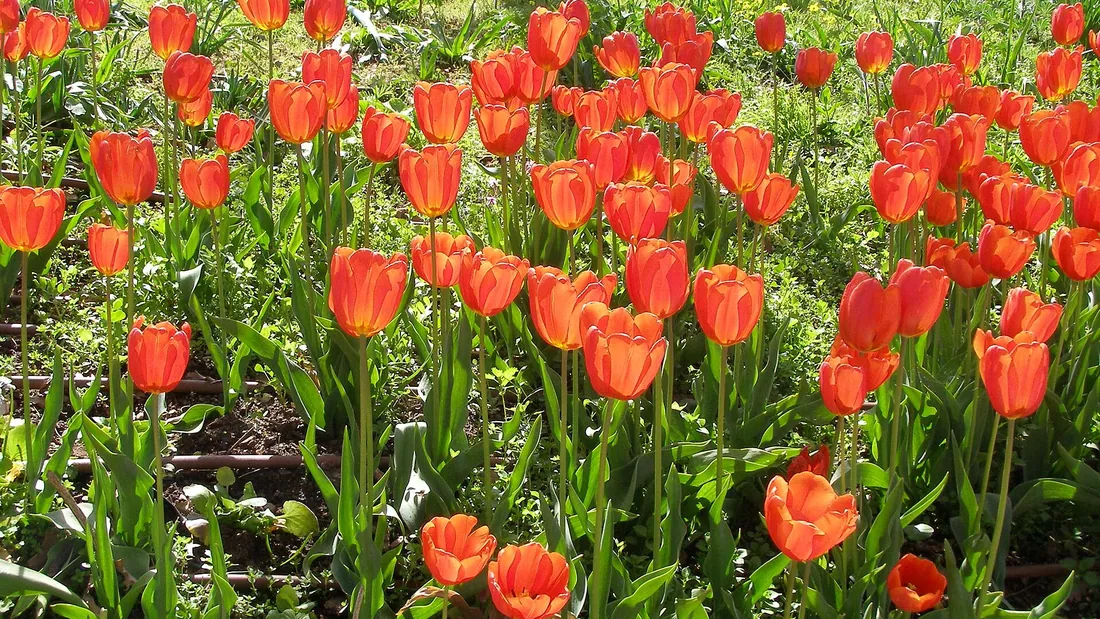

The tulip (Tulipa) is a spring-flowering bulb, come from the mountains of Central Asia and become the emblem of Dutch gardens. The key point fits in one sentence: you plant the bulbs in autumn, for flowering the following spring. Planting is done once the soil has cooled to around ten degrees, before the hard frosts. It wants full sun and above all a well-drained soil, because its only real enemy is the damp of the cold season, which rots the bulb.
Light and exposure
The tulip wants full sun to flower well and hold itself upright. Choose an open spot, a bed, a border or a rock garden, that gets direct light for a good part of the day in spring. In shade, the stems stretch, flop, and the flowers open poorly.
Since the tulip flowers early, before the trees leaf out, you can place it under deciduous shrubs or at the foot of a hedge: it enjoys the sun of late winter and early spring, then keeps a low profile when the shade returns. In a pot on a sunny terrace, it also looks very fine.
Watering
In the ground, the tulip usually makes do with the spring rains and asks for no particular watering. The soil stays cool at this season, and the bulb has built its reserves. If spring is exceptionally dry at flowering time, moderate watering prolongs the flowers a little.
The real trouble is not the lack of water but the excess. Through the cold season, waterlogged soil rots the dormant bulb. In a pot it is even clearer: never let water sit in the saucer, and cut watering right back once the foliage yellows, when the bulb goes to rest.
Soil and repotting
Drainage is the crucial point for the tulip, more important than soil richness. The bulb rots in heavy, waterlogged ground, a very common case in a clayey garden and under a rainy winter. A light, sandy soil that does not hold water suits it ideally.
If your soil is heavy, the saving move is simple: add a handful of coarse sand or gravel to the bottom of the planting hole, under the bulb, so the water drains away and does not sit against it. Plant deep, two to three times the height of the bulb, in loosened soil. A little ripe compost at planting helps recharge the bulb, without excess of fresh fertilizer.
Temperature and humidity
The tulip is perfectly hardy, from USDA zone 3 to zone 8, and cold does not scare it, on the contrary: the bulb needs twelve to sixteen weeks between two and seven degrees to trigger its flowering, which any temperate winter offers naturally. So there is no need to protect it from frost, it is even a good thing. Under too mild a winter the chill never adds up and the flower stays down in the bulb: that is where you pre-chill the bulbs in the fridge before putting them in the ground.
What it fears is the combination of cold and standing damp. A dry bulb withstands severe frosts, a bulb in waterlogged frozen soil rots. Plant before the hard frosts, once the soil has cooled to around ten degrees, so the bulb roots a little before the cold season, then let winter do its work, it works for you.
Pruning and upkeep
After flowering, cut off the faded flower to stop the plant from exhausting itself forming seeds. It is a useful gesture, especially if you want fine flowers the following year: the energy goes to the bulb rather than to the seeds.
However, do not touch the foliage at all while it is green. It is the foliage that, by catching the sun, recharges the bulb for the year ahead. Let the leaves yellow and dry out completely, which takes four to six weeks, before removing them. Cutting the green foliage for the sake of tidiness is the classic mistake: the bulb stays weakened and the next flowering disappoints.
Pests and diseases
The most common disease in a mild, damp climate is tulip fire, a botrytis (Botrytis tulipae) that appears in mild, wet weather. It shows as brown or grey spots on the leaves and flowers, which deform and become covered with a grey felting. Remove and discard the affected parts, air the plantings, avoid wetting the foliage, and do not replant tulips in the same spot several years running.
On the animal side, the bulbs attract the greedy. Voles devour them underground through the cold season, and squirrels dig them up just after the autumn planting. Against them, plant a little deeper, firm the soil well, and you can protect precious bulbs with a fine-mesh wire buried, or a bulb basket.
Propagation
The tulip multiplies naturally by offsets: the mother bulb produces small side bulbs each year. You can separate them in summer, when the foliage has dried and you dig up the bulbs, then replant them in autumn. The smallest will take a year or two before flowering, but it is free and true to the variety.
Sowing exists but remains a matter for the patient and for botanists: it takes several years, sometimes five to seven, before a seed gives a bulb able to flower, and hybrid garden tulips do not resemble their parents. For a garden, dividing the offsets is the only reasonable route.
Toxicity
The tulip bulb is toxic if eaten. It contains compounds (the tulipalins) that cause digestive upset, drooling and malaise, a real risk for children and animals that might mistake a bulb for an edible onion. Store the bulbs out of reach.
Repeated handling of the bulbs, especially when planting in large quantity, can also cause skin irritation, known as tulip bulb dermatitis: redness, itching, sometimes cracks at the fingertips. Nothing serious, but if you are planting a lot, wear gloves.
Climate and hardiness
Where and in which climate it thrives
The tulip is perfectly hardy, from USDA zone 3 to zone 8: cold does not scare it, cold is what it needs. The bulb calls for twelve to sixteen weeks between two and seven degrees to trigger its flowering, a chill any temperate winter hands it for free. So you plant in autumn, once the soil has cooled to around ten degrees and roughly six weeks before it freezes deep. It is the counterintuitive move that many forget: you do not plant the tulip in spring, but well before, the previous autumn.
In a mild climate, zone 9 and above, winter never drops low enough and nothing flowers: there the bulbs are pre-chilled in the fridge, ten to fourteen weeks between two and seven degrees, kept away from apples and pears whose ethylene destroys the flower in the bud, then planted at the coolest point of the year and treated as annuals.
Drainage is the other key, and it counts all the more where winter is mild and wet: heavy, waterlogged ground rots the dormant bulb, while a dry bulb shrugs off severe frosts. A handful of sand at the bottom of the planting hole settles most of the problem. One last point to know so as not to be disappointed: not all tulips come back. The botanical tulips, those small wild species, naturalize readily and reflower for years, they are perfect for a corner of the garden left in peace. The large garden tulips, on the other hand, degenerate fast, the second flowering is already thinner. Many gardeners treat them as annuals, pulling them up after flowering and replanting fresh bulbs each autumn for a guaranteed effect.
Growing tulip?
Green Hub keeps a dated history of your own plant: its photos, its progress, its repottings. An AI answers about yours specifically, not a generic sheet, for free.
Identify my plantMonth-by-month care calendar
| January | The bulbs planted in autumn sleep underground and receive the cold they need. Nothing to do outside, except dream over the catalogues. |
|---|---|
| February | The first green tips of the early tulips sometimes break through the soil late in the month. Check that no bulb has been dug up by squirrels. |
| March | The foliage develops. A light dose of compost or bulb fertilizer supports the coming flowering. Watch for slugs on the young shoots. |
| April | Full flowering of the early and mid-season tulips. Enjoy the show. In mild, damp weather, watch for the spots of tulip fire. |
| May | Flowering of the late varieties. Cut off the faded flowers as they go, but leave all the foliage in place, it recharges the bulb. |
| June | The flowers are over, the foliage yellows. Let it dry out completely. You can dig up the large garden tulips once the leaves have faded. |
| July | Remove the fully dried foliage. Clean, sort and dry off the dug-up bulbs, separate the offsets of the species to keep. |
| August | Rest. Keep the dug-up bulbs in a dry, airy and dark place. It is the moment to order the new bulbs for autumn. |
| September | Prepare the planting spots, lighten the heavy soils with sand. Planting can begin at the very end of the month if the weather cools. |
| October | Prime planting period. Set the bulbs in the ground, tip up, with a handful of sand at the bottom of the hole, at two or three times their height deep. |
| November | Last plantings before the hard frosts. Firm the soil well over the bulbs to discourage squirrels and voles. |
| December | Everything is in the ground. The winter cold does its work on the dormant bulbs. Complete rest, plan next year’s beds. |
Green Hub tips
- Plant in autumn, never in spring: once the soil has cooled to around ten degrees and before the hard frosts, for flowering the following spring.
- A handful of sand at the bottom of the planting hole saves the bulb from rot in heavy soil and under a damp winter.
- Never cut the foliage while it is green. Let it yellow completely: it is the foliage that recharges the bulb for the next flowering.
- For tulips that come back faithfully every year, bet on the botanical tulips: the large garden ones degenerate fast and are often treated as annuals.
- The bulb is toxic if swallowed and handling it can irritate the skin: store it out of children’s reach and put on gloves to plant in quantity.
Related species
Althea
Hibiscus syriacus
Althea (Hibiscus syriacus) is a hardy deciduous garden shrub that flowers when every other one has finished, from…
Beech
Fagus sylvatica
Beech (Fagus sylvatica) is the most common broadleaf tree in the temperate forests of Europe, just as happy standing…
Begonia
Begonia
Begonia is the star summer flower of window boxes, hanging baskets and shady borders. Hundreds of hybrids exist, but…
Box
Buxus sempervirens
Box (Buxus sempervirens) is an evergreen shrub that has been clipped into balls, cones and low borders in formal…
Butterfly bush
Buddleja davidii
Buddleia (Buddleja davidii), better known as the butterfly bush, is a nearly indestructible shrub that has taken over…
Cherry laurel
Prunus laurocerasus
Cherry laurel (Prunus laurocerasus) is the most widely planted evergreen hedging shrub in temperate gardens, and it is…
The guides that mention it
Perennial Flowers: Choosing, Planting and Blooming Without a Gap All Season
What genuinely comes back year after year, how to read hardiness by zone rather than by promise, and how to string…
Toxic Plants for Cats and Dogs: Recognising the Danger Rather Than Memorising a List
A list of toxic plants is easily forgotten and always incomplete. What actually protects a cat or dog is recognising…
Lawn Care: From Seeding to Mowing, and Renovation
Mowing higher changes more than any fertilizer can: turf density, drought resistance, weeds, moss. Everything else in…
The Cutting Garden: How to Pick Flowers and Make Your Bouquet Last
Dahlias, peonies, hydrangeas: what separates a flower that lasts ten days in a vase from one that droops by the next…
Designing your garden by colour: the combinations that work
Warm harmonies, cool harmonies, monochrome schemes or bold contrasts: colour changes everything in a garden, from the…
Updated on
How this sheet is written
Written for Green Hub with the help of language models, then reviewed. It offers gardening guidance, not professional advice: if you are unsure whether a plant is toxic to a child or an animal, ask a vet, a doctor or your national poison centre.