Sweet corn
Zea mays var. saccharata
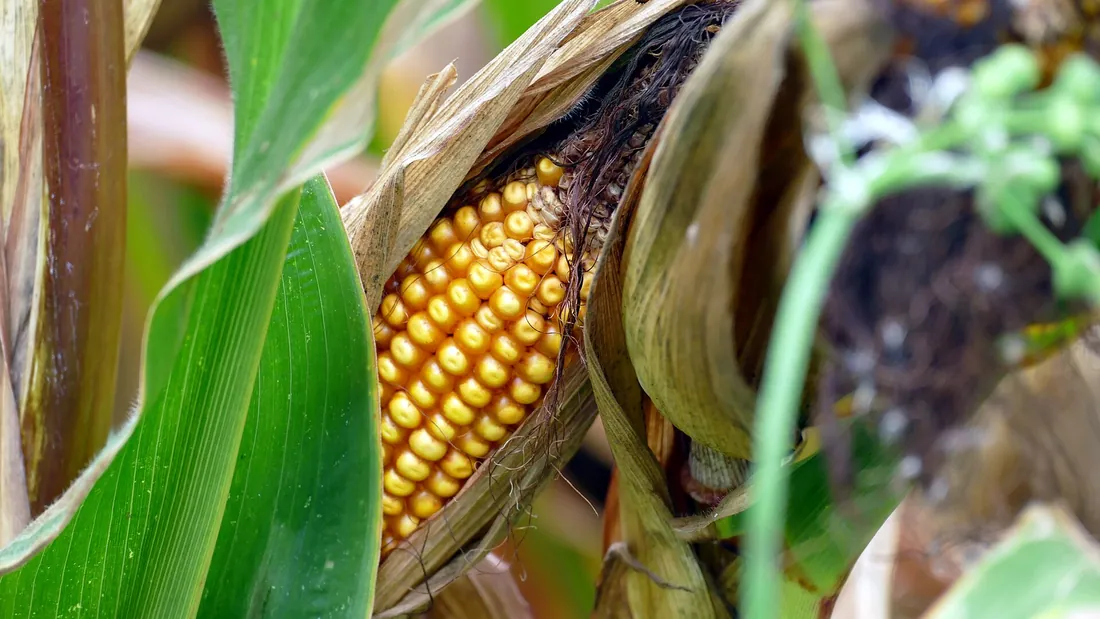
.jpg)
Sweet corn (Zea mays var. saccharata) is a tall, tender annual grass grown for its sugary cobs, eaten fresh or grilled. Two facts govern everything else: the slightest frost kills it and it needs real warmth, so you only sow it outdoors once all risk of frost has passed and the soil is above 12 degrees. Another rule that surprises beginners: you plant it in a tight block and never in a single row, because its pollination depends on the wind. It is a hungry but rewarding vegetable, as long as you choose early varieties where the warm season is short.
Light and exposure
Sweet corn demands full sun, no compromise. Give it the most open and warmest spot in the vegetable garden, sheltered from strong winds that flatten the tall stalks. Corn in the shade makes neither good stalks nor filled cobs, it just struggles along.
Since the plant often reaches one and a half to two metres, place the corn patch at the edge of the garden where its shadow falls outside the beds, on the side away from the midday sun, so it does not shade the lower vegetables. Be careful, though, that it does not block the wind so much that it hinders pollination, which actually needs a bit of a breeze.
Watering
Sweet corn is thirsty, especially at two key moments: flowering, when the tassels and silks emerge, and grain filling. A lack of water at these stages gives half filled cobs, with rows of missing kernels. Water generously and deeply during dry spells, from early summer through to harvest.
The rest of the time, regular watering is enough to keep the soil cool. A good mulch at the base helps a lot to hold moisture and space out watering, which is precious during the dry summers that come back more and more often.
Soil and repotting
Corn likes deep, rich soil well supplied with organic matter. An addition of mature compost or well rotted manure in autumn or before sowing supports its fast and voracious growth. It is a vegetable that drains the soil, so give it plenty to feed on.
It enjoys soil that warms quickly in spring and drains well, while staying cool in summer. Heavy, cold soils slow emergence and do not help a plant already pressed by the shortness of the frost-free season. A light earthing up at the base during the season strengthens the anchoring of the tall stalks.
Temperature and humidity
This is the sensitive point wherever the warm season is short. Sweet corn is genuinely frost tender: the slightest frost kills young plants, and the seed will not even emerge in cold soil below 10 to 12 degrees. Sowing too early means watching the seeds rot in the ground without germinating.
So wait until all risk of frost has passed and the soil has warmed before sowing in the open ground. To gain time where the season is short, you can start in pots under cover about a month before that point and transplant once the last frosts are over. The plant then loves the summer heat and sulks during cool spells, hence the importance of early varieties under a short season.
Pruning and upkeep
Corn is not pruned. You let the stalk rise in a single shot with its plume of male flowers at the top, the tassels, and its cobs that form lower down in the leaf axils. Touching it would only hinder the plant.
Two useful gestures replace pruning. Earth up the base to stabilise the tall stalks against the wind, and leave the tillers in place, those small shoots that sometimes start from the base, because removing them brings nothing and deprives the plant of a little leaf area. Just take off the clearly dry leaves at the end of the season.
Pests and diseases
In a humid climate, watch for corn smut, a fungus that forms grey, swollen galls on the cobs and stalks, and rust on the foliage. A good rotation, not putting corn in the same spot two years in a row, greatly limits these troubles.
As for pests, slugs attack young plants in spring, and birds, crows first among them, love to dig up the sown seeds and peck the ripe cobs. A net over young sowings and close watch as harvest approaches avoid many disappointments. The corn borer, a caterpillar that tunnels into the stalks, remains rarer in the amateur garden but deserves an eye.
Propagation
Sweet corn is propagated only by sowing, every year. Sow in stations of two or three seeds, at 3 centimetres deep, keeping the most vigorous plant after emergence. Space about 30 to 40 centimetres apart, and above all arrange everything in a block of several close rows, not in a single line.
This block business is no detail: corn pollinates by wind, the pollen from the tassels at the top must fall onto the silks of the cobs below. In a square block, the pollen circulates and lands on its neighbours; in a single line, half of it blows away into the void and the cobs stay full of holes. Do not save the seeds of hybrid varieties, they do not come true: buy fresh seed each year.
Climate and hardiness
Where and in which climate it thrives
Sweet corn has no hardiness at all: the slightest frost kills it, and its seed will not germinate in soil that stays below 10 to 12 degrees. It is therefore grown as an annual everywhere, from the subtropics to the cool temperate zone, and what decides the outcome is the length of the frost-free season, not the USDA zone. Allow 70 to 100 days from sowing to harvest depending on the variety: under a long, hot summer almost any of them will do, under a short, cool summer only the early ones complete their cycle.
Sowing in the open ground therefore depends on the state of the soil, never on a date: all risk of frost gone and the soil warmed above 12 degrees. Where the season is short, you gain three to four weeks by starting in pots under cover about a month before that point, then transplanting once the nights no longer drop below 10 degrees. Hybrids of the se type, so-called sugary enhanced, emerge better in still-cool soil than the sh2 types, which demand more warmth: that is the criterion that matters under a fickle spring. In a hot, dry climate the difficulty is reversed: above 35 degrees pollen quickly loses its viability and the cobs fill badly, which argues for sowing early so that flowering escapes the peak of heat.
The rest comes down to three habits that hold anywhere. Plant in a tight block, a square of four or five rows rather than one long line, otherwise wind pollination goes badly and you harvest half filled cobs. Feed generously and water without counting at flowering and grain filling. Pick as soon as the silks turn brown and a crushed kernel releases a milky juice, then rush it to the pot: the sugar turns to starch within the first hours after picking.
Growing sweet corn?
Green Hub keeps a dated history of your own plant: its photos, its progress, its repottings. An AI answers about yours specifically, not a generic sheet, for free.
Identify my plantMonth-by-month care calendar
| January | Nothing in the garden. This is the time to choose varieties suited to the length of your warm season and to order the seed. |
|---|---|
| February | Patience, too cold to sow anything outdoors or even under cover. Plan the full sun spot and lay out the square as a block. |
| March | Prepare the soil: add mature compost or well rotted manure to the future corn patch, which is hungry for food. |
| April | At the end of the month, you can start sowings in pots under cover, in the warm, to gain a head start. Outdoors it still frosts, so do not sow. |
| May | Sow in the open ground in stations, in a block of several rows, once all risk of frost has passed and the soil is above 12 degrees. Transplant the plants started in pots. Protect from slugs and birds. |
| June | Thin to one plant per station. Earth up the base to stabilise the young stalks. Weed and mulch to keep the soil cool. |
| July | Full growth, the stalks rise fast. Water generously, especially as soon as the tassels and silks emerge. A lack of water now costs kernels. |
| August | Flowering and cob filling. Keep watering deeply in dry weather. Watch for smut and remove the galls before they burst. |
| September | Start of harvest depending on varieties and the year. Pick when the silks turn brown and a crushed kernel releases a milky juice. Cook without waiting. |
| October | Last harvests before the cold. Pull out the spent stalks and put them on the compost. Clean up the patch. |
| November | End of cycle, corn is an annual and does not come back. An addition of manure to the patch already prepares next year’s crop. |
| December | Rest. Note the varieties that ripened well for you this year and those caught out by the cold, to choose better next season. |
Green Hub tips
- Never sow before all risk of frost has passed and the soil is above 12 degrees: in cold soil the seed rots without germinating, and the slightest frost kills young plants.
- Plant in a square block of several rows, never in a single line. The pollen from the tassels must fall onto the silks of the neighbouring cobs, otherwise the cobs stay full of holes.
- Choose early varieties if your warm season is short: late ones get caught by the cold before filling their cobs.
- Harvest when the silks turn brown and a crushed kernel releases a milky juice, then cook quickly: the sugar turns to starch within the first hours after picking.
Related species
Artichoke
Cynara scolymus
The artichoke (Cynara scolymus) is a large perennial with silvery, deeply cut foliage, as striking in an ornamental…
Asparagus
Asparagus officinalis
Asparagus (Asparagus officinalis) is an unusual perennial for a vegetable patch: once established, an asparagus bed…
Bean
Phaseolus vulgaris
The green bean (Phaseolus vulgaris) is one of the easiest vegetables in the kitchen garden, provided you respect one…
Beetroot
Beta vulgaris
Beetroot (Beta vulgaris) is an easy root vegetable, one of the most forgiving in the kitchen garden. You sow it…
Bell pepper
Capsicum annuum
The bell pepper (Capsicum annuum) is an annual fruiting vegetable and a genuinely cold-shy one, the sweet cousin of the…
Broad bean
Vicia faba
The broad bean (Vicia faba) is one of the very first vegetables of the year, a rustic, sturdy legume that goes into the…
The guides that mention it
The vegetable garden calendar, from sowing to harvest
Two dates are enough to build an entire vegetable garden year: your last spring frost and your first autumn frost.…
Companion Planting in the Vegetable Garden: Which Plants Belong Together
Tomatoes and basil get along beautifully, while potatoes and tomatoes make each other sick: companion planting explains…
Gardening with Children: Where to Start in the Vegetable Patch
Radishes that sprout in a week, peas nibbled straight from the row, potatoes dug up like buried treasure: the vegetable…
Sowing Seeds Successfully: Why It Fails, and What Fixes It
A seed that never comes up was not unlucky. Germination temperatures by species, correct depth, seeds that need light,…
Updated on
How this sheet is written
Written for Green Hub with the help of language models, then reviewed. It offers gardening guidance, not professional advice: if you are unsure whether a plant is toxic to a child or an animal, ask a vet, a doctor or your national poison centre.