Garlic
Allium sativum
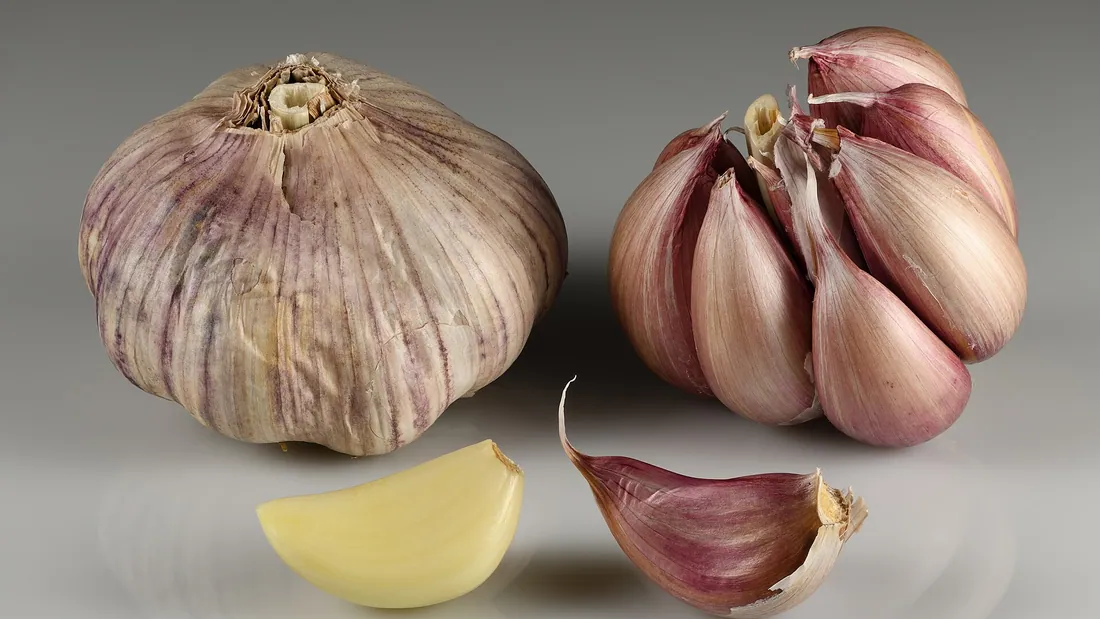

Garlic (Allium sativum) is one of the easiest vegetables in a kitchen garden, provided you grasp two things. You don’t sow it: you plant the cloves, separated from a head, point facing up. And white and purple garlic are planted in autumn, because they need to go through the cold of winter to form good, well-divided heads. The real trap is not frost but moisture: in heavy, waterlogged soil, garlic rots.
Light and exposure
Garlic wants full sun, no compromise. Give it the most open and sunny bed in the garden, away from tall vegetables that would cast shade. The less light it gets, the smaller the heads stay.
Avoid the low corners of the garden where water sits and air circulates poorly after rain. A spot on a slight slope, or a raised, well-aired bed, always gives better results than a damp bottom of the garden.
Watering
This is one of the most frugal crops in the vegetable garden. Once the cloves are in place in autumn, the rainfall of the cold season is more than enough under a temperate climate, and most years you will have nothing to water until growth picks up strongly at the end of winter. Too much water does far more damage than too little.
Only water in the event of a real prolonged drought in spring, when the foliage is growing strongly. As soon as the leaves start to yellow, near harvest, stop all watering: the heads finish ripening in dry conditions, and waterlogged soil at this stage makes them rot in the ground.
Soil and repotting
Drainage is the point that decides everything. Garlic demands a light, loose and above all well-drained soil; it hates heavy, waterlogged ground, where it rots before bulking up. In clay soil, plant on a small ridge ten to fifteen centimetres high so the water drains away and the cloves never sit in water.
When planting, push each clove point up, five centimetres deep, spaced ten to fifteen centimetres apart, in rows thirty centimetres apart. Never add fresh manure: it makes garlic rot and encourages disease. Simply loosened soil, with no fresh manure, suits it very well.
Temperature and humidity
Garlic is perfectly hardy and overwinters outdoors without protection under a temperate climate. Cold is not an enemy, quite the opposite: white and purple garlic need a period of winter cold, vernalisation, to divide properly and form a head with several cloves. Without that cold spell, you often harvest a single bulb, with no cloves.
The real danger is not the temperature, it is the moisture in the soil during the cold months. Heavy soil that stays waterlogged all winter makes the cloves rot before they even get going. The ridge in clay soil and full sun are your best insurance against this risk.
Pruning and upkeep
There is no pruning as such, but one useful task on autumn garlic. In spring, some varieties send up a rigid flower stalk in the centre, the scape. Cut it as soon as it appears: the plant stops feeding the flower and concentrates its energy in the head, which bulks up all the more. These scapes, tender, are actually very good to cook.
Weed regularly around the plants, as garlic tolerates competition from weeds poorly. A light hoeing now and then keeps the soil aerated. Watch the foliage in spring: it is what will warn you of the first signs of disease.
Pests and diseases
Garlic rust is the most common enemy under a mild, damp spring. You spot it by small, bright orange pustules that speckle the leaves. It weakens the plant and reduces head size. You limit it by spacing the plants well so air circulates, avoiding any excess nitrogen and never wetting the foliage.
White rot, a soil fungus, is more serious because it persists in the ground for years. It makes the plants yellow then rot, with a white felting at the base. The only real defence is a long rotation: never replant garlic, onion or leek in the same spot for four to five years. In soil that is too wet, clove rot is also a threat, hence the importance of drainage.
Propagation
Garlic is propagated only by its cloves, there is no sowing. Take a healthy head, detach the cloves one by one just before planting, and keep the largest ones from the outside: those are the ones that will give the finest heads. Each clove planted becomes a whole head.
Always use healthy seed cloves, bought at a garden centre or saved from your own harvest. Avoid supermarket garlic: it is often treated so it won’t sprout, sometimes carries disease, and is poorly suited to your climate. A locally grown seed garlic, replanted year after year from your finest heads, adapts and improves.
Toxicity
Harmless to humans, it is an everyday seasoning. Garlic, however, is toxic to dogs and cats: it destroys their red blood cells and can cause anaemia. Don’t leave peelings or heads within their reach, and never slip any into their bowl.
Climate and hardiness
Where and in which climate it thrives
Garlic is fully hardy: once in the ground, the cloves take frosts well below -15 °C, and the crop is commonly grown from USDA zone 4 to 9. Its real constraint is not cold but the need for cold: white and purple garlic require one to two weeks below 7 °C, a process called vernalisation, before they will split into cloves. That requirement sets the whole calendar. Under a temperate climate with a proper winter, you plant six to eight weeks before the ground freezes deeply, and harvest in early summer when the foliage yellows and bends over. Under a mild climate where winter almost never drops below 7 °C, Mediterranean, subtropical or very mild oceanic, vernalisation does not happen on its own: you then harvest a single rounded bulb with no separate cloves. The fix is simple: keep the cloves six to eight weeks in the fridge, between 4 and 8 °C, before planting, or turn to softneck garlics of the pink type, which need far less cold. Conversely, under a harsh continental winter, an autumn planting is covered with a dry mulch, or postponed to the very end of winter, as soon as the soil has drained. The real risk is never temperature, it is water: under a mild, rainy winter, in heavy soil that stays sodden for weeks, the cloves rot before they even get going, where a dry frost leaves them untouched. A ridge ten to fifteen centimetres high and full sun are worth more than any protection against the cold. Under dry heat the crop is easy, but the bulking phase is short: water while the foliage is growing, then stop dead at the first yellowing. Curing follows the same logic: one to two weeks in the open air, sheltered from rain, under a thoroughly ventilated shelter if the air stays humid.
Growing garlic?
Green Hub keeps a dated history of your own plant: its photos, its progress, its repottings. An AI answers about yours specifically, not a generic sheet, for free.
Identify my plantMonth-by-month care calendar
| January | Autumn garlic lies dormant in the ground, nothing to do. This is the time to order healthy seed cloves for spring planting or the following autumn. |
|---|---|
| February | Pink garlic can be planted as soon as the soil has drained and is workable. Push the cloves point up, five centimetres deep, on a ridge in heavy soil. |
| March | Last window to plant pink garlic. Autumn garlic restarts its growth. Weed around the plants without damaging them. |
| April | The foliage grows fast. Watch for the appearance of rust, those orange pustules on the leaves, in mild, damp weather. Hoe lightly. |
| May | Full growth. Cut the flower scapes as soon as they rise so the energy goes into the heads. Only water in the event of real drought. |
| June | The foliage starts to yellow. Stop all watering. First harvests of autumn garlic when half the leaves have yellowed. |
| July | Full harvest. Lift in dry weather when the foliage is yellowed and bent over. Let the heads dry off in the sun for a few hours. |
| August | End of air drying, one to two weeks sheltered from rain in a ventilated spot. Plait or store the well-dried heads in a dry place. |
| September | Prepare the bed for autumn garlic: loosened, well-drained soil, no fresh manure. Choose a spot where no allium has grown for four years. |
| October | Start of planting white and purple garlic. Separate the cloves from a healthy head, plant point up, on a ridge if the soil is heavy. |
| November | Continue autumn planting. The cloves take root before the hard frosts and will benefit from winter vernalisation. |
| December | Final deadline to plant autumn garlic. After that, let the cold do its work: it is necessary for head formation. |
Green Hub tips
- Plant white and purple garlic in autumn, never in spring: without winter cold, it won’t form true heads with several cloves.
- In clayey, damp soil, always plant on a ridge ten to fifteen centimetres high. Garlic rots as soon as it sits in water, and that is the number one risk under a mild, rainy winter.
- Stop all watering as soon as the foliage yellows, close to harvest. The heads finish ripening in the dry; waterlogged soil would make them rot.
- Never replant garlic in the same spot for four to five years, nor onion or leek: white rot settles into the soil for years.
Related species
Chives
Allium schoenoprasum
Chives (Allium schoenoprasum) are a small perennial of the onion family, with fine hollow stems tasting mildly of…
Clivia
Clivia miniata
The clivia (Clivia miniata) is a sturdy, generous houseplant from the undergrowth of South Africa. Its broad strap-like…
Daffodil
Narcissus
The daffodil (Narcissus) is the first big signal of spring in the garden. Long before the tulips, its yellow trumpets…
Leek
Allium porrum
The leek (Allium porrum) is the winter vegetable par excellence. Very hardy, it stands in the ground all winter and is…
Onion
Allium cepa
The onion (Allium cepa) is a hardy, no-fuss bulb vegetable, one of the easiest crops to succeed with in a vegetable…
Shallot
Allium ascalonicum
The shallot (Allium ascalonicum) is a classic of the vegetable garden, a cousin of the onion but with a finer, milder…
The guides that mention it
The vegetable garden calendar, from sowing to harvest
Two dates are enough to build an entire vegetable garden year: your last spring frost and your first autumn frost.…
Toxic Plants for Cats and Dogs: Recognising the Danger Rather Than Memorising a List
A list of toxic plants is easily forgotten and always incomplete. What actually protects a cat or dog is recognising…
Garden Diseases: Recognising What Is Attacking Your Plants, and Acting Before the Spot Appears
A white bloom that wipes off on a fingertip, an angular lesion stopped dead by a vein, a fruit browned from the bottom…
Companion Planting in the Vegetable Garden: Which Plants Belong Together
Tomatoes and basil get along beautifully, while potatoes and tomatoes make each other sick: companion planting explains…
Updated on
How this sheet is written
Written for Green Hub with the help of language models, then reviewed. It offers gardening guidance, not professional advice: if you are unsure whether a plant is toxic to a child or an animal, ask a vet, a doctor or your national poison centre.