Leek
Allium porrum
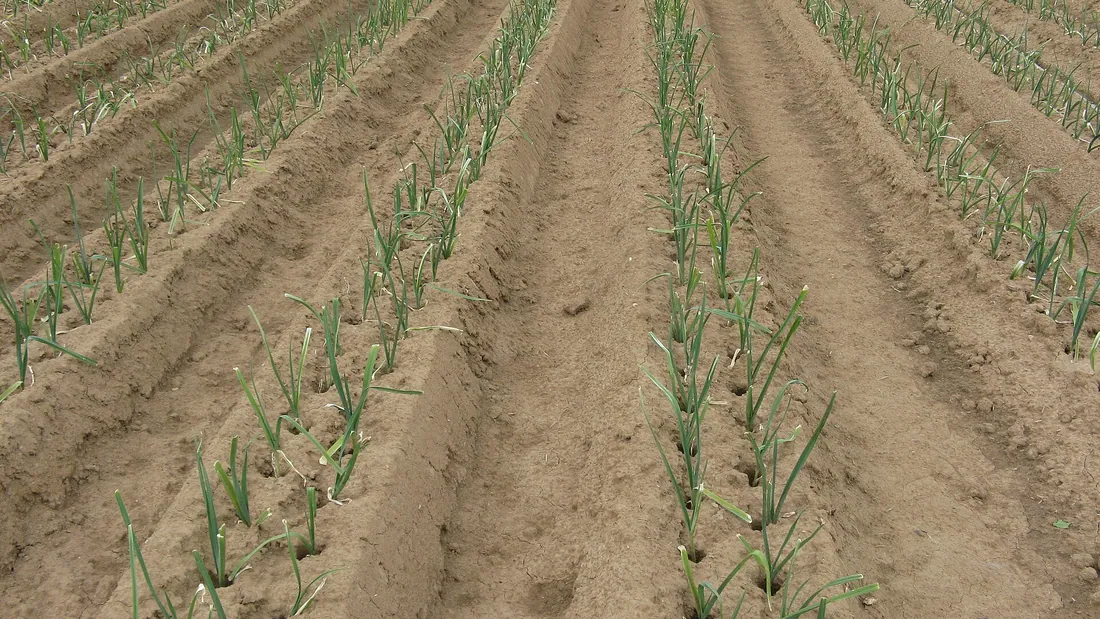

The leek (Allium porrum) is the winter vegetable par excellence. Very hardy, it stands in the ground all winter and is harvested as needs arise, even under the snow. It is a pillar of the autumn and winter vegetable garden, when almost everything else has frozen. Its cultivation calls for patience, between the spring sowing and the harvest eight to nine months later, but it demands little care.
Light and exposure
The leek likes full sun, but tolerates well a slightly shaded position for part of the day. What it needs above all is space and a clear bed to develop its long white shaft.
As it occupies the ground for long months, including all winter, choose a spot that will not get in the way of the following spring crops. A bed accessible even in wet weather makes harvesting easier through the bad season.
Watering
The leek appreciates soil that stays cool, above all in the six to eight weeks that follow transplanting, a critical period when a lack of water permanently checks the swelling of the shaft. Water regularly through the growing season, especially during dry spells, so that it swells without check. Soil that dries out too much gives thin, tough leeks.
In the late season and through winter, under a rainy climate, the rain is amply sufficient and watering becomes needless. The established leek then makes do with the soil’s natural moisture, to the point that standing water becomes the only real risk. Under a dry winter, on the other hand, occasional watering remains useful so that the shafts keep swelling.
Soil and repotting
The leek likes deep, loose and rich soil that holds coolness. Soil enriched with mature compost before planting suits it perfectly. It dreads soil that is too stony, which deforms the shaft.
In the heavy, damp soils of the region, work the bed well and deeply to loosen it and prevent water from stagnating around the roots in winter. A slightly raised bed helps drainage without penalising the crop.
Temperature and humidity
The leek is one of the hardiest vegetables in the garden. The winter varieties withstand without damage temperatures of minus fifteen to minus twenty degrees and stay edible all winter in the open ground. The cold only improves their flavour, by concentrating their sugars.
This is precisely what makes it the ideal winter vegetable under a climate whose winters are damp rather than truly icy. Where the tomato and the bean have long since disappeared, the leek holds firm in the cold and the damp, provided a winter variety has been chosen: summer varieties are bigger and earlier, and tolerate heat better, but stand up much less well to prolonged frost. Only really harsh winters, with the soil frozen deep, complicate lifting: a good mulch of leaves or straw at the base then lets you harvest even in freezing weather.
Pruning and upkeep
The leek is not pruned, but it is earthed up. Earthing up consists of drawing the soil around the shaft as it grows, which lengthens and blanches the tender, tasty lower part. Earth up gradually, in two or three goes, taking care not to let soil fall between the leaves.
Another method is to plant deep in a hole made with a dibber, without filling it back in, to obtain a long white shaft naturally. At planting time, the foliage and roots of the young plants are often shortened by a third to encourage them to take.
Pests and diseases
The great enemy of the leek is the leek worm, in fact the larvae of two pests: the leek moth and above all the leek miner fly (Napomyza gymnostoma), whose larvae dig galleries in the shaft and make it rot. The best remedy is preventive: an insect-proof net laid over the bed stops the flies from laying eggs, at the two flight periods, in spring and late summer.
Watch too for rust (Puccinia allii), which covers the leaves with orange pustules in mild, damp weather, without really compromising the harvest, and downy mildew in case of excess moisture. Crop rotation, by not putting alliums back in the same place for three years, limits all of these problems.
Propagation
The leek is multiplied by sowing. Sow in a nursery, in a plug or in a seed tray, from the end of winter under cover, or in spring in the open ground. When the young plants are the thickness of a pencil, usually after ten to twelve weeks, lift them and transplant them in place, dipping the roots in a puddling mix if you wish. It is this transplanting that gives fine shafts.
To harvest your own seed, let a few plants run to flower in the second year: the leek is biennial and forms a large spherical umbel that produces black seeds. Harvest them when the head dries, and keep them dry. They keep poorly, two or three years at most.
Climate and hardiness
Where and in which climate it thrives
The leek is one of the hardiest vegetables in the garden: the winter varieties such as 'Bleu de Solaise' or 'Bleu de Liège', whose bluish foliage turns purplish under frost, hold in the open ground down to minus fifteen or minus twenty degrees, which means a winter crop with no protection to about USDA zone 6. The cold does not damage them, it improves them by concentrating their sugars: this is the vegetable that fills the soup when the rest of the garden sleeps, and it is lifted as needs arise instead of being brought in before the frosts.
It is at home in cool, damp temperate climates, oceanic or temperate continental, where it holds the bed from a late-winter sowing until the heart of the cold season. It struggles mainly in two cases. Under strong summer heat, in a Mediterranean or subtropical climate, it bolts and the shaft stays fibrous: there the cycle is shifted towards autumn and winter, sowing at the end of summer. And under a long, very wet winter with no real cold, the threat is not frost but rust (Puccinia allii) and white tip (Phytophthora porri): spacing the rows so that the foliage dries quickly after rain does more than any late curative treatment, and 'Bleu de Liège', an old variety selected under that kind of winter, remains a safe bet.
Two tasks depend on the climate, not on the country. The insect-proof net goes on at planting and stays until the start of winter: the leek miner fly has two flights, one in spring and a second, often the worse, from the end of summer to mid-autumn, and a net taken off too early costs the crop. Where the soil freezes deep, a mulch of dead leaves or straw laid before the hard cold keeps the ground loose and lets you lift even when the surface is set. Finally, do not transplant by the calendar but by the weather: wait until the last significant frosts are past.
Growing leek?
Green Hub keeps a dated history of your own plant: its photos, its progress, its repottings. An AI answers about yours specifically, not a generic sheet, for free.
Identify my plantMonth-by-month care calendar
| January | Harvest of the winter leeks in the open ground, as needs arise. Lift under the mulch even in freezing weather. |
|---|---|
| February | End of harvest of the winter leeks. Sowing of summer varieties possible under cover, in the warmth. |
| March | Sowing in a nursery or seed tray. Prepare the transplanting bed by enriching it with compost. |
| April | Sowing in the open ground possible. The plants sown in February-March continue their growth in the nursery. |
| May | Transplanting in place of the first plants when they are the thickness of a pencil. Shorten leaves and roots. |
| June | Transplanting of the winter leeks. Water as they take. Lay the insect-proof net against the leek miner fly. |
| July | Active growth. Water in dry weather, weed and start earthing up to blanch the shafts. |
| August | Continue the gradual earthing up. First harvests of the summer varieties. Keep the net in place. |
| September | Harvest of the summer leeks. Maximum vigilance for the leek miner fly, it is the big autumn flight period. |
| October | The winter leeks swell. Last earthing up. The cold arrives and improves the taste. |
| November | Start of harvest of the winter leeks. Mulch the base before the frosts to keep the soil loose. |
| December | Harvest as needs arise for the soup. The leek holds without trouble under the cold and the snow. |
Green Hub tips
- Transplant deep in a dibber hole without filling it back: the shaft lengthens and blanches on its own, without earthing up.
- An insect-proof net from planting to autumn is the only real defence against the leek worm.
- Mulch the base before the hard cold: the soil stays loose underneath and you lift even when it freezes at the surface.
- Do not harvest everything at once: the leek waits in the ground all winter and improves with the frost.
Related species
Chives
Allium schoenoprasum
Chives (Allium schoenoprasum) are a small perennial of the onion family, with fine hollow stems tasting mildly of…
Clivia
Clivia miniata
The clivia (Clivia miniata) is a sturdy, generous houseplant from the undergrowth of South Africa. Its broad strap-like…
Daffodil
Narcissus
The daffodil (Narcissus) is the first big signal of spring in the garden. Long before the tulips, its yellow trumpets…
Garlic
Allium sativum
Garlic (Allium sativum) is one of the easiest vegetables in a kitchen garden, provided you grasp two things. You don’t…
Onion
Allium cepa
The onion (Allium cepa) is a hardy, no-fuss bulb vegetable, one of the easiest crops to succeed with in a vegetable…
Shallot
Allium ascalonicum
The shallot (Allium ascalonicum) is a classic of the vegetable garden, a cousin of the onion but with a finer, milder…
The guides that mention it
The vegetable garden calendar, from sowing to harvest
Two dates are enough to build an entire vegetable garden year: your last spring frost and your first autumn frost.…
Making Compost: Steering the Thermal Biology of the Heap
A compost heap is not a pile of waste you stir, it is a thermal process you steer. The real carbon/nitrogen ratio of…
Garden Mulching: Every Mulch Has an Effect and a Drawback
Mulching is presented everywhere as a benefit with no downside. There is one for every material: what nitrogen drawdown…
Vegetable Garden Pests: The Natural Method That Holds All Season
A leaf riddled with holes, a lettuce shaved to the ground overnight, a twisted and sticky shoot: every kind of damage…
Garden Diseases: Recognising What Is Attacking Your Plants, and Acting Before the Spot Appears
A white bloom that wipes off on a fingertip, an angular lesion stopped dead by a vein, a fruit browned from the bottom…
Rainwater Harvesting for the Garden: Choosing and Sizing Your System
Rain barrel, above-ground tank, or underground cistern: how to choose the right size so your vegetable garden no longer…
Gardening Under a Greenhouse or Cold Frame: Growing All Year Round
A greenhouse or even a simple cold frame changes everything: sowings brought forward by several weeks, harvests…
Companion Planting in the Vegetable Garden: Which Plants Belong Together
Tomatoes and basil get along beautifully, while potatoes and tomatoes make each other sick: companion planting explains…
Updated on
How this sheet is written
Written for Green Hub with the help of language models, then reviewed. It offers gardening guidance, not professional advice: if you are unsure whether a plant is toxic to a child or an animal, ask a vet, a doctor or your national poison centre.