Onion
Allium cepa
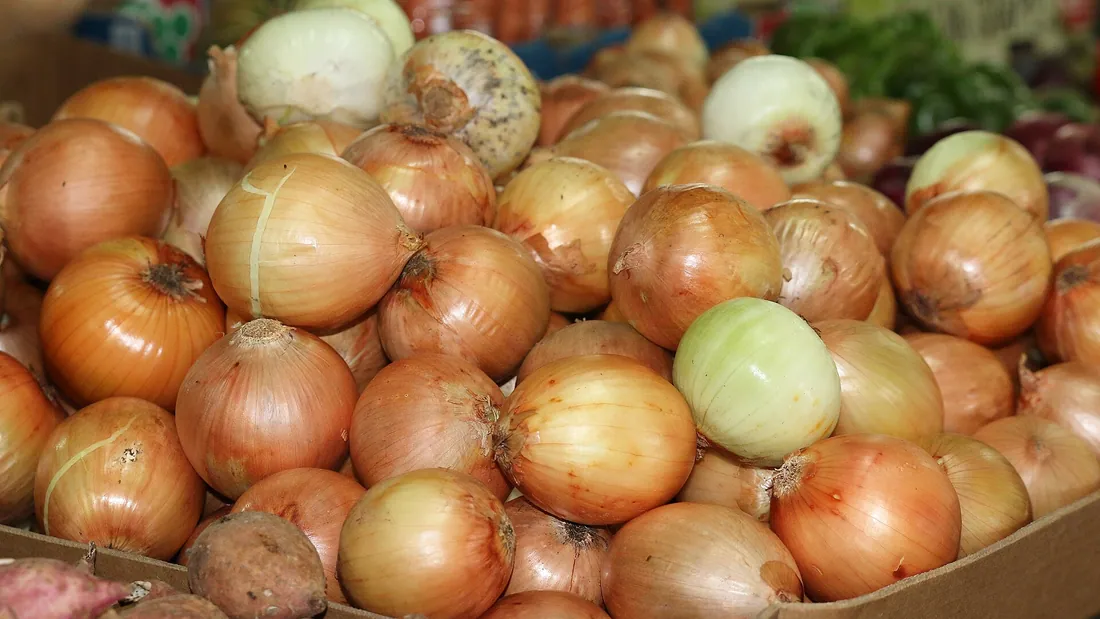

The onion (Allium cepa) is a hardy, no-fuss bulb vegetable, one of the easiest crops to succeed with in a vegetable garden. The shortcut to keeping life simple: plant sets, those small onions, in spring, to harvest in summer. Sowing from seed is still possible but it takes longer and is more temperamental. The real secret comes down to one sentence: well-drained soil, never any fresh manure, and a harvest in dry weather before the late-summer rains.
Light and exposure
The onion wants full sun, no compromise. Choose the most open and sunniest bed in the garden: in shade, the bulb swells poorly and stays small. Count on at least six to seven hours of direct sun to form fine onions.
A well-aired spot also helps keep the foliage dry, which limits disease in a damp climate. Avoid low corners where the air stagnates and the dew lingers late into the morning.
Watering
The onion needs little water. Water moderately after planting to help it root, then only in the event of a genuine prolonged drought. An excess of water rots the bulb and encourages downy mildew.
The important move comes at the end of the season: as soon as the foliage begins to yellow and fall over, stop watering completely. This is the signal that the bulb is finishing its ripening, and leaving it dry at this stage clearly improves storage.
Soil and repotting
The onion likes a loose, light, well-drained soil with no excess nitrogen. Work the soil deeply before planting, but above all do not add fresh manure: it rots the bulbs and attracts diseases. If you want to enrich it, do so the previous autumn with well-rotted compost, never just before planting.
Plant shallow: the set barely goes in, the tip just at the surface, the neck level with the ground. Space the plants ten to fifteen centimetres apart in rows twenty-five centimetres apart. In heavy clay soil, a raised bed or an addition of sand improves drainage.
Temperature and humidity
The onion is perfectly hardy. Sets are planted from the end of winter, as soon as the soil has drained and warmed, and cope without any trouble with the cool spells of early spring. Moderate cold does not worry it, it is stagnant moisture that harms it.
The critical point is often not frost but water. A damp summer and a rainy end to the season are the main enemy: a bulb that ripens in a waterlogged soil stores badly and rots quickly. The whole strategy then consists of harvesting and drying during a dry window before the rains arrive.
Pruning and upkeep
There is no pruning as such. Routine care comes down to keeping the bed clean: hoe and weed regularly, because the onion has few leaves and copes badly with competition from weeds.
Watch for bolting. If a plant sends up a flower stalk, cut it off or harvest that bulb first, because it will not keep. Break or bend the foliage over only if it does not fall on its own at the end of the season, never before maturity has arrived.
Pests and diseases
Onion downy mildew, favoured by a mild, damp summer, is the most common disease wherever the air stays laden with moisture. It shows up as pale spots and then a greyish-purple felting on the leaves, which yellow and fall over before their time. Well-drained soil, spaced-out plants and stopping watering clearly limit the damage.
The onion fly is the other plague: it lays at the neck and its maggots tunnel into the bulb, which rots. The plants wilt and yellow all at once. Rotation is essential, never replant onion, nor any other allium such as garlic or shallot, in the same spot for two to three years.
Propagation
The simplest and safest route remains planting sets. Buy these small calibrated onions in spring, push them in tip upwards as soon as the soil drains at the end of winter, and let them get on with it. The harvest follows in summer, with no worry about temperamental germination.
Sowing from seed is possible for anyone who wants more varieties or larger bulbs. Sow under cover eight to ten weeks before your last expected frost, or directly in place once the soil has drained and risen above ten degrees, in clear rows. It is longer and more demanding in terms of weeding, but economical. Some winter varieties, notably coloured onions, are planted in autumn for an early harvest the following year.
Toxicity
Harmless to humans, it is a vegetable. Onion is toxic to dogs and cats, however, raw or cooked: it destroys their red blood cells and causes anaemia. Keep the peelings and plants out of their reach.
Climate and hardiness
Where and in which climate it thrives
The onion is a biennial grown as an annual, and cold is its strong suit: sets and young plants take frosts of around minus five to minus ten degrees without damage, and autumn-planted winter varieties come through the cold season in open ground in USDA zones 6 to 9, down to roughly minus fifteen degrees, a light mulch being enough to secure regrowth where winter bites harder. What harms the onion is almost never frost, it is standing water.
The factor that really decides success is latitude, not country. The onion only swells its bulb once a day-length threshold has been crossed: short-day varieties bulb at around ten to twelve hours and suit low latitudes, intermediate ones at twelve to fourteen hours, and long-day varieties call for fourteen to sixteen hours and only give fine bulbs beyond roughly forty degrees of latitude. A long-day variety sown in the tropics will make foliage and no bulb; a short-day variety planted in a temperate climate will bulb too early, on plants that are still thin.
Climate then bears on the end of the run far more than on the start. Under a hot, dry summer, continental or Mediterranean, ripening and drying take care of themselves and storage is excellent. Under a mild, damp oceanic climate, everything hangs on a dry late-summer window: lift the bulbs, let them dry in the sun for a day or two, then finish the drying under cover and well ventilated before the rains set in. Where the summer is short, prefer sets to seed; in a humid subtropical climate, plant during the cool dry season. The stored crop keeps everywhere between zero and four degrees at sixty-five to seventy per cent humidity: an unheated cellar or larder suits it better than a kitchen, where the ambient warmth sprouts the bulbs within a few weeks.
Growing onion?
Green Hub keeps a dated history of your own plant: its photos, its progress, its repottings. An AI answers about yours specifically, not a generic sheet, for free.
Identify my plantMonth-by-month care calendar
| January | Nothing to do outside. Check the stored onions, remove any that are softening or sprouting. Order sets and seed. |
|---|---|
| February | First sowings under cover in the warm for anyone who wants large onions. Prepare the bed as soon as the soil allows. |
| March | Start planting the sets as soon as the soil has dried out. Continue sowing under cover. |
| April | Peak planting season for sets, tip upwards, neck at the surface. Sowing possible directly in place. |
| May | Hoe and weed regularly. The onion copes badly with competition. Water only if the spring is very dry. |
| June | Active leaf growth. Watch for the onion fly and downy mildew in damp weather. Keep the bed clean. |
| July | The foliage begins to yellow and fall over on the most advanced plants. Stop watering at that point. |
| August | Harvest when the leaves are dry and fallen over, in dry weather. Let the bulbs dry in the sun for a few days. |
| September | Bring the well-dried onions in dry before the rains. Plant winter varieties for an early harvest next year. |
| October | The winter onions root. Clean up the spring bed and respect the rotation, no allium in the same spot. |
| November | Little activity. An input of rotted compost on a future bed prepares next season, never fresh manure. |
| December | Rest. Check the stock, kept dry and airy. Note which varieties kept best. |
Green Hub tips
- Plant sets rather than sowing seed: it is the simplest and most reliable route to successful onions.
- Never fresh manure before planting. It rots the bulbs and invites diseases. Enrich the previous autumn with rotted compost.
- Stop watering as soon as the foliage yellows and falls over. A bulb that ripens dry keeps all winter.
- Harvest in dry weather and dry the onions in the sun before the autumn rains. An onion brought in damp rots in storage.
- Respect the rotation: two to three years without onion or any other allium in the same spot, to avoid the fly and soil-borne diseases.
Related species
Chives
Allium schoenoprasum
Chives (Allium schoenoprasum) are a small perennial of the onion family, with fine hollow stems tasting mildly of…
Clivia
Clivia miniata
The clivia (Clivia miniata) is a sturdy, generous houseplant from the undergrowth of South Africa. Its broad strap-like…
Daffodil
Narcissus
The daffodil (Narcissus) is the first big signal of spring in the garden. Long before the tulips, its yellow trumpets…
Garlic
Allium sativum
Garlic (Allium sativum) is one of the easiest vegetables in a kitchen garden, provided you grasp two things. You don’t…
Leek
Allium porrum
The leek (Allium porrum) is the winter vegetable par excellence. Very hardy, it stands in the ground all winter and is…
Shallot
Allium ascalonicum
The shallot (Allium ascalonicum) is a classic of the vegetable garden, a cousin of the onion but with a finer, milder…
The guides that mention it
The vegetable garden calendar, from sowing to harvest
Two dates are enough to build an entire vegetable garden year: your last spring frost and your first autumn frost.…
Toxic Plants for Cats and Dogs: Recognising the Danger Rather Than Memorising a List
A list of toxic plants is easily forgotten and always incomplete. What actually protects a cat or dog is recognising…
Making Compost: Steering the Thermal Biology of the Heap
A compost heap is not a pile of waste you stir, it is a thermal process you steer. The real carbon/nitrogen ratio of…
Vegetable Garden Pests: The Natural Method That Holds All Season
A leaf riddled with holes, a lettuce shaved to the ground overnight, a twisted and sticky shoot: every kind of damage…
Garden Diseases: Recognising What Is Attacking Your Plants, and Acting Before the Spot Appears
A white bloom that wipes off on a fingertip, an angular lesion stopped dead by a vein, a fruit browned from the bottom…
Companion Planting in the Vegetable Garden: Which Plants Belong Together
Tomatoes and basil get along beautifully, while potatoes and tomatoes make each other sick: companion planting explains…
Living soil: the no-dig method for a garden that thrives without a spade
Giving up digging means letting earthworms and mycorrhizae build a living soil that feeds the garden in your…
Sowing Seeds Successfully: Why It Fails, and What Fixes It
A seed that never comes up was not unlucky. Germination temperatures by species, correct depth, seeds that need light,…
Updated on
How this sheet is written
Written for Green Hub with the help of language models, then reviewed. It offers gardening guidance, not professional advice: if you are unsure whether a plant is toxic to a child or an animal, ask a vet, a doctor or your national poison centre.